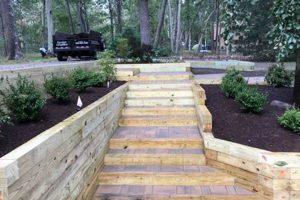
Pathways created through a garden, consisting of individual, spaced units, provide a functional and aesthetic element. These consist of flat materials, such as stone, concrete, or wood, placed to create a walkable surface through planted areas. For example, flagstone set amidst groundcover allows passage without compacting soil or damaging plants.
These pathway elements enhance the garden’s usability, enabling access for maintenance and enjoyment regardless of weather conditions. Functionality is also improved with an enhanced visual appeal and a sense of order in the outdoor space. Historically, gardens utilized various materials to define walkways, from simple packed earth to elaborate mosaic pathways, reflecting both practical needs and evolving design aesthetics.
The selection and placement of these individual units involve several considerations, including material choice, design style, installation techniques, and integration with the overall garden landscape. The following sections will address these key aspects in greater detail.
Placement and Installation Tips
Strategic planning and careful installation are crucial for long-lasting functionality and visual harmony. Adhering to the following tips can ensure a successful outcome.
Tip 1: Plan the Path: Before installing any units, map out the desired route. Consider the natural flow of traffic and the destinations within the garden. Using a garden hose or rope to visualize the path can be beneficial.
Tip 2: Material Selection Matters: Choose materials appropriate for the climate and the surrounding landscape. Natural stone offers durability and a rustic aesthetic, while concrete provides versatility and can be customized. Wood may require regular maintenance to prevent decay.
Tip 3: Ensure Proper Spacing: The distance between each unit should be comfortable for walking. A standard stride length should be considered to prevent awkward stepping. A spacing of approximately 6 to 8 inches is generally suitable.
Tip 4: Prepare a Stable Base: Excavate the soil beneath each unit to a depth of several inches. Add a layer of compacted gravel or sand to create a level and stable base. This prevents settling and ensures long-term stability.
Tip 5: Level Each Unit: Use a level to ensure that each unit is flush with the surrounding ground. Adjust the base as needed to achieve a uniform surface. Uneven surfaces can create tripping hazards.
Tip 6: Integrate with Plantings: Consider the surrounding plants when positioning the units. Allow sufficient space for plants to grow and avoid placing units directly over roots. Incorporating groundcover between elements can enhance the visual appeal.
Tip 7: Consider Drainage: Ensure that water drains away from the path to prevent puddling and erosion. A slight slope can facilitate drainage. Permeable materials, such as gravel or mulch, can also be used around the pathway.
Implementing these techniques ensures a safe, functional, and aesthetically pleasing feature in any garden setting. Careful consideration of these elements contributes significantly to the overall garden design.
The subsequent sections will explore various design ideas and maintenance considerations to further enhance the function and longevity of garden pathways.
1. Material Durability

Material durability is a critical factor influencing the longevity and functionality of pathways composed of individual units in a garden setting. The selected material must withstand environmental stressors such as freeze-thaw cycles, prolonged exposure to sunlight, and consistent foot traffic. Inadequate durability leads to cracking, crumbling, or degradation, compromising the pathway’s structural integrity and aesthetic appeal. For instance, using untreated softwood in a damp climate will result in rapid decay compared to using natural stone like granite or bluestone, which are inherently resistant to weathering.
The choice of material directly affects the maintenance requirements and long-term cost-effectiveness of the installation. While less durable materials may offer a lower initial cost, their frequent replacement or repair can ultimately prove more expensive. Concrete, a widely used material, can be reinforced with fibers to enhance its resistance to cracking. Similarly, using pressure-treated wood can extend its lifespan compared to untreated varieties. Therefore, assessing the specific environmental conditions and intended use of the pathway is essential when selecting a durable material.
Ultimately, prioritizing material durability ensures that the pathway remains a functional and aesthetically pleasing element within the garden for years to come. Neglecting this aspect results in a compromised structure that requires frequent upkeep and ultimately detracts from the garden’s overall appeal. The initial investment in durable materials is a cost-effective strategy for creating a lasting and sustainable landscape feature.
2. Path Alignment

Path alignment, concerning the placement and orientation of individual pathway elements, is a crucial determinant of both the functionality and aesthetic impact of spaced garden pathways. The manner in which these individual units are arranged dictates ease of navigation, influences visual flow, and contributes significantly to the overall design cohesion of the outdoor space.
- Straight vs. Curved Paths
Straight paths often lend a formal or structured appearance, suitable for symmetrical garden layouts or where direct access is prioritized. Curved paths, conversely, introduce a sense of informality and encourage a more leisurely pace, often used to showcase specific garden features or create a sense of discovery. For example, a straight path composed of rectangular stones may lead directly to a focal point like a fountain, while a winding path of irregular flagstone might meander through a flower bed.
- Path Width and Accessibility
The width of the path should be proportionate to the scale of the garden and the anticipated traffic. A narrow path, perhaps only wide enough for a single person, can create an intimate feel, while a wider path allows for two people to walk side-by-side or accommodate garden equipment. Considerations for accessibility, such as providing sufficient width for wheelchairs or mobility aids, may also influence path alignment and dimensions.
- Integration with Landscape Features
The alignment of pathway units should complement existing landscape features, such as trees, shrubs, and flower beds. Avoid abrupt transitions or obstacles that disrupt the flow of the path. Instead, integrate the pathway seamlessly with the surrounding environment. For instance, a path could curve around a mature tree or follow the natural contours of a sloping garden bed.
- Material and Pattern Considerations
The choice of material and pattern used in the arrangement can further enhance path alignment. Using uniform materials and consistent spacing can create a sense of order and predictability, while varying the materials and patterns can add visual interest and texture. For example, a pathway could incorporate a combination of different stone sizes and shapes or alternate between different types of groundcover between the elements.
Effective path alignment is not merely about connecting points from one area to another, but about orchestrating the movement and visual experience within the garden. Careful consideration of the alignment impacts the degree of ease, aesthetic harmony and how the garden as a whole is percieved.
3. Spacing Consistency
Maintaining consistent spacing between individual pathway units is paramount for ensuring the safety, functionality, and aesthetic appeal of installations within gardens. Deviation from uniform spacing can lead to awkward strides, potential tripping hazards, and a visually disjointed landscape.
- Ergonomic Considerations
Consistent spacing aligns with the natural human gait, allowing for a comfortable and fluid walking experience. Irregular spacing forces adjustments in stride length, leading to fatigue and an increased risk of missteps. A spacing of approximately 6 to 8 inches typically accommodates average stride lengths, minimizing strain. This consideration is particularly important in frequently used pathways.
- Accessibility and Safety
Inconsistent spacing presents a significant safety hazard, especially for individuals with mobility limitations or visual impairments. Uneven gaps can be difficult to navigate, increasing the likelihood of falls. Maintaining uniform distances between units promotes safer passage and reduces the risk of accidents. Furthermore, consistent spacing simplifies maintenance, such as weeding or cleaning between the pathway elements.
- Aesthetic Harmony
Consistent spacing contributes to a visually pleasing and cohesive design. Uniform gaps create a sense of order and balance, enhancing the overall aesthetic appeal of the garden. Irregular spacing can appear haphazard and detract from the intended design aesthetic. The spacing of ground cover growing between the units contributes to an overall balance.
- Installation Precision
Achieving consistent spacing requires careful planning and precise installation techniques. Accurate measurement and placement of each unit are essential. The use of spacers during installation can help maintain uniform gaps. Periodic checks during the installation process ensure adherence to the planned spacing parameters and prevent cumulative errors.
Therefore, consistent spacing is not merely an aesthetic preference but a functional imperative impacting safety, usability, and the overall quality of spaced pathway installations. Addressing spacing meticulously enhances both accessibility and visual allure.
4. Surface Leveling

Surface leveling is a critical aspect of constructing pathways using individual elements in garden landscapes. Ensuring each unit is flush with the surrounding grade mitigates safety hazards and contributes to the overall aesthetic coherence of the design. Uneven surfaces create tripping points, compromising the pathway’s usability and potentially causing injury.
- Preventing Hazards
The primary role of leveling is hazard prevention. Units that protrude above or sink below the surrounding surface create an uneven walking area. For instance, a stone that sits even an inch higher than the adjacent ground can easily cause a stumble. Proper leveling eliminates these abrupt changes in elevation, creating a safer path for pedestrian traffic.
- Facilitating Drainage
Level surfaces promote efficient drainage. When the pathway slopes uniformly, water flows away from the path, preventing puddling and reducing the risk of ice formation in colder climates. Conversely, uneven surfaces can trap water, leading to slippery conditions and accelerating the deterioration of materials like wood or certain types of stone.
- Enhancing Stability
Leveling contributes to the stability of the individual units. When each unit rests firmly on a compacted, level base, it is less likely to shift or rock under foot. An unstable pathway element can not only be a safety hazard but also accelerate wear and tear on the materials. Proper base preparation and leveling are essential for long-term stability.
- Aesthetic Integration
A level pathway integrates more seamlessly with the surrounding landscape. Uneven pathways can appear disjointed and detract from the overall aesthetic appeal of the garden. Level surfaces create a sense of order and balance, enhancing the visual harmony of the outdoor space. For instance, smooth, level stones set amidst a lush groundcover create a visually appealing and inviting pathway.
The combined effect of these facets underscores the importance of meticulous leveling during pathway construction. The safety, longevity, and aesthetic value of the pathway elements are directly contingent upon this crucial step. Attention to surface leveling translates to a more functional and visually pleasing garden feature.
5. Plant Integration

The strategic incorporation of plant life around pathway elements significantly augments both the aesthetic appeal and ecological value of a garden. The relationship between plants and the hardscape of pathway units is symbiotic, with each element enhancing the characteristics of the other. Careful plant selection and placement softens the visual impact of the hardscape, creating a more natural and inviting environment. The absence of thoughtful plant integration results in a stark and sterile landscape, where the pathway appears as an isolated and disconnected feature.
Consider, for instance, a pathway composed of flagstone set amidst creeping thyme. The thyme not only fills the spaces between the stones, creating a visually cohesive surface, but also releases a pleasant aroma when stepped upon. Conversely, a pathway situated on bare soil lacks visual interest and is susceptible to erosion. Taller plants, such as ornamental grasses or perennials, can be positioned alongside the pathway to provide vertical structure and further integrate the hardscape into the surrounding garden. The selection of plants should consider factors such as sun exposure, soil type, and desired aesthetic. Native plants, in particular, offer ecological benefits by attracting pollinators and supporting local wildlife.
In conclusion, the effective incorporation of plant life is indispensable to the success of any pathway composed of individual elements. It softens the hardscape, enhances the aesthetic appeal, and promotes ecological diversity within the garden. By carefully considering plant selection and placement, it transforms a purely functional element into an integral and harmonious compon
ent of the landscape design.
Frequently Asked Questions
This section addresses common inquiries regarding the installation and maintenance of pathways comprised of individual units within garden settings. The information presented aims to clarify key considerations for creating functional and aesthetically pleasing outdoor spaces.
Question 1: What factors should be considered when selecting materials for individual units?
Material selection is influenced by climate, intended usage, and aesthetic preferences. Durable materials like natural stone or concrete are recommended for high-traffic areas. The material should also complement the existing garden design.
Question 2: How can proper spacing between the units be ensured?
Maintaining consistent spacing requires careful planning and precise installation. A standard stride length is typically 6 to 8 inches, but individual preferences should be considered. Using spacers during installation can help maintain uniform gaps.
Question 3: What steps are necessary to ensure the stability of pathway units?
Stability is achieved by preparing a level and compacted base beneath each unit. Excavating the soil and adding a layer of gravel or sand provides a stable foundation. The units should be level with the surrounding ground to prevent shifting or rocking.
Question 4: How can plant life be effectively integrated with individual pathways?
Plants can be integrated by allowing groundcover to grow between the elements. Consider drought-resistant varietals. Care must be taken to avoid placing units directly over existing root systems.
Question 5: What are the maintenance requirements for spaced garden pathways?
Maintenance primarily involves weeding, cleaning, and occasional leveling. Periodic inspection can identify potential problems, such as loose or uneven units. The materials should be cleaned as necessary with a brush and water or a specialized cleaner.
Question 6: How can one address drainage issues associated with pathway installations?
Drainage issues can be mitigated by creating a slight slope to facilitate water runoff. Permeable materials, such as gravel or mulch, can be used around the pathway. Installing a drainage system may be necessary in areas with poor drainage.
In summary, thoughtful planning, careful installation, and regular maintenance are essential for creating functional and aesthetically pleasing spaced pathways. Considering these factors ensures a safe and visually harmonious element within the garden landscape.
The subsequent section will explore advanced design techniques and considerations for creating customized spaced pathway installations.
Concluding Remarks
The preceding analysis has comprehensively explored the multifaceted nature of stepping stones for a garden. Topics ranging from material selection and installation techniques to plant integration and maintenance considerations have been addressed. Strategic implementation and careful execution remains essential for optimizing their utility and enhancing the aesthetic qualities of outdoor spaces.
The design and construction of these pathways represent a long-term investment in both functionality and beauty. Diligent planning and proactive maintenance are critical for preserving the structural integrity and visual appeal for years to come. Future innovations in material science and landscape design will undoubtedly further refine the possibilities and applications in the outdoor landscape.