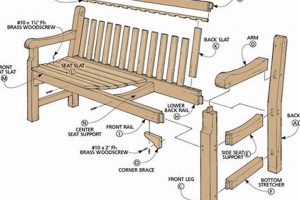
A self-constructed outdoor workstation, primarily used for horticultural tasks such as transplanting seedlings, mixing soil, and repotting plants, often incorporates storage solutions for tools and supplies. These structures offer a dedicated space for gardening activities, preventing mess and promoting organization. For example, a gardener might construct a simple bench from reclaimed wood to provide a convenient surface for preparing plants for their garden.
The provision of a designated area enhances gardening efficiency and reduces strain on the body by providing an ergonomically suitable workspace. Historically, gardeners repurposed existing furniture or built rudimentary tables. The modern approach allows for custom designs catering to individual needs and preferences, leading to more comfortable and enjoyable gardening experiences. This customizability allows for features like integrated sinks, lighting, and specialized storage.
The subsequent sections will delve into the advantages of constructing a custom gardening workstation, exploring various design ideas, providing step-by-step building instructions, and offering guidance on material selection and maintenance techniques. These resources aim to empower individuals to create a practical and aesthetically pleasing addition to their outdoor spaces.
Construction and Customization Guidance
The following guidance aims to maximize the functionality and longevity of a self-built gardening workstation. Thoughtful planning and execution are paramount for a successful outcome.
Tip 1: Prioritize Ergonomics: Design the height of the work surface to minimize back strain. Consider the user’s height and typical gardening postures during the design phase. A work surface that is too low or too high can lead to discomfort and injury.
Tip 2: Implement Adequate Drainage: Ensure the work surface incorporates drainage solutions to prevent water accumulation. This can be achieved through strategically placed gaps between planks or the inclusion of a designated drainage channel. Stagnant water promotes rot and harbors pests.
Tip 3: Utilize Durable Materials: Select materials resistant to weather exposure and moisture. Treated lumber, cedar, or composite materials offer enhanced durability compared to untreated pine. Proper sealing and finishing further extend the lifespan of the structure.
Tip 4: Optimize Storage Solutions: Incorporate various storage compartments to accommodate gardening tools, potting soil, and other supplies. Shelves, drawers, and hooks promote organization and accessibility. Consider the specific tools and materials that will be stored to determine appropriate compartment sizes.
Tip 5: Integrate a Soil Collection System: Design a method for capturing spilled soil and potting mix. A lip around the edge of the work surface or a removable collection tray minimizes waste and simplifies cleanup. Collected soil can be reused or composted.
Tip 6: Consider Portability: If space is limited or relocation is anticipated, design a lightweight and portable structure. Wheels or a modular design facilitate movement. Ensure the structure remains stable during use.
Tip 7: Prioritize Safety: Smooth all edges and corners to prevent injury. Use appropriate hardware and construction techniques to ensure structural integrity. Regularly inspect the structure for signs of wear and tear and address any issues promptly.
Implementing these guidelines ensures the creation of a functional, durable, and user-friendly gardening workstation, maximizing the efficiency and enjoyment of gardening activities.
The subsequent section will provide example projects and design inspirations to demonstrate practical applications of these tips.
1. Ergonomic working height

The consideration of ergonomic working height is paramount in the design and construction of a gardening workstation. This element directly influences user comfort, reduces the risk of physical strain, and enhances the overall efficiency of gardening tasks. The selection of an inappropriate height compromises these benefits.
- Reduced Back Strain
An appropriately determined height minimizes bending and stooping during activities such as potting and transplanting. This reduces stress on the lower back, mitigating the potential for chronic pain and injuries. A workstation that is too low necessitates excessive bending, while one that is too high requires reaching, both of which can contribute to discomfort and long-term musculoskeletal issues.
- Improved Posture
An ergonomic height promotes a natural and upright posture. This reduces strain on the neck, shoulders, and upper back. Maintaining proper posture during prolonged gardening sessions prevents fatigue and enhances overall well-being. A well-designed workstation allows for a comfortable and sustainable workflow.
- Enhanced Efficiency
A comfortable working height optimizes reach and leverage, facilitating efficient task completion. Easy access to tools and materials reduces unnecessary movements, streamlining the gardening process. An ergonomic workstation contributes to a more productive and enjoyable gardening experience.
- Customization and Adaptability
An advantage of constructing a gardening workstation is the ability to customize the height to suit individual needs. This adaptability allows for adjustments based on user height, preferred working style, and the specific tasks being performed. Customization ensures optimal comfort and efficiency for each user.
These facets collectively underscore the critical importance of ergonomic height in the design. A gardening workstation with an appropriate height not only enhances user comfort and efficiency but also contributes to long-term health and well-being, maximizing the value and utility of the structure.
2. Weather-resistant material selection

Material selection is a pivotal factor determining the longevity and performance of a self-constructed gardening workstation. Exposure to the elements necessitates the use of durable, weather-resistant materials to prevent premature degradation and maintain structural integrity.
- Resistance to Moisture Damage
Untreated wood is susceptible to rot, decay, and insect infestation when exposed to moisture. Weather-resistant materials, such as treated lumber or naturally decay-resistant woods like cedar or redwood, mitigate these risks. Proper sealing and finishing further enhance moisture resistance, preventing warping, cracking, and fungal growth. The selection of appropriate materials minimizes the need for frequent repairs or replacements.
- Protection Against UV Deg
radationProlonged exposure to ultraviolet (UV) radiation can degrade certain materials, causing them to become brittle and fade. Plastics and some types of wood are particularly vulnerable to UV damage. Materials with inherent UV resistance or those treated with UV-protective coatings maintain their structural integrity and appearance over time. This ensures the gardening workstation remains aesthetically pleasing and functional for an extended period.
- Durability Under Temperature Fluctuations
Outdoor structures are subject to temperature fluctuations, which can cause expansion and contraction of materials. This can lead to cracking, warping, or joint failure. Materials that exhibit dimensional stability under varying temperatures, such as certain types of composite lumber or metal, are better suited for gardening workstations. Proper construction techniques, such as allowing for expansion joints, further mitigate the effects of temperature changes.
- Resistance to Pest Infestation
Wood-boring insects, such as termites and carpenter ants, can compromise the structural integrity of wooden structures. Treated lumber is impregnated with insecticides that deter these pests. Naturally insect-resistant woods, like cedar, provide an alternative solution. Regular inspection and maintenance, including the application of insecticides or wood preservatives, can further protect the gardening workstation from pest infestation.
The prudent selection of weather-resistant materials is essential for ensuring the durability and longevity of a gardening workstation. By mitigating the damaging effects of moisture, UV radiation, temperature fluctuations, and pest infestation, the lifespan of the structure is significantly extended, providing a reliable and functional workspace for gardening activities.
3. Integrated storage solutions
The incorporation of storage solutions within a self-constructed gardening workstation directly influences its functionality and efficiency. A dedicated storage area centralizes tools, potting mixes, and containers, reducing clutter and minimizing time spent searching for necessary implements. This integration streamlines gardening tasks, allowing for a more focused and productive experience. For example, a potting bench with built-in shelving can house various sized pots, while drawers might contain smaller tools like trowels and pruning shears, readily accessible when needed.
The absence of integrated storage necessitates the use of separate containers and shelving units, often located away from the primary work area. This arrangement increases the time and effort required to gather materials, potentially disrupting the flow of gardening activities. Moreover, a lack of dedicated storage can lead to disorganized workspaces, increasing the risk of misplacing tools or accidentally damaging plants. A well-planned storage system, conversely, contributes to a cleaner, more organized, and safer gardening environment. Consider a bench design incorporating a pull-out bin for spent soil or trimmings, facilitating easy cleanup and disposal.
In summation, the integration of storage solutions is a crucial design element for a self-constructed gardening workstation. It directly enhances efficiency, promotes organization, and contributes to a more enjoyable gardening experience. While the specific storage configuration depends on individual needs and preferences, prioritizing this aspect is essential for maximizing the practicality and long-term value of the workstation. Overlooking storage integration can result in a less functional and more cumbersome gardening setup.
4. Effective drainage provisions
Effective drainage provisions are a critical consideration in the design and construction of a self-built gardening workstation. Water accumulation can lead to material degradation, promote the growth of mold and mildew, and create unsanitary conditions, thereby compromising the structure’s longevity and the user’s gardening experience.
- Prevention of Material Decay
Standing water accelerates the decay of wooden components commonly used in gardening workstations. Implementing drainage solutions, such as slatted surfaces or strategically placed drainage holes, allows water to dissipate quickly, preventing prolonged contact with the wood. This minimizes the risk of rot, warping, and structural weakening, extending the lifespan of the workstation. For instance, a bench constructed with gaps between the planks of the work surface inherently provides drainage, preventing water from pooling after watering or rainfall.
- Mitigation of Mold and Mildew Growth
Damp environments foster the growth of mold and mildew, which can pose health risks and contribute to the deterioration of materials. Adequate drainage prevents the buildup of moisture, inhibiting the development of these organisms. Proper ventilation, in conjunction with drainage features, further reduces humidity levels and minimizes the risk of mold and mildew. A potting bench designed with an open framework promotes airflow, aiding in the evaporation of moisture and discouraging fungal growth.
- Facilitation of Soil Management
Waterlogged soil can impede plant growth and lead to root rot. A gardening workstation with effective drainage allows excess water to drain away from potting mixes and seedling trays, creating a more favorable environment for plant propagation. This is particularly important when working with delicate seedlings that are susceptible to overwatering. Integrating a sloped surface or a collection tray with drainage holes directs excess water away from the potting area, preventing soil saturation and promoting healthy root development.
- Enhancement of Workstation Hygiene
Poor drainage can create a breeding ground for insects and other pests. By preventing water accumulation, effective drainage provisions contribute to a cleaner and more hygienic workspace. This reduces the risk of pest infestations and minimizes the spread of plant diseases. A workstation designed with smooth, easily cleanable surfaces and adequate drainage is easier to maintain and promotes a healthier gardening environment. Regularly cleaning the drainage areas prevents clogging and ensures optimal performance.
In conclusion, effective drainage provisions are not merely an aesthetic consideration but a functional necessity for a self-built gardening workstation. Implementing these features ensures the structure’s durability, promotes a healthy gardening environment, and enhances the overall user experience. Neglecting drainage can lead to a range of problems that compromise the workstation’s value and utility.
5. Structural Stability

Structural stability represents a fundamental requirement for any self-constructed gardening workstation. The absence of adequate structural integrity compromises the safety of the user, reduces the lifespan of the structure, and diminishes its overall utility. The causes of instability can range from the selection of inappropriate m
aterials to the utilization of inadequate construction techniques. The effect is a workstation prone to collapse, tipping, or premature failure under load. Consider a scenario where a workbench, constructed from thin, untreated lumber and secured with insufficient fasteners, collapses under the weight of several bags of potting soil. This exemplifies the critical relationship between structural stability and the functional longevity of the workstation.
The practical implications of understanding structural stability extend beyond mere safety considerations. A structurally sound workstation facilitates efficient workflow and minimizes the risk of accidents, such as spilled soil or damaged plants. For instance, a bench with sturdy legs and a reinforced work surface can safely accommodate the weight of large pots and heavy tools, allowing the gardener to work with confidence and precision. Proper joinery techniques, such as mortise and tenon joints or the use of metal fasteners, contribute significantly to the overall stability of the structure. Reinforcing vulnerable areas, such as leg connections and work surface supports, ensures the workstation can withstand the stresses associated with regular gardening activities. The selection of appropriate lumber dimensions and the implementation of cross-bracing further enhance structural integrity.
In summation, structural stability is not merely a desirable attribute but a non-negotiable prerequisite for a functional and safe self-constructed gardening workstation. Addressing this aspect through careful material selection, sound construction techniques, and thoughtful design considerations is paramount. Overlooking structural stability leads to compromised safety, reduced longevity, and diminished overall utility, thereby negating the benefits of a custom-built gardening workspace.
6. Customizable design adaptability

The inherent value of a self-constructed gardening workstation lies substantially in its customizable design adaptability. This characteristic allows the structure to be tailored precisely to the unique needs and spatial constraints of the individual gardener. Unlike commercially manufactured alternatives, a do-it-yourself approach permits the incorporation of specific features, dimensions, and storage configurations optimized for a particular garden and its activities. A gardener with limited space, for instance, might design a compact, wall-mounted workstation, while someone with an extensive garden could construct a larger, multi-functional bench with integrated potting and storage areas. The effect is a highly personalized and efficient workspace, directly addressing the gardeners specific requirements. This adaptability is a core component distinguishing the benefits of self-construction from pre-fabricated options.
The practical application of customizable design adaptability extends beyond mere dimensional adjustments. It encompasses material selection, feature integration, and ergonomic considerations. A gardener concerned with sustainability may opt for reclaimed wood and eco-friendly finishes. Another individual may prioritize accessibility by incorporating adjustable-height work surfaces and specialized tool holders. Furthermore, features such as built-in sinks, integrated lighting, or specialized composting systems can be seamlessly incorporated into the design, optimizing the workstation for specific gardening tasks. The modularity afforded by self-construction allows for future modifications and upgrades, ensuring the workstation remains adaptable to evolving needs and gardening practices. A gardener who initially focuses on seedling propagation might later add features for composting or vermiculture, adapting the workstation to new gardening interests.
In conclusion, customizable design adaptability constitutes a defining attribute and significant advantage of self-constructed gardening workstations. The ability to tailor the structure precisely to individual needs, preferences, and spatial limitations results in a highly functional and personalized workspace. While challenges may arise in the initial design and construction phases, the long-term benefits of a customized solution far outweigh the effort involved. This understanding underscores the practical significance of embracing a do-it-yourself approach to create a gardening workstation that truly enhances the gardening experience.
7. Tool accessibility
Efficient tool accessibility is a paramount factor in maximizing the utility of a self-constructed gardening workstation. The strategic organization and placement of tools directly impact workflow, reduce unnecessary movement, and enhance the overall gardening experience. A properly designed system minimizes time spent searching for implements, fostering a more focused and productive environment.
- Optimized Spatial Arrangement
Effective tool accessibility necessitates careful consideration of the workstation’s spatial arrangement. Commonly used tools should be located within easy reach, minimizing the need to stretch or move around the work area. This can be achieved through the implementation of tool racks, pegboards, or designated storage compartments strategically positioned around the perimeter of the bench. For example, frequently used trowels and pruners might be placed on a hanging rack directly above the work surface, while larger tools, such as shovels and rakes, are stored in a vertical rack beneath the bench.
- Dedicated Storage Compartments
Specific tools require specialized storage solutions to prevent damage and ensure easy retrieval. Sharp implements, such as pruning shears and knives, should be stored in protective sheaths or dedicated compartments to prevent accidental injury. Small tools, such as seed packets and labels, can be organized in drawers or bins, preventing them from being lost or misplaced. Organizing tools by category or frequency of use further enhances accessibility and streamlines the gardening process.
- Ergonomic Tool Placement
The height and orientation of tool storage systems should be optimized for ergonomic accessibility. Tools should be positioned at a comfortable reach level, minimizing the need to bend or strain. The angle of tool racks and the orientation of tool handles should be carefully considered to facilitate easy gripping and removal. This prevents fatigue and reduces the risk of musculoskeletal injuries. For instance, a tool rack positioned at waist height with tools facing forward allows for effortless retrieval.
- Visual Tool Inventory
A clear and visually accessible tool inventory enhances organization and reduces the risk of misplaced items. Utilizing labels, color-coding, or transparent storage containers allows for quick identification and retrieval of necessary tools. Regularly inspecting the tool inventory and returning tools to their designated locations after use reinforces organizational habits and ensures that tools are readily available when needed. A well-maintained tool inventory promotes a more efficient and enjoyable gardening experience.
The integration of these facets contributes significantly to the practicality and efficiency of a do-it-yourself gardening workstation. A well-designed system for tool accessibility not only enhances the gardening experience but also promotes safety, reduces clutter, and prolongs the lifespan of g
ardening implements. Overlooking this crucial aspect can lead to frustration, inefficiency, and a diminished overall gardening experience.
Frequently Asked Questions
This section addresses common inquiries regarding the design, construction, and maintenance of self-constructed gardening workstations, providing concise and informative responses to assist individuals in creating functional and durable outdoor workspaces.
Question 1: What are the primary considerations when selecting materials for a gardening workstation exposed to the elements?
Material selection should prioritize resistance to moisture, UV degradation, and pest infestation. Treated lumber, naturally decay-resistant woods such as cedar or redwood, and composite materials offer enhanced durability compared to untreated options. Proper sealing and finishing further extend the lifespan of the structure.
Question 2: How can ergonomic principles be incorporated into the design of a gardening workstation to minimize physical strain?
The working height should be adjusted to minimize bending and stooping, reducing stress on the lower back. A comfortable reach distance should be maintained for tools and materials. Consider incorporating adjustable-height components to accommodate individual preferences and varying gardening tasks.
Question 3: What are effective methods for providing adequate drainage in a gardening workstation to prevent material decay and promote hygiene?
Implementing slatted surfaces, strategically placed drainage holes, or sloped work areas allows water to dissipate quickly, preventing prolonged contact with wooden components. An open framework promotes airflow, aiding in the evaporation of moisture and reducing the risk of mold and mildew growth.
Question 4: How can integrated storage solutions be optimized to enhance tool accessibility and maintain a well-organized gardening workspace?
Tool racks, pegboards, and designated storage compartments should be positioned within easy reach, minimizing unnecessary movement. Specific tools require specialized storage solutions to prevent damage and ensure convenient retrieval. Categorizing and labeling tools promotes efficient organization and reduces the risk of misplacement.
Question 5: What construction techniques contribute most significantly to the structural stability and longevity of a self-built gardening workstation?
Employing robust joinery methods, such as mortise and tenon joints or the use of metal fasteners, enhances overall stability. Reinforcing vulnerable areas, such as leg connections and work surface supports, ensures the structure can withstand the stresses associated with regular gardening activities. Cross-bracing and the selection of appropriate lumber dimensions further contribute to structural integrity.
Question 6: How does customizable design adaptability contribute to the overall value and utility of a self-constructed gardening workstation?
Customization allows the structure to be tailored precisely to individual needs, spatial constraints, and gardening practices. Specific features, dimensions, and storage configurations can be optimized for a particular garden, resulting in a highly personalized and efficient workspace. Modularity allows for future modifications and upgrades, ensuring the workstation remains adaptable to evolving needs.
Key takeaways emphasize material durability, ergonomic design, effective drainage, strategic storage, structural stability, and customizable adaptability as critical factors in creating functional and long-lasting self-constructed gardening workstations.
The subsequent section provides design inspirations and project examples to further illustrate the practical application of these principles.
DIY Garden Potting Bench
The preceding discussion has explored the multifaceted considerations involved in the construction of a functional gardening workstation. From material selection and ergonomic design to drainage provisions and storage solutions, the creation of a durable and efficient gardening space demands careful planning and execution. Structural integrity and customizable adaptability represent further critical elements contributing to the overall value and long-term utility of such a project. The successful implementation of these principles results in a dedicated workspace that enhances the gardening experience.
The construction of a self-sufficient gardening area represents a significant investment in both personal well-being and horticultural pursuits. Thoughtful design and meticulous execution will yield a lasting and productive space. Future endeavors should prioritize innovative solutions for resource management and environmental sustainability in order to maximize the ecological impact of gardening practices.