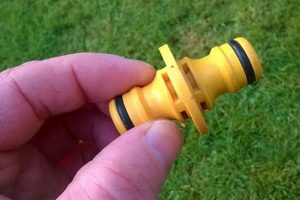
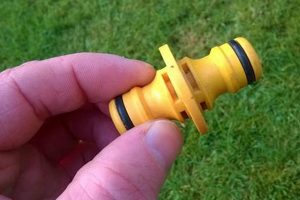
A component designed for facilitating rapid attachment and detachment of a water hose to a spigot, nozzle, or other hose, these coupling devices significantly reduce the time and effort required for connecting and disconnecting watering implements. An example includes a set comprised of a female-threaded receiver that attaches to a faucet and a corresponding male-threaded adapter that secures to the hose end.
These devices offer several advantages, including increased efficiency in gardening and landscaping tasks, prevention of water wastage by minimizing connection leaks, and improved ease of use for individuals with limited hand strength. Their adoption reflects a broader trend toward optimizing convenience and streamlining processes in outdoor maintenance activities, stemming from a desire to minimize downtime and maximize productivity in domestic and professional settings.
The subsequent sections of this article will delve into the different types available, materials used in their construction, factors to consider when selecting the most appropriate model for specific applications, installation procedures, maintenance tips for longevity, and a comparative analysis of leading brands and their respective features.
Tips for Optimal Use and Longevity
Maximizing the effectiveness and extending the lifespan of these connectors requires adherence to specific guidelines. These tips ensure secure connections, prevent damage, and promote consistent performance over time.
Tip 1: Proper Size Matching: Ensure compatibility by matching the connector size to the hose diameter and spigot threading. Mismatched sizes can lead to leaks, compromised connections, and potential damage to the components.
Tip 2: Thorough Thread Inspection: Regularly examine the threads on both the connector and the hose or spigot for damage or debris. Clean or replace components as needed to maintain a secure and watertight seal.
Tip 3: Careful Tightening: Avoid overtightening the connectors. Excessive force can strip the threads or damage the internal mechanisms. Tighten only until a firm, leak-free connection is achieved.
Tip 4: Cold Weather Protection: During freezing temperatures, disconnect the connectors and drain any residual water. Freezing water can expand and crack the connector body, rendering it unusable.
Tip 5: Periodic Cleaning: Regularly clean the connectors with a mild soap and water solution to remove dirt, grime, and mineral buildup. This helps maintain smooth operation and prevents corrosion.
Tip 6: Material Compatibility Awareness: Be mindful of the materials used in the connector construction (e.g., brass, plastic) and their compatibility with the intended use case. Some materials are more resistant to corrosion or high water pressure than others.
Tip 7: Storage Considerations: When not in use, store the connectors in a dry, protected environment away from direct sunlight and extreme temperatures. This prevents degradation of the materials and extends their service life.
By following these recommendations, users can ensure that these connectors provide reliable performance and maintain their integrity for an extended period, reducing the need for frequent replacements.
The final section of this article will summarize the key considerations discussed and provide concluding remarks regarding the importance of selecting and maintaining these components for efficient and effective watering systems.
1. Material Durability
Material durability is a critical determinant of the lifespan and operational effectiveness of these connectors. The materials used in their construction directly impact their ability to withstand environmental stressors and mechanical strain.
- Corrosion Resistance
The choice of materials dictates the connector’s resistance to corrosion from water, fertilizers, and other environmental elements. Brass, for example, exhibits inherent corrosion resistance compared to some plastics, ensuring longevity in outdoor settings. Corrosion can lead to weakened connections, leaks, and eventual failure of the connector.
- Pressure Tolerance
The connector material must withstand the water pressure delivered by the hose. Materials with higher tensile strength, such as stainless steel or reinforced polymers, are better suited for applications with high water pressure. Failure to choose a material with adequate pressure tolerance can result in bursting or cracking under pressure.
- UV Degradation Resistance
Exposure to sunlight can degrade certain materials, particularly plastics, over time. UV degradation can lead to brittleness, cracking, and reduced structural integrity. Connectors made from UV-resistant materials, or those with UV-protective coatings, are necessary for prolonged outdoor use.
- Mechanical Stress Endurance
Connectors are subjected to mechanical stress from repeated connections, disconnections, and general handling. Materials with high impact resistance and tensile strength, such as metal alloys or robust polymers, are crucial for resisting wear and tear. Inadequate material strength can result in broken or stripped threads and compromised connections.
The selection of durable materials is paramount for ensuring the reliable performance and extended lifespan of these connectors. Careful consideration of the environmental conditions, water pressure, and frequency of use is necessary to choose a connector constructed from a material that will withstand the intended application and minimize the need for frequent replacements.
2. Connection Security

Connection security is a paramount attribute of a functional device. A secure connection ensures consistent water flow, minimizes water wastage, and prevents potential hazards associated with dislodged hoses. The design of these devices directly affects the reliability of the connection, influencing factors such as the locking mechanism’s strength, the precision of the threading, and the overall fit between the male and female components. For example, a connector with a poorly designed locking collar may detach under pressure, leading to sudden water release and potential damage to surrounding vegetation or property. Similarly, improperly manufactured threads can result in leaks and reduced water pressure.
The implications of compromised connection security extend beyond mere inconvenience. In agricultural settings, inconsistent irrigation due to faulty connectors can negatively impact crop yields. In residential applications, undetected leaks can lead to increased water bills and potential water damage within the home. Therefore, the selection of devices incorporating robust connection mechanisms is crucial. Examples of such mechanisms include du
al-locking collars, reinforced clamping systems, and precision-engineered threading. These features contribute to a more reliable and secure connection, minimizing the risk of detachment and ensuring consistent water delivery.
In conclusion, connection security represents a critical factor in evaluating the overall quality and effectiveness of a device. A focus on robust design and reliable locking mechanisms translates to a more efficient, safer, and cost-effective watering system. Understanding the practical significance of secure connections allows for informed purchasing decisions and optimized utilization of watering equipment, mitigating risks associated with water wastage and potential property damage.
3. Size Compatibility

The functionality of a connector is fundamentally dependent on size compatibility. Incompatible sizes result in leaks, inefficient water delivery, and potential damage to the involved components. Establishing the relevance of size compatibility is essential before detailing specific aspects.
- Thread Standards Compliance
Connectors adhere to established thread standards, most commonly National Pipe Thread (NPT) or Garden Hose Thread (GHT). Deviation from these standards leads to an inability to create a secure seal. For example, attempting to connect an NPT fitting to a GHT outlet inevitably results in leakage due to differences in thread pitch and taper. Adherence to recognized standards is therefore crucial for interoperability.
- Hose Diameter Matching
Connectors are designed to accommodate specific hose diameters, typically ranging from 1/2 inch to 3/4 inch. Mismatching the connector to the hose diameter compromises the connection’s integrity. A connector designed for a 5/8 inch hose, when attached to a 1/2 inch hose, may not provide a tight fit, leading to pressure loss and potential detachment. Conversely, attempting to force a larger hose onto a smaller connector can damage both components.
- Spigot Compatibility
Spigots, or outdoor faucets, also adhere to standardized thread sizes. Ensuring that the connector’s female end matches the spigot’s male thread is vital for establishing a secure and leak-free connection. Incompatibility may necessitate the use of adapters, adding complexity and potential points of failure to the system. Direct compatibility, whenever possible, is preferred for simplicity and reliability.
- Quick Connect System Consistency
Proprietary systems often require specific connector sizes and designs unique to that brand. Intermixing components from different systems can lead to compatibility issues and reduced performance. For example, attempting to use a connector from Brand A with a hose adapter from Brand B may result in a loose fit or complete incompatibility due to variations in locking mechanisms and dimensions. Maintaining consistency within a given system is essential for optimal performance.
These elements demonstrate the central importance of size compatibility in the practical application. Accurate assessment of thread standards, hose diameters, spigot dimensions, and system-specific requirements is necessary for selecting connectors that ensure efficient and leak-free water delivery. Incorrect sizing undermines the intended advantages of rapid connection and disconnection.
4. Flow Rate
Flow rate, defined as the volume of fluid passing a point per unit of time, constitutes a critical performance parameter in any fluid conveyance system. In the context of water hose accessories, specifically quick connectors, flow rate impacts the efficiency and effectiveness of irrigation, cleaning, and other water-dependent tasks. Connector design and material properties can either facilitate or impede the unimpeded passage of water, directly influencing the utility of the entire system.
- Internal Diameter Restrictions
The internal diameter of a connector represents a primary determinant of flow rate. Narrow internal passages create constrictions that reduce water pressure and flow. For example, a connector with a significantly smaller internal diameter than the hose itself acts as a bottleneck, limiting the volume of water that can be delivered. This effect is particularly noticeable in longer hose runs where pressure loss is already a factor. Connectors with wider, unobstructed internal diameters minimize this restriction, enabling higher flow rates and more efficient water delivery.
- Connector Design and Flow Path
The internal design of a connector significantly affects flow characteristics. Sharp angles, abrupt changes in diameter, and complex internal geometries can create turbulence and increase frictional losses, thereby reducing flow rate. Streamlined designs with smooth internal surfaces and gradual transitions minimize turbulence and promote laminar flow, resulting in higher flow rates. For example, a connector with a ball-valve closure mechanism may offer a more direct and less restrictive flow path compared to one with a more convoluted internal structure.
- Material Roughness and Friction
The surface roughness of the connector material impacts the frictional resistance experienced by the water flowing through it. Rougher surfaces create greater friction, slowing the water and reducing flow rate. Smooth materials, such as polished brass or certain polymers, minimize friction and facilitate higher flow rates. Over time, corrosion or mineral buildup can increase surface roughness, negatively affecting flow performance. Regular cleaning and maintenance can help mitigate this effect.
- Pressure Drop Characteristics
Every connector introduces some degree of pressure drop into the system. The magnitude of this pressure drop is directly related to the connector’s design and flow characteristics. Connectors with low pressure drop characteristics minimize the reduction in water pressure, ensuring that adequate pressure is maintained at the nozzle or other output device. High pressure drop can result in weak spray patterns, reduced cleaning effectiveness, and inefficient irrigation. Choosing connectors with optimized pressure drop performance is essential for maintaining system-wide efficiency.
The preceding facets demonstrate the interconnectedness of connector design, material properties, and flow performance. While the convenience of quick connection mechanisms is undeniable, careful consideration must be given to the impact on flow rate. Selecting connectors optimized for flow, and maintaining them properly, is crucial for maximizing the efficiency and effectiveness of any watering system.
5. Ease of Use

The operational efficiency of watering systems is significantly influenced by the ease with which components can be connected and disconnected. These connectors are designed to streamline this process, minimizing the physical effort and time required for hose management. Examining key facets of user experience reveals the practical implications of this design philosophy.
- Ergonomic Design
The physical shape and texture of a connector directly impa
ct the user’s ability to grip and manipulate it effectively. Ergonomic designs incorporate features such as contoured surfaces, non-slip materials, and appropriately sized levers or collars. Connectors lacking such features may be difficult to grasp, especially for individuals with limited hand strength or dexterity. The presence of ergonomic elements facilitates secure and comfortable handling, reducing the risk of slippage and strain. - Intuitive Operation
The mechanism by which a connector engages and disengages should be readily understandable and require minimal instruction. Complex locking systems or unclear visual cues can lead to frustration and incorrect usage. An intuitive design utilizes simple, unambiguous movements, such as a push-pull or twist-lock action, to establish or release the connection. This simplicity minimizes the learning curve and promotes efficient operation, even for novice users.
- Quick Attachment and Detachment
The primary function of these connectors is to expedite the connection and disconnection process. A well-designed connector should accomplish this task in a matter of seconds, without the need for tools or excessive force. Systems that require multiple steps, significant physical exertion, or specialized equipment undermine the core benefit of convenience. The speed and ease of attachment and detachment directly contribute to overall efficiency and user satisfaction.
- Compatibility and Standardization
Ease of use extends beyond the individual connector to encompass compatibility with existing watering system components. Standardized thread sizes and connection interfaces ensure seamless integration with hoses, spigots, and nozzles from various manufacturers. Non-standard or proprietary systems may necessitate the use of adapters or require replacement of multiple components, complicating the process and increasing costs. Interoperability promotes flexibility and simplifies system management.
These connectors are specifically engineered to enhance the overall user experience of watering systems. Consideration of ergonomic design, intuitive operation, rapid attachment mechanisms, and compatibility with existing infrastructure are essential for maximizing the benefits of these devices and promoting efficient and convenient water management practices.
Frequently Asked Questions
This section addresses common inquiries regarding quick connectors, providing concise and informative answers to enhance understanding and facilitate informed decision-making.
Question 1: Are garden hose quick connectors universally compatible with all garden hoses?
While designed to adhere to standard garden hose thread (GHT) specifications, variations in manufacturing tolerances and specific design features can sometimes result in compatibility issues. It is advisable to verify thread compatibility before purchase, especially when integrating connectors from different manufacturers. Some proprietary systems may require brand-specific connectors for optimal performance.
Question 2: What materials are commonly used in the construction of garden hose quick connectors, and how do these materials impact durability?
Common materials include brass, plastic (typically ABS or polypropylene), and aluminum. Brass offers excellent corrosion resistance and durability, making it suitable for demanding applications. Plastic connectors are lightweight and more cost-effective but may be less durable under high pressure or extreme temperatures. Aluminum connectors offer a balance between weight and durability but are susceptible to corrosion in certain environments.
Question 3: Do garden hose quick connectors significantly reduce water flow rate compared to direct hose connections?
The degree to which a quick connector reduces water flow depends on its internal design and diameter. Connectors with narrow internal passages or sharp angles can restrict flow. Opting for connectors with a wider internal diameter and a streamlined design minimizes flow restriction. Published flow rate specifications, when available, can aid in selecting connectors that meet specific flow requirements.
Question 4: What maintenance procedures are recommended to prolong the lifespan of garden hose quick connectors?
Regular cleaning with water to remove dirt and debris is recommended. For brass connectors, occasional cleaning with a mild acid solution can remove mineral buildup. Avoid storing connectors in direct sunlight or extreme temperatures. Inspect connectors regularly for signs of wear, such as cracks or leaks, and replace damaged components promptly.
Question 5: Are there specific types of garden hose quick connectors designed for high-pressure applications?
Yes, connectors specifically designed for high-pressure applications are available. These connectors typically feature reinforced construction, robust locking mechanisms, and materials capable of withstanding higher pressures. Verify the pressure rating of the connector before use to ensure it meets the demands of the intended application. Exceeding the rated pressure can lead to connector failure and potential water damage.
Question 6: Can garden hose quick connectors be used with hot water?
The suitability of connectors for hot water use depends on the materials used in their construction. Plastic connectors, in general, are not recommended for hot water applications, as the plastic may soften or degrade at elevated temperatures. Brass connectors are typically more suitable for hot water use, but it is essential to verify the manufacturer’s temperature rating before use. Exceeding the rated temperature can compromise the connector’s integrity.
This FAQ section provides a foundational understanding of connector-related aspects. Careful selection, proper installation, and consistent maintenance are crucial for optimizing performance and ensuring longevity.
The subsequent section will address comparative analysis of leading brands and their respective features.
Concluding Remarks on Garden Hose Quick Connector
This exploration has detailed the attributes, considerations, and maintenance practices associated with the use of a garden hose quick connector. From material durability to flow rate optimization and connection security, the selection and responsible application of these components contribute significantly to the efficiency and effectiveness of fluid conveyance systems. An understanding of size compatibility, coupled with adherence to recommended usage guidelines, mitigates potential risks and maximizes the operational lifespan of these devices.
Given the critical role connectors play in water management, a continued emphasis on quality control and design innovation is warranted. Further research into advanced materials and enhanced locking mechanisms will undoubtedly yield more reliable and efficient solutions. Professionals and homeowners alike are encouraged to remain informed about evolving technologies and to prioritize informed decision-making in the selection and implementation of garden hose quick connector solutions for sustained performance and responsible water usage.
![Best 2 Inch Garden Hose For [X] & Reviews | The Ultimate Gardening Guide: Grow a Thriving Garden Year-Round](https://MyGardenPatch.com/wp-content/uploads/2025/07/th-5631-300x200.jpg "Best 2 Inch Garden Hose For [X] & Reviews The Ultimate Gardening Guide: Grow a Thriving Garden Year-Round")