



![Upgrade Your Hose: Quick Connectors for Garden Hose [Easy!]](data:image/svg+xml;base64,PHN2ZyB4bWxucz0iaHR0cDovL3d3dy53My5vcmcvMjAwMC9zdmciIHdpZHRoPSI0NzQiIGhlaWdodD0iMTAwIiB2aWV3Qm94PSIwIDAgNDc0IDEwMCI+PHJlY3Qgd2lkdGg9IjEwMCUiIGhlaWdodD0iMTAwJSIgc3R5bGU9ImZpbGw6I2NmZDRkYjtmaWxsLW9wYWNpdHk6IDAuMTsiLz48L3N2Zz4= "Upgrade Your Hose: Quick Connectors for Garden Hose [Easy!] The Ultimate Gardening Guide: Grow a Thriving Garden Year-Round")
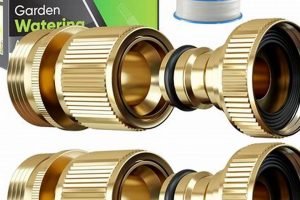
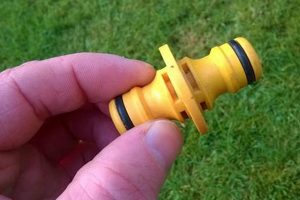
These coupling devices provide a rapid and secure method for attaching and detaching various components of a watering system, such as hoses, nozzles, sprinklers, and other accessories. Characterized by a mechanism that allows for instant connection and disconnection, these fittings offer a convenient alternative to traditional threaded connections. For example, swapping between a spray nozzle and a sprinkler becomes a matter of seconds, eliminating the need for tedious twisting and tightening.
The adoption of these systems significantly improves efficiency and reduces the physical strain associated with managing a garden’s irrigation. Historically, securing watering implements involved considerable time and effort. However, the development of these easy-to-use links has streamlined the process, allowing users to focus on plant care rather than equipment manipulation. This innovation has become particularly valuable for individuals with limited mobility or those managing larger gardens requiring frequent equipment changes.
The subsequent sections will delve into the different types available, material considerations, factors to consider when selecting the appropriate option, installation procedures, and maintenance tips to ensure longevity and optimal performance.
Essential Usage Guidance
The following points are crucial for maximizing the lifespan and effectiveness of these fittings, ensuring a leak-free and efficient watering system.
Tip 1: Ensure Proper Sizing: Verify that the fitting size matches the internal diameter of the hose being used. An incorrect fit can lead to leaks or a compromised connection. Refer to the manufacturer’s specifications for compatibility.
Tip 2: Inspect for Damage: Before each use, examine each connector for cracks, splits, or other signs of wear. Damaged components should be replaced immediately to prevent water loss and potential system failure.
Tip 3: Clean Regularly: Debris, such as dirt and sand, can accumulate within the fitting, hindering its locking mechanism. Periodically rinse the connector with water to remove any obstructions.
Tip 4: Lubricate O-Rings: The O-rings within these fittings are essential for creating a watertight seal. Apply a small amount of silicone-based lubricant to the O-rings to maintain their elasticity and prevent drying or cracking.
Tip 5: Avoid Over-Tightening: While a secure connection is necessary, excessive force during attachment can damage the internal components. Attach the fitting firmly, but avoid using tools to tighten it further.
Tip 6: Store Properly: When not in use, store these fittings in a cool, dry place away from direct sunlight. Exposure to extreme temperatures can degrade the materials and shorten their lifespan.
Tip 7: Use Compatible Accessories: Ensure that the accessories being attached, such as spray nozzles or sprinklers, are compatible with the specific type of fitting being used. Using incompatible components can result in damage or leaks.
Adhering to these guidelines will help maintain the functionality and extend the usability, promoting a reliable and efficient watering system for horticultural needs.
The subsequent section will provide information on troubleshooting common issues that may arise during use and strategies for resolving them effectively.
1. Compatibility

Compatibility forms a cornerstone of effective watering system design, directly influencing the function of rapid attachment fittings. Selecting components that align with existing infrastructure is essential for ensuring leak-free operation and preventing equipment damage.
- Hose Diameter Matching
The internal diameter of the connector must correspond precisely with the outer diameter of the hose. Mismatched sizes lead to inadequate sealing, resulting in water leakage and reduced water pressure. Standard hose sizes exist (e.g., 1/2 inch, 5/8 inch, 3/4 inch), and connectors should be chosen accordingly. Ignoring these dimensions can damage the hose or the connector itself.
- Thread Standards Alignment
While many systems eschew threaded connections in favor of the quick-connect mechanism, adapters are sometimes necessary to bridge between older threaded components and the new system. Ensuring thread standards (e.g., National Pipe Thread (NPT), Garden Hose Thread (GHT)) are aligned is vital for compatibility. Attempting to force incompatible threads can damage both the hose and the accessory.
- Material Compatibility
Dissimilar materials can react chemically under certain conditions. While less of a concern with modern plastics, galvanic corrosion can occur when joining brass fittings directly to aluminum components in the presence of water. It is best to use materials that have similar compatibility characteristics.
- System Pressure Rating
The pressure rating of the connector must meet or exceed the maximum water pressure of the irrigation system. Using fittings rated for lower pressures than the system delivers can lead to bursting, causing water damage and system failure. Confirm pressure ratings prior to installation, particularly in systems with boosted pressure.
These elements of compatibility directly impact the function of these connectors, making a selection based on accurate measurements, standards adherence, and understanding of material properties essential for long-term system performance.
2. Durability
Durability, in the context of rapid attachment fittings for watering systems, represents the connector’s ability to withstand prolonged exposure to environmental stressors and physical demands without compromising structural integrity or functional performance. This attribute directly influences the lifespan and reliability of the entire watering setup.
- Material Composition and Resistance to Degradation
The constituent materials determine the connector’s resilience against UV radiation, temperature fluctuations, and chemical exposure from fertilizers or pesticides. High-quality plastics, such as UV-stabilized polypropylene or reinforced nylon, exhibit superior resistance to cracking, warping, and discoloration compared to lower-grade materials. Brass fittings offer corrosion resistance, but galvanic corrosion may occur if connected to dissimilar metals. The selection of appropriate materials directly correlates with the connector’s longevity in outdoor environments.
- Impact Resistance and Structural Integrity
Connectors are often subjected to accidental impacts or physical stress during routine usage. Fittings constructed with robust designs and reinforced structures demonstrate greater resistance to fracturing or deformation upon impact. Wall thickness and in
ternal support structures contribute significantly to the connector’s ability to withstand physical shocks without compromising its sealing capabilities. A connector’s ability to maintain its shape and integrity under pressure is a key aspect of its overall durability. - Sealing Mechanism Longevity
The O-rings or gaskets responsible for creating watertight seals are susceptible to degradation over time due to compression set, chemical exposure, or abrasion. The choice of O-ring material, such as EPDM or silicone, affects its resistance to these factors. Connectors that employ durable, high-quality sealing materials exhibit prolonged leak-free performance compared to those utilizing lower-grade alternatives. The robustness of the sealing mechanism dictates the connector’s ability to maintain a secure connection over extended periods.
- Cycle Testing and Fatigue Resistance
The frequency of connection and disconnection cycles imposes stress on the internal locking mechanisms of rapid attachment fittings. Connectors designed and tested to withstand repeated use without failure demonstrate superior fatigue resistance. The quality of the locking mechanism components, such as stainless steel springs or durable plastic latches, determines its ability to maintain a secure and reliable connection over numerous cycles. Cycle testing simulates real-world usage patterns to assess the connector’s long-term performance under repeated stress.
The facets of material composition, impact resistance, sealing mechanism longevity, and cycle testing collectively define the durability of these fittings. Connectors that excel in these areas provide extended service life, reduced maintenance requirements, and minimized risk of system failure, contributing to a more efficient and sustainable watering system.
3. Leak Resistance
Leak resistance is a critical performance parameter for rapid attachment fittings used in watering systems. The primary function of these connectors is to establish a secure, watertight seal between the hose and various accessories. Failure to achieve this results in water loss, reduced system pressure, and potential damage to surrounding areas. The effectiveness of the sealing mechanism directly determines the overall efficiency and reliability of the watering system. Causes of leaks in quick connect fittings often include damaged or worn O-rings, improperly sized connectors, or debris obstructing the sealing surfaces. A loose connection can also compromise the seal.
The design and materials used in the construction of these fittings are key factors in achieving optimal leak resistance. For instance, high-quality O-rings made from materials like EPDM or silicone provide a more resilient and durable seal compared to cheaper alternatives. Precision engineering ensures that the connector components fit together snugly, minimizing the risk of leakage. Furthermore, features like locking mechanisms or pressure-activated seals enhance the connection’s ability to withstand variations in water pressure without leaking. Real-life examples of the impact of inadequate leak resistance include reduced sprinkler coverage due to pressure loss, increased water bills, and the potential for mold growth in areas exposed to constant leaks. In agricultural settings, leaks can lead to uneven irrigation, affecting crop yields and increasing water consumption.
In summary, leak resistance is an indispensable attribute. The ability to create and maintain a watertight seal is fundamental to the functionality and efficiency. Selecting well-designed components with robust sealing mechanisms is essential for minimizing water waste, ensuring consistent watering pressure, and preventing potential damage to surrounding areas. Prioritizing quality materials and construction practices translates into long-term cost savings and improved system performance.
4. Ease of Use
Ease of use is an intrinsic characteristic, significantly enhancing their practical value. The primary function is to provide a swift and straightforward method for connecting and disconnecting hoses and attachments. A design that prioritizes ease of use directly translates to increased efficiency and reduced physical strain for the user. For instance, swapping between a sprinkler and a spray nozzle becomes a matter of seconds, minimizing the downtime associated with traditional threaded connections. This capability is particularly beneficial for individuals with limited mobility or those managing expansive gardens requiring frequent equipment alterations.
The implementation of user-friendly designs reduces the need for specialized tools or extensive technical knowledge. A simple, intuitive mechanism, such as a spring-loaded collar or lever, allows for quick and secure connections with minimal effort. This simplifies the process of setting up and maintaining a watering system, making it accessible to a broader range of users. Consider a scenario where a homeowner needs to quickly connect a hose to a portable pressure washer for cleaning. A user-friendly connector enables them to accomplish this task swiftly, without struggling with tight threads or complicated mechanisms. Similarly, in commercial landscaping, groundskeepers can efficiently switch between different irrigation setups based on the specific needs of various plant types.
In conclusion, ease of use is a critical determinant of the overall value and practicality. By simplifying the connection process, these fittings save time and effort while reducing the potential for user error. Prioritizing intuitive design and user-friendly mechanisms enhances the accessibility and effectiveness of watering systems across a spectrum of applications. This directly contributes to improved efficiency, reduced physical strain, and increased user satisfaction.
5. Flow Rate

Flow rate, the measure of water volume passing through a connector per unit time, directly impacts the effectiveness of any watering system incorporating rapid attachment fittings. A restricted flow diminishes the water pressure reaching the sprinkler or nozzle, reducing its effective range and potentially leading to uneven irrigation. The internal diameter of the connector, the design of its internal channels, and the presence of any obstructions all influence the flow rate. Inadequately sized connectors or those with poorly designed internal passages can create a bottleneck, limiting the water available to the attached device. For example, using a small connector on a large-diameter hose intended for high-volume irrigation will negate the hose’s capacity, resulting in suboptimal performance.
Real-world examples highlight the practical significance of understanding the connection between flow rate and these fittings. Consider a homeowner using a drip irrigation system. If the connectors have a flow rate lower than the emitters require, plants will not receive adequate water, leading to stunted growth or even death. Similarly, in commercial agriculture, inadequate flow can lead to uneven crop yields, as some areas receive sufficient water while others are under-irrigated. Choosing connectors designed to maximize flow is therefore critical for ensuring efficient and effective water delivery. Manufacturers typically pr
ovide flow rate specifications, allowing users to select components appropriate for their specific needs.
In conclusion, flow rate is a fundamental consideration in the selection and implementation of rapid attachment fittings. Insufficient flow restricts performance, leading to inefficiencies and potential damage to the watering system and the plants it serves. While selecting a suitable connector is crucial, it is also important to take into account other factors, such as the input water pressure from the main water source, the hose diameter, and the total length of the watering system. This ensures that the fittings deliver the required amount of water, optimizing the health and productivity of the landscape.
6. Material Quality
Material quality is a paramount determinant of the longevity, performance, and reliability of rapid attachment fittings designed for watering systems. The composition of the materials directly influences the connector’s resistance to degradation, corrosion, and physical stress, ultimately affecting its ability to maintain a secure, leak-free connection over extended periods. Substandard materials are susceptible to cracking, warping, and chemical breakdown, leading to premature failure and system inefficiencies. High-quality materials, conversely, offer superior resilience and ensure consistent functionality, minimizing the need for frequent replacements and reducing the risk of water wastage. The selection of appropriate materials is therefore a critical consideration in maximizing the return on investment and minimizing operational costs.
Consider the case of brass fittings exposed to hard water. Over time, mineral deposits can accumulate on the internal surfaces, restricting flow and potentially corroding the metal. Fittings constructed from dezincification-resistant brass alloys mitigate this risk, ensuring consistent performance and extending the component’s lifespan. Similarly, plastic fittings made from UV-stabilized polypropylene or reinforced nylon exhibit superior resistance to sunlight degradation compared to standard plastics. This is crucial for systems exposed to prolonged outdoor use, as UV radiation can cause plastics to become brittle and prone to cracking. The selection of materials specifically engineered to withstand environmental stressors significantly improves the durability and reliability of these fittings.
In summary, material quality is an indispensable element of rapid attachment fittings, impacting not only their lifespan but also their ability to perform reliably under diverse conditions. Investing in fittings constructed from high-quality, durable materials is essential for minimizing maintenance requirements, preventing water loss, and ensuring the efficient and sustainable operation of the watering system. By prioritizing material quality, users can mitigate the risk of premature failure, reduce long-term costs, and optimize the performance of their irrigation infrastructure.
7. Connection Security

Connection security, in the context of rapid attachment fittings for watering systems, represents the integrity and reliability of the physical link established between the hose and its associated accessories. The primary function of these connectors is to provide a dependable and leak-proof connection that withstands the operational pressures and physical stresses inherent in typical watering scenarios. A compromised connection undermines the efficiency of the entire system, resulting in water loss, reduced pressure, and potential equipment damage. Consequently, the design and manufacturing processes must prioritize mechanisms that ensure a robust and secure attachment, effectively mitigating the risk of accidental disconnections or premature failures.
Various factors contribute to achieving a high level of connection security. The locking mechanism itself must be designed to resist unintended release, whether due to pressure fluctuations, hose movement, or accidental contact. Materials selection plays a crucial role, as the components must maintain their structural integrity and dimensional stability under sustained stress and environmental exposure. Precision manufacturing is essential to ensure that the connector parts fit together seamlessly, minimizing any play or looseness that could compromise the connection. Examples of compromised security include a sprinkler system detaching mid-cycle, leading to localized flooding and uneven watering. A pressure washer hose disconnecting under pressure can cause property damage and potential injury. In agricultural settings, a failed connection in an irrigation line can result in significant water wastage and crop damage.
In conclusion, connection security is a fundamental attribute, dictating the overall effectiveness and dependability of rapid attachment fittings. Achieving a reliable connection requires a multifaceted approach, encompassing robust locking mechanisms, durable materials, and precise manufacturing. Prioritizing connection security minimizes the risk of system failures, reduces water waste, and ensures consistent and efficient operation, contributing to the long-term sustainability and cost-effectiveness of watering systems across diverse applications. The robustness of the connections between hoses and accessories is essential to the overall operation.
Frequently Asked Questions
The following questions and answers address common inquiries regarding the selection, utilization, and maintenance of these couplings. The information is intended to provide clarity and promote informed decision-making.
Question 1: Are all types of these connectors compatible with standard garden hoses?
Compatibility is contingent upon adhering to standardized hose diameters and thread types, if applicable. Variations exist in both internal diameter and connection mechanisms. Prior to purchase, verify that the selected connector conforms to the specifications of the existing hose. Failure to do so can lead to leaks or system damage.
Question 2: What materials offer the best durability for these connectors in outdoor environments?
Materials such as UV-stabilized polypropylene, reinforced nylon, and dezincification-resistant brass exhibit superior resistance to degradation from sunlight, temperature fluctuations, and chemical exposure. The selection of appropriate materials directly correlates with the connector’s lifespan and operational reliability.
Question 3: How often should the O-rings in these connectors be replaced to maintain a watertight seal?
The replacement frequency depends on usage intensity and environmental conditions. However, periodic inspection is recommended, and O-rings exhibiting signs of cracking, drying, or deformation should be replaced immediately. Applying a silicone-based lubricant can extend the O-ring’s lifespan.
Question 4: Can these connectors be used with high-pressure watering systems, such as pressure washers?
Connector pressure ratings vary, and it is imperative to select a connector with a pressure rating that meets or exceeds the maximum pressure of the system in which it will be used. Exceeding the rated pressure can result in connector failure and potential injury.
Question 5: What is the best method for cleaning these connectors to prevent clogs and maintain optimal performance?
Regular rinsing with clean water is gene
rally sufficient to remove debris. For more stubborn clogs, a mild detergent solution can be used, followed by thorough rinsing. Avoid using abrasive cleaners, as they can damage the connector surfaces.
Question 6: Are there any specific precautions to take when storing these connectors during the winter months?
To prevent damage from freezing temperatures, disconnect the connectors from the hose and store them in a dry, sheltered location. This minimizes the risk of water expansion causing cracks or fractures in the connector body.
These FAQs offer a foundational understanding. Adhering to these recommendations helps ensure efficient operation.
The subsequent section provides an overview of market availability, highlighting leading brands and product offerings.
Conclusion
This article has explored the functional characteristics, selection criteria, and maintenance protocols associated with quick connectors for garden hose. It has addressed considerations ranging from material compatibility and pressure ratings to leak resistance and ease of use, underlining the significance of informed decision-making in optimizing watering system performance.
The judicious application of the principles outlined herein will promote efficient water management, reduce operational costs, and enhance the longevity of irrigation infrastructure. A continued focus on innovation and adherence to best practices remains essential for advancing the capabilities and sustainability of horticultural practices.
![Best 2 Inch Garden Hose For [X] & Reviews | The Ultimate Gardening Guide: Grow a Thriving Garden Year-Round](https://MyGardenPatch.com/wp-content/uploads/2025/07/th-5631-300x200.jpg "Best 2 Inch Garden Hose For [X] & Reviews The Ultimate Gardening Guide: Grow a Thriving Garden Year-Round")