



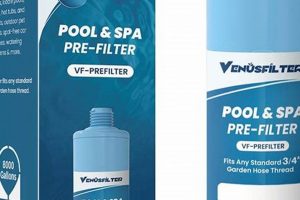
A device attached to a water delivery system used for irrigation, it refines water quality at the point of use. These attachments remove sediment, debris, and potentially harmful chemicals from the water supply before it reaches plants or cleaning implements. An example of its utilization would be connecting it between an outdoor tap and a soaker hose to prevent clogging and deliver cleaner water for optimal plant health.
The implementation of this type of water purification device offers several key advantages. Primarily, it protects sensitive irrigation systems, such as drip lines and micro-sprayers, from blockage, extending their lifespan and maintaining consistent water distribution. Moreover, it can contribute to healthier plant growth by reducing the exposure of foliage and roots to unwanted contaminants that can impede nutrient absorption or cause disease. Historically, the need for such systems arose with the increased use of municipal water sources, which, while treated, may still contain particles detrimental to specialized gardening practices.
This article will further examine different types of these filtration systems, explore their installation and maintenance procedures, and analyze factors to consider when selecting the most appropriate option for specific gardening requirements.
Essential Usage Guidelines
The following guidelines aim to maximize the effectiveness and longevity of your water source purification attachment for gardening applications.
Tip 1: Pre-Flush New Devices: Before initial use, flush the device with water for several minutes. This removes any manufacturing residue that may be present within the filter housing and media.
Tip 2: Install in the Correct Orientation: Observe the directional flow markings on the housing. Incorrect installation will impede water flow and may damage the filter element.
Tip 3: Regularly Inspect for Damage: Periodically inspect the housing and connections for cracks, leaks, or other signs of wear. Address any issues promptly to prevent water loss and maintain optimal performance.
Tip 4: Monitor Water Pressure: High water pressure can shorten the lifespan of the filter element and potentially damage the housing. Consider installing a pressure regulator upstream if water pressure exceeds the device’s maximum rating.
Tip 5: Replace Filter Elements as Recommended: Follow the manufacturer’s recommendations for filter element replacement. Overextended use reduces filtration efficiency and can lead to clogging.
Tip 6: Winterize Properly: In colder climates, disconnect and drain the device before freezing temperatures arrive to prevent damage from ice expansion. Store indoors if possible.
Tip 7: Backflush When Possible: Some models allow for backflushing to remove accumulated sediment and debris. This can extend the life of the filter element and maintain optimal flow rates. Consult the manufacturer’s instructions for specific procedures.
Following these guidelines ensures consistent water quality and prolongs the service life of the device. Consistent maintenance yields healthier plant life and efficient irrigation system operation.
The next section will address common issues and troubleshooting techniques associated with this type of device.
1. Sediment Removal

Sediment removal is a primary function of many garden hose filters. Suspended particulate matter, such as sand, silt, rust, and organic debris, is commonly present in both municipal and well water supplies. When this sediment enters an irrigation system, it can cause several detrimental effects. Clogging of drip emitters, micro-sprayers, and soaker hoses is a prevalent issue, leading to uneven water distribution and reduced efficiency. Furthermore, sediment abrasion can damage internal components of irrigation systems, shortening their operational life. Consequently, a filter designed for effective sediment removal is a crucial component for maintaining the functionality and longevity of irrigation infrastructure.
The effectiveness of sediment removal is directly related to the filter’s micron rating. A lower micron rating indicates the filter can capture smaller particles. For example, a filter with a 50-micron rating will remove particles larger than 50 micrometers. The appropriate micron rating depends on the specific water source and the sensitivity of the irrigation system. Drip irrigation systems with small emitter orifices typically require finer filtration than sprinkler systems. Regular maintenance, including cleaning or replacing the filter element, is essential to ensure continued sediment removal efficiency. Failure to do so can lead to a buildup of trapped sediment, reducing water flow and potentially damaging the filter.
In summary, sediment removal is an indispensable attribute of a garden hose filter. Its effectiveness directly impacts the performance, longevity, and efficiency of connected irrigation systems. Selecting the correct filter with an appropriate micron rating and adhering to a consistent maintenance schedule will mitigate the adverse effects of particulate matter, promoting healthier plant growth and conserving water resources. The ability to keep a irrigation system free from sediment is the essence of keeping things running smoothly.
2. Flow Rate Maintenance

Maintaining an adequate flow rate through a filtration device attached to a water delivery apparatus is paramount for effective irrigation and consistent water distribution. Flow rate dictates the volume of water delivered over a specific time, directly influencing plant hydration and the performance of watering systems. Impaired flow compromises system functionality and plant health. This section explores critical facets of flow rate maintenance within the context of these filtration devices.
- Filter Element Selection
The type and porosity of the filter element significantly impact flow rate. High-density filters with small pore sizes, while effective at removing fine particles, inherently restrict water passage more than less dense filters. Selecting a filter element appropriate for the specific water source and irrigation system is crucial. For instance, a high-sediment water source necessitates a more robust filter, potentially sacrificing some flow rate, whereas a relatively clean water source can accommodate a less restrictive filter.
- Filter Clogging and Backpressure
Over time, filters accumulate debris, leading to clogging and increased backpressure. This obstruction reduces the flow rate downstream of the filter, potentially starving plants or causing irrigation system malfunctions. Regular cleaning or replacement of the filter element is essential to prevent clogging and maintain optimal flow. Some filters offer backflushing capabilities, allowing users to reverse the water flow and dislodge accumula
ted debris, extending the filter’s lifespan and preserving flow rate. - System Pressure Dynamics
The relationship between water pressure and flow rate is interdependent. Low water pressure entering the filter may result in a significantly reduced flow rate exiting the filter, particularly if the filter element is partially clogged. Conversely, excessively high water pressure can damage the filter housing or compromise the filter element’s integrity, potentially leading to premature failure. Maintaining appropriate water pressure within the filter’s specified operating range is crucial for consistent flow rate and system longevity.
- Filter Size and Capacity
The physical size and filtration capacity of the device directly influence its ability to maintain adequate flow. Undersized filters, relative to the irrigation system’s demand, will experience greater pressure drops and reduced flow rates. Selecting a device with sufficient capacity to handle the system’s peak flow requirements is essential for optimal performance. Furthermore, oversized filters may be unnecessary and cost more, highlighting the importance of matching filter size to the specific application.
These facets underscore the importance of careful consideration when integrating filtration devices into irrigation systems. Effective flow rate maintenance ensures optimal water delivery, efficient system operation, and ultimately, healthier plant life. Balancing filtration needs with flow rate requirements is a fundamental aspect of responsible water management and sustainable gardening practices.
3. Filter Element Type
The filtration effectiveness of a device attached to a water delivery system depends significantly on the type of filtration media employed. The selection of an appropriate filter element is not arbitrary; it is dictated by the specific contaminants present in the water source and the intended application. Different element types excel at removing particular impurities, and understanding these distinctions is critical for optimizing performance.
- Sediment Filters
Sediment filters, typically constructed from spun polypropylene, pleated polyester, or wound string, are designed to remove particulate matter such as sand, silt, rust, and other debris. These filters are rated by micron size, indicating the smallest particle they can effectively capture. For instance, a 5-micron sediment filter will remove particles larger than 5 micrometers. The selection of micron rating depends on the water source and sensitivity of the irrigation system. These filters are commonly used as pre-filters to protect finer filtration stages.
- Activated Carbon Filters
Activated carbon filters utilize the principle of adsorption to remove chlorine, chloramine, volatile organic compounds (VOCs), and other taste and odor-causing compounds. The porous structure of activated carbon provides a large surface area for these contaminants to adhere to. These filters are particularly beneficial when using municipal water sources, which are typically treated with chlorine or chloramine. Activated carbon filters do not remove sediment; therefore, they are often used in conjunction with sediment filters.
- Ceramic Filters
Ceramic filters offer a fine level of filtration, capable of removing bacteria, protozoa, and other microorganisms. These filters consist of a porous ceramic material with extremely small pore sizes. While effective at removing biological contaminants, ceramic filters often have a lower flow rate compared to other types. They are typically used in situations where water source contamination is a concern, or where extremely clean water is required.
- KDF (Kinetic Degradation Fluxion) Filters
KDF filters utilize a redox (reduction-oxidation) process to remove chlorine, heavy metals, and other contaminants. KDF media consists of copper-zinc alloy granules that create an electrochemical reaction, converting harmful contaminants into harmless substances. KDF filters also inhibit the growth of bacteria, algae, and fungi. These filters are often used in combination with activated carbon filters to enhance contaminant removal and extend filter life.
In summary, the selection of filter element type significantly impacts the filtration efficiency of a device attached to a water delivery apparatus. Understanding the characteristics and capabilities of different filter element types is essential for optimizing performance and protecting irrigation systems and plant health. Choosing the right element for the water source is of the essence.
4. Housing Material Durability
The operational lifespan and reliability of a device attached to a water delivery system are intrinsically linked to the durability of its housing material. The housing serves as the protective barrier for the internal filtration components, safeguarding them from environmental stressors and hydraulic pressures. The selection of an appropriate housing material is therefore a critical design consideration that directly impacts long-term performance.
- Material Resistance to UV Degradation
Prolonged exposure to ultraviolet (UV) radiation can cause degradation in certain plastic polymers, leading to embrittlement, cracking, and eventual failure. Housings constructed from UV-resistant materials, such as polypropylene with UV stabilizers or specific grades of nylon, maintain their structural integrity over extended periods of sunlight exposure. Conversely, housings made from non-UV-resistant plastics may exhibit premature failure, particularly in regions with high solar irradiance. Proper material selection mitigates UV-induced damage, extending the device’s functional lifespan.
- Pressure Withstand Capacity
The housing must withstand the internal pressure exerted by the water supply. Materials such as reinforced nylon, brass, or stainless steel offer superior pressure resistance compared to standard plastics. Operating a filter housing beyond its rated pressure capacity can lead to catastrophic failure, resulting in water leaks and potential damage to surrounding areas. The pressure rating of the housing should always exceed the maximum water pressure in the system to provide a safety margin and ensure reliable operation.
- Chemical Compatibility
Depending on the water source, the housing may be exposed to various chemicals, including chlorine, chloramine, and fertilizers. Certain materials exhibit poor resistance to these chemicals, leading to degradation, swelling, or cracking. Polypropylene and stainless steel offer good chemical resistance, while other materials may require specialized coatings or treatments to enhance their compatibility. Understanding the chemical composition of the water source is crucial for selecting a housing material that will not be adversely affected.
- Temperature Stability
The housing material must maintain its structural integrity over a range of temperatures. Extreme temperature fluctuations can induce thermal expansion and contraction, leading to stress on the housing and potential leaks. Materials with high thermal stability, such as stainless steel and certain grades of nylon, are less susceptible to temperature-induced damage. Considerat
ion of local climate conditions is essential when selecting a housing material to ensure reliable performance across a wide temperature range.
These considerations underscore the significance of housing material selection in determining the overall durability and longevity of water filtration devices. Proper selection extends the device’s operational lifespan, reduces the risk of failure, and ensures consistent performance under various environmental conditions. Neglecting housing material durability can compromise filtration efficiency, leading to premature replacement and increased operational costs.
5. Water Pressure Compatibility
Water pressure compatibility is a critical parameter in the selection and application of any device used to refine water quality, including inline attachments for water delivery systems. Incompatible pressure levels can compromise both the functionality and longevity of these systems, leading to inefficient operation or catastrophic failure. Understanding the relationship between inlet pressure and filter performance is essential for optimal system design and maintenance.
- Maximum Pressure Rating
Every filter housing possesses a maximum pressure rating, typically expressed in pounds per square inch (PSI). Exceeding this rating can lead to housing rupture or seal failure, resulting in water leakage and potential damage to the surrounding environment. Municipal water systems often exhibit fluctuations in pressure, particularly during peak demand periods. Therefore, selecting a filter with a maximum pressure rating that exceeds the expected peak pressure of the water supply is imperative. Installing a pressure regulator upstream of the filter can provide additional protection against over-pressurization.
- Minimum Pressure Requirements
Some filtration media, particularly those with fine pore sizes or complex flow paths, require a minimum water pressure to operate effectively. Insufficient inlet pressure can result in reduced flow rates, incomplete filtration, and premature clogging. Systems relying on gravity-fed water sources or those with extended piping runs may experience low pressure. In such cases, selecting a filter with low-pressure drop characteristics or incorporating a pressure booster pump may be necessary to ensure adequate performance.
- Pressure Drop Across the Filter
The introduction of a filter into a water line inherently creates a pressure drop as water flows through the filtration media. This pressure drop varies depending on the filter type, flow rate, and the level of contamination. Monitoring the pressure differential across the filter provides valuable insight into its condition. A significant increase in pressure drop indicates that the filter element is becoming clogged and requires cleaning or replacement. Ignoring this pressure build-up can lead to reduced flow, compromised filtration, and eventual system failure.
- Impact on Downstream Components
Water pressure influences the performance of downstream irrigation components, such as drip emitters, micro-sprayers, and sprinkler heads. Fluctuations in pressure can lead to inconsistent water distribution, affecting plant health and irrigation efficiency. Over-pressurization can damage these components, while under-pressurization can result in inadequate water delivery. Maintaining stable and appropriate water pressure throughout the irrigation system, by selecting compatible filter and pressure regulation, is crucial for optimal performance and water conservation.
In conclusion, appropriate water pressure compatibility is not merely a technical specification but a fundamental requirement for the reliable and efficient operation of devices used to refine water quality for gardening and irrigation. Ignoring these pressure dynamics can lead to a cascade of problems, including equipment damage, water wastage, and compromised plant health. A thorough understanding of water pressure principles and careful component selection are essential for achieving sustainable and effective water management.
Frequently Asked Questions
The following section addresses common inquiries regarding the application and functionality of the device used for water purification in gardening contexts. The information provided aims to clarify misconceptions and offer practical guidance on filter selection and maintenance.
Question 1: What is the expected lifespan of a typical sediment element?
The lifespan of a sediment element is contingent upon the sediment load in the water supply. Highly turbid water will necessitate more frequent replacement. Visual inspection of the element is recommended, replacing it when sediment accumulation is apparent or flow rate is noticeably reduced. A general guideline suggests replacement every three to six months under average conditions.
Question 2: Can a filter designed for garden hoses remove bacteria from water?
Standard filtration devices are not designed to remove bacteria. Specialized filters, such as those incorporating ceramic media or ultraviolet disinfection, are required for bacterial removal. The suitability of a particular filtration method depends on the specific type and concentration of bacteria present in the water source.
Question 3: How does one determine the appropriate micron rating for a particular gardening application?
The appropriate micron rating is determined by the type of irrigation system employed. Drip irrigation systems with small emitter orifices require finer filtration (lower micron rating) than sprinkler systems. A lower micron rating removes smaller particles, preventing clogging of the emitters. Consult irrigation system specifications for recommended filtration levels.
Question 4: Is it necessary to use a device designed to refine water quality when using municipal water?
While municipal water is treated, it may still contain chlorine, chloramine, and particulate matter that can be detrimental to plant health or irrigation systems. A filter that eliminates these impurities may be beneficial, particularly for sensitive plants or intricate irrigation systems. The decision to use a filtration device is dependent on individual needs and water quality concerns.
Question 5: What are the consequences of neglecting regular filter maintenance?
Neglecting regular maintenance leads to reduced flow rates, compromised filtration efficiency, and potential damage to the irrigation system. Clogged filters increase backpressure, placing undue stress on the filter housing and potentially causing leaks or ruptures. Furthermore, accumulated contaminants can serve as a breeding ground for bacteria, compromising water quality.
Question 6: Can different filter elements be combined to achieve comprehensive water purification?
Yes, multi-stage filtration systems, incorporating sediment filters, activated carbon filters, and other specialized media, can be used to achieve comprehensive water purification. This approach allows for the targeted removal of specific contaminants, providing a higher level of water quality compared to single-stage filtration. The selection of filter elements should be based on the specific water quality characteristics and the desired level of purification.
In summary, this section has provided answers to prevalent inquiries regarding garden hose filter operation and maintenance. Proper understanding contr
ibutes to effective utilization and prolonged equipment lifespan. Consistent maintenance habits are critical for optimized performance.
The subsequent section will address troubleshooting techniques for common issues encountered with filtration devices used in gardening scenarios.
Conclusion
This article has explored the multifaceted aspects of the garden hose filter, emphasizing its critical role in maintaining efficient irrigation systems and promoting healthier plant growth. Key points addressed include the importance of sediment removal, flow rate maintenance, appropriate filter element selection, housing material durability, and ensuring water pressure compatibility. Understanding these factors is essential for informed decision-making when selecting and utilizing these devices.
Effective employment of the garden hose filter is paramount for sustainable water management and optimal gardening practices. Neglecting the principles outlined herein may lead to compromised irrigation system performance and diminished plant vitality. Therefore, a commitment to proper filter selection, installation, and maintenance is strongly encouraged to realize the full benefits of this essential gardening tool.
![Best 2 Inch Garden Hose For [X] & Reviews | The Ultimate Gardening Guide: Grow a Thriving Garden Year-Round](https://MyGardenPatch.com/wp-content/uploads/2025/07/th-5631-300x200.jpg "Best 2 Inch Garden Hose For [X] & Reviews The Ultimate Gardening Guide: Grow a Thriving Garden Year-Round")