



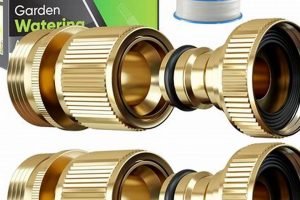
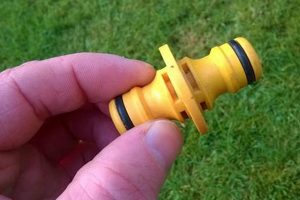
These are coupling devices designed for the rapid and effortless attachment and detachment of garden hoses to various watering tools and water sources. A typical set involves two parts: a male adapter that screws onto the hose end and a female connector that attaches to the spigot, sprinkler, or other accessory. When these two parts are pressed together, they create a secure, leak-proof connection, and when a release mechanism is activated, they instantly disconnect, allowing for quick changes between different watering applications.
The significance of these systems lies in their ability to enhance efficiency and convenience in outdoor watering tasks. They eliminate the tedious and time-consuming process of manually screwing and unscrewing hose connections, which is especially beneficial for individuals with limited mobility or those managing large gardens. Moreover, they reduce the wear and tear on hose threads and prevent water wastage from leaky or improperly tightened connections. The development of these coupling systems reflects a broader trend towards simplifying and optimizing gardening practices.
The subsequent sections will delve into the different types available, materials used in their construction, installation procedures, maintenance tips, and factors to consider when selecting the most appropriate options for specific gardening needs.
Optimizing Usage
The following recommendations are designed to maximize the lifespan and effectiveness of these connectors, ensuring efficient and reliable watering practices.
Tip 1: Material Selection. Opt for brass or stainless steel components for enhanced durability and corrosion resistance, particularly in regions with hard water or exposure to harsh weather conditions. Plastic variants are suitable for lighter use and cost-effectiveness, but may exhibit reduced longevity.
Tip 2: Proper Installation. Ensure a secure and leak-proof connection by thoroughly tightening the adapters onto the hose and watering accessories. Utilize Teflon tape on threaded connections to improve sealing and prevent leaks.
Tip 3: Regular Inspection. Periodically examine the connectors for signs of wear, cracks, or damage. Replace any components that exhibit deterioration to prevent unexpected failures during operation.
Tip 4: Seasonal Storage. Disconnect and store the connectors in a sheltered location during freezing temperatures to prevent damage from ice expansion. Drain any residual water from the connectors before storage.
Tip 5: Lubrication. Apply a silicone-based lubricant to the internal moving parts of the connectors to maintain smooth operation and prevent sticking. Avoid petroleum-based lubricants, which can degrade rubber seals.
Tip 6: Compatibility Assessment. Verify compatibility between different brands and connector types to ensure proper fit and function. Inconsistent sizing or threading can lead to leaks or damage.
Tip 7: Pressure Considerations. Select connectors rated for the water pressure of the system to prevent bursting or separation under high-pressure conditions. Consult the product specifications for pressure ratings.
Adherence to these recommendations will contribute to extended service life, reduced maintenance requirements, and improved performance.
The subsequent section provides a conclusion, summarizing key considerations.
1. Durability

The lifespan and consistent functionality of these connectors are intrinsically linked to their inherent durability. Connectors subjected to frequent use, varying weather conditions, and constant water pressure require robust construction to prevent premature failure and ensure uninterrupted water delivery.
- Material Composition and Corrosion Resistance
The choice of materials significantly impacts durability. Brass and stainless steel exhibit superior resistance to corrosion and degradation from exposure to water, sunlight, and fertilizers, prolonging the lifespan of the connector compared to plastic alternatives. Brass fittings can withstand high pressure without deformation, while stainless steel offers an even better resistance to rust. However, both are significantly more expensive than their plastic counterparts.
- Resistance to Mechanical Stress
The connectors endure repeated connection and disconnection cycles, placing stress on the internal locking mechanisms and external housings. Durable connectors are engineered to withstand this mechanical wear and tear without compromising their sealing integrity or ease of use. Frequent handling of the garden hose puts pressure on the connecting joint. Metal options can handle this much better than plastic options that become brittle over time.
- Impact of Environmental Factors
Outdoor environments expose these connectors to extreme temperature fluctuations, UV radiation, and potential physical damage from impacts or abrasion. Durable connectors are designed to resist these environmental stressors, maintaining their structural integrity and functionality over extended periods. High-quality plastics are treated to withstand UV radiation and metal ones are treated to prevent corrosion.
- Thread Strength and Sealing Integrity
The threads on the connectors must maintain their integrity to provide a secure and leak-proof connection. Durable connectors feature robust threading that resists stripping or deformation, ensuring a reliable seal even after repeated use. Over time, threads made of lower quality metal or plastic become compromised and connections become loose. The superior material used in more durable options helps reduce this.
The selection of durable connectors is a cost-effective long-term investment. While initial expenses may be higher, the extended lifespan and reduced need for replacements offset these costs. This reduces the frequency of system repairs, and guarantees reliable water delivery for gardening purposes.
2. Compatibility

The operational effectiveness of garden hose quick connects hinges significantly on their compatibility across various aspects of a watering system. A lack of compatibility can lead to leaks, reduced water pressure, or complete system failure. Therefore, a thorough understanding of compatibility factors is crucial for selecting and implementing these connectors.
- Thread Standards and Size Matching
Thread compatibility is paramount. Mismatched thread types (e.g., National Pipe Thread (NPT) versus Garden Hose Thread (GHT)) or differing thread sizes (e.g., 1/2 inch versus 3/4 inch) prevent secure connections and result in leaks. Many older accessories have different size threads. Always verify the thread type and size of both the connector and the corresponding hose, spigot, or accessory to ensure a proper fit.
Material Compatibility and Chemical Reactions The materials used in the connectors and connected components must be chemically compatible. Combining dissimilar metals (e.g., brass and aluminum) in the presence of water can lead to galvanic corrosion, degrading the connection over time. Consider the chemical resistance of connector materials when using fertilizers or other additives in the water stream.
- Pressure Rating Consistency
All components within the watering system, including the quick connects, must have pressure ratings that meet or exceed the maximum water pressure of the supply. Using connectors with lower pressure ratings than the hose or spigot creates a risk of bursting or separation, leading to potential damage and water wastage. Verify that all components involved have consistent pressure ratings.
- Brand and System Integration
While many quick connect systems adhere to standard thread sizes, subtle variations in design or manufacturing tolerances between different brands can impact compatibility. If possible, utilize connectors and accessories from the same manufacturer to ensure seamless integration. If mixing brands, thoroughly test the connections for leaks before prolonged use.
Proper assessment of these facets of compatibility is essential for the effective utilization of garden hose quick connects. Attention to thread standards, material compatibility, pressure ratings, and brand integration prevents operational issues, ensures efficient water delivery, and prolongs the lifespan of the entire watering system.
3. Ease of Use

The design and functionality of garden hose quick connects significantly impact the overall user experience, streamlining gardening tasks and reducing physical strain. The ease with which these connectors can be manipulated directly influences the efficiency and convenience of any watering system.
- One-Handed Operation
Many quick connect systems are designed to facilitate one-handed connection and disconnection, particularly advantageous when maneuvering a heavy hose or working in awkward positions. A simple push-and-click or pull-back mechanism allows for swift changes between watering tools without the need for tools or excessive force. This can be particularly beneficial for individuals with arthritis or limited hand strength.
- Intuitive Design and Ergonomics
The shape, size, and texture of the connector components contribute to ease of handling. Ergonomic designs with textured surfaces provide a secure grip, even when wet, minimizing slippage and reducing the effort required to operate the connection mechanism. Intuitive designs allow users to quickly understand and master the connection process without consulting lengthy instructions.
- Reduced Physical Strain
Traditional threaded hose connections often require significant tightening to achieve a leak-proof seal, potentially causing strain on hands and wrists. Quick connect systems eliminate the need for forceful tightening, reducing the risk of musculoskeletal discomfort. This is beneficial for users who spend extended periods gardening or those with pre-existing joint issues.
- Rapid Tool Changes
The primary benefit of quick connects is the speed with which users can switch between different watering tools, such as spray nozzles, sprinklers, or wands. This rapid tool-changing capability enhances efficiency, allowing users to adapt quickly to varying watering needs without interrupting the water flow or wasting time on cumbersome threading and unthreading.
Collectively, these ease-of-use features transform the watering experience from a potentially laborious chore into a streamlined, efficient activity. The benefits extend beyond simple convenience, reducing physical strain and enhancing the overall enjoyment of gardening tasks.
4. Water Flow

Water flow, measured in gallons per minute (GPM), represents a critical parameter in any garden watering system. The design and construction of garden hose quick connects directly impact the system’s ability to deliver an adequate and consistent water supply to plants and other landscaping features. Restrictions in water flow caused by poorly designed connectors can lead to inefficient watering, uneven distribution, and potential damage to irrigation equipment.
- Internal Diameter and Orifice Size
The internal diameter of a quick connect, specifically the size of its internal orifice, acts as a primary determinant of water flow. A smaller internal diameter creates a bottleneck, restricting the volume of water that can pass through the connector. This restriction reduces water pressure at the point of delivery and can significantly impact the performance of sprinklers and spray nozzles. Industrial applications and professionals usually go for a bigger size.
- Connector Design and Flow Path
The internal design of the quick connect influences the smoothness and efficiency of the water flow path. Sharp angles, abrupt changes in diameter, and internal obstructions create turbulence, reducing the overall flow rate. Connectors with streamlined designs and gradual transitions minimize turbulence, maximizing water flow and minimizing pressure loss. Smooth surface on the quick connect does help on water flowing.
- Impact of Multiple Connections
Each quick connect added to a watering system introduces a potential point of restriction. The cumulative effect of multiple connectors in a series can significantly reduce water flow, particularly in systems with long hose runs or low water pressure. Careful consideration should be given to minimizing the number of connectors used and selecting high-flow models to mitigate these effects. Each connected equipment requires more quick connects, so planning is important.
- Material and Surface Finish
The material and surface finish of the internal components of a quick connect can influence water flow. Rough surfaces or materials prone to corrosion create friction, slowing down the water flow. Smooth, non-corrosive materials, such as stainless steel or high-quality plastics, minimize friction and maintain optimal flow rates over time. Quality should be a primary aspect to consider.
In summary, the selection of garden hose quick connects should prioritize designs that maximize internal diameter, minimize turbulence, and utilize smooth, non-corrosive materials. Failure to address these factors can result in significant reductions in water flow, compromising the effectiveness and efficiency of the entire watering system. Always consider water flow for quick connects selection.
5. Leak Prevention

Leak prevention is a paramount characteristic of effective garden hose quick connects. Leaks not only waste water, a valuable resource, but also diminish water pressure, potentially hindering the performance of watering tools and irrigation systems. A properly designed and functioning quick connect forms a secure, watertight seal, preventing water from escaping at the connection poi
nt between the hose and the spigot or watering accessory. The absence of leaks ensures optimal water usage and consistent performance throughout the watering process.
The design of quick connects incorporates several features to enhance leak prevention. Precision-engineered threads, O-rings, and internal locking mechanisms work in concert to create a tight, reliable seal. Quality materials, such as brass or stainless steel, resist corrosion and deformation, maintaining the integrity of the seal over time. For example, a quick connect with worn or damaged O-rings will inevitably leak, regardless of how tightly it is connected. Similarly, corroded threads prevent a secure connection, allowing water to escape. Regular inspection and replacement of worn components are essential for maintaining leak-free performance.
In conclusion, leak prevention is not merely a desirable feature of garden hose quick connects but a fundamental requirement for efficient and responsible watering. Understanding the mechanisms that contribute to leak prevention, such as quality materials and precise engineering, enables informed selection and maintenance practices. By prioritizing leak prevention, users can conserve water, optimize watering system performance, and avoid costly repairs due to water damage. Selection and installation should focus on leak prevention.
6. Material Quality
Material quality serves as a foundational determinant of the overall performance and longevity of garden hose quick connects. The composition of the materials used directly influences the connectors’ resistance to environmental stressors, mechanical wear, and chemical degradation, factors that significantly impact their functional lifespan and reliability. For instance, quick connects constructed from low-grade plastics are susceptible to cracking and becoming brittle upon exposure to ultraviolet radiation, leading to premature failure. Conversely, connectors fabricated from brass or stainless steel exhibit superior corrosion resistance and mechanical strength, ensuring sustained performance over extended periods. The choice of material, therefore, is not merely an aesthetic consideration but a critical factor affecting the long-term viability of the watering system.
The selection of appropriate materials extends beyond the main body of the connector to include internal components such as O-rings and sealing mechanisms. These smaller parts are equally crucial in maintaining a leak-proof seal and preventing water wastage. Inferior O-rings composed of low-quality rubber may degrade rapidly when exposed to chlorinated water or temperature fluctuations, resulting in leaks and diminished water pressure. High-quality silicone or EPDM O-rings, however, offer enhanced resistance to chemical attack and temperature variations, preserving the integrity of the seal and ensuring consistent water delivery. Real-world examples demonstrate that investing in connectors with robust internal components translates to reduced maintenance costs and improved watering efficiency over time.
In conclusion, material quality constitutes an indispensable element of garden hose quick connects, influencing their durability, reliability, and overall performance. Selecting connectors constructed from high-grade materials, including corrosion-resistant metals and chemically stable elastomers, is a prudent investment that yields long-term benefits in terms of reduced maintenance, water conservation, and enhanced watering system efficiency. While initial costs may be higher, the extended lifespan and improved performance of high-quality connectors far outweigh the short-term savings associated with cheaper alternatives. The challenges of identifying and sourcing high-quality connectors can be mitigated by consulting product reviews and seeking recommendations from reputable gardening experts, ultimately ensuring a sound investment in a reliable and efficient watering solution.
Frequently Asked Questions
The following section addresses common inquiries regarding the selection, installation, and maintenance of these systems, providing clarity on key considerations for optimal performance and longevity.
Question 1: What types of materials are most suitable for garden hose quick connects, and why?
Brass and stainless steel are generally preferred due to their superior corrosion resistance and durability. Plastic options offer cost-effectiveness but may exhibit reduced longevity and susceptibility to damage from UV exposure.
Question 2: How does one ensure compatibility between different brands or types of quick connect systems?
Verify thread types (e.g., GHT, NPT) and sizes to ensure a proper fit. While many systems adhere to standard sizing, subtle variations can exist. Testing connections for leaks before prolonged use is advisable.
Question 3: What steps can be taken to prevent leaks from quick connect connections?
Ensure proper tightening of connections, utilize Teflon tape on threaded joints, and regularly inspect O-rings for wear or damage. Select connectors with robust sealing mechanisms and replace worn components promptly.
Question 4: How do quick connects impact water flow, and what can be done to mitigate any potential restrictions?
Internal diameter and design influence water flow. Select connectors with larger orifices and streamlined flow paths to minimize turbulence and pressure loss. Minimize the number of connections in the system.
Question 5: What maintenance procedures are recommended to extend the lifespan of quick connect systems?
Regularly inspect connectors for damage, clean them to remove debris, and lubricate moving parts with silicone-based lubricant. Store connectors in a sheltered location during freezing temperatures.
Question 6: How do environmental factors, such as extreme temperatures or hard water, affect the performance of garden hose quick connects?
Extreme temperatures can cause expansion or contraction, potentially loosening connections. Hard water can lead to mineral buildup, affecting sealing and flow. Select materials resistant to these factors and perform regular cleaning.
These answers provide a foundational understanding of these systems, addressing key concerns related to their performance and maintenance.
The subsequent section will explore advanced troubleshooting techniques for common issues encountered with these systems.
Conclusion
This exploration of garden hose quick connects has revealed their multifaceted nature, extending beyond simple convenience to encompass critical aspects of watering system efficiency and longevity. The correct choice, mindful installation, and consistent maintenance of these components are paramount for achieving optimal water flow, leak prevention, and long-term durability.
Therefore, a thorough understanding of material quality, compatibility considerations, and environmental influences is essential for making informed decisions. The effective deployment of garden hose quick connects translates to responsible water usage, reduced maintenance costs, and enhanced gardening outcomes, thereby underscoring their significant role in modern horticultural practices.
![Best 2 Inch Garden Hose For [X] & Reviews | The Ultimate Gardening Guide: Grow a Thriving Garden Year-Round](https://MyGardenPatch.com/wp-content/uploads/2025/07/th-5631-300x200.jpg "Best 2 Inch Garden Hose For [X] & Reviews The Ultimate Gardening Guide: Grow a Thriving Garden Year-Round")