



Optimizing the flow of water from an outdoor spigot to the end of a flexible conduit is a common objective for homeowners and landscaping professionals. Insufficient water delivery can hinder tasks such as irrigation, vehicle washing, and pressure washing. Several factors can contribute to a reduction in the force of water exiting the hose, and understanding these factors is the first step toward effective improvement.
Adequate water flow is essential for efficient completion of outdoor chores and maintenance. A strong, consistent stream can reduce the time required for watering plants, cleaning surfaces, and other water-dependent activities. Historically, fluctuations in municipal water supply have presented challenges to maintaining consistent water availability at the point of use. Identifying the sources of restriction in a typical plumbing system allows users to implement solutions to enhance performance.
The subsequent sections will address potential causes of diminished water output, ranging from simple obstructions to more complex plumbing issues. Each potential problem area will be examined in detail, with practical strategies outlined for restoring optimal water delivery to the user.
Strategies for Optimizing Water Flow
Improving the delivery of water through a flexible conduit requires a systematic approach. Diagnosing and addressing potential sources of restriction is paramount to achieving optimal output.
Tip 1: Inspect for Kinks and Obstructions: Examine the entire length of the hose for kinks, bends, or constrictions. Straighten any kinks and ensure the hose is not obstructed by objects that could impede water flow. A visual inspection can often reveal the source of a pressure drop.
Tip 2: Check Spigot Valve: Verify the spigot valve is fully open. Partial closure of the valve restricts water flow. Ensure the handle is turned completely to the open position, maximizing the water supply to the hose.
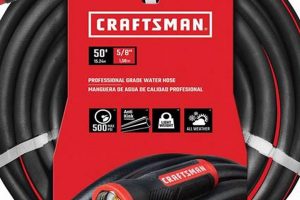
Tip 3: Evaluate Hose Diameter: Smaller diameter hoses inherently deliver less water volume. Consider using a larger diameter hose (e.g., 5/8 inch instead of 1/2 inch) to increase flow capacity and overall water pressure at the output end.
Tip 4: Shorten Hose Length: Longer hoses create greater friction, reducing water pressure. If possible, use a shorter hose length that is adequate for the task at hand to minimize frictional losses within the system.
Tip 5: Clean Hose and Spigot Connections: Mineral deposits and debris can accumulate in hose and spigot connections, restricting flow. Disconnect the hose and spigot, and thoroughly clean the connection points with a brush or cloth to remove any obstructions.
Tip 6: Use a Pressure Booster (If Necessary): In cases where water pressure from the main supply is inherently low, a pressure booster pump may be required. These pumps increase water pressure before it enters the hose, providing a significant improvement in flow rate.
Tip 7: Address Leaks: Even small leaks can reduce overall water pressure. Inspect the hose and connections for any signs of leakage and repair them promptly. Leak repair prevents water loss and maintains optimal system pressure.
Implementation of these strategies can significantly enhance the performance of a standard water delivery system. By addressing potential sources of restriction and optimizing system components, users can achieve a more consistent and forceful water flow.
The following section will provide information on troubleshooting persistent problems and when professional assistance is necessary.
1. Obstruction Removal

The removal of obstructions within a water delivery system constitutes a critical element in optimizing water pressure at the output. Restrictions impede water flow, resulting in diminished performance. Identification and elimination of these impediments are fundamental steps in achieving desired water output.
- Kinks and Bends
Kinks and sharp bends in the flexible conduit create localized constrictions, significantly reducing the cross-sectional area available for water to pass through. This localized reduction generates a pressure drop, resulting in a weaker stream at the outlet. Straightening these deformities restores the hose’s original diameter, thus enhancing water flow and pressure.
- Debris Accumulation
Over time, particulate matter, such as sediment and mineral deposits, can accumulate within the hose and at connection points. These accumulations narrow the pathway for water, creating resistance and lowering pressure. Regular flushing of the hose and cleaning of connection points with a brush can dislodge these obstructions, restoring optimal water delivery.
- Clogged Nozzles and Attachments
Spray nozzles, sprinklers, and other attachments connected to the hose end are prone to clogging due to mineral build-up or debris. A partially or fully blocked nozzle dramatically reduces water output. Regular inspection and cleaning of these attachments, including soaking them in vinegar to dissolve mineral deposits, are essential for maintaining optimal water pressure.
- Valve Obstructions
The spigot valve itself can become obstructed with sediment or corrosion, limiting the amount of water that enters the hose. Disconnecting the hose and inspecting the valve for any visible obstructions is advisable. Carefully cleaning the valve seat and any internal components can improve the water flow into the system.
The cumulative effect of obstructions, whether large or small, contributes to a reduction in overall water flow. Removing these obstructions is a proactive measure to ensure the system operates efficiently and delivers water at the intended pressure. By systematically addressing these issues, it helps the strategy on water pressure to be more effective.
2. Diameter Enhancement
Diameter enhancement, in the context of flexible water conduits, directly influences water pressure. Increasing the cross-sectional area available for water to flow significantly impacts the volume and velocity of water delivered at the output, thereby enhancing overall system performance. This principle is rooted in fluid dynamics and directly applicable to achieving optimal water pressure for various applications.
- Reduced Frictional Losses
A larger diameter reduces the ratio of surface area to water volume, which leads to lower frictional losses along the length of the hose. Water molecules experience less resistance as they flow through the conduit, translating to higher pressure at the output. This reduction in friction is especially noticeable over longer hose lengths, where smaller diameter hoses exhibit a significant pressu
re drop. - Increased Flow Capacity
The volume of water that can pass through a hose is directly proportional to its cross-sectional area. A larger diameter hose allows for a greater volume of water to flow through per unit of time, increasing the potential flow rate. This is particularly beneficial for applications requiring high water volume, such as filling large containers or operating pressure washers.
- Mitigation of Pressure Drop
A narrow hose restricts water flow, creating a pressure drop between the spigot and the nozzle. Increasing the diameter helps to minimize this pressure drop, ensuring that a greater percentage of the initial water pressure is maintained throughout the system. This mitigation of pressure drop is crucial for maintaining consistent performance, especially when connected to systems with marginally low initial pressure.
- Enhanced Compatibility with Attachments
Many high-flow attachments, such as certain types of sprinklers or nozzles, are designed to operate optimally with larger diameter hoses. Using a smaller diameter hose with these attachments can lead to reduced performance or even damage to the attachment. Diameter enhancement ensures that the water supply is adequate to support the demands of the connected equipment, maximizing its efficiency and lifespan.
The principles of fluid dynamics dictate that a larger diameter facilitates increased water flow and reduced frictional losses, contributing significantly to achieving optimal water pressure. Implementing diameter enhancement as a strategy directly addresses limitations imposed by smaller hoses, resulting in improved performance for a variety of watering and cleaning applications. Selecting an appropriate diameter based on the intended use and the characteristics of the water supply system is essential for maximizing the benefits of this enhancement.
3. Length Reduction

The length of a water delivery system exerts a direct influence on water pressure at the point of output. Minimizing this length is a pragmatic strategy for enhancing water pressure, mitigating frictional losses, and ensuring efficient water delivery for various applications. The relationship between hose length and pressure is governed by fundamental hydraulic principles.
- Minimizing Frictional Resistance
As water travels through a flexible conduit, it encounters frictional resistance against the inner walls. The longer the conduit, the greater the cumulative frictional resistance. Reducing the length minimizes the surface area over which friction acts, allowing water to flow more freely and maintaining a higher pressure at the output. Consider a situation where two hoses of the same diameter are connected to the same spigot; the shorter hose will invariably deliver water at a higher pressure than the longer one.
- Reducing Head Loss
Head loss, or pressure loss, is directly proportional to the length of the conduit. Longer hoses introduce a greater pressure drop between the spigot and the point of use. This pressure drop diminishes the force with which water exits the hose, impacting the effectiveness of tasks such as irrigation or cleaning. By using the shortest hose length necessary for a given task, head loss is minimized, and water pressure is preserved.
- Improving Response Time
Shorter hoses exhibit a faster response time when the spigot is opened or closed. The reduced volume of water within the hose allows for quicker pressure build-up and more immediate control over water flow. This is particularly advantageous in situations where precise water delivery is required, such as spot watering delicate plants or using a pressure washer with intermittent spray patterns. The immediacy of the water flow also prevents water waste.
- Optimizing System Efficiency
Using unnecessarily long hoses introduces inefficiencies into the water delivery system. The excess length contributes to wasted water and energy, particularly when the system is connected to a pump or other pressure-enhancing device. Optimizing the hose length to the specific task at hand reduces these inefficiencies, resulting in a more economical and environmentally responsible water usage. The use of shorter hoses also prevents accidental damage, because there is less hose to be driven over or stepped on.
The concept of length reduction is a practical and readily implementable strategy for augmenting water pressure. By minimizing the distance water must travel, the negative effects of friction and head loss are significantly reduced, leading to improved performance and efficiency. Selection of the appropriate hose length should be a primary consideration when seeking to achieve optimal water delivery for any application.
4. Leak Elimination
Eliminating leaks within a water conduit system is a critical determinant of water pressure at the output. Leaks represent a parasitic loss of water volume and, consequently, a reduction in the overall system pressure. The correlation between leak elimination and maintaining adequate pressure is direct and quantifiable: any reduction in leakage translates to an increase in usable pressure at the point of use. For example, a small pinhole leak may not seem significant; however, multiple leaks along the conduit or at connection points will cumulatively diminish the force of the water stream, particularly at the distal end of the delivery system. Detecting and rectifying these points of egress prevents the uncontrolled release of water and ensures a greater proportion of the available water supply is directed towards the intended purpose.
Practical application of leak elimination strategies extends beyond mere conservation. Consider the operation of a pressure washer connected to a leaking water supply. The pressure washer relies on a consistent and adequate input pressure to function efficiently. Leaks in the supply hose will compromise the pressure washer’s performance, reducing its cleaning power and potentially damaging its internal components due to cavitation or insufficient water flow. Similarly, an irrigation system relying on low-pressure sprinklers will suffer from uneven or inadequate water distribution if leaks exist in the main supply line. Addressing these leaks ensures that the sprinklers receive the design pressure, resulting in uniform and effective irrigation.
In summary, the elimination of leaks serves as a fundamental component in maintaining and augmenting water pressure within a given delivery system. The presence of leaks inherently diminishes the available pressure at the output, compromising the effectiveness of connected devices or tasks. Implementing leak detection and repair protocols ensures that the available water supply is efficiently utilized, and system pressure is optimized for intended applications. The broader theme is about maximizing available resources and ensuring the plumbing systems deliver water pressure that will not affect the function intended.
5. Source Pressure
Source pressure represents the foundational element governing the maximum achievable water pressur
e at the terminal end of a flexible conduit. If the water supply entering the hose exhibits low pressure, any subsequent attempts to augment pressure downstream will yield limited results. The inlet pressure serves as a limiting factor, irrespective of optimizations such as leak elimination, obstruction removal, or diameter enhancement. A robust water source is, therefore, a prerequisite for attaining satisfactory hose output pressure. For instance, if a residence receives water at 30 psi from the municipal supply, the hose pressure cannot realistically exceed this level, even with a new hose and a perfectly clear pathway.
Conversely, a high source pressure provides the potential for optimal hose performance. However, this potential can only be realized if the system is free from impediments. For instance, a source delivering water at 80 psi could still experience significantly reduced pressure at the hose end due to a partially closed spigot valve, a kinked hose, or excessive hose length. In such cases, addressing these downstream restrictions becomes paramount to harnessing the full potential of the available source pressure. Furthermore, regulations and infrastructure limitations may impose upper limits on source pressure, requiring pressure regulators to prevent damage to plumbing systems. These regulators, while protective, also cap the maximum pressure available for hose use.
In summary, source pressure acts as both a ceiling and a foundation for hose performance. Adequate source pressure is necessary but not sufficient for achieving optimal output. Effective pressure maximization requires a dual approach: ensuring a sufficient incoming pressure and meticulously addressing any downstream impediments to flow. Without both components in place, the endeavor to increase hose pressure will inevitably fall short of its intended objective. Assessing and understanding the initial water supply pressure is, therefore, the crucial first step in improving hose water output, paving the way for targeted interventions to maximize performance.
Frequently Asked Questions
The following section addresses common inquiries concerning the augmentation of water flow and force from flexible conduits used in residential and commercial settings.
Question 1: What is the primary factor influencing water pressure at the output of a water hose?
The initial water pressure from the source (e.g., municipal water supply or well pump) is the fundamental determinant. Subsequent modifications can only optimize within the bounds set by this initial pressure.
Question 2: How does the length of a hose impact the water pressure?
Longer hoses increase frictional resistance, leading to a pressure drop from the source to the output. Employing shorter hoses mitigates this pressure loss.
Question 3: Does the diameter of a water hose affect water flow?
Yes, a larger diameter hose provides a greater cross-sectional area for water flow, thereby reducing friction and allowing for increased water volume at the output.
Question 4: How do leaks in a hose or its connections reduce water pressure?
Leaks represent uncontrolled water loss, diminishing the overall volume and pressure available at the hose’s terminal end. Repairing leaks restores system efficiency.
Question 5: What role do obstructions, such as kinks or mineral deposits, play in reducing water pressure?
Obstructions restrict water flow, creating localized pressure drops. Removal of these impediments enhances water delivery at the outlet.
Question 6: When is the use of a pressure booster pump advisable for increasing hose output?
A pressure booster pump is recommended when the incoming water pressure from the main supply is inherently low, preventing adequate flow even after addressing other potential issues.
Optimizing water pressure requires a holistic approach that considers the source pressure, hose characteristics, and the presence of any flow restrictions. Addressing each of these factors contributes to enhanced system performance.
The subsequent section will delve into advanced troubleshooting techniques and professional intervention strategies for persistent water pressure deficiencies.
Concluding Remarks
This exposition has detailed methodologies for improving the force of water expelled from a flexible conduit. Key considerations include optimizing source pressure, minimizing hose length and obstructions, eliminating leaks, and selecting appropriate hose diameter. Implementation of these strategies yields a tangible increase in hydraulic performance.
Achieving optimal flow requires diligent assessment and proactive intervention. The benefits of enhanced water delivery extend beyond mere convenience, impacting efficiency and resource conservation. Prioritizing these strategies leads to both improved operational capabilities and responsible water usage, and may lead to the need for professional plumber to inspect the root cause or install a water pressure booster.
![Best 2 Inch Garden Hose For [X] & Reviews | The Ultimate Gardening Guide: Grow a Thriving Garden Year-Round](https://MyGardenPatch.com/wp-content/uploads/2025/07/th-5631-300x200.jpg "Best 2 Inch Garden Hose For [X] & Reviews The Ultimate Gardening Guide: Grow a Thriving Garden Year-Round")