



The standardized threading used on outdoor water spigots and the fittings of flexible watering tubes is a crucial element in ensuring leak-proof connections. This particular specification, often referred to by its descriptive characteristics, allows for interchangeability between different brands and types of watering equipment. As an example, a nozzle designed for a specific brand will generally attach seamlessly to a hose from another manufacturer due to this common design.
This universal compatibility simplifies the task of setting up and maintaining an irrigation system. It eliminates the need for specialized adapters or custom-made parts, thereby reducing costs and saving time. The implementation of this standard has historical roots in streamlining manufacturing processes and promoting ease of use for consumers in both residential and commercial settings.
Understanding the specifics of this standard thread facilitates informed decisions when purchasing hoses, sprinklers, and other related hardware. Subsequent sections will delve into the precise measurements, variations that may exist, and the best practices for ensuring secure and reliable connections.
Practical Guidance Regarding Garden Hose Threading
This section provides practical advice for working with standardized water spigot and flexible tube connections. The following recommendations aim to maximize efficiency and prevent common issues.
Tip 1: Verification Before Purchase: Prior to acquiring any watering equipment, confirm compatibility with existing infrastructure. A simple visual inspection often suffices, but consulting product specifications is recommended for absolute certainty.
Tip 2: Thread Protection: When hoses are not in use, consider using protective caps to shield the threads from damage. This preventative measure extends the lifespan of the connection points.
Tip 3: Proper Alignment During Connection: Avoid cross-threading by ensuring proper alignment before tightening. Applying gentle pressure while turning the coupling prevents damage and ensures a secure seal.
Tip 4: Use of Thread Seal Tape: Applying polytetrafluoroethylene (PTFE) tape, also known as thread seal tape, can improve the seal and prevent leaks, particularly with older fittings.
Tip 5: Avoid Over-Tightening: Overtightening can damage the threads and lead to leaks. Tighten connections until snug, then add a quarter turn. Over-tightening will likely strip the threads.
Tip 6: Regular Inspection and Maintenance: Periodically inspect connection points for wear and tear, such as cracks or corrosion. Replace damaged components promptly to prevent water loss and potential damage.
Adhering to these recommendations will optimize the performance and longevity of watering systems, minimizing water wastage and preventing costly repairs.
The following sections will explore advanced topics related to specialized adaptors and troubleshooting common connection problems.
1. Diameter

Diameter is a fundamental aspect of standardized watering equipment threads, directly influencing compatibility and leak prevention. The established norms concerning this measurement are essential for interoperability between various components.
- Nominal Outer Diameter
The nominal outer diameter (OD) represents the approximate size of the external thread. While the standard outer diameter for a typical flexible tube connection is roughly 1.375 inches (34.925 mm), this is a nominal measurement and may vary slightly. Precise measurements are crucial when selecting adapters or ensuring compatibility with non-standard fittings. Deviation from this nominal diameter may result in leaks or prevent proper connection.
- Internal Diameter Considerations
While the outer diameter of the male thread is the primary focus, the internal diameter of the female fitting must also be considered. A mismatch between these two dimensions, even within the nominal standard, can lead to difficulties in achieving a secure and watertight seal. The internal diameter must be appropriately sized to accommodate the male thread without excessive play or restriction.
- Impact on Flow Rate
The internal diameter of the hose itself, while not directly related to the threading, is integrally linked to flow rate. Constrictions or reductions in this diameter, whether due to poor design or damage, can significantly impede water flow. While the thread diameter ensures connection, the hose diameter determines the volume of water that can pass through the system. Therefore, consideration of both is important for optimal system performance.
- Material Influence on Dimensions
The material used in manufacturing the fittings can subtly affect the actual diameter. For example, plastic fittings may exhibit slight dimensional variations due to manufacturing tolerances or thermal expansion. Metal fittings, while generally more dimensionally stable, can be subject to corrosion that alters the diameter over time. Regular inspection and replacement of corroded or damaged fittings are necessary to maintain proper connection integrity.
In summary, the diameter, both nominal and actual, of the standardized threads is a critical factor in achieving secure and leak-proof connections within watering systems. Understanding these dimensional considerations, alongside material properties and their potential impact on size, facilitates informed decisions when selecting and maintaining watering equipment, thereby ensuring efficient water delivery and minimizing potential damage.
2. Threads per inch (TPI)

Threads per inch (TPI) is a critical specification intricately linked to standardized watering equipment connections. TPI dictates the fineness or coarseness of the thread, impacting the strength and sealing capability of the connection. Deviations from the standard TPI can compromise the integrity of the joint, leading to leaks or complete failure.
- Definition and Measurement
Threads per inch refers to the number of thread crests or valleys present within a one-inch span along the thread axis. Accurate measurement necessitates the use of a thread gauge or precise measuring tools. The standard TPI for garden hose connections is typically 11.5, a value established to balance ease of connection with sufficient sealing force.
- Impact on Sealing Capability
A higher TPI generally results in a finer thread, potentially offering improved sealing due to the increased surface contact between mating threads. However, excessively fine threads can be more susceptible to damage and require greater precision in manufacturing. The 11.5 TPI standard represents a compromise, providing adequate sealing without u
ndue complexity. - Compatibility Considerations
Mixing fittings with differing TPI values is strongly discouraged, as it can lead to cross-threading and irreversible damage. Although some fittings may appear to engage initially, the mismatch in thread pitch prevents proper seating and sealing. Attempting to force such connections often results in stripped threads and a non-functional joint. Adherence to the 11.5 TPI standard is imperative for ensuring compatibility between hoses, spigots, and accessories.
- Material Influence on TPI Performance
The material composition of the fitting also interacts with the TPI to determine overall performance. For example, plastic fittings with a high TPI may be more prone to thread stripping compared to brass fittings with the same TPI, owing to the lower tensile strength of plastic. Likewise, corrosion on metal fittings can effectively alter the TPI, reducing the sealing capability and increasing the risk of leaks. Regular inspection and replacement of worn or corroded fittings are essential for maintaining system integrity.
Understanding the role of TPI is paramount to comprehending the overall standardized threading system for watering equipment. Proper TPI ensures the physical compatibility, as well as helps determine the integrity and long-term performance of the connection under pressure and various environmental conditions. By adhering to standard practices and guidelines regarding TPI, individuals can maintain the efficiency and reliability of their systems.
3. GHT (Garden Hose Thread)
GHT, or Garden Hose Thread, directly defines the standard dimension specifications associated with a hose connection. It is the definitive answer to the query of thread size, representing the accepted norm for hose fittings in the United States and other regions. This standardization facilitates interchangeability among various brands and types of watering equipment. Without GHT, compatibility issues would necessitate the use of numerous adapters, increasing the risk of leaks and system inefficiencies. For instance, a sprinkler purchased from one manufacturer will reliably connect to a hose manufactured by another, provided both adhere to GHT specifications. This represents the direct impact and illustrates its fundamental nature when discussing connection sizes.
The establishment of GHT has far-reaching practical applications. It simplifies irrigation system design, reduces manufacturing costs, and empowers consumers to easily customize their watering setups. Furthermore, GHT specifications extend beyond residential applications, influencing the design of commercial irrigation systems and fire suppression equipment. For example, fire hoses often utilize variants of GHT to ensure compatibility with hydrants and nozzles. The development and widespread adoption of GHT represent a significant advancement in ensuring efficient and reliable water delivery across diverse applications.
In summary, GHT is the keystone that defines the “thread size” for flexible watering tubes, the critical specification to ensure compatibility, prevent leaks, and enable efficient system design. While variations and regional standards may exist, the underlying principle of standardization remains paramount. Therefore, understanding GHT specifications is crucial for anyone involved in selecting, installing, or maintaining watering systems. Adhering to GHT guidelines minimizes complexity and maximizes the performance and lifespan of the connection.
4. National Pipe Thread (NPT)
National Pipe Thread (NPT) represents a distinct thread standard that occasionally intersects with, but is fundamentally different from, garden hose thread (GHT). While GHT is specifically designed for hose connections, NPT is primarily employed for sealing pipes conveying liquids or gases. Understanding the distinctions between NPT and GHT is crucial to prevent misapplication and potential system failures. An appreciation of NPT ensures that it is not confused with garden hose standards.
- Tapered Design
NPT threads are characterized by their tapered design, wherein the diameter gradually decreases along the thread length. This taper facilitates a tight seal as the threads are tightened, compressing the mating surfaces. In contrast, GHT threads are typically straight, relying on a gasket or O-ring to create a seal. The tapered nature of NPT makes it unsuitable for direct connection to GHT fittings without an appropriate adapter. An example is seen where fittings on a home’s main water line utilize NPT, whereas the outside spigot relies on GHT.
- Thread Form and Pitch
NPT thread forms and pitch (threads per inch) differ significantly from GHT standards. NPT typically has a finer thread pitch, resulting in a greater number of threads per inch compared to GHT. This difference in thread geometry prevents proper engagement between NPT and GHT fittings. Attempting to force such a connection can damage the threads on both fittings, rendering them unusable. The specific thread pitch values can be found in engineering reference tables.
- Material Compatibility
NPT fittings are commonly manufactured from materials such as brass, stainless steel, or iron, chosen for their strength and resistance to corrosion. GHT fittings, on the other hand, may be constructed from plastic, aluminum, or brass. While material compatibility is always a consideration, the thread geometry mismatch remains the primary obstacle to direct NPT-to-GHT connections. Utilizing dissimilar metals in threaded connections can exacerbate corrosion. For example, connecting a brass fitting to an aluminum pipe can lead to galvanic corrosion.
- Adapter Requirements
When connecting NPT to GHT is necessary, a specialized adapter must be used. These adapters are designed with NPT threads on one end and GHT threads on the other, enabling a seamless transition between the two standards. The selection of an appropriate adapter requires careful consideration of thread sizes, material compatibility, and pressure ratings. An example is transitioning from the home’s water supply line (NPT) to an outdoor hose (GHT) using an adapter.
In summary, while NPT serves a critical role in plumbing and industrial applications, its tapered design, thread form, and pitch differentiate it significantly from GHT. Direct connection between NPT and GHT is not possible without an appropriate adapter. Understanding these differences is essential to ensuring proper system design, leak prevention, and overall functionality. Utilizing appropriate adapters and considering material compatibility ensures reliable performance.
5. Male/Female differentiation

The distinction between male and female components is an integral element in the design and functionality of standardized watering system connections. In the context of “what is garden hose thread size,” this differentiation refers to whether the thread is external (male) or internal (female). This characteristic dictates how two fittings will engage and seal, and proper id
entification is essential for achieving a leak-proof connection. A mismatch between male and female types will invariably prevent a secure fit, regardless of conforming thread sizes. For example, attempting to connect a male-to-male or female-to-female configuration without an intervening component is inherently unsuccessful.
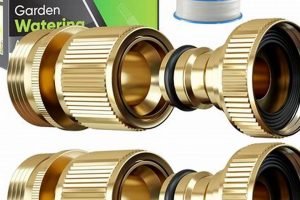
The male fitting typically features threads on its outer surface, designed to insert into a corresponding female fitting with internal threads. This arrangement allows for a secure mechanical interlock, further enhanced by a gasket or O-ring in many GHT (Garden Hose Thread) applications. The dimensions of both male and female threads must adhere to the established GHT standard to ensure proper engagement and sealing. For instance, the outer diameter of a male GHT fitting must be compatible with the inner diameter of the corresponding female fitting. Variations in these dimensions, even within the GHT specification, can compromise the seal and lead to leaks. The success of any connection is dependent upon understanding these relationships.
In summary, male/female differentiation is an essential aspect in understanding watering equipment connection and GHT requirements. Proper identification prevents system errors and improves the longevity and reliability of installed watering systems. Recognizing this distinction enables informed choices during system design and maintenance, ultimately contributing to efficient water usage and reduced waste.
6. Seal integrity

Seal integrity is a paramount consideration in the context of standardized watering equipment connection. It directly relates to the effectiveness with which a threaded joint prevents water leakage. Proper thread dimensions are foundational to ensuring a robust and reliable seal. The following aspects detail key factors influencing the connection.
- Thread Engagement and Tightness
Adequate thread engagement is essential for establishing sufficient compressive force to create a watertight seal. Insufficient thread engagement may result in an incomplete seal, leading to leaks. Proper tightening, without over-tightening, ensures that the threads mesh correctly and generate the necessary compression. Overtightening, conversely, can damage the threads and compromise the seal. For instance, stripping plastic threads can occur, and prevent a connection from being sealed.
- Gasket and O-Ring Performance
Many flexible watering connections rely on gaskets or O-rings to enhance the seal. These components fill microscopic imperfections in the thread surfaces, preventing water from escaping. The condition of the gasket or O-ring is crucial for maintaining seal integrity. Damaged, worn, or improperly sized gaskets or O-rings can lead to leaks, regardless of proper thread dimensions. These are common failure points due to weathering or wear.
- Material Compatibility and Degradation
The materials used in the construction of threaded fittings and sealing components must be compatible with each other and the water being conveyed. Incompatible materials can corrode or degrade over time, compromising the seal. For example, using dissimilar metals in a connection can lead to galvanic corrosion, weakening the joint and causing leaks. Similarly, certain plastics may degrade when exposed to sunlight or chemicals in the water, reducing their sealing effectiveness. Maintaining appropriate connections is necessary for keeping reliable seals.
- Thread Cleanliness and Condition
The presence of dirt, debris, or corrosion on the threads can interfere with proper engagement and compromise the seal. Clean threads are essential for ensuring a tight, watertight connection. Regular inspection and cleaning of threads can help prevent leaks and extend the lifespan of watering equipment. The buildup of minerals can damage threads and cause leaks.
In conclusion, seal integrity is directly dependent on multiple factors, including thread engagement, gasket condition, material compatibility, and thread cleanliness. Proper thread dimensions provide the foundation for a secure connection, but careful attention to these additional factors is essential for maintaining a leak-free watering system.
7. Material compatibility

Material compatibility is a critical, often overlooked, aspect closely intertwined with the understanding of “what is garden hose thread size.” While the thread dimensions define the physical connection, the materials from which the fittings are constructed dictate the longevity and reliability of that connection. Incompatible materials can lead to accelerated corrosion, thread degradation, and ultimately, failure of the seal, negating the benefits of properly sized threads. For example, connecting a brass fitting directly to an aluminum hose bib, without dielectric separation, sets up a galvanic cell. The aluminum, being less noble, corrodes preferentially, weakening the threads and causing leaks. This underscores that dimension compatibility is insufficient if the materials are reactive.
The choice of materials must also consider the environmental conditions and the fluid being conveyed. Prolonged exposure to sunlight, chemicals in the water supply, or extreme temperatures can degrade certain plastics or accelerate corrosion in metals. A nylon fitting, for instance, may become brittle and crack under prolonged UV exposure, even if the thread size is perfectly matched. Similarly, a steel fitting may rust and seize if exposed to continuous moisture, making it difficult to disconnect or adjust the connection. The selection of appropriate materials, therefore, extends beyond merely matching thread sizes, requiring consideration of the broader operational context.
In conclusion, material compatibility is not merely a supplementary consideration but an integral component of understanding “what is garden hose thread size.” Mismatched materials negate the benefits of standardized threads and can lead to premature failure, costly repairs, and water wastage. A comprehensive approach to system design and maintenance necessitates careful selection of materials that are compatible with each other and the operating environment, ensuring a robust and reliable connection that extends the lifespan of the watering system.
Frequently Asked Questions About Garden Hose Thread Dimensions
The following questions address common inquiries regarding thread standards for flexible water tube connections, providing clarification on sizing and compatibility.
Question 1: What constitutes the standard dimension for a hose connection?
The accepted standard is designated Garden Hose Thread (GHT), encompassing specific parameters for diameter and threads per inch.
Question 2: Are there variations in thread dimensions?
While GHT is the predominant standard, regional variations and alternative thread types, such as National Pipe Thread (NPT), exist. Adapters may be necessary to ensure compatibility.
Question 3: How can compatibility issues be resolved?
The use of appropriate adapters is the primary method for connecting fittings with differing thread dimensions or types. Ensure the adapter is rated for the intended pressure and material compatibility.
Question 4: What role does material play in connection longevity
?
Material compatibility is crucial. Dissimilar metals can cause galvanic corrosion, and certain plastics degrade when exposed to sunlight or chemicals. Select materials appropriate for the operating environment.
Question 5: How is a secure, leak-proof connection achieved?
Proper thread engagement, appropriate tightening, and the use of undamaged gaskets or O-rings are essential. Clean threads are also necessary for optimal sealing.
Question 6: What is the typical lifespan of a flexible watering tube, and how can it be extended?
The lifespan varies depending on usage, environmental conditions, and material quality. Regular inspection for wear, protection from extreme temperatures and sunlight, and proper storage can extend the lifespan.
Understanding these fundamental aspects of thread standards is crucial for maintaining efficient and leak-free watering systems.
The following section delves into advanced techniques for system troubleshooting and optimization.
Understanding Thread Specifications for Flexible Watering Tubes
The preceding discussion has systematically explored the concept of “what is garden hose thread size,” clarifying its significance in ensuring compatibility and preventing leakage in watering systems. This exploration encompassed critical dimensions, variations such as National Pipe Thread (NPT), the importance of male/female differentiation, and the essential role of material compatibility in connection longevity. Emphasis was placed on the practical implications of adhering to standardized dimensions, highlighting how proper thread engagement, gasket integrity, and material selection contribute to reliable and efficient water delivery.
The knowledge gained from understanding “what is garden hose thread size” empowers informed decision-making in the selection, installation, and maintenance of watering systems. A continued commitment to adhering to established standards and best practices will contribute to water conservation, reduced maintenance costs, and the long-term reliability of irrigation infrastructure. Diligence in understanding and applying these principles remains paramount for both residential and commercial applications.
![Best 2 Inch Garden Hose For [X] & Reviews | The Ultimate Gardening Guide: Grow a Thriving Garden Year-Round](https://MyGardenPatch.com/wp-content/uploads/2025/07/th-5631-300x200.jpg "Best 2 Inch Garden Hose For [X] & Reviews The Ultimate Gardening Guide: Grow a Thriving Garden Year-Round")