



A device that connects to a single outdoor water spigot, expanding its capacity to supply water to multiple hoses simultaneously. This attachment typically features one inlet and four outlets, each with a valve to control water flow. For example, it allows users to water plants in different areas of a garden without needing to disconnect and reconnect hoses repeatedly.
This type of connector offers significant convenience by optimizing water usage and saving time. The ability to control each outlet independently prevents water wastage and enables targeted irrigation. Historically, homeowners relied on individual spigots for each watering task; the advent of multi-way connectors streamlines operations and reduces the need for extensive plumbing modifications.
Understanding the materials, flow rates, valve mechanisms, and common applications is essential for selecting the appropriate device and ensuring its longevity and efficient performance. The following sections will delve into these crucial aspects to provide a complete overview.
Usage Considerations for Four-Way Hose Distribution
Optimal performance and longevity depend on informed selection and proper handling. The following considerations enhance utility and prevent damage.
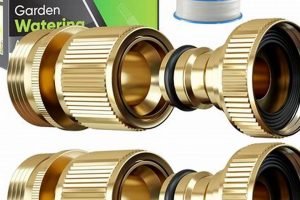
Tip 1: Material Selection: Opt for brass or stainless steel models. These materials resist corrosion and provide greater durability compared to plastic alternatives, particularly in outdoor environments.
Tip 2: Flow Rate Assessment: Determine the water pressure and flow rate requirements of all connected devices. Ensure the selected device can accommodate the combined demand to prevent reduced performance across multiple outlets.
Tip 3: Valve Operation: Exercise caution when opening and closing valves. Avoid excessive force, which can damage the valve mechanism and cause leaks. Regularly inspect valve seals for wear and replace them as needed.
Tip 4: Seasonal Storage: Before freezing temperatures arrive, disconnect the device and drain any remaining water. Store it indoors to prevent cracking or damage due to ice expansion.
Tip 5: Connection Security: When attaching hoses, ensure a tight, leak-proof seal. Use Teflon tape on threaded connections to prevent water loss and maintain consistent pressure.
Tip 6: Pressure Regulation: For applications involving delicate irrigation systems, consider installing a pressure regulator upstream. This protects sensitive components from over-pressurization and potential damage.
Tip 7: Periodic Inspection: Routinely inspect the device for signs of wear, corrosion, or leaks. Address any issues promptly to prevent further damage and maintain efficient operation.
Adhering to these recommendations can prolong the life of the device, improve its performance, and ensure consistent water delivery to multiple points.
The next section will explore specific applications in residential and commercial settings, highlighting the versatility and adaptability of this type of plumbing accessory.
1. Simultaneous Operation

Simultaneous operation, a defining characteristic, dictates the utility of a four-outlet hose connector. This functionality allows for the distribution of water from a single spigot to multiple hoses concurrently, enabling diverse watering or cleaning tasks to occur without interruption. The cause is the internal manifold design, which splits the incoming water flow into four separate streams. Its importance stems from the time and effort saved by negating the need to repeatedly connect and disconnect hoses for different applications. For instance, a homeowner can simultaneously water a lawn, wash a car, rinse garden tools, and fill a pet’s water bowl, all from the same water source.
The practical significance of simultaneous operation is evident in both residential and commercial settings. Landscapers can irrigate multiple zones of a garden at the same time. Car wash businesses can supply water to several washing stations concurrently. In industrial facilities, this allows for simultaneous cleaning operations. The design must account for potential pressure drops when all outlets are in use, often necessitating a larger inlet diameter to maintain adequate water flow to each hose. Without this capability, the device becomes merely a switch, sequentially directing water to each outlet, rather than a true facilitator of parallel operations.
In summary, simultaneous operation is the pivotal feature that makes a four-outlet hose connector a valuable tool. The ability to perform multiple tasks at once translates to increased efficiency and convenience. Potential challenges, such as pressure regulation and flow management, must be addressed through proper design and user awareness to fully realize the benefits of this capability. The successful implementation of simultaneous operation directly links to the devices effectiveness in streamlining various water-dependent tasks.
2. Independent Control

Independent control is a crucial element of a four-way hose connector. The presence of individual valves at each outlet enables users to regulate water flow independently. This mechanism allows for the selective activation or deactivation of each hose, preventing water wastage and optimizing resource management. For example, a gardener may need to water delicate seedlings with a gentle spray while simultaneously providing a high-pressure stream for cleaning a patio. Without independent control, this level of customization would be unattainable.
The practical applications of this functionality extend beyond simple convenience. In commercial settings, independent control allows for precise water management in multi-zone irrigation systems. Each zone can be watered according to its specific needs, ensuring optimal plant health and minimizing water consumption. Moreover, in situations where multiple users share a single water source, independent control eliminates conflicts and allows each user to operate their hose without affecting others. This is particularly valuable in community gardens or shared outdoor spaces.
In summary, independent control elevates the utility of a four-way hose connector from a simple splitter to a versatile water management tool. It promotes efficiency, reduces waste, and facilitates customized water delivery in a variety of settings. The absence of this feature would significantly limit the practicality and value of the device, reducing it to a less adaptable and less user-friendly alternative. The effective implementation of independent control is a key differentiator in the quality and performance of these devices.
3. Material Durability

Material durability exerts a direct influence on the lifespan and performance of a four-way hose connector. The selection of materials determines the device’s ability to withstand environmental stressors, water pressure, and physical strain. Inferior materials are prone to corrosion, cracking, and leakage, leading to premature failure. Brass and stainless steel represent common choices due to their inherent resistance to these degradation factors. For instance, prolonged exposure to sunlight and fluctuating temperatures can cause plastic components to become brittle and break, rendering the connector unusable. Similarly, repeated connections and disconnections create stress on the threads, potentially leading to stripping or cross-threading if the material lacks sufficient strength.
The practical significance of material selection extends to the overall efficiency of water usage. A connector fabricated from robust materials maintains a tight seal, preventing water loss through leaks. This is particularly critical in areas where water conservation is paramount or where water bills are high. The initial cost of a durable, high-quality connector may be greater, however, the long-term savings resulting from reduced water waste and fewer replacements often justify the investment. Furthermore, durable connectors withstand higher water pressure, ensuring consistent flow rates across all four outlets, which is essential for applications like irrigation systems or simultaneous cleaning tasks.
In summary, material durability is not merely a desirable attribute but a fundamental requirement for a reliable four-way hose connector. The choice of materials directly impacts the device’s longevity, performance, and overall cost-effectiveness. Selecting connectors constructed from corrosion-resistant and structurally sound materials mitigates the risk of premature failure, reduces water wastage, and ensures consistent water delivery over an extended period. Understanding this connection empowers informed purchasing decisions and promotes responsible water management practices.
4. Flow Capacity

Flow capacity is a crucial specification for a four-way hose distribution manifold. It dictates the volume of water that can pass through the device in a given time. Insufficient flow capacity creates a bottleneck, reducing water pressure at each outlet when multiple hoses are in simultaneous use. This limitation directly affects the efficiency of tasks such as watering large gardens or simultaneously washing multiple vehicles. The internal diameter of the inlet and outlet ports, as well as the design of the internal manifold, determine the overall flow rate. For example, a device with a narrow internal channel will restrict water flow, even if connected to a high-pressure water source. A scenario of a professional gardener connecting four sprinkler hoses to a four-way splitter that doesn’t provide sufficient flow capacity would result in each sprinkler providing weaker spray. The practical consequence is increased watering time and uneven distribution of water, potentially harming plant growth. Therefore, understanding the flow requirements of intended applications is important for selecting the appropriate device.
Considerations for flow capacity extend to the type of tasks being performed. High-demand applications, such as pressure washing or filling large containers, necessitate a manifold with a higher flow rate. Low-demand applications, like drip irrigation or gentle watering, might be satisfied with a lower flow rate device. Manufacturers commonly specify the flow capacity in gallons per minute (GPM) or liters per minute (LPM). Users must determine the combined flow rate required by all connected devices and select a splitter with a flow capacity that meets or exceeds that demand. Pressure regulators can be incorporated to moderate fluctuations and prevent damage to sensitive equipment connected to the splitter. Failure to account for flow capacity can result in equipment malfunction and inefficient water usage.
In summary, flow capacity is inextricably linked to the performance and utility of a four-way hose connector. Selecting a device with adequate flow ensures efficient water delivery, prevents pressure drops, and supports the simultaneous operation of multiple hoses. A mismatch between the flow capacity of the splitter and the demands of the connected devices results in diminished performance and potential damage. The importance of assessing and matching flow requirements cannot be overstated for optimal operation and water resource management.
5. Connection Security

Connection security is paramount in the operation of a four-way hose connector. A secure connection prevents leaks, maintains optimal water pressure, and ensures efficient water delivery to all connected hoses. A compromised connection, resulting from damaged threads or inadequate sealing, leads to water wastage, reduced water pressure, and potentially, damage to the device itself or surrounding areas. For example, a loose connection can cause a steady drip, wasting significant amounts of water over time. A failing connector can cause damage to surrounding environment.
The impact of connection security extends to the performance of connected devices. Inconsistent water pressure due to leaks can negatively affect the operation of sprinkler systems, pressure washers, and other water-dependent tools. Secure connections are achieved through the use of appropriate sealing materials, such as Teflon tape, and by ensuring that threads are properly aligned and tightened. Regular inspection of connections and replacement of worn-out washers are also essential to maintaining connection integrity.
In summary, connection security is not a mere detail but a fundamental requirement for the reliable and efficient operation of a four-way hose connector. Maintaining secure connections prevents water wastage, ensures optimal performance of connected devices, and prolongs the life of the connector itself. Neglecting connection security leads to inefficiency, increased costs, and potential damage to both the device and its surroundings.
6. Installation Ease

Installation ease represents a significant factor in the practical utility and widespread adoption of any four-way hose connector. Straightforward installation reduces setup time, minimizes the potential for errors, and broadens the appeal of the device to a wider range of users, regardless of their technical expertise.
- Thread Compatibility
Standardized threading on both the inlet and outlet ports is crucial for compatibility with a wide range of garden hoses and spigots. Universal threading patterns (e.g., GHT – Garden Hose Thread) eliminates the need for adapters or specialized tools, streamlining the installation process. Incompatible threading leads to leaks, cross-threading, and frustration for the user.
- Tool-Free Connection
Designs that facilitate tool-free connection, such as those with integrated swivel connectors or hand-tightening mechanisms, simplify the installation process considerably. The absence of required tools removes a barrier to entry for less experienced users and expedites setup in time-s
ensitive situations. Connectors that require wrenches or pliers increase the likelihood of overtightening or damaging the threads. - Clear Instructions
Well-written and easily understandable instructions, whether printed or provided digitally, guide users through the installation process step-by-step. Clear instructions minimize the potential for misinterpretation and ensure that the device is installed correctly, preventing leaks or malfunctions. Diagrams and visual aids further enhance comprehension.
- Weight and Ergonomics
A lightweight and ergonomically designed connector is easier to handle and maneuver during installation. Bulky or awkwardly shaped connectors are more challenging to install, especially in confined spaces. A well-balanced design reduces strain on the user’s hands and wrists and facilitates a secure connection.
These facets of installation ease directly contribute to the user’s overall experience with the four-way hose connector. By prioritizing thread compatibility, tool-free connections, clear instructions, and ergonomic design, manufacturers enhance the accessibility and usability of their products, leading to greater customer satisfaction and wider adoption.
7. Seasonal Maintenance

Seasonal maintenance is a critical aspect of ensuring the longevity and consistent performance of a four-way hose connector. Environmental factors, primarily temperature fluctuations and the presence of moisture, exert significant stress on the device, necessitating proactive measures to mitigate potential damage.
- Winterization Procedures
Freezing temperatures pose a substantial threat to four-way hose connectors. Residual water trapped within the device expands upon freezing, potentially causing cracks or fractures in the housing, valve mechanisms, or connecting threads. Winterization involves disconnecting the connector from the spigot and hoses, inverting it to drain any remaining water, and storing it in a frost-free environment. Failure to winterize can lead to irreversible damage and the need for replacement.
- Inspection for Corrosion
Exposure to moisture and certain chemicals can accelerate corrosion, particularly in connectors made from brass or other susceptible materials. Seasonal maintenance includes a thorough inspection for signs of corrosion, such as discoloration, pitting, or the formation of mineral deposits. Affected areas can be cleaned with appropriate solvents or brushes, and protective coatings can be applied to inhibit further corrosion. Neglecting corrosion can lead to leaks and reduced flow capacity.
- Valve Lubrication
The valves that control water flow to each outlet are subject to wear and tear over time, especially with frequent use. Seasonal maintenance may involve lubricating the valve mechanisms with a silicone-based grease to ensure smooth operation and prevent seizing. This is particularly important for connectors that have been idle for extended periods. Proper lubrication prolongs the life of the valves and maintains precise flow control.
- Washer and Seal Replacement
Washers and seals within the connector are responsible for creating a watertight seal between the various components. These components can degrade over time due to exposure to water, sunlight, and fluctuating temperatures. Seasonal maintenance includes inspecting washers and seals for cracks, tears, or deformation and replacing them as needed. This prevents leaks and maintains optimal water pressure.
These maintenance practices, performed on a seasonal basis, significantly extend the service life of a four-way hose connector. Proactive maintenance not only prevents costly repairs or replacements but also ensures efficient water usage and reliable performance throughout the year, ultimately contributing to responsible resource management.
Frequently Asked Questions Regarding Four-Way Hose Distribution Manifolds
The following questions address common concerns and misconceptions regarding the use and maintenance of multi-outlet hose connectors.
Question 1: What is the typical lifespan of a four-way hose distribution manifold?
Lifespan is heavily dependent on material composition, usage frequency, and adherence to proper maintenance procedures. Brass and stainless steel models generally outlast plastic alternatives. Expect a lifespan of 3-5 years with regular use and proper winterization; neglecting maintenance can significantly shorten this period.
Question 2: Can a four-way connector reduce water pressure?
Yes, if the combined flow rate of the connected hoses exceeds the capacity of the water source or the connector’s internal diameter. Selecting a connector with a sufficient flow rate for the intended applications minimizes pressure reduction. Installing a pressure regulator can protect sensitive equipment.
Question 3: Is Teflon tape necessary when connecting hoses to a four-way manifold?
Teflon tape is highly recommended to ensure a watertight seal and prevent leaks. It fills microscopic gaps in the threads, preventing water from escaping. Apply Teflon tape in the direction of the threads to avoid unraveling during tightening.
Question 4: How do I prevent a four-way connector from freezing during the winter?
Disconnect the connector from the spigot and hoses, invert it to drain any remaining water, and store it indoors in a frost-free location. This prevents water from expanding and cracking the connector’s housing or internal components.
Question 5: What are the common signs of a failing four-way hose connector?
Common signs include leaks, reduced water pressure, difficulty turning valves, and visible corrosion or cracking. Promptly address these issues to prevent further damage and water wastage.
Question 6: Can a four-way connector be used with potable (drinking) water?
It is advisable to use lead-free components to supply safe drinking water. It is important to check with the manufacturer.
Proper selection, installation, and maintenance are crucial for optimizing the performance and longevity of four-way hose distribution manifolds. Addressing these common questions promotes informed decision-making and responsible water management.
The next section will delve into advanced applications and troubleshooting tips.
Conclusion
The preceding exploration clarifies the multifaceted nature of the garden hose splitter 4 way. From assessing material durability and flow capacity to emphasizing the importance of independent control and seasonal maintenance, this device demands careful consideration for optimal performance and longevity. Successfully navigating these aspects ensures efficient water management and avoids costly replacements.
Recognizing the value of informed selection and responsible use maximizes the potential of this plumbing accessory. Continued awareness and adherence to best practices will solidify its role in efficient and sustainable water resource management for both residential and commercial applications.

![Best 2 Inch Garden Hose For [X] & Reviews | The Ultimate Gardening Guide: Grow a Thriving Garden Year-Round](https://MyGardenPatch.com/wp-content/uploads/2025/07/th-5631-300x200.jpg "Best 2 Inch Garden Hose For [X] & Reviews The Ultimate Gardening Guide: Grow a Thriving Garden Year-Round")