



A device connected to a water supply spigot, serving the purpose of controlling the flow of water through a flexible conduit used for irrigation and cleaning tasks. It provides a user-controlled valve, allowing for the initiation, cessation, and regulation of water disbursement. For example, an individual might use this device to stop the water flow to a sprinkler without having to walk back to the main outdoor tap.
The utility of such a mechanism is significant in water conservation efforts and the prevention of water wastage. By enabling precise control over water output, it facilitates targeted irrigation, reducing unnecessary water consumption. Historically, simpler valves or direct connections to the main supply were used, often resulting in overwatering and increased water bills. The introduction of these controllable devices marked an advancement in garden and home water management, offering both economic and environmental advantages.
The following sections will explore the various types available, installation procedures, maintenance tips, and troubleshooting steps to ensure optimal functionality and longevity of this essential plumbing component.
Operational Tips for Water Flow Regulators
The efficient and prolonged use of these devices requires adherence to several key practices. Implementing these tips will ensure optimal performance and prevent unnecessary repairs or replacements.
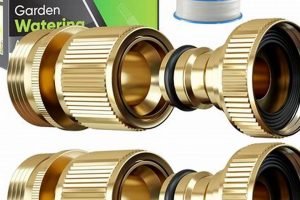
Tip 1: Select a Durable Material: Opt for brass or high-impact plastic models to withstand weathering and constant water pressure. Brass is resistant to corrosion, while certain plastics offer durability at a lower cost.
Tip 2: Inspect for Leaks Regularly: Check the connection points and valve body for any signs of water leakage. Even small leaks can lead to significant water wastage over time.
Tip 3: Protect From Freezing Temperatures: In colder climates, disconnect and drain the device during winter months to prevent damage from ice expansion. Store indoors if possible.
Tip 4: Avoid Over-Tightening: When connecting to the faucet or hose, tighten only until secure. Over-tightening can damage the threads and compromise the seal.
Tip 5: Periodically Clean the Valve: Mineral deposits or debris can accumulate inside the valve, restricting water flow. Disassemble and clean the components with a mild solution of vinegar and water.
Tip 6: Use Appropriate Tools: When tightening or loosening connections, use the correct size wrench to avoid damaging the fitting. Slip-joint pliers or adjustable wrenches are suitable for most applications.
Tip 7: Replace Worn Washers: If leaks persist despite tightening, the internal washers may be worn or damaged. Replace these washers to restore a watertight seal.
Adhering to these guidelines will not only extend the lifespan of the component but also contribute to responsible water usage and cost savings.
The subsequent sections will delve into troubleshooting common issues and explore advanced functionalities available in some models.
1. Water Flow Control
Effective water flow control is the primary function enabled by a water flow regulator on a flexible conduit. It directly determines the efficiency and effectiveness of irrigation and cleaning tasks, and is critical for water conservation.
- On-Demand Water Delivery
These mechanisms provide the ability to initiate and cease water flow precisely when and where it is needed. This eliminates the need to adjust the main water source each time, saving water and reducing wasted time. For example, spot watering plants or rinsing off a patio becomes a focused, controlled activity, minimizing water usage compared to leaving a hose running continuously.
- Flow Rate Adjustment
Certain models offer adjustable flow rates, allowing for customized water delivery depending on the specific task. A gentle shower setting might be used for delicate plants, while a higher-pressure stream might be employed for cleaning. This adaptability optimizes water usage for diverse needs, avoiding excessive pressure or inefficient disbursement.
- Prevention of Water Hammer
Rapidly shutting off water flow can create a pressure surge in the pipes, known as water hammer. Some designs incorporate features that mitigate this effect, protecting the plumbing system from potential damage. By slowing down the shut-off process, these features reduce the impact of pressure spikes, contributing to the overall longevity of the system.
- Localized Control
The ability to control water flow at the point of use minimizes the need to repeatedly adjust the main water source. This is particularly beneficial in larger gardens or when multiple users are sharing the water supply. It allows for independent operation and prevents unintentional disruptions to other users.
These facets collectively illustrate the significance of water flow control in the context of these devices. By enabling precise, efficient, and adaptable water delivery, they contribute to responsible water usage, reduce waste, and enhance the overall effectiveness of irrigation and cleaning activities.
2. Leakage prevention
The function of controlling water disbursement through flexible conduits is intrinsically linked to the imperative of preventing water loss through leakage. Effective mechanisms are essential not only for efficient water use but also for the long-term integrity of plumbing systems and responsible resource management.
- Thread Integrity and Compatibility
Secure, watertight connections between the device, the spigot, and the flexible conduit are paramount. Thread damage, cross-threading, or incompatibility between components invariably leads to leakage. Employing fittings of appropriate materials and ensuring proper alignment during installation are critical preventative measures. For example, using Teflon tape or pipe sealant on threaded connections provides an additional barrier against leaks. Failure to do so can result in a continuous loss of water, even when the valve is ostensibly closed.
- Washer and Seal Condition
Internal washers and seals within the device are subject to wear and degradation over time. Hardening, cracking, or disintegration of these components will compromise the seal, resulting in leakage. Regular inspection and timely replacement of worn washers and seals are essential maintenance practices. For example, a dripping spigot when the valve is closed is often indicative of a faulty internal washer that requires replacement. This simple maintenance step can prevent significant water wastage.
- Valve Body Integrity
The structural integrity of the device’s body itself is a critical factor in preven
ting leakage. Cracks, fractures, or corrosion in the body can create pathways for water to escape. Selecting a device constructed from durable, corrosion-resistant materials, such as brass or high-impact plastic, is essential, particularly in environments with fluctuating temperatures or aggressive water chemistry. For example, prolonged exposure to freezing temperatures can cause cracks in a plastic valve body, leading to substantial water loss. - Proper Installation and Operation
Even with high-quality components, improper installation or operation can lead to leakage. Over-tightening connections can damage threads or crush washers, while subjecting the device to excessive pressure can compromise its structural integrity. Following manufacturer instructions meticulously and employing appropriate tools during installation are essential. Furthermore, avoiding abrupt and forceful opening or closing of the valve can prevent unnecessary stress and wear on internal components, minimizing the risk of leaks.
These facets, when considered holistically, underscore the multifaceted nature of leakage prevention when controlling flexible conduits. A comprehensive approach encompassing proper material selection, meticulous installation, regular maintenance, and informed operation is necessary to ensure efficient water usage and prevent costly water waste.
3. Material durability

The longevity and operational effectiveness of a device designed to control water flow through a flexible conduit are fundamentally determined by the inherent durability of the materials from which it is constructed. Material selection dictates resistance to environmental stressors and the ability to withstand sustained operational demands.
- Resistance to Ultraviolet Degradation
Prolonged exposure to sunlight, specifically ultraviolet (UV) radiation, can degrade certain materials commonly used in these devices, such as certain plastics and rubber compounds. This degradation manifests as discoloration, embrittlement, and eventual cracking, leading to leaks and functional failure. Materials with inherent UV resistance or treated with UV stabilizers are crucial for applications involving outdoor exposure. For instance, a shut-off valve constructed from unstabilized polypropylene may become brittle and prone to cracking after a single season of sun exposure, whereas a valve made from UV-stabilized polyethylene would exhibit significantly greater longevity.
- Corrosion Resistance
Exposure to water, particularly water containing dissolved minerals or chemicals, can induce corrosion in metallic components. Corrosion weakens the material, leading to structural failure and potential contamination of the water supply. Brass, stainless steel, and certain specialized alloys offer superior corrosion resistance compared to standard steel or aluminum in typical potable water applications. For example, a shut-off valve with internal components made from untreated steel may rust and seize within a short period, rendering it inoperable, whereas a brass valve would maintain its functionality for a much longer duration.
- Pressure Tolerance and Impact Resistance
The materials must withstand the constant pressure of the water supply and resist damage from accidental impacts or physical stresses. Materials with low tensile strength or impact resistance are susceptible to cracking or deformation, compromising the integrity of the device. High-density plastics, reinforced composites, and certain metallic alloys offer superior pressure tolerance and impact resistance. For example, a shut-off valve made from a thin, brittle plastic may fracture under high water pressure, whereas a valve constructed from reinforced nylon or brass would withstand the pressure without damage.
- Temperature Stability
Fluctuations in ambient temperature, especially in regions experiencing freezing conditions, can induce stress in materials, leading to cracking or deformation. Materials with low thermal expansion coefficients and resistance to cold-weather embrittlement are essential for applications involving wide temperature ranges. For example, a shut-off valve made from a material that becomes brittle at low temperatures may crack when water freezes inside it, whereas a valve made from a more flexible and temperature-stable material would be less susceptible to damage.
The interplay of these material properties directly influences the reliability and service life of the device. Selection of appropriate materials is paramount to ensuring efficient water management, minimizing the risk of leaks and failures, and reducing the overall cost of ownership over the lifespan of the plumbing system. The initial investment in more durable materials typically translates into long-term cost savings and reduced maintenance requirements.
4. Freeze protection

Maintaining the integrity of a water flow regulator during periods of sub-freezing temperatures is paramount to prevent damage and ensure functionality upon the return of warmer weather. The design, material composition, and operational procedures must all address the risks associated with water expansion during freezing.
- Material Selection for Freeze Resilience
Certain materials exhibit greater resistance to damage from freezing water than others. Brass and high-density plastics, for example, possess higher tensile strength and are less prone to cracking or deformation compared to thinner, more brittle plastics. The choice of materials significantly impacts the likelihood of structural failure when subjected to ice expansion within the valve body. A valve constructed from a low-density plastic may shatter upon freezing, whereas a brass or reinforced plastic valve would be more likely to withstand the stress.
- Draining Procedures for Winterization
The most effective method of protecting a water flow regulator from freeze damage involves completely draining all water from the device and the connected flexible conduit before the onset of freezing temperatures. This removes the potential for water expansion and subsequent cracking of the valve body. Failure to drain the system allows water to accumulate within the valve, leading to ice formation and potential structural damage. Opening the valve fully after disconnecting from the water supply allows any trapped water to evacuate, minimizing the risk of freezing damage.
- Insulation Techniques for Moderate Freezes
In regions experiencing only brief or moderate freezes, insulation can provide a degree of protection. Wrapping the device and exposed sections of the flexible conduit with insulating materials, such as foam or pipe wrap, slows the rate of heat loss and prevents the water within from reaching freezing temperatures. However, insulation alone is not sufficient in areas with prolonged or severe freezes and should be used in conjunction with draining procedures. Even with insulation, water within the system can eventually freeze if exposed to sub-freezing temperatures for an extended period.
- Valve Design Considerations for Freeze Tolerance
Some designs incorporate features specifically intended to mitigate freeze damage. These may include pressure relief valves that automatically open to relieve pressure buildup from ice expa
nsion or flexible components that can accommodate volume changes without cracking. However, these features are not a substitute for proper winterization procedures. While such designs may offer some degree of protection, complete drainage remains the most reliable method of preventing freeze damage.
These factors collectively highlight the importance of proactive measures in safeguarding a water flow regulator from damage resulting from freezing temperatures. Proper material selection, thorough drainage, appropriate insulation (where applicable), and consideration of valve design features all contribute to ensuring the continued functionality of the device throughout the winter months and beyond. Consistent adherence to these practices minimizes the risk of costly repairs and ensures reliable water control when warmer weather returns.
5. Thread compatibility
Thread compatibility is a foundational element in the reliable operation of a water flow regulator used with a flexible conduit. Incompatibility between the device’s threading and that of the spigot or the hose itself results in compromised connections, manifesting as leaks or complete failure to establish a secure seal. This foundational aspect directly impacts the device’s primary purpose: to effectively control water disbursement. For example, a regulator with National Pipe Thread (NPT) will not properly connect to a hose or spigot using Garden Hose Thread (GHT), leading to immediate water loss upon system pressurization. This is a critical issue because the regulator’s value is entirely dependent on its ability to form a watertight seal.
The significance extends beyond simple water loss. A compromised connection can lead to increased water bills, potential property damage from uncontrolled leaks, and inefficient irrigation, negating any water conservation efforts intended by using the device. Furthermore, repeated attempts to force incompatible threads can damage both the regulator and the spigot, requiring costly repairs or replacements. Consider a scenario where a homeowner, unaware of thread differences, forcefully attempts to connect an incompatible regulator. The resulting damage to the spigot could lead to a much larger plumbing repair, far exceeding the cost of simply purchasing a compatible device. Thread compatibility, therefore, is not a mere detail, but a crucial factor in the regulator’s overall performance, longevity, and cost-effectiveness.
Ultimately, understanding and ensuring thread compatibility is paramount for anyone utilizing these water control devices. Consulting manufacturer specifications, verifying thread types before purchase, and using thread adapters when necessary are essential steps. Failing to address this seemingly minor detail undermines the entire purpose of the device, leading to inefficiency, water wastage, and potential property damage. Thread compatibility is thus a crucial element in maximizing the benefits and minimizing the risks associated with regulating water flow in domestic and irrigation settings.
Frequently Asked Questions About Mechanisms for Water Flow Control
The following questions and answers address common inquiries regarding these devices used to regulate the output from a water supply spigot via a flexible conduit.
Question 1: What is the typical lifespan of a mechanism designed to control water flow with a flexible conduit?
The lifespan varies depending on material composition, environmental conditions, and frequency of use. Brass models generally exhibit greater longevity than plastic versions. Regular inspection and replacement of worn components, such as washers, contribute to an extended operational period.
Question 2: Is it necessary to remove and drain a mechanism for controlling water flow during the winter months?
In regions experiencing freezing temperatures, removal and complete drainage are strongly recommended to prevent damage from ice expansion. Failure to do so can result in cracking of the valve body and subsequent leaks.
Question 3: How often should the mechanisms be inspected for leaks?
A visual inspection for leaks should be conducted at least monthly during periods of regular use. Any signs of water escaping from connection points or the valve body warrant immediate attention and potential component replacement.
Question 4: What type of lubricant is appropriate for maintaining the valve mechanism?
A food-grade silicone lubricant is recommended for lubricating the internal components. Petroleum-based lubricants may degrade rubber seals and should be avoided.
Question 5: Can water pressure affect the performance of the mechanism?
Excessive water pressure can place undue stress on the internal components and increase the risk of leaks. If water pressure exceeds the manufacturer’s specifications, a pressure regulator should be installed upstream of the device.
Question 6: Are all mechanisms compatible with all flexible conduits?
No. Thread compatibility must be verified before connecting the device to a flexible conduit. Mismatched threads can result in leaks and potential damage to both components. Adapters can be used to bridge certain compatibility issues.
These frequently asked questions provide essential information for the proper maintenance and use of mechanisms designed for water flow control. Adhering to these guidelines ensures efficient operation and extends the lifespan of these devices.
The next section will discuss potential troubleshooting steps for common issues encountered with these water flow control devices.
Conclusion
This exploration of the garden hose shut off mechanism has highlighted its multifaceted importance in water management. From ensuring precise control over water disbursement to preventing leakage and withstanding environmental stressors, the functionality of this device is crucial for efficient irrigation and responsible resource utilization. The proper selection, installation, and maintenance of these components directly impact their effectiveness and longevity.
Therefore, a comprehensive understanding of thread compatibility, material durability, and freeze protection protocols is essential for optimizing the performance of these mechanisms. Recognizing the significance of this seemingly simple device underscores a broader commitment to water conservation and sustainable practices in both residential and commercial settings. Vigilance in maintaining these systems ensures both economic benefits and responsible stewardship of a vital resource.
![Best 2 Inch Garden Hose For [X] & Reviews | The Ultimate Gardening Guide: Grow a Thriving Garden Year-Round](https://MyGardenPatch.com/wp-content/uploads/2025/07/th-5631-300x200.jpg "Best 2 Inch Garden Hose For [X] & Reviews The Ultimate Gardening Guide: Grow a Thriving Garden Year-Round")