



![GHT Guide: What Size is Garden Hose Thread? [Specs]](data:image/svg+xml;base64,PHN2ZyB4bWxucz0iaHR0cDovL3d3dy53My5vcmcvMjAwMC9zdmciIHdpZHRoPSI0NzQiIGhlaWdodD0iNjIiIHZpZXdCb3g9IjAgMCA0NzQgNjIiPjxyZWN0IHdpZHRoPSIxMDAlIiBoZWlnaHQ9IjEwMCUiIHN0eWxlPSJmaWxsOiNjZmQ0ZGI7ZmlsbC1vcGFjaXR5OiAwLjE7Ii8+PC9zdmc+ "GHT Guide: What Size is Garden Hose Thread? [Specs] The Ultimate Gardening Guide: Grow a Thriving Garden Year-Round")
The standardized connection used on garden hoses and many outdoor faucets employs a specific set of dimensions. This particular threading, commonly found in North America, ensures compatibility between various watering implements and water sources. It is crucial for leak-free connections and efficient water delivery in gardening and irrigation systems. The dimensions are typically identified as 3/4 inch GHT (Garden Hose Thread).
This standardized sizing is vital for several reasons. It allows consumers to easily interchange hoses, sprinklers, and nozzles from different manufacturers without needing adapters. The uniformity also simplifies the process of setting up irrigation systems, saving time and preventing water wastage. Historically, the standardization of this connection has fostered the growth of the gardening and landscaping industries by providing a reliable and accessible connection point for water delivery.
Further details regarding the specific measurements, variations, and alternative connection types for different applications will be explored in the subsequent sections.
Tips Regarding Garden Hose Thread Sizing
Proper understanding of garden hose thread sizing is essential for ensuring effective watering and irrigation. Following these guidelines can prevent leaks, water wastage, and equipment damage.
Tip 1: Always verify the thread type before connecting a hose to a faucet or appliance. Mismatched threads can lead to damage and leaks.
Tip 2: When purchasing a new hose or accessory, confirm that it uses the standard 3/4 inch GHT to ensure compatibility with existing systems.
Tip 3: Use Teflon tape on the threads during installation to create a tighter seal and minimize the risk of leaks, especially with older connections.
Tip 4: Avoid overtightening the connections. Overtightening can strip the threads, causing permanent damage to the hose or faucet.
Tip 5: Regularly inspect hose connections for signs of wear or damage. Replace worn or damaged components promptly to prevent leaks and maintain water pressure.
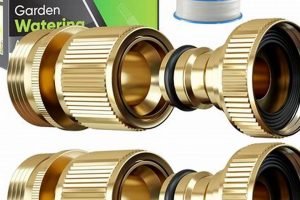
Tip 6: Consider using quick-connect fittings that are designed for garden hose thread to quickly attach and detach hoses from faucets or accessories.
Tip 7: When storing hoses, ensure they are completely drained to prevent freezing and potential damage to the threads during colder months.
Adhering to these tips will help maintain the integrity of garden hose thread connections, optimizing water usage and prolonging the lifespan of related equipment.
The next section will explore common issues associated with maintaining garden hose thread connections and provide solutions for troubleshooting these problems.
1. Diameter

The diameter is a fundamental component in specifying garden hose thread size. The nominal diameter of garden hose thread, frequently cited as 3/4 inch, directly influences compatibility between hoses, faucets, and various watering attachments. Deviations from this standard diameter will, in most instances, prevent a secure connection, leading to leaks and inefficient water usage. For example, attempting to connect a hose with a non-standard diameter to a 3/4 inch threaded faucet will result in an inability to properly engage the threads and create a watertight seal.
The practical significance of understanding the diameter lies in the selection of appropriate fittings and accessories. Irrigation systems rely on consistent diameters to maintain pressure and water flow throughout the system. Furthermore, commercial applications, such as car washes and landscaping businesses, depend on standardized connections for efficient operation and equipment interchangeability. In these scenarios, improper diameter matching can result in costly downtime and repairs.
In summary, the diameter is not merely one aspect of garden hose thread size; it is a defining characteristic. Maintaining awareness of the standard 3/4 inch diameter, and ensuring compatibility with existing systems, is essential for successful water management. Ignoring this key element introduces risks of leaks, reduced water pressure, and equipment damage, ultimately impacting both residential and commercial water usage efficiency.
2. Threads per inch (TPI)

Threads per inch (TPI) is a crucial factor defining the compatibility and performance of garden hose connections. It directly influences the seal integrity and ease of connection, underscoring its importance in understanding garden hose specifications.
- Definition and Measurement
Threads per inch refers to the number of thread crests counted within a one-inch span along the thread axis. In the context of garden hose thread (GHT), a standard TPI ensures consistent engagement between male and female connectors. Precise measurement and adherence to specifications are crucial for a secure, leak-proof seal. Deviations in TPI can result in cross-threading or a loose fit.
- Impact on Seal Integrity
The TPI directly affects the tightness and reliability of the connection. A standardized TPI allows for uniform pressure distribution across the connection surface, maximizing the seal’s effectiveness. Variations can lead to uneven pressure, creating pathways for leaks. Regular inspection and maintenance of threads are essential to preserve seal integrity.
- Compatibility Across Fittings
A consistent TPI ensures interchangeability between different brands and types of garden hose fittings. Without a uniform standard, connecting hoses, sprinklers, and nozzles from various manufacturers would be problematic. The established TPI enables a wide range of configurations and applications within irrigation and gardening systems.
- Material Considerations
The choice of material for the hose and fittings also influences the optimal TPI. Materials such as brass, aluminum, and plastic each have different strengths and tolerances, which must be considered in relation to the TPI. Stricter TPI standards may be required for weaker materials to ensure a robust connection. Proper material selection combined with correct TPI contributes to the overall durability and lifespan of the connection.
In summary, Threads per inch (TPI) is a critical specification dictating the compatibility, seal integrity, and overall performance of garden hose connections. Strict adherence to the standard TPI is vital for efficient water delivery, leak prevention, and seamless integration of various watering implements.
3. Standardization

Sta
ndardization plays a fundamental role in the utility and widespread adoption of garden hose threads. It ensures interchangeability and proper function across various manufacturers and applications, making it a critical element in water distribution systems.
- Uniform Dimensions and Specifications
The adoption of uniform dimensions and specifications for garden hose threads facilitates compatibility among diverse brands and products. This standardization means that a hose purchased from one manufacturer will reliably connect to a faucet or sprinkler from another, promoting consumer convenience and reducing compatibility issues. The specific dimensional standards cover diameter, thread pitch, and thread form, ensuring a consistent interface.
- Ensuring Leak-Proof Connections
Standardized threads are designed to provide a secure, leak-proof connection when properly tightened. The consistency in thread dimensions and angles allows for optimal engagement between male and female connectors, minimizing the risk of water leakage. This standardization is particularly important in irrigation systems, where even minor leaks can lead to significant water wastage and reduced system efficiency.
- Facilitating Mass Production and Distribution
Standardization enables manufacturers to mass-produce garden hose fittings and accessories, leading to economies of scale and lower costs for consumers. The uniformity in thread size simplifies manufacturing processes and allows for efficient quality control, ensuring that products meet defined performance standards. Mass distribution networks can then rely on consistent product dimensions, streamlining inventory management and logistics.
- Supporting Regulatory Compliance and Safety
Adherence to standardized thread sizes supports regulatory compliance and safety in water distribution systems. Standardized fittings are often subject to testing and certification processes to ensure they meet minimum performance and safety criteria. This compliance reduces the risk of system failures, water contamination, and other potential hazards, contributing to the overall reliability and safety of water delivery infrastructure.
In conclusion, standardization is indispensable to the functionality and widespread use of garden hose threads. By ensuring dimensional consistency, promoting leak-proof connections, enabling mass production, and supporting regulatory compliance, standardization ensures that garden hoses remain a reliable and efficient means of water conveyance for a wide range of applications.
4. Compatibility
Compatibility is a critical consideration directly tied to the dimensions of garden hose thread. The effectiveness of any watering or irrigation system hinges on the ability of its components to connect seamlessly, and this is predicated on adhering to standardized thread sizing. Without proper compatibility, leaks, system inefficiencies, and equipment damage are likely outcomes.
- Interchangeability of Fittings
One primary facet of compatibility is the ability to interchange fittings from different manufacturers. If the garden hose thread size is consistent across brands, consumers can easily replace or add components without needing specialized adapters. For instance, a nozzle from Company A should readily attach to a hose from Company B, provided both adhere to the standard garden hose thread dimensions. Failure to meet this standard results in limited interchangeability, complicating system maintenance and expansion.
- Sealing Performance
Compatibility directly affects the sealing performance of the connection. When threads are mismatched or improperly sized, a secure, watertight seal cannot be achieved. This leads to water leakage, reduced water pressure, and potential damage to the connection points. A compatible connection, adhering to standard garden hose thread dimensions, ensures that the threads engage properly, creating a tight seal that minimizes water loss. Examples include loose connections between a hose and a sprinkler, resulting in a loss of water pressure and an inefficient watering pattern.
- Material Compatibility
Compatibility extends beyond just thread sizing to include material considerations. While thread dimensions may be standard, combining dissimilar materials can lead to corrosion or degradation over time. For example, connecting a brass fitting to a plastic hose may result in galvanic corrosion, weakening the connection and eventually causing a leak. Compatibility also encompasses ensuring that the materials used in different components are designed to withstand similar pressure and temperature conditions. A low-pressure hose connected to a high-pressure faucet is likely to rupture or fail prematurely.
- Application-Specific Considerations
Compatibility requirements can vary depending on the specific application. A simple garden watering setup may have less stringent compatibility needs than a complex irrigation system. Irrigation systems, often involving multiple interconnected components and higher water pressures, require a high degree of compatibility to ensure reliable performance. The thread dimensions, material composition, and pressure ratings of all components must be carefully matched to avoid system failures. Specialized applications, such as those involving chemical delivery, may require specific thread types and materials to ensure chemical resistance and prevent contamination.
In essence, compatibility, in the context of garden hose threads, is a multifaceted issue that encompasses thread sizing, material compatibility, and application-specific considerations. A thorough understanding of these aspects is critical for ensuring the effective and reliable operation of any water delivery system, from simple garden watering to complex irrigation setups. Ignoring compatibility concerns leads to inefficiencies, increased water wastage, and potential equipment damage, underscoring the importance of adhering to standardized garden hose thread dimensions and material guidelines.
5. Material

Material selection significantly impacts the performance and longevity of garden hose thread connections. The properties of the material, such as its strength, corrosion resistance, and thermal expansion coefficient, directly affect the thread’s ability to maintain a secure and leak-proof seal. The type of material used influences its compatibility with other connected components and the overall durability of the system.
- Brass
Brass is a common material for garden hose fittings due to its corrosion resistance and durability. It maintains its integrity under varying weather conditions and resists degradation from exposure to water and sunlight. Brass fittings, when properly sized, provide a reliable connection and are less prone to thread damage compared to some alternatives. The density and strength of brass allow for tighter seals, provided the threads are clean and well-maintained. However, brass is more expensive than plastic and can be susceptible to galvanic corrosion when coupled with dissimilar metals.
- Plastic
Plastic materials, such as polypropylene and ABS, are frequently used for garden hose threads due to their lower cost and ease of manufacturing. Plastic fittings are lightwei
ght and resistant to many chemicals found in fertilizers and pesticides. They are less prone to corrosion than metal fittings, which is advantageous in harsh environments. However, plastic fittings are generally less durable than brass and may be more susceptible to thread damage from overtightening or exposure to extreme temperatures. The lower strength of plastic requires careful attention to thread dimensions to ensure a secure seal without stripping the threads. - Aluminum
Aluminum is another material option, providing a balance between weight and corrosion resistance. Aluminum fittings are lighter than brass but stronger than many plastics. Aluminum’s resistance to corrosion is beneficial in environments with high humidity or exposure to corrosive substances. However, aluminum is prone to galvanic corrosion when in contact with dissimilar metals, requiring careful selection of mating components. Thread dimensions must be precisely controlled to avoid galling or seizing of the threads during tightening.
- Hybrid Materials
Some fittings combine different materials to leverage their respective strengths. For example, a fitting might feature a brass core for strength and a plastic outer layer for chemical resistance. Hybrid designs aim to provide the benefits of both materials while mitigating their drawbacks. However, these designs require careful engineering to ensure that the materials are compatible and that the thread dimensions are precisely maintained. Improper assembly or mismatched materials can lead to premature failure of the connection.
The selection of material for garden hose threads is a critical consideration, influencing the durability, corrosion resistance, and sealing performance of the connection. Each material option presents its own advantages and disadvantages, requiring careful evaluation based on the specific application and environmental conditions. Regardless of the material chosen, adherence to standardized thread dimensions remains essential for ensuring compatibility and a leak-proof connection.
6. Seal
The integrity of a garden hose connection is fundamentally linked to the quality of its seal, which, in turn, is directly dependent on maintaining correct garden hose thread size. A properly sized thread ensures adequate contact between the male and female connectors, allowing for a tight compression and preventing water leakage. When the thread size deviates from the standard, the contact surface is compromised, leading to an imperfect seal. As a direct result, water escapes under pressure, negating the hose’s functionality. Consider a scenario where a non-standard thread is forced onto a faucet; even with considerable tightening, a leak persists due to the inconsistent thread engagement. This underlines the importance of thread size as a precursor to an effective seal.
The seal’s effectiveness also hinges on the material properties of the connected components. Even with a correct thread size, damaged or degraded threads can compromise the seal. For instance, threads stripped from overtightening or deformed from prolonged exposure to harsh conditions will struggle to form a reliable seal, despite adhering to standard garden hose thread size guidelines. The addition of Teflon tape or pipe dope often compensates for minor imperfections, creating a tighter barrier within the threads. This practice highlights the direct application of understanding seal requirements to real-world scenarios, thereby optimizing water delivery efficiency and minimizing wastage.
In summary, the seal is an integral component of garden hose functionality, intrinsically tied to the garden hose thread size. A correct thread size is a necessary but not always sufficient condition for a leak-proof connection. Material integrity, proper maintenance, and appropriate sealing techniques further contribute to optimizing the overall seal performance. Prioritizing these factors ensures efficient water use and extends the lifespan of the hose and connected components.
7. Application

The intended application dictates the selection and importance of garden hose thread sizing. Different use-cases necessitate varied levels of precision and compatibility, directly impacting system performance and longevity.
- Residential Watering
For typical residential watering tasks such as gardening, car washing, and lawn irrigation, a standard 3/4 inch garden hose thread is generally sufficient. The widespread availability of compatible hoses, sprinklers, and nozzles makes this application relatively straightforward. However, variations in water pressure and flow rate within a residential setting may influence the need for additional considerations, such as reinforced hoses or pressure regulators.
- Commercial Landscaping
Commercial landscaping operations often require more robust and reliable connections due to the increased frequency and duration of use. Larger-scale irrigation systems and specialized equipment may necessitate the use of reinforced hoses and fittings with precise thread dimensions to prevent leaks and maintain consistent water pressure across the entire system. Specialized fittings, such as quick-connect couplings, may also be employed to facilitate rapid setup and disassembly.
- Agricultural Irrigation
Agricultural irrigation systems demand the highest level of precision and reliability in thread sizing. Large-scale farming operations rely on consistent water distribution to maximize crop yields, and any deviation in thread size or material compatibility can result in significant water wastage and economic losses. Specialized thread types, such as those conforming to specific industry standards (e.g., National Pipe Thread), may be used in conjunction with or in place of standard garden hose threads to ensure compatibility with agricultural irrigation equipment.
- Industrial Water Delivery
Industrial applications, such as equipment cleaning or process cooling, may involve the delivery of water under high pressure or with specific chemical additives. In these scenarios, the choice of thread size and material must be carefully considered to ensure compatibility with the process fluids and to prevent leaks or system failures. Specialized thread types, such as those made from stainless steel or other corrosion-resistant materials, may be required to withstand harsh industrial environments. Precision thread gauging and regular inspections are essential to maintain the integrity of the connections and prevent costly downtime.
In conclusion, the application profoundly influences the requirements for garden hose thread. From simple residential watering to complex industrial processes, selecting the correct thread size, material, and ensuring compatibility is critical for achieving efficient water delivery and minimizing risks of leaks or system failures. The specific demands of each application dictate the level of precision and reliability required, highlighting the importance of understanding garden hose thread sizing in the context of its intended use.
Frequently Asked Questions Regarding Garden Hose Thread Dimensions
This section addresses common inquiries about garden hose thread sizing, providing clarity on standards, compatibility, and potential issues.
Question 1: What is the standard size for garden hose thread?
The
generally accepted standard size for garden hose thread, particularly in North America, is 3/4 inch (GHT). This dimension is crucial for interchangeability between hoses, faucets, and accessories.
Question 2: Are all garden hose threads the same, regardless of manufacturer?
While the 3/4 inch GHT is widely adopted, minor variations can occur between manufacturers. Adherence to industry standards minimizes these differences, but verifying compatibility before connecting components is advisable.
Question 3: Can garden hose thread be used with plumbing pipes?
Garden hose thread differs from standard plumbing pipe threads (e.g., NPT). Direct connection is generally not possible without an adapter, as the thread pitch and angle are dissimilar.
Question 4: What happens if a non-standard thread is forced onto a standard garden hose fitting?
Attempting to force a non-standard thread can damage both the hose fitting and the connecting component. Stripped threads, leaks, and potential equipment failure may result.
Question 5: Is there a difference between male and female garden hose threads?
Yes, male threads are located on the exterior of a fitting, while female threads are found on the interior. Proper identification and matching of male and female threads are essential for a secure connection.
Question 6: How does thread size affect water pressure in a garden hose?
Thread size, specifically the internal diameter of the fitting, influences water flow and pressure. A smaller internal diameter can restrict flow, reducing water pressure at the output end of the hose.
Understanding these fundamental aspects of garden hose thread size enables informed decision-making when selecting, connecting, and maintaining watering equipment.
The subsequent section will provide a guide for troubleshooting common issues with garden hose thread connections, offering practical solutions for resolving leaks and compatibility problems.
Conclusion
This exploration of “what size is garden hose thread” has illuminated its critical role in ensuring efficient water delivery. Standardized dimensions, material considerations, and application-specific adaptations all contribute to the reliability and performance of watering systems. Adherence to established norms mitigates risks associated with leaks, compatibility issues, and potential equipment damage.
Given the significance of precise sizing, continued emphasis on standardization and rigorous quality control remains paramount. Future advancements should focus on enhancing material durability and developing innovative connection solutions to optimize water conservation efforts across diverse applications. The importance of “what size is garden hose thread” extends beyond mere connection; it underpins sustainable water management practices.
![Best 2 Inch Garden Hose For [X] & Reviews | The Ultimate Gardening Guide: Grow a Thriving Garden Year-Round](https://MyGardenPatch.com/wp-content/uploads/2025/07/th-5631-300x200.jpg "Best 2 Inch Garden Hose For [X] & Reviews The Ultimate Gardening Guide: Grow a Thriving Garden Year-Round")