



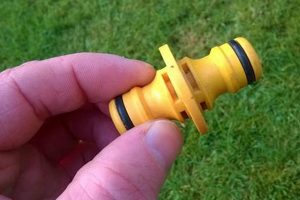
A device that joins two garden hoses, each possessing a standard male threaded end, facilitates a direct connection between them. This type of connector features female threading on both ends, enabling the secure and leak-proof linking of the two male hose ends. For instance, this fitting allows for extending the reach of a watering system by joining a short hose to a longer one.
Such a component offers a simple and cost-effective solution for extending hose length or adapting existing watering setups. The ability to readily combine multiple hoses provides flexibility in reaching distant areas of a garden or accommodating varied landscape layouts. Historically, these adapters evolved to standardize hose connections, ensuring compatibility across different brands and systems, simplifying irrigation and outdoor tasks.
The subsequent sections will delve into material considerations for these connectors, optimal usage scenarios, and potential challenges in maintaining a reliable seal. Examining the various options will aid in selecting the most suitable solution for specific gardening and watering needs.
Essential Usage Guidelines
The effective employment of a fitting designed to connect two male-ended garden hoses hinges on understanding proper installation and maintenance. The following points outline best practices to ensure optimal performance and longevity.
Tip 1: Material Compatibility: Select an adapter constructed from materials compatible with the hose fittings. Brass offers durability and corrosion resistance, whereas plastic alternatives are more cost-effective but may degrade with prolonged UV exposure.
Tip 2: Thread Alignment: Ensure proper thread alignment before tightening. Cross-threading can damage both the connector and the hose fittings, resulting in leaks and potential component failure.
Tip 3: Sealing Considerations: Employ Teflon tape or pipe sealant on the male threads before connection. This provides a tighter seal and minimizes the risk of leaks, particularly under high water pressure.
Tip 4: Torque Management: Avoid over-tightening the connection. Excessive force can strip the threads or crack the adapter body. Tighten only until a secure seal is achieved.
Tip 5: Storage Practices: When not in use, store the adapter in a dry, sheltered location. This protects it from weathering and potential damage caused by extreme temperatures or environmental factors.
Tip 6: Regular Inspection: Periodically inspect the adapter for signs of wear or damage, such as cracks or stripped threads. Replace the component if any defects are observed to prevent leaks and ensure reliable performance.
By adhering to these guidelines, users can maximize the effectiveness and lifespan of this hose joining component. This proactive approach minimizes potential issues and promotes efficient watering system operation.
The following section will address common troubleshooting scenarios and provide solutions for maintaining a leak-free connection.
1. Compatibility

The successful utilization of a fitting designed to unite two male-threaded garden hoses is predicated on compatibility across several dimensions. This ensures a secure, leak-free connection and optimal performance of the extended hose system.
- Thread Standard Compatibility
Adherence to standardized thread specifications is paramount. Garden hoses typically employ a garden hose thread (GHT), which must be matched by the connector. Mismatched threads, whether due to non-standard sizing or differing thread types (e.g., NPT vs. GHT), will prevent a secure connection, leading to leaks or complete incompatibility. An example is attempting to connect a European hose fitting (often metric) to a North American GHT system without a suitable converter.
- Material Compatibility
The materials of the connector and hoses should be chemically compatible to prevent degradation or corrosion over time. For instance, using a brass fitting with a hose that leaches chemicals when exposed to brass could lead to premature failure of the hose or fitting. Conversely, some lower quality plastic adapters might degrade or crack when connected to a heavy-duty rubber hose with high water pressure.
- Pressure Rating Compatibility
The pressure rating of the adapter must meet or exceed the maximum water pressure of the supply system. Using an adapter with a lower pressure rating than the system pressure can lead to bursting or failure of the connector, resulting in water damage and system downtime. An example would be using a thin plastic adapter with a system rated for 80 PSI; a brass or reinforced polymer adapter would be more appropriate.
- Hose Diameter Compatibility
Although most garden hoses utilize a standard inner diameter (typically 5/8 inch), variations can occur. While the adapter will primarily connect the male threads, significant differences in inner hose diameter can impact water flow rate and system pressure. Using an adapter with hoses of drastically different diameters might create a bottleneck or turbulence, affecting the overall efficiency of the watering system. For example, connecting a half inch hose and a five-eighths inch hose using the adapter may greatly diminish the water flow.
In summary, achieving full compatibility necessitates careful consideration of thread standards, material properties, pressure ratings, and hose diameters. When the adapter meets these, optimal performance is guaranteed. Failure to adhere to these guidelines can result in leaks, damage, or reduced efficiency within the watering system.
2. Thread Standardization

The functionality of a connector engineered to join two male-ended garden hoses is fundamentally contingent upon thread standardization. This standardization ensures interchangeability and compatibility across various brands and hose types. Without unified thread specifications, the connector would be unable to establish a secure, leak-proof seal, rendering it ineffectual. The presence of standardized threads, predominantly garden hose thread (GHT), dictates the connector’s dimensions, pitch, and form. In absence of thread standardization, each connector would need to be custom-fitted to specific hose brands, a scenario that poses significant logistical and economic obstacles. Standard threads enable users to easily extend hoses without specialized tools or modifications.
The implementation of GHT, for instance, allows a homeowner to seamlessly connect hoses from disparate manufacturers using a single, universally compatible joining component. This simplicity extends to replacing damaged hose sections. Instead of replacing the entire length, a user can disconnect the damaged segment, attach the joining device, and then affix
a new segment, efficiently restoring the system to full functionality. Prior to such standardization, each hose was essentially a proprietary system, thereby impeding flexibility and increasing costs for consumers.
In summary, thread standardization is not merely a technical detail but a core requirement for a fitting designed to link two male-threaded garden hoses. It ensures broad compatibility, simplifies hose extension and repair, and ultimately lowers the cost and complexity associated with garden irrigation and maintenance. The benefits of standardization directly enhance usability and reduce potential frustration for the end-user. The development and adoption of unified thread standards represent a critical advancement in garden hose technology.
3. Material Durability

Material durability is a critical consideration when selecting a device for joining two male-ended garden hoses, directly influencing its lifespan, performance under varying environmental conditions, and overall cost-effectiveness. The choice of material dictates the adapter’s ability to withstand physical stress, chemical exposure, and degradation from environmental factors.
- Corrosion Resistance
The adapters resistance to corrosion is paramount, especially in environments where water contains minerals or is slightly acidic. Materials like brass, known for their inherent corrosion resistance, prevent rust and mineral buildup that can compromise the integrity of the threads and reduce water flow. For example, in coastal areas with saltwater exposure, adapters made of less resistant materials may quickly corrode, leading to leaks and eventual failure.
- UV Degradation
Prolonged exposure to ultraviolet (UV) radiation can cause significant degradation in certain materials, particularly plastics. Adapters made from UV-stabilized polymers maintain their structural integrity and flexibility longer than those made from standard plastics. An example of this is an adapter left exposed to sunlight for extended periods; a UV-resistant model would remain pliable, while a standard plastic adapter may become brittle and prone to cracking.
- Pressure Tolerance
The adapters ability to withstand high water pressure without deformation or failure is crucial for reliable performance. Materials such as brass and reinforced polymers offer higher pressure tolerances than standard plastics, ensuring that the adapter maintains a secure seal even under fluctuating water pressure. This is particularly important in applications where the water supply pressure is consistently high, as a weaker material could fail catastrophically under the strain.
- Impact Resistance
The physical robustness of the material determines its ability to withstand impacts and accidental damage. Adapters made from durable materials like brass or high-impact polymers are less likely to crack or break if dropped or subjected to physical stress, providing greater longevity and reducing the need for frequent replacements. An example is an adapter used in a high-traffic garden area, where it may be accidentally stepped on or struck by gardening tools; a more durable material will withstand these impacts better than a fragile one.
The selection of a suitable material for a connector designed to join two male-threaded garden hoses is not merely a matter of cost but an investment in long-term reliability and performance. By prioritizing durability, users can minimize the risk of leaks, failures, and the associated costs of replacement and water wastage, ensuring a more efficient and sustainable watering system.
4. Leak Prevention

Leak prevention is paramount when utilizing a device to connect two male-ended garden hoses. A compromised seal not only leads to water wastage but can also diminish water pressure and potentially damage surrounding vegetation or structures. Therefore, understanding the factors that contribute to leak prevention is essential for the effective deployment of such a connector.
- Thread Sealing Techniques
The application of thread sealant, such as Teflon tape or pipe dope, to the male threads before connection is a critical step. These sealants fill microscopic gaps between the threads, creating a watertight barrier. For instance, without Teflon tape, even a properly tightened connection may exhibit a slow leak due to imperfect thread mating. The choice of sealant may depend on the hose material and environmental conditions; certain sealants are better suited for high-temperature or chemically aggressive environments.
- Proper Tightening Torque
Achieving the correct tightening torque is vital to prevent leaks. Over-tightening can deform the threads or crack the connector, while under-tightening may not create a sufficient seal. Manufacturers typically specify a torque range for their products; however, in the absence of specific instructions, a snug fit followed by a slight additional turn is generally adequate. As an example, overtightening a plastic adapter can easily strip the threads, rendering it useless.
- Material Compatibility and Condition
The compatibility of the connector material with the hose material, as well as the condition of the threads, significantly impacts leak prevention. Mismatched materials may corrode or degrade over time, compromising the seal. Damaged or worn threads, whether on the connector or the hose, create pathways for water to escape. An example is using a brass adapter with a hose that contains chemicals that react with brass. Also, a hose with stripped threads cannot establish a reliable connection, regardless of the adapter quality.
- Regular Inspection and Maintenance
Periodic inspection of the connector and hose for signs of wear, damage, or corrosion is essential for proactive leak prevention. Identifying and addressing potential issues before they escalate can prevent costly water wastage and damage. For example, inspecting the connector for cracks or mineral buildup and replacing it if necessary can maintain the integrity of the connection. Regular cleaning of the threads can also remove debris that could impede a proper seal.
In conclusion, effective leak prevention when using an adapter for joining two male-threaded garden hoses is a multifaceted process. It requires careful attention to thread sealing techniques, proper tightening torque, material compatibility, and regular maintenance. By addressing these factors proactively, users can ensure a reliable, leak-free connection, optimizing water usage and preventing potential damage to their gardens and properties.
5. Extension Capability

The utility of a device engineered to connect two male-ended garden hoses resides primarily in its contribution to extension capability, enabling users to overcome limitations imposed by hose length and access. This function directly impacts the versatility and practicality of irrigation systems and outdoor water management.
- Reaching Distant Areas
The primary advantage lies in the ability to reach areas beyond t
he span of a single hose. Large gardens, multiple-story dwellings, or distant water features necessitate extending hose length to facilitate watering, cleaning, or other fluid transfer tasks. For example, a gardener may use the adapter to combine two shorter hoses, allowing irrigation of a remote flower bed without requiring the purchase of a single, more expensive, long hose. - Adapting to Variable Terrain
Uneven terrain, obstacles, or fixed structures may necessitate indirect hose routes. Extending hose length with a connector allows users to navigate these challenges, maintaining consistent water pressure and flow. A homeowner might use multiple connected hoses to route water around a building corner or over a raised garden bed, avoiding kinks and ensuring uninterrupted water supply.
- Facilitating Temporary Installations
Temporary setups, such as filling a portable pool or washing a vehicle in a distant location, benefit from the flexibility afforded by extended hose reach. The connector allows for a rapid and easily reversible extension of the water supply. For instance, a user could quickly combine two hoses to reach a swimming pool located at the far end of a yard, disconnecting them just as easily when the task is complete.
- Enhancing System Flexibility
The ability to combine multiple hoses of varying lengths provides greater overall system flexibility. Users can adapt their watering setup to different tasks and locations, optimizing water usage and minimizing waste. A landscaper might use an assortment of hoses and connectors to tailor the irrigation system to the specific needs of different zones within a garden, adjusting length and flow as required.
These facets highlight the central role of extension capability in enhancing the functionality and versatility of garden hoses. By enabling users to overcome spatial constraints and adapt to diverse watering requirements, this type of connector contributes significantly to efficient and effective water management in residential and commercial settings.
6. Water Pressure

The connection between water pressure and a device for connecting two male-ended garden hoses is critical, dictating its performance and longevity. Water pressure, defined as the force exerted by water per unit area, significantly impacts the structural integrity and sealing capacity of the connector. An inadequate connector for a given water pressure can result in leaks, bursts, or complete failure, rendering the connected hoses unusable. The material composition and design of the connector must withstand the expected water pressure to ensure a secure and reliable connection. As an example, consider a household with consistently high water pressure; a connector made of thin plastic might fail prematurely, while a brass or reinforced polymer connector would offer greater resistance.
The adapter’s role in maintaining consistent water pressure is equally important. A poorly designed or damaged connector can create a bottleneck, reducing water flow and diminishing pressure at the hose end. This is particularly problematic in applications requiring significant water flow, such as irrigation or pressure washing. Selecting a connector with an internal diameter that matches the hose’s and ensuring smooth internal surfaces minimizes flow restriction. Furthermore, the type of seal employed in the connector directly affects its ability to maintain pressure. A robust seal prevents leaks and ensures that the available water pressure is fully utilized. For instance, the use of Teflon tape on the threads, which provides a greater sealing, is very suitable in the high-pressure setting.
In summary, the relationship between water pressure and a device connecting two male garden hoses is interdependent. The connector must be appropriately rated for the expected water pressure to avoid failure, and its design should minimize pressure loss. A thorough understanding of these factors is vital for selecting the right connector, ensuring efficient water usage, and preventing potential damage or water wastage. The practical application of this understanding leads to a more reliable and effective watering system, whether for residential or commercial use.
Frequently Asked Questions
The following addresses common inquiries regarding the utilization and selection of a device for connecting two male-ended garden hoses, offering clarity and guidance for optimal use.
Question 1: What is the primary function of a device designed to join two male-ended garden hoses?
The primary function is to connect two garden hoses, both possessing male-threaded ends, effectively extending the overall length of the watering system or facilitating connection to other compatible equipment.
Question 2: What materials are commonly used in the construction of these adapters, and how does the material impact performance?
Common materials include brass, plastic, and aluminum. Brass offers superior durability and corrosion resistance, while plastic provides a cost-effective and lightweight alternative. Aluminum offers a balance of durability and cost, but may be more prone to corrosion than brass in certain environments.
Question 3: What are the key considerations when selecting an adapter to ensure a leak-proof connection?
Key considerations include ensuring proper thread alignment, applying Teflon tape or pipe sealant to the threads, and achieving the correct tightening torque to create a secure seal without damaging the adapter or hose fittings.
Question 4: How does water pressure affect the performance and lifespan of the connector?
Excessive water pressure can strain the adapter, potentially leading to leaks or failure. Selecting an adapter with a pressure rating that meets or exceeds the maximum water pressure of the system is crucial for ensuring reliable performance and longevity.
Question 5: Are there different thread standards for garden hoses, and how does this impact compatibility?
Yes, garden hoses typically utilize a standardized garden hose thread (GHT). However, variations may exist in other regions or with specialized equipment. Ensuring that the adapter thread matches the hose threads is essential for compatibility and a secure connection.
Question 6: What maintenance practices can prolong the lifespan of these adapters?
Regular inspection for signs of wear, damage, or corrosion is recommended. Cleaning the threads periodically and storing the adapter in a dry, sheltered location when not in use can also help to prolong its lifespan.
The above FAQs are for understanding the core concepts of such a connector.
The following section will deal with real world problems to improve the value of the mentioned tool.
Conclusion
The preceding exploration has delineated the salient features and practical considerations surrounding the utilization of a fitting designed to join two male-threaded garden hoses. Comprehension of thread standards, material properties, pressure ratings, and leak prevention techniques is crucial for effective implementation. The extension capability afforded by this connector enhances irrigation system versatility, while appropriate maintenance practices ensure prolonged service life.
A judicious selection and conscientious application of this component facilitate efficient water management and mitigate potential damage resulting from leaks or system failures. Further investiga
tion into advanced materials and sealing technologies may yield enhanced performance and durability in future iterations of this ubiquitous gardening tool. Continued adherence to best practices will maximize the benefits derived from employing this essential element of modern irrigation systems.
![Best 2 Inch Garden Hose For [X] & Reviews | The Ultimate Gardening Guide: Grow a Thriving Garden Year-Round](https://MyGardenPatch.com/wp-content/uploads/2025/07/th-5631-300x200.jpg "Best 2 Inch Garden Hose For [X] & Reviews The Ultimate Gardening Guide: Grow a Thriving Garden Year-Round")