



A specific type of flexible water conduit designed for horticultural use is characterized by its flattened profile when not pressurized. Upon activation of water flow, this conduit expands to a circular shape, enabling water delivery to plants and garden areas. This design contrasts with traditional round hoses, offering advantages in storage and portability.
The utility of this specific watering apparatus lies in its space-saving attributes and ease of handling. Its collapsible nature allows for compact storage, minimizing clutter in gardening sheds or garages. Historically, such devices have provided a practical solution for gardeners seeking efficient and manageable watering solutions, particularly in environments with limited storage capacity or where frequent hose relocation is required.
The following discussion will delve into the construction materials, usage scenarios, advantages, and disadvantages associated with this particular type of garden watering equipment, providing a comprehensive overview of its applications and limitations.
Optimizing Use and Longevity
Effective utilization and extended lifespan require adherence to specific practices. The following recommendations are designed to maximize performance and minimize potential issues associated with this watering implement.
Tip 1: Pressure Management: Operate within the recommended pressure range specified by the manufacturer. Exceeding this limit can cause bursting or irreparable damage to the hose material.
Tip 2: Storage Practices: Completely drain the hose before storing. Moisture retention can promote mold growth and material degradation. Store in a cool, dry location away from direct sunlight to prevent UV damage.
Tip 3: Surface Protection: Avoid dragging the hose across abrasive surfaces such as concrete or gravel. Such contact can lead to punctures and weakening of the material. Utilize a hose reel or carrying device.
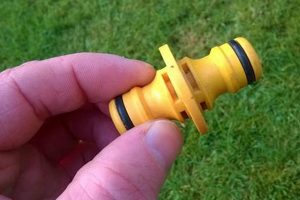
Tip 4: Connector Maintenance: Regularly inspect the fittings for leaks or damage. Ensure proper sealing and replace worn washers or connectors as needed. Loose connections can result in water wastage and pressure loss.
Tip 5: Winterization Procedures: In regions subject to freezing temperatures, thoroughly drain the hose and disconnect it from the water source. Residual water can freeze and expand, causing significant damage. Consider storing the hose indoors during the winter months.
Tip 6: Avoid Sharp Bends: Sharp bends and kinks can restrict water flow and weaken the hose structure. Uncoil the hose carefully and avoid creating tight bends during use or storage.
Adherence to these guidelines will contribute to improved performance, reduced maintenance, and an extended service life. Consistent application of these principles ensures reliable operation throughout the gardening season.
The subsequent sections will cover common troubleshooting scenarios and offer solutions for addressing potential operational challenges.
1. Material Durability

Material durability constitutes a critical determinant of the longevity and operational effectiveness of watering equipment. In the context of flat hosing, the selection and properties of the constituent materials directly influence resistance to degradation, operational pressure tolerance, and overall lifespan.
- UV Resistance
Prolonged exposure to ultraviolet (UV) radiation degrades polymeric materials, leading to embrittlement and reduced burst strength. Flat hoses constructed from UV-stabilized polymers exhibit enhanced resistance to sunlight-induced degradation, extending their service life in outdoor environments. The absence of such stabilization results in premature failure and necessitates more frequent replacements.
- Abrasion Resistance
Repeated dragging across abrasive surfaces, such as concrete or gravel, causes wear and thinning of the hose wall. Materials with high abrasion resistance, often incorporating reinforced layers or specialized coatings, are better suited for demanding applications where frequent surface contact is unavoidable. Lower abrasion resistance leads to punctures and leaks, compromising functionality.
- Temperature Sensitivity
Extreme temperature fluctuations can induce expansion and contraction, placing stress on the material and potentially causing cracking or delamination. Materials with a wide operating temperature range maintain their structural integrity under diverse climatic conditions. Susceptibility to temperature extremes limits the hose’s usability in certain geographic regions and necessitates careful storage practices.
- Chemical Resistance
Exposure to fertilizers, pesticides, and other commonly used gardening chemicals can degrade certain hose materials. Chemical-resistant polymers are impervious to these substances, preventing material breakdown and contamination of the water supply. Lack of chemical resistance can lead to leaching of harmful chemicals into the water and reduced hose lifespan.
The interplay of these material properties dictates the overall durability and suitability of flat hoses for specific horticultural applications. Selection of materials that address these factors contributes directly to extended product lifespan, reduced replacement costs, and reliable performance in diverse operational scenarios. Careful consideration of these characteristics is paramount when choosing flat hosing for garden irrigation systems.
2. Storage Efficiency
The design of flat hoses directly addresses storage efficiency. Their defining characteristic is the ability to collapse into a flattened state when not pressurized, leading to a significant reduction in volume compared to traditional, rigid hoses. This feature is particularly beneficial in environments with limited storage space, such as urban gardens, apartments with balconies, or small storage sheds. The cause is the flexible material; the effect is minimized storage footprint. This intrinsic space-saving quality is a fundamental advantage of flat hoses in the context of urban and smaller-scale gardening.
The importance of storage efficiency in a garden hose becomes apparent when considering practical applications. For instance, a 50-foot standard garden hose, when coiled, can occupy a substantial portion of a small shed or garage. In contrast, a flat hose of similar length, when emptied and rolled, occupies a fraction of the same space. This facilitates easier organization and allows for the storage of other essential gardening tools. Furthermore, the lightweight nature of collapsed flat hoses simplifies handling and transportation, a crucial factor for individuals with mobility constraints or those needing to relocate the hose frequently.
In summary, the storage efficiency of flat hoses is a direct conseq
uence of their design and material properties. This characteristic offers tangible benefits in space-constrained environments, enhances portability, and simplifies organization. While other factors such as durability and water pressure requirements must also be considered, the space-saving attribute of flat hoses represents a significant advantage for many gardeners, particularly those with limited storage capacity or requiring frequent relocation of watering equipment.
3. Pressure Tolerance

Pressure tolerance, in the context of a flat hose garden, refers to the maximum internal water pressure that the hose can withstand before structural failure occurs. This characteristic is critically important because municipal water systems, as well as pumps used in private wells, deliver water at varying pressures. A flat hose employed in gardening applications must be capable of withstanding the typical, and occasional peak, pressures within the water supply system. Exceeding the pressure tolerance results in bursting, leaks, or other forms of irreparable damage, rendering the hose unusable and potentially causing water damage to the surrounding area. For instance, if a homeowner connects a flat hose with a pressure tolerance of 60 PSI to a water source delivering 80 PSI, the likelihood of hose failure is significantly elevated.
The pressure tolerance of flat garden hoses is directly linked to the materials used in their construction and the manufacturing processes employed. Reinforced polymers, such as those incorporating woven fabric layers, generally exhibit higher pressure tolerances than non-reinforced materials. Manufacturers typically specify the maximum operating pressure on the product packaging or in the accompanying documentation. Adherence to these specifications is paramount for ensuring safe and effective operation. Moreover, the pressure tolerance may degrade over time due to exposure to UV radiation, temperature fluctuations, and repeated expansion and contraction cycles. Regular inspection for signs of wear and tear, such as bulging or discoloration, is advisable to proactively identify potential weaknesses before a catastrophic failure occurs. Some hoses also feature pressure relief valves as a failsafe.
In summary, pressure tolerance is a fundamental performance parameter for flat garden hoses. It directly impacts safety, reliability, and longevity. Selection of a flat hose with an appropriate pressure tolerance for the intended water source is a prerequisite for preventing damage and ensuring consistent performance. Furthermore, regular maintenance and careful handling practices are necessary to preserve the hose’s pressure-bearing capacity over time, thereby mitigating the risk of unexpected failures and prolonging its service life.
4. Kink Resistance
Kink resistance is a critical characteristic determining the operational efficacy of a flat hose intended for garden use. Its presence or absence directly influences water flow, ease of handling, and the overall user experience. Inherent to the flat design, the propensity for kinking differs markedly from traditional circular hoses, thereby warranting specific consideration.
- Material Composition and Flexibility
The material from which the flat hose is constructed significantly impacts its kink resistance. Polymers with greater flexibility and elasticity are inherently less prone to kinking. For example, a flat hose manufactured from a highly pliable thermoplastic polyurethane (TPU) will exhibit superior kink resistance compared to one fabricated from a more rigid polyvinyl chloride (PVC) compound. The material’s ability to bend without collapsing internally dictates its susceptibility to flow obstruction.
- Reinforcement Structures
The incorporation of internal or external reinforcement structures enhances kink resistance. These structures, often consisting of woven fibers or helical supports, provide structural integrity and prevent the hose from collapsing upon itself when bent. An example would be a flat hose embedding a layer of braided nylon within its polymeric matrix, thereby increasing its resistance to deformation and subsequent kinking. The absence of such reinforcement renders the hose more vulnerable to flow restriction.
- Wall Thickness and Design
The wall thickness and overall design of the flat hose contribute to its resistance to kinking. Hoses with thicker walls generally exhibit greater rigidity and are less susceptible to collapse under bending forces. Design elements such as internal ribs or external convolutions can also enhance kink resistance by providing additional support and preventing the hose from folding sharply. A thin-walled, unreinforced flat hose will invariably kink more readily than a robustly designed counterpart.
- Usage Practices and Environmental Factors
Even the most kink-resistant flat hose can be compromised by improper usage or adverse environmental conditions. Sharp bends, excessive pulling, and storage in extreme temperatures can all contribute to kinking. For instance, repeatedly bending a flat hose at the same point weakens the material and increases the likelihood of a permanent kink forming. Furthermore, exposure to direct sunlight can degrade the polymer, making it more brittle and susceptible to kinking. Correct handling and storage protocols are essential for preserving the kink resistance of any flat hose.
The inherent design and material composition of the flat hose dictate its initial kink resistance, while reinforcement structures and wall thickness further augment this property. However, user practices and environmental factors also play a significant role in maintaining kink-free operation. Optimizing these factors ensures consistent water flow and extends the service life of the flat hose in garden applications.
5. Flow Rate Consistency

Flow rate consistency, within the context of a flat hose garden system, refers to the uniformity of water delivery over time and across different sections of the watering area. It is the measure of how consistently a specific volume of water is discharged per unit of time, irrespective of variations in water pressure or hose configuration. Inherent to the design and operational characteristics of flat hoses, the maintenance of consistent flow presents both unique challenges and opportunities compared to traditional circular hoses. Inconsistent flow rates lead to uneven watering, resulting in localized overwatering and underwatering, ultimately affecting plant health and yield. For instance, a vegetable garden irrigated with a flat hose exhibiting inconsistent flow might show vigorous growth in areas closest to the water source, while plants farther away suffer from drought stress. Thus, flow rate consistency is a crucial parameter for efficient and effective irrigation using flat hoses.
Several factors influence flow rate consistency in flat hose garden systems. Hose length significantly impacts pressure drop, leading to reduced flow rates at the distal end. Kinking, common with less robust flat hose designs, drastically restricts water flow. Internal debris accumulation and mineral buildup impede flow and alter
its uniformity. The type of nozzle or sprinkler attached to the hose end directly governs water distribution patterns. Moreover, water pressure fluctuations in the municipal supply or pump system propagate inconsistencies in flow rates. To mitigate these issues, strategies such as selecting appropriately sized hoses, implementing backflow prevention devices, employing pressure regulators, and regularly flushing the hose system are crucial. Optimizing nozzle selection and avoiding sharp bends also contribute to improved flow rate consistency.
In summary, flow rate consistency is an indispensable attribute of a well-functioning flat hose garden system. Its impact on irrigation efficiency and plant health is significant. Achieving and maintaining consistent flow requires careful consideration of hose characteristics, system design, and operational practices. Addressing the challenges associated with pressure drop, kinking, and debris accumulation through appropriate hose selection and maintenance protocols ensures even water distribution and promotes optimal plant growth. Ignoring this aspect results in inefficient water usage, reduced yields, and increased susceptibility to plant diseases.
Frequently Asked Questions Regarding Flat Hose Garden Systems
The following questions address common inquiries concerning the usage, maintenance, and suitability of flat hose garden systems. These answers provide factual information based on established horticultural practices and engineering principles.
Question 1: What distinguishes a flat hose from a traditional round garden hose?
A flat hose is designed to collapse into a flattened profile when not pressurized, offering space-saving storage capabilities. Traditional round hoses maintain a circular cross-section regardless of water pressure. This design difference impacts storage, portability, and, potentially, flow characteristics.
Question 2: What is the expected lifespan of a flat hose used in a garden environment?
The lifespan of a flat hose is dependent upon material composition, usage frequency, and environmental conditions. High-quality, UV-resistant materials, proper storage, and adherence to pressure guidelines can extend the lifespan to several seasons. Conversely, exposure to harsh conditions and improper handling can significantly reduce longevity.
Question 3: Can a flat hose be used with a standard garden hose reel?
Certain hose reels are compatible with flat hoses, but compatibility should be verified prior to purchase. Reels designed specifically for flat hoses accommodate their unique collapsing characteristic. Attempting to use an incompatible reel can damage the hose.
Question 4: What water pressure is appropriate for operating a flat hose garden system?
The recommended water pressure varies depending on the hose’s construction and intended use. Exceeding the manufacturer’s specified pressure limit can result in bursting or premature failure. A pressure regulator is recommended to ensure consistent and safe operation.
Question 5: How should a flat hose be stored to maximize its lifespan?
Prior to storage, the flat hose should be completely drained of water. It should then be stored in a cool, dry location away from direct sunlight and extreme temperatures. Rolling or folding the hose loosely is preferred over tightly coiling it.
Question 6: Are flat hoses suitable for use with fertilizers or pesticides?
Certain flat hoses are constructed from materials resistant to chemical degradation. However, verification of compatibility with specific fertilizers and pesticides is advised. Residue should be thoroughly flushed from the hose after each application to prevent corrosion or blockage.
Consistent adherence to proper usage and maintenance protocols, as outlined above, is essential for maximizing the performance and lifespan of flat hose garden systems.
The subsequent section will delve into a comparative analysis of various flat hose brands and models, highlighting their respective strengths and weaknesses.
Conclusion
The exploration of “flat hose garden” systems reveals both advantages and limitations relative to traditional watering methods. Their space-saving storage capability is a demonstrable benefit, particularly in confined environments. However, considerations regarding material durability, pressure tolerance, kink resistance, and flow rate consistency are paramount for optimal performance and longevity. Selection of appropriate materials and adherence to recommended operating procedures are essential for realizing the potential benefits of this technology.
Continued innovation in material science and hose design may address current limitations and further enhance the appeal and utility of “flat hose garden” systems. Informed decision-making, based on a thorough understanding of the inherent characteristics and operational requirements, will ultimately determine their suitability for specific horticultural applications. The onus remains on the user to evaluate individual needs and select equipment accordingly, thereby ensuring efficient and effective water delivery in the garden.
![Best 2 Inch Garden Hose For [X] & Reviews | The Ultimate Gardening Guide: Grow a Thriving Garden Year-Round](https://MyGardenPatch.com/wp-content/uploads/2025/07/th-5631-300x200.jpg "Best 2 Inch Garden Hose For [X] & Reviews The Ultimate Gardening Guide: Grow a Thriving Garden Year-Round")