



This device mixes soap solution with water and air to produce a thick foam, delivered through a standard outdoor water spigot connection. Users attach it to the end of a garden hose, fill the reservoir with a chosen cleaning solution, and adjust the settings to control the foam’s density. This system is typically used for cleaning cars, siding, patios, and other outdoor surfaces.
The advantage of using this method lies in its ability to provide even coverage and dwell time for cleaning solutions, enhancing their effectiveness in removing dirt and grime. Its ease of use eliminates the need for buckets and manual scrubbing, saving both time and effort. Historically, these have evolved from simple spray nozzles to more sophisticated devices with adjustable settings and improved foam production.
The following sections will delve into the components, operating principles, selection criteria, and optimal usage practices associated with these convenient cleaning tools, as well as address frequently asked questions regarding their maintenance and potential applications.
Usage Tips
Optimal performance and longevity require adherence to specific operational guidelines. These guidelines encompass solution selection, dilution ratios, and maintenance procedures.
Tip 1: Always utilize cleaning solutions specifically formulated for use with foam-generating devices. Household detergents may not produce the desired foam consistency and could potentially damage the internal components.
Tip 2: Adhere strictly to the manufacturer’s recommended dilution ratios for cleaning solutions. Over-concentration can result in excessive residue, while under-concentration may compromise cleaning efficacy.
Tip 3: Rinse the reservoir thoroughly after each use to prevent the buildup of soap residue. This practice helps maintain optimal foam production and prevents clogging.
Tip 4: Ensure the water supply provides adequate pressure for effective foam generation. Insufficient water pressure will result in weak foam output.
Tip 5: Store the device in a dry, sheltered location when not in use. Exposure to prolonged sunlight or freezing temperatures can damage the plastic components.
Tip 6: Regularly inspect the hose connections for leaks. Tighten any loose connections to prevent water wastage and maintain consistent pressure.
Tip 7: Before commencing cleaning, pre-rinse the target surface to remove loose debris. This minimizes the risk of scratching and enhances the overall cleaning results.
By following these guidelines, users can maximize the cleaning effectiveness and extend the operational lifespan of their equipment.
The subsequent sections will provide further insights into troubleshooting common issues and exploring advanced application techniques.
1. Solution Reservoir Capacity

The solution reservoir capacity of a foam-generating device directly influences its operational efficiency. This capacity, measured in fluid ounces or liters, dictates the duration a user can continuously apply foam without needing to pause and refill the cleaning solution. A larger reservoir minimizes interruptions, thereby accelerating the cleaning process, especially when dealing with expansive areas such as vehicle fleets or building exteriors. Conversely, a smaller reservoir necessitates more frequent refills, potentially extending the overall cleaning time. For example, cleaning a large SUV might require multiple refills with a model having a small reservoir, while a single fill might suffice with a larger capacity unit.
The optimal reservoir size is contingent upon the intended application and the scale of cleaning tasks. For homeowners primarily cleaning a single vehicle or a small patio, a moderate capacity may prove sufficient. However, for professional detailers or cleaning services tackling multiple vehicles or large commercial properties, a larger reservoir is crucial for maximizing productivity. Furthermore, the concentration ratio of the cleaning solution also plays a role. Highly concentrated solutions, requiring greater dilution, can effectively extend the usable volume within a smaller reservoir, mitigating the need for frequent refills. The material of the reservoir is also an important factor to consider, as durability and chemical resistance will influence the lifespan of the device.
In summary, the solution reservoir capacity constitutes a significant determinant of the overall usability and efficiency of these foam-generating devices. Selecting a capacity aligned with typical cleaning demands is essential for optimizing performance and minimizing workflow disruptions. Understanding this relationship enables informed purchasing decisions and promotes effective utilization of the equipment, contributing to enhanced cleaning outcomes and improved operational efficiency. Ignoring this aspect could lead to frustration and reduced productivity during cleaning tasks.
2. Adjustable Foam Density

The capacity to modify the consistency of foam produced by a device is a pivotal feature affecting its versatility and effectiveness across a spectrum of cleaning applications. This adjustability, commonly referred to as variable foam density, enables users to tailor the foam output to match specific surface characteristics and cleaning requirements, thus optimizing cleaning outcomes.
- Control Mechanism
The adjustment of foam density is typically achieved through a control mechanism integrated into the device. This mechanism manipulates the ratio of air, water, and cleaning solution, thereby influencing the resulting foam’s thickness and saturation. More sophisticated models may incorporate calibrated dials or electronic controls, providing a finer degree of precision in foam density selection. The design of this mechanism directly impacts the ease of use and the range of achievable foam consistencies.
- Impact on Cleaning Efficacy
The density of the foam directly affects its ability to cling to surfaces and penetrate dirt or grime. A denser, drier foam offers prolonged dwell time, allowing the cleaning solution to effectively break down stubborn contaminants. This is particularly beneficial for vertical surfaces, where gravity can quickly dissipate thinner foams. Conversely, a wetter, less dense foam is ideal for rinsing away loosened debris, minimizing residue and promoting a streak-free finish. The correct density selection is therefore paramount to achieving optimal cleaning results.
- Application-Specific Optimization
Different cleaning tasks necessitate varying foam densities. For instance, detailing the exterior of a vehicle requires a dense foam to encapsulate dirt and prevent scratches, while cleaning delicate surfaces may benefit from a gentler, less
concentrated foam. Similarly, removing heavy grease or grime from machinery may necessitate an extremely thick foam to maximize dwell time and penetration. This adaptability is crucial for optimizing cleaning effectiveness across diverse applications. - Solution Compatibility
The effectiveness of adjustable foam density is inherently linked to the cleaning solution employed. Different formulations possess varying foaming properties, and some may not be compatible with the device’s adjustment range. It is imperative to select solutions specifically designed for use with foam-generating equipment and to adhere to the manufacturer’s recommendations regarding dilution ratios. Incompatibility can lead to suboptimal foam production or even damage to the device.
In summary, adjustable foam density is a critical attribute that significantly enhances the versatility and performance of these devices. By enabling users to fine-tune the foam output to match specific cleaning requirements, this feature promotes superior cleaning outcomes, minimizes wasted product, and protects delicate surfaces from damage. A comprehensive understanding of this functionality is essential for maximizing the benefits and realizing the full potential of foam-based cleaning.
3. Water Pressure Requirement
The operational efficiency of a device hinges significantly on the available water pressure. This parameter, typically measured in pounds per square inch (PSI), dictates the force with which water flows through the device, facilitating the creation and projection of foam. Insufficient water pressure directly impedes the mixing process of water, air, and cleaning solution, resulting in weak, inconsistent, or nonexistent foam production. Conversely, excessive water pressure, while less common, can potentially damage internal components or lead to inefficient operation. Therefore, understanding the water pressure requirements and ensuring compatibility with the available water supply is paramount for optimal performance.
Most models are designed to operate within a specific pressure range, typically specified by the manufacturer. This range represents the optimal balance between foam generation and device integrity. For instance, a model might require a minimum of 40 PSI to effectively draw the cleaning solution and mix it with air, while exceeding 60 PSI could strain internal seals and reduce the lifespan of the device. Homeowners with low water pressure may need to consider using a pressure booster pump to meet the device’s requirements. Similarly, those with high water pressure might need to install a pressure regulator to prevent damage. Real-world examples include situations where individuals in older homes with aging plumbing systems experience significantly reduced foam output due to low water pressure, or conversely, damage to the device after connecting it to a high-pressure commercial water source.
In conclusion, the water pressure requirement is a critical determinant of the effectiveness and longevity of this class of product. Matching the device’s specifications to the available water supply ensures consistent foam production, prevents damage, and ultimately maximizes the cleaning potential. Disregarding this factor can lead to suboptimal performance, premature failure, and a frustrating user experience. Paying close attention to the pressure requirements as a user yields the best outcome.
4. Nozzle Spray Pattern

The nozzle spray pattern is an integral component influencing the operational efficacy of a device. It dictates the distribution of the foam solution across the targeted surface, directly impacting cleaning efficiency and coverage uniformity. Variations in spray patterns, ranging from focused streams to wide-angle fans, affect the speed and thoroughness of surface cleaning. A narrow stream concentrates the foam, suitable for spot cleaning or penetrating heavily soiled areas. Conversely, a wide fan pattern disperses the foam over a larger area, ideal for general washing and rinsing. The nozzle’s design inherently governs the pattern’s consistency and range, consequently affecting the device’s adaptability across diverse cleaning applications. For example, when cleaning a vehicle, a wide fan pattern ensures even soap distribution across the panels, while a concentrated stream can target stubborn bug splatters or tar deposits.
Practical applications underscore the significance of nozzle selection. Consider the task of cleaning vinyl siding. A broad fan pattern is advantageous for quickly covering large surface areas, minimizing streaks and ensuring consistent coverage. Alternatively, when cleaning intricate patio furniture with numerous crevices and corners, a more focused stream enables precise foam application, targeting dirt accumulation within hard-to-reach areas. Adjustable nozzles, offering multiple spray patterns, provide versatility for adapting to varying cleaning requirements. The material composition of the nozzle further influences performance. Nozzles constructed from durable, chemical-resistant polymers withstand prolonged exposure to cleaning solutions, ensuring consistent spray patterns over time.
In summary, the nozzle spray pattern constitutes a critical determinant of the devices overall performance and applicability. Selecting a device with appropriate or adjustable patterns optimizes cleaning efficiency, promotes uniform coverage, and minimizes wasted cleaning solution. A thorough understanding of spray pattern characteristics enables users to make informed purchasing decisions and effectively tailor their cleaning approach to specific tasks, ultimately enhancing the effectiveness of these cleaning tools. A user is benefited with proper product and how it applies.
5. Hose Connection Type

The hose connection type is a fundamental determinant of compatibility and functionality within any system employing a device, directly impacting its operational efficiency and user experience. Its selection is therefore not simply a matter of convenience but a critical factor influencing performance and longevity.
- Standard Threaded Connections
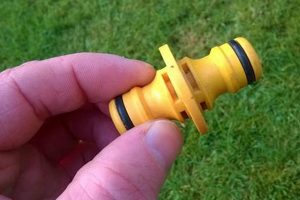
The most prevalent type utilizes standardized threading, typically National Pipe Thread (NPT) or Garden Hose Thread (GHT), ensuring interchangeability across a wide range of hoses and devices. These connections rely on physical threads for a secure seal. An example is the standard GHT found in most residential spigots, which interfaces directly with the foam-generating device’s inlet. Improper sealing due to damaged threads or mismatched standards can lead to leaks and reduced foam output.
- Quick-Connect Fittings
These fittings offer rapid attachment and detachment without the need for threading. They typically employ a locking mechanism, such as a ball detent or cam lock, to secure the connection. While offering convenience, they may be more susceptible to leaks if the locking mechanism becomes worn or if the fitting is not properly seated. Their use is more common in professional settings where speed and efficiency are paramount, but their robustness should be carefully considered.
- Material Compatibilityong>
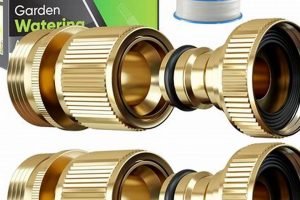
The material of the connection, whether brass, plastic, or stainless steel, must be compatible with both the hose material and the cleaning solutions used. Brass offers excellent corrosion resistance but may be susceptible to galvanic corrosion when in contact with certain metals. Plastic connections are lightweight and cost-effective but may degrade over time with exposure to harsh chemicals or UV radiation. Stainless steel provides superior durability and chemical resistance but is typically more expensive.
- Sealing Mechanisms
Effective sealing is crucial for maintaining adequate water pressure and preventing leaks. Connections often incorporate O-rings or gaskets to create a watertight seal. The condition of these seals should be regularly inspected and replaced as needed. Failure to maintain proper sealing can result in reduced performance and increased water wastage. Different sealing materials offer varying degrees of resistance to different chemicals and temperatures.
In summary, the hose connection type is an essential factor dictating a device’s usability, reliability, and overall effectiveness. Selecting a connection type that is both compatible with the existing water supply and robust enough to withstand the intended usage conditions is critical for maximizing the benefits of foam-based cleaning. The consequences of neglecting this aspect can range from minor inconveniences to significant performance limitations.
6. Material Durability

Material durability is a paramount consideration in the context of a garden hose foam gun, influencing its lifespan, performance consistency, and overall value proposition. The operational environment, characterized by exposure to water, cleaning solutions, and varying temperatures, subjects these devices to considerable stress. Consequently, the selection of robust and chemically resistant materials is crucial for ensuring long-term reliability.
- Polymer Composition and Degradation Resistance
The housing and internal components are frequently constructed from various polymers. Their resistance to degradation from commonly used cleaning agents, such as surfactants, acids, and alkalis, is paramount. For instance, polypropylene offers good chemical resistance and impact strength, while higher-grade polymers like nylon provide enhanced durability and temperature tolerance. Premature degradation can lead to cracking, leaking, and ultimately, device failure.
- Metal Component Corrosion Resistance
Metal components, such as connectors, nozzles, and internal valves, are susceptible to corrosion, particularly when exposed to hard water or certain cleaning solutions. Brass, stainless steel, and anodized aluminum are commonly employed for their corrosion resistance. However, the specific alloy or coating significantly impacts their long-term performance. For example, a low-grade brass fitting may corrode rapidly, leading to restricted water flow and reduced foam output. Similarly, stainless steel 304 would be better choice.
- Seal and O-Ring Integrity
Seals and O-rings are critical for preventing leaks and maintaining optimal pressure. The materials used, such as nitrile rubber (NBR), ethylene propylene diene monomer (EPDM), or Viton, must exhibit excellent resistance to swelling, cracking, and degradation from cleaning solutions and UV exposure. Failure of these seals can result in reduced foam generation, water wastage, and potential damage to the surrounding environment.
- Impact Resistance and Structural Integrity
The ability of the device to withstand physical impacts and maintain its structural integrity is vital for preventing damage during use and storage. Reinforced polymers, such as glass-filled nylon, offer enhanced impact resistance. The design of the device, including wall thickness and reinforcing ribs, also contributes significantly to its overall robustness. A device with inadequate impact resistance is prone to cracking and breaking, rendering it unusable.
In conclusion, material durability is a multifaceted aspect profoundly influencing the longevity and performance of the described device. The selection of appropriate materials, resistant to chemical degradation, corrosion, and physical impacts, is essential for ensuring a reliable and long-lasting product. These considerations are vital for both manufacturers seeking to produce high-quality devices and consumers seeking to make informed purchasing decisions.
7. Soap Compatibility

Proper functioning relies significantly on the correct interaction between the device and the cleaning solution used. Incompatibility can lead to reduced foam production, damage to internal components, and ineffective cleaning. The chemical properties of different soaps and detergents, such as pH level, viscosity, and surfactant type, directly affect their ability to create stable foam when mixed with water and air within the device. For instance, soaps with excessive oil content may clog the mechanism, while highly acidic detergents can corrode internal seals and metal parts. Real-world examples include situations where users experience diminished foam output or device malfunctions after using dish soap or other non-recommended cleaning agents. Selecting the correct soap is crucial for ensuring that the equipment operates as intended and delivers effective cleaning results.
Furthermore, soap compatibility influences the longevity of the product. Incompatible solutions can accelerate the degradation of internal components, such as O-rings and seals, leading to leaks and reduced performance over time. Specialized car wash soaps, formulated with specific surfactants and pH levels, are designed to produce consistent foam and protect vehicle paint. Using these compatible soaps ensures that the equipment remains functional and prevents damage. The concentration ratio of the soap also plays a critical role, as over-dilution may result in weak foam, while over-concentration can leave excessive residue on surfaces. Adhering to manufacturer recommendations regarding soap type and concentration is vital for optimizing performance and minimizing the risk of damage.
In summary, soap compatibility is an essential consideration for anyone utilizing a device for foam-based cleaning applications. Choosing the right type of cleaning solution, maintaining proper dilution ratios, and adhering to manufacturer guidelines are critical for maximizing performance, extending the lifespan of the equipment, and achieving effective cleaning results. Ignoring this aspect can lead to suboptimal foam production, device malfunctions, and ultimately, a compromised cleaning experience. A user must be aware of soap’s content.
Frequently Asked Questions
This section addresses common inquiries regarding the application, maintenance, and troubleshooting of these foam-generating devices.
Question 1: What is the optimal water pressure for effective foam generation?
The optimal water pressure typically ranges between 40 and 60 PSI. Insufficient pressure results in weak foam, while excessive pressure may damage internal components. Consult the manufacturer’s specifications for precise pressure requirements.
Question 2: Can any type of soap be used?
No. Solutions specifically formulated for foam-generat
ing devices are required. Household detergents may not produce adequate foam and can potentially damage the equipment. Refer to the manufacturer’s recommendations for compatible cleaning solutions.
Question 3: How often should the device be cleaned?
The device should be cleaned after each use to prevent the buildup of soap residue. Rinse the reservoir and flush the internal components with clean water to maintain optimal foam production.
Question 4: What causes inconsistent foam output?
Inconsistent foam output can result from several factors, including low water pressure, clogged nozzles, or incompatible cleaning solutions. Ensure the water pressure is within the specified range, clean the nozzle regularly, and use recommended solutions.
Question 5: How should the device be stored when not in use?
The device should be stored in a dry, sheltered location, away from direct sunlight and freezing temperatures. This prevents damage to the plastic components and extends the operational lifespan.
Question 6: What should be done if the device leaks?
Inspect the hose connections, seals, and O-rings for damage. Tighten any loose connections and replace worn or damaged seals to prevent leaks. If the leaking persists, contact the manufacturer for assistance.
Proper usage and maintenance are essential for maximizing the performance and longevity. Adhering to the guidelines outlined in this FAQ section ensures effective operation and minimizes potential issues.
The following section will provide advanced tips and techniques for optimizing foam-based cleaning processes.
Conclusion
This exploration has elucidated the functionality, components, and operational considerations surrounding the garden hose foam gun. The importance of water pressure, soap compatibility, material durability, and nozzle spray pattern has been established. Adherence to proper usage and maintenance protocols ensures optimal performance and prolonged lifespan.
Understanding the nuances of this tool empowers informed decision-making and effective application. Continued adherence to best practices will maximize the benefits and minimize potential issues. Further innovation in material science and design will likely enhance the efficiency and versatility of this category of cleaning equipment in the future.
![Best 2 Inch Garden Hose For [X] & Reviews | The Ultimate Gardening Guide: Grow a Thriving Garden Year-Round](https://MyGardenPatch.com/wp-content/uploads/2025/07/th-5631-300x200.jpg "Best 2 Inch Garden Hose For [X] & Reviews The Ultimate Gardening Guide: Grow a Thriving Garden Year-Round")