



A plumbing component designed to split a single water stream into two separate streams from a common source. Characterized by its tee-shaped structure, this fitting typically features three openings: one inlet and two outlets. This allows for the simultaneous connection of multiple watering devices, such as sprinklers and soaker hoses, to a single spigot.
The employment of this device provides enhanced efficiency in irrigation practices. It allows for the targeted delivery of water to multiple areas of a landscape from a single water source, reducing the need for multiple hoses or frequent repositioning. Historically, the need for such distribution arose with the expansion of residential and commercial landscaping, necessitating more complex and efficient watering solutions.
Further discussion will elaborate on the selection criteria, installation procedures, and maintenance considerations associated with this type of connector, enabling users to optimize their watering systems and conserve water resources effectively.
Optimizing Water Distribution
Effective utilization hinges on careful selection, correct installation, and consistent maintenance. These factors directly impact the lifespan and performance of the component and the overall efficiency of the watering system.
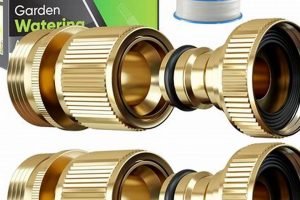
Tip 1: Material Selection. Opt for brass or durable plastic variants. Brass exhibits superior resistance to corrosion, particularly in environments with hard water, while high-quality plastics offer cost-effectiveness and sufficient durability for most residential applications. Evaluate water quality and usage frequency to determine the appropriate material.
Tip 2: Connection Integrity. Ensure a watertight seal at all connection points. Use Teflon tape on threaded connections to prevent leaks and maintain consistent water pressure. Inspect the connections regularly for signs of wear or damage and replace components as needed.
Tip 3: Pressure Regulation. Consider the water pressure of the supply source. Excessively high pressure can strain the connector, leading to leaks or failure. Implement a pressure regulator if necessary to maintain optimal operating conditions and extend the lifespan of the device.
Tip 4: Flow Rate Considerations. Account for the flow rate requirements of attached watering devices. Overloading the connector can reduce water pressure to individual devices and compromise their performance. Select a connector with a sufficient diameter to accommodate the combined flow rate of all connected devices.
Tip 5: Winterization Practices. Disconnect and drain the connector during freezing temperatures. Residual water can freeze and expand, causing cracks or fractures in the fitting. Proper winterization is essential for preventing damage and ensuring continued functionality.
Tip 6: Strategic Placement. Position the connector in a location that minimizes stress on the connected hoses. Avoid sharp bends or kinks in the hoses, as this can restrict water flow and increase the risk of leaks at the connection points. Proper placement contributes to the overall efficiency and longevity of the system.
Tip 7: Regular Inspection. Conduct periodic inspections to identify potential problems early. Look for signs of leaks, cracks, or corrosion. Addressing these issues promptly can prevent more significant damage and maintain the efficiency of the watering system.
These considerations ensure the optimal functionality of the chosen fitting, contributing to water conservation and efficient landscape maintenance.
The following sections will delve into specific installation techniques and long-term maintenance strategies.
1. Material Durability
The lifespan and performance are intrinsically linked to the inherent durability of its constituent materials. The selection of appropriate materials directly impacts the connector’s ability to withstand environmental stressors, including fluctuating temperatures, exposure to ultraviolet radiation, and contact with potentially corrosive elements present in water or soil. Failure to consider material durability can lead to premature degradation, leaks, and ultimately, system failure. For example, a connector constructed from low-grade plastic may become brittle and crack under prolonged sun exposure, resulting in water loss and the need for frequent replacements. Conversely, a brass connector, while generally more expensive, exhibits superior resistance to corrosion and physical damage, leading to a longer service life and reduced maintenance requirements.
The practical significance of understanding material durability extends beyond mere cost considerations. In agricultural settings, where irrigation systems are often subjected to demanding conditions, the use of durable connectors is essential for maintaining consistent water delivery and preventing crop damage due to unexpected system failures. Similarly, in residential landscapes, the selection of durable connectors can minimize water wastage and reduce the environmental impact associated with frequent replacement of damaged components. The long-term reliability of the watering system hinges on the appropriate selection of materials tailored to the specific operating environment.
In conclusion, the material composition represents a critical factor in determining its overall reliability and longevity. Understanding the properties of various materials, such as brass, plastic, and stainless steel, and their respective strengths and weaknesses is crucial for selecting a connector that can withstand the rigors of its intended application. Choosing appropriately durable components contributes to efficient water management, reduces maintenance costs, and promotes sustainable landscaping practices.
2. Thread Compatibility

Thread compatibility is a fundamental aspect of ensuring leak-free and efficient operation. The consistent performance of this connector relies on the secure and standardized connection points formed by its threads. Mismatched or damaged threads can lead to leaks, pressure loss, and system inefficiencies.
- Standardization and Thread Types
Connectors commonly employ National Pipe Thread (NPT) or Garden Hose Thread (GHT) standards. NPT is a tapered thread designed to create a tight seal, while GHT is a straight thread, typically used for garden hoses. Ensuring the connector’s thread type matches that of the connected hoses and spigots is paramount. Failure to match thread types will invariably lead to leakage and potential damage to the threads themselves. For example, attempting to force an NPT fitting onto a GHT connection will damage both components, rendering them unusable.
- Thread Material and Compatibility
The material of the threads also plays a significant role. Brass threads, common in higher-quali
ty connectors, offer better corrosion resistance and durability than plastic threads. However, dissimilar metals can create galvanic corrosion over time, particularly in the presence of water. While less critical for low-pressure applications, it’s advantageous to use similar materials for extended service life. For instance, connecting a brass connector directly to an aluminum spigot without proper insulation can accelerate corrosion in the aluminum. - Thread Damage and Inspection
Even with proper thread type and material compatibility, physical damage can compromise the integrity of the connection. Nicks, dents, or cross-threading can prevent a proper seal. Therefore, careful inspection of threads before installation is essential. Damaged threads should be repaired or replaced to ensure a leak-free connection. Using a thread file or tap can sometimes repair minor damage, but severely damaged components should be discarded.
- Thread Sealants and Lubricants
To enhance the seal and prevent leaks, thread sealants or Teflon tape are frequently used. These materials fill minor imperfections in the threads and provide lubrication during tightening. However, over-application of sealant can also hinder the connection. Applying sealant or tape correctly enhances the connection. Proper sealant usage ensures a watertight seal and protects the threads from corrosion and damage.
Therefore, meticulous attention to thread compatibility is paramount for the efficient functioning of the connector. This encompasses understanding thread standards, material compatibility, inspecting for damage, and the proper use of sealants. Correct implementation guarantees a reliable, long-lasting, and leak-free watering system.
3. Pressure Resistance
The operational integrity and longevity of a plumbing component are directly contingent upon its pressure resistance. The connector, situated within a water distribution network, experiences constant internal pressure. Insufficient pressure resistance can lead to structural failure, manifested as cracks, leaks, or complete disintegration of the fitting. The material composition, manufacturing processes, and overall design directly contribute to the connector’s capacity to withstand internal pressure. For instance, a connector fabricated from low-density polyethylene will exhibit significantly lower pressure resistance compared to a brass or reinforced nylon variant. A catastrophic failure of a connector within a residential irrigation system can result in substantial water wastage and potential damage to surrounding landscaping, highlighting the practical significance of selecting components with adequate pressure ratings. The correlation between pressure resistance and component reliability is a defining factor in determining the overall effectiveness and efficiency of the watering infrastructure.
The significance of pressure resistance extends beyond the immediate risk of structural failure. Sustained operation under high-pressure conditions, even if not immediately resulting in catastrophic failure, can induce gradual material fatigue. This fatigue manifests as microscopic cracks or deformations that weaken the connector over time, ultimately leading to reduced lifespan and increased susceptibility to leaks. Consequently, selecting a connector with a pressure rating that exceeds the anticipated operating pressure by a substantial margin provides a safety buffer against material fatigue and extends the service life of the system. Consider a commercial agricultural operation where irrigation systems operate continuously under high pressure to deliver water to extensive crop fields. In such demanding environments, connectors with insufficient pressure resistance would require frequent replacement, resulting in costly downtime and reduced crop yields. Proper specification and selection of robust connectors is essential for minimizing these risks and ensuring consistent, reliable irrigation performance.
In summary, pressure resistance constitutes a critical performance parameter that profoundly impacts the functionality and durability of the connector. Selecting components with appropriate pressure ratings, considering both immediate operating pressures and long-term material fatigue, is essential for minimizing the risk of failures, reducing water wastage, and ensuring the sustained reliability of water distribution systems. The cost savings associated with utilizing higher-quality, pressure-resistant connectors often outweigh the initial investment, particularly in demanding commercial or agricultural applications where system downtime can have significant economic consequences. Therefore, a thorough understanding of pressure resistance characteristics is vital for informed decision-making in the design, installation, and maintenance of efficient and sustainable watering systems.
4. Flow Capacity

Flow capacity, defined as the volume of fluid passing through a conduit per unit of time, represents a crucial design parameter. In the context of distribution, insufficient flow capacity restricts the water supply to connected devices. This restriction manifests as reduced pressure and diminished performance of sprinklers, spray nozzles, or other irrigation components. The internal diameter and the material properties of the connector significantly influence its flow capacity. A smaller internal diameter creates increased resistance, thereby reducing flow. Rough internal surfaces exacerbate this effect. Real-world examples include situations where users attempt to connect multiple high-demand irrigation devices to a single source using a connector with an inadequate flow rating, resulting in uneven watering patterns and stressed vegetation. Therefore, selection must account for the cumulative flow requirements of all connected devices.
The practical significance of understanding flow capacity extends to water conservation. A poorly chosen component can lead to inefficient water usage. When devices do not receive adequate water pressure due to restricted flow, users often compensate by increasing the watering duration, leading to overwatering and water wastage. Furthermore, uneven water distribution caused by limited flow capacity can result in localized overwatering in some areas and underwatering in others. For example, a residential user connecting multiple sprinkler heads to a single spigot through an undersized connector might observe that sprinklers closest to the spigot operate effectively, while those further away exhibit significantly reduced spray distance. This necessitates increased watering time to compensate for the diminished output of the distal sprinklers, ultimately leading to unnecessary water consumption. Proper component selection ensures balanced water distribution, minimizing wastage and promoting healthy plant growth.
In conclusion, the flow capacity is a critical consideration that directly impacts the performance and efficiency of the systems. Selecting connectors with appropriate flow ratings, based on the cumulative flow requirements of connected devices, is essential for achieving uniform water distribution, minimizing water wastage, and ensuring optimal irrigation system performance. The challenge lies in accurately assessing the flow demands of each connected device and choosing a connector that can accommodate those demands without creating undue flow restriction. The subsequent sections detail strategies for accurately calculating flow requirements and se
lecting appropriately sized connectors.
5. Leak Prevention

The effective operation relies heavily on reliable prevention measures. Leaks compromise water pressure, waste water resources, and potentially damage surrounding areas. A failure at a connection point reduces the overall efficiency of the watering system, requiring increased water usage to achieve the desired irrigation levels. The design and installation greatly influence the probability of leaks. Inadequate thread sealing, improper tightening, or use of incompatible materials contribute to compromised connections, leading to water seepage or complete joint failure. For example, overtightening a plastic connector onto a metal spigot can strip the threads, rendering the connection useless and creating a significant leak point. The selection of appropriate materials, coupled with careful installation techniques, constitutes the first line of defense against leaks.
Implementing preventative strategies extends beyond initial installation. Regular inspections for signs of wear, corrosion, or physical damage are crucial. Minor leaks, often initially overlooked, can escalate over time due to fluctuating pressure and environmental factors. For instance, hairline cracks in a plastic connector, induced by prolonged exposure to sunlight, can gradually widen under repeated pressure cycles, eventually leading to a noticeable leak. Addressing these issues promptly, through component replacement or re-sealing of connections, prevents further water loss and potential system damage. Furthermore, proper winterization practices, such as draining the system to prevent freezing and expansion, mitigate the risk of damage to connectors and subsequent leaks during colder months. A proactive approach to leak prevention minimizes water wastage, extends the lifespan of the system, and reduces overall maintenance costs.
In summary, leak prevention is an integral component of maintaining an efficient and sustainable watering system that uses garden hose fittings. Careful component selection, diligent installation practices, and routine inspections are essential for minimizing water wastage and maximizing system performance. The challenges associated with leaks underscores the need for proactive maintenance and a commitment to employing high-quality materials and proper installation techniques. The understanding of these factors translates directly into responsible water management and the long-term preservation of resources.
6. Installation Ease
The practical utility is inextricably linked to the straightforwardness of its installation process. Complex or cumbersome installation procedures negate the potential benefits of the component by increasing labor costs, time investment, and the likelihood of improper connections. An easily installed connector minimizes the risk of user error, ensuring a secure and leak-free connection. For instance, a connector designed with intuitive threading and requiring no specialized tools facilitates rapid deployment and reduces the potential for cross-threading or other installation-related damage. The ease of installation directly influences the widespread adoption and effective utilization of this component in both residential and commercial settings. A design prioritizing simplicity minimizes the need for professional assistance, empowering users to quickly adapt and expand their watering systems as needed.
Furthermore, connectors designed for ease of installation often incorporate features such as ergonomic grips, clear labeling, and standardized thread sizes, which facilitate connection to a wide range of hoses and accessories. Conversely, poorly designed connectors with difficult-to-access connection points or non-standard threading can lead to frustration, wasted time, and ultimately, a less efficient watering system. For example, in agricultural contexts where large-scale irrigation systems require frequent modifications and repairs, connectors characterized by ease of installation significantly reduce downtime and minimize labor costs. The ability to quickly connect and disconnect hoses without the need for specialized tools or expertise is critical for maintaining operational efficiency in demanding agricultural environments. The correlation between installation simplicity and operational efficiency underscores the practical significance of prioritizing user-friendly designs.
In conclusion, emphasizes the overall value and reliability. Prioritizing designs that are user-friendly leads to reduced installation time, minimizes the risk of errors, and enhances the overall effectiveness of the watering system. The ease of use is not merely a convenience; it is a critical factor that directly impacts the component’s widespread adoption, operational efficiency, and long-term cost-effectiveness. It’s important to assess installation requirements, and it’s a critical consideration in component selection.
Frequently Asked Questions
The following addresses common inquiries regarding the selection, implementation, and maintenance, ensuring optimal watering system functionality.
Question 1: What materials are most suitable for the manufacture of a connector, and what are the key considerations for material selection?
Brass offers superior corrosion resistance and durability, particularly in environments with hard water. Plastic provides a cost-effective alternative for residential applications with less demanding conditions. Selection hinges on water quality, usage frequency, and budget constraints.
Question 2: How does thread compatibility affect the performance and reliability of a connector, and what steps should be taken to ensure proper thread engagement?
Thread compatibility is crucial for leak prevention and pressure maintenance. Verify that the thread type (e.g., NPT, GHT) and material are compatible with the connected hoses and spigots. Apply Teflon tape to threaded connections to ensure a watertight seal.
Question 3: What factors influence the flow capacity, and how does insufficient flow capacity impact the performance of connected watering devices?
The internal diameter and material properties influence flow capacity. Insufficient flow reduces water pressure to individual devices, compromising their performance. Select a connector with a sufficient diameter to accommodate the combined flow rate of all connected devices.
Question 4: What are the primary causes of leaks and what preventative measures can be implemented to minimize water wastage and system damage?
Leaks result from improper thread sealing, material degradation, and physical damage. Implement preventative measures, including regular inspections for wear, proper winterization practices, and the use of high-quality materials and thread sealants.
Question 5: How does ease of installation contribute to the overall efficiency and effectiveness of a connector, and what design features facilitate simplified installation procedures?
Ease of installation minimizes labor costs, time investment, and the likelihood of improper connections. Select connectors with intuitive threading, ergonomic grips, and clear labeling to facilitate rapid deployment and reduce the risk of user error.
Question 6: What are the optimal maintenance practices for this connector, and how does regular maintenance
contribute to the longevity and reliability?
Regularly inspect connectors for signs of leaks, cracks, or corrosion. Replace damaged components promptly and implement proper winterization practices to prevent damage from freezing temperatures. Consistent maintenance extends the lifespan of the connector and ensures continued functionality.
Understanding these common issues and their remedies enhances the overall functionality and longevity. Prioritizing proper techniques and selection contributes to a high-performing watering system.
The next section will cover troubleshooting common issues and innovative designs.
Concluding Remarks
The preceding discussion has illuminated the multifaceted aspects of the garden hose t connector. From material selection to installation techniques and preventative maintenance, each element plays a critical role in optimizing water distribution and minimizing resource waste. The selection of an appropriate garden hose t connector is a decision that balances cost, performance expectations, and long-term reliability.
As water conservation becomes increasingly imperative, a comprehensive understanding of the functionality of these essential components is crucial. Prioritizing informed decision-making in the implementation and maintenance of these irrigation system components ensures responsible resource utilization and contributes to the sustainability of landscaping practices.
![Best 2 Inch Garden Hose For [X] & Reviews | The Ultimate Gardening Guide: Grow a Thriving Garden Year-Round](https://MyGardenPatch.com/wp-content/uploads/2025/07/th-5631-300x200.jpg "Best 2 Inch Garden Hose For [X] & Reviews The Ultimate Gardening Guide: Grow a Thriving Garden Year-Round")