



The standardized connection type found on most garden hoses is generally referred to as Garden Hose Thread (GHT). This thread is a crucial element enabling secure attachment to spigots, nozzles, and various watering accessories. The specific dimensions and thread form ensure a reliable, leak-resistant seal under typical water pressure conditions. For example, a typical homeowner can easily connect a hose to an outdoor faucet utilizing this standardized threading.
Adherence to this standardized threading offers numerous advantages. It allows for universal compatibility across different brands and types of watering equipment. This interchangeability simplifies tasks such as irrigation, cleaning, and other outdoor water-related activities. Furthermore, the established standard reduces the likelihood of mismatches, leaks, and the need for specialized adapters. The widespread adoption of the GHT standard has streamlined the gardening and landscaping industries significantly.
Understanding the significance of this connection type is essential for properly selecting and maintaining garden hoses and related equipment. The following sections will delve deeper into the specific dimensions, variations, and troubleshooting tips associated with this common fitting, equipping readers with a comprehensive knowledge of its practical applications.
Tips for Identifying and Maintaining Garden Hose Threads
Properly identifying and maintaining the thread on a garden hose is crucial for ensuring a leak-free connection and prolonging the life of the hose and its associated fittings.
Tip 1: Visual Inspection: Regularly inspect the thread for signs of damage, such as flattened or stripped areas. A damaged thread will likely prevent a secure connection.
Tip 2: Thread Gauge Verification: Utilize a thread gauge to confirm the thread type is indeed Garden Hose Thread (GHT). This is especially important when connecting hoses from different manufacturers.
Tip 3: Cleaning the Threads: Periodically clean the thread to remove dirt, debris, and mineral buildup. A wire brush or a specialized thread cleaning tool can be used.
Tip 4: Lubrication: Apply a small amount of silicone grease to the thread before connecting the hose to a spigot or accessory. This reduces friction and prevents galling.
Tip 5: Proper Tightening: Avoid overtightening the connection. Excessive force can damage the thread or the fitting itself. Hand-tightening is generally sufficient.
Tip 6: Storage Practices: Store hoses in a manner that prevents the thread from being damaged. Avoid dragging the hose across rough surfaces or subjecting it to excessive weight.
Tip 7: Replacement Considerations: If the thread becomes severely damaged, consider replacing the entire hose or the fitting with the damaged thread. Attempting to force a damaged connection is likely to result in leaks.
By adhering to these maintenance and identification practices, the longevity and optimal performance of garden hoses and their associated connections can be achieved.
The following section provides information on troubleshooting common issues related to garden hose connections.
1. Standardized Dimensions

The defining characteristic of Garden Hose Thread (GHT) is its adherence to standardized dimensions. These established measurements are what enable reliable and leak-proof connections between hoses, spigots, nozzles, and other watering accessories. Without these uniform dimensions, compatibility would be severely compromised, leading to widespread mismatches and functional failures. The primary standardization body in the United States for garden hose threads is the American National Standards Institute (ANSI), which maintains specifications to ensure all manufacturers conform to common measurements.
A critical aspect of the dimensional standard is the thread diameter and pitch, typically expressed as threads per inch (TPI). The standard GHT for a 3/4-inch hose, which is the most common size, has an outer diameter of approximately 1.0625 inches and 11.5 TPI. Deviations from these specifications would render a hose incompatible with standard fittings. For example, if a hose manufacturer produced a hose with 12 TPI instead of 11.5, it would likely be difficult or impossible to create a secure and leak-free connection with a standard spigot.
In summary, the standardized dimensions of GHT are not merely a convenience, but rather a fundamental requirement for the functionality of watering systems. They ensure interchangeability, prevent leaks, and allow consumers to confidently connect different components without the need for specialized adapters or custom fittings. This standardization has greatly simplified garden maintenance and irrigation practices, resulting in cost savings and reduced frustration for users. Failure to adhere to these standards can lead to significant inefficiencies and operational difficulties.
2. Thread per Inch (TPI)

Thread per Inch (TPI) is a critical specification defining the fineness or coarseness of the helical ridges on a garden hose’s threaded end. In the context of “what thread is on a garden hose,” TPI dictates the number of thread crests present within a one-inch axial distance. The standard Garden Hose Thread (GHT) for a 3/4-inch hose, the most common size, features 11.5 TPI. This precise value directly influences the mating characteristics and sealing capability when connecting the hose to a spigot or accessory. Deviations from this TPI would likely result in a compromised connection, leading to leaks or a complete inability to join the components. For instance, if a hose intended to connect to a standard outdoor faucet deviates from the specified 11.5 TPI, the connection would likely exhibit cross-threading, rendering a secure seal impossible and causing water leakage.
The significance of TPI extends beyond simple compatibility; it affects the mechanical strength of the connection. A coarser thread (lower TPI) generally offers greater resistance to stripping under high torque, while a finer thread (higher TPI) provides a more gradual engagement, potentially reducing stress concentration on the fitting material. However, the GHT standard strikes a balance, providing adequate strength for typical residential water pressures while ensuring ease of assembly and disassembly. The specific 11.5 TPI has been empirically determined to be optimal for this application, minimizing the risk of both leakage and thread damage. Maintenance practices, such as applying thread sealant or Teflon tape, further enhance the sealing properties, particularly in older fittings where the TPI may have been compromised by corrosion or wear.
In conclusion, TPI is not merely a dimensional characteristic; it is a fundamental element governing the performance and relia
bility of a garden hose connection. Adherence to the specified 11.5 TPI for GHT is crucial for ensuring compatibility, preventing leaks, and maintaining the integrity of watering systems. Challenges arise when dealing with older or non-standard fittings, necessitating careful inspection and the potential use of adapters to ensure a proper and secure connection. An understanding of TPI is essential for both consumers and manufacturers, facilitating informed decisions regarding hose selection, maintenance, and repair.
3. Male/Female Distinction

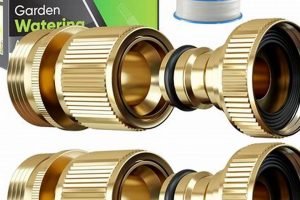
The “Male/Female Distinction” is a fundamental aspect of garden hose thread (GHT) design. This distinction refers to the physical configuration of the threaded ends, with one end featuring external threads (male) and the other internal threads (female). This arrangement dictates how garden hose components connect and is crucial for creating a watertight seal. A male-ended fitting inserts into a female-ended fitting, and the threads engage to form a mechanical bond. Without this defined distinction, connections would be impossible, rendering the hose useless for its intended purpose. Consider, for example, a standard outdoor faucet, which invariably presents a male GHT. A garden hose designed to connect to this faucet must, therefore, have a corresponding female GHT end to facilitate the connection. The compatibility and functionality of the entire watering system depend on this simple yet essential design principle.
The importance of correctly identifying the “Male/Female Distinction” is readily apparent in practical applications. Attempting to connect two male-ended or two female-ended fittings directly is futile; the threads cannot engage, and no seal can be established. This necessitates the use of adapters, often referred to as “male-to-male” or “female-to-female” connectors, to bridge the gap. These adapters, which possess opposing thread types on either end, effectively reverse the gender of the connection, allowing for compatibility. In situations where a hose requires extension, a male-to-male adapter is commonly employed to join two female-ended hoses. Similarly, if a sprinkler head possesses a female GHT and needs to connect to a female-ended hose, a male-to-male adapter becomes necessary. The “Male/Female Distinction” not only governs direct connections but also dictates the type of adapters required to overcome connection incompatibilities.
In summary, the “Male/Female Distinction” is an indispensable element of garden hose thread standards. It ensures that hoses can be readily connected to a variety of water sources and accessories. Understanding this distinction is essential for both selecting appropriate hoses and fittings and for troubleshooting connection problems. The availability of adapters mitigates potential compatibility issues, but recognizing the initial “Male/Female Distinction” remains the cornerstone of effective garden hose management.
4. Material Composition

The material composition of a garden hose thread significantly impacts its durability, longevity, and resistance to environmental degradation. Given the exposure to varying weather conditions, water pressure, and potential physical stress, the choice of material directly influences the performance and lifespan of the threaded connection. Common materials include brass, plastic (typically Acrylonitrile Butadiene Styrene, or ABS), and aluminum. Brass threads offer superior strength and corrosion resistance compared to plastic, making them suitable for applications requiring frequent connections and disconnections. However, brass is more expensive and can be susceptible to galvanic corrosion when in contact with dissimilar metals. Plastic threads, while more cost-effective, are prone to damage from overtightening, UV exposure, and extreme temperatures, potentially leading to thread stripping or cracking. The interplay between thread design and material selection ensures optimal functionality under specific operational conditions. For example, a high-pressure spray nozzle frequently attached and detached from a garden hose will benefit from a brass threaded connection due to its enhanced durability, while a low-pressure soaker hose might suffice with a plastic threaded connection, prioritizing cost efficiency.
The selection of appropriate material also affects the seal integrity of the threaded connection. Brass, due to its malleability, can conform more readily to minor imperfections, creating a tighter seal compared to rigid plastic. However, the use of Teflon tape or thread sealant can mitigate the sealing limitations of plastic threads. The choice of material can influence the type of sealant required and the frequency of its application. Furthermore, the long-term exposure to chemicals present in water or fertilizers can degrade certain materials, compromising the thread integrity and leading to leaks. The material composition needs to be compatible with the intended use of the hose and the chemicals to which it will be exposed. As an example, some fertilizers contain corrosive agents that can accelerate the degradation of aluminum or certain types of plastic, necessitating the use of more resistant materials like brass or specialized polymers.
In summary, the material composition of a garden hose thread is a critical factor determining its suitability for specific applications. The choice between brass, plastic, or other materials involves a trade-off between cost, durability, corrosion resistance, and sealing performance. A comprehensive understanding of the operational environment and the intended use of the hose is essential for selecting a threaded connection that ensures reliable and long-lasting performance. Addressing the challenges related to material degradation requires diligent maintenance practices and the selection of appropriate materials for specific environmental conditions.
5. Connection Seal
The integrity of the connection seal is paramount to the functionality of any garden hose system. It ensures efficient water delivery without leakage, contributing to water conservation and preventing damage to surrounding areas. The thread type directly influences the effectiveness of this seal.
- Thread Engagement
The depth and precision of thread engagement are critical for achieving a secure connection. A greater number of engaged threads increases the contact surface area and the mechanical strength of the joint, reducing the likelihood of leaks under pressure. Garden Hose Thread (GHT) standards specify the thread pitch and form to ensure optimal engagement. For instance, a damaged thread can significantly reduce the contact area, leading to a compromised seal and water loss.
- Material Compatibility
The materials used in the hose, fittings, and sealing washers must be chemically compatible to prevent degradation and maintain seal integrity. Some plastics can become brittle or degrade when exposed to certain chemicals or UV radiation, leading to leaks over time. Brass fittings, while more durable, can corrode under certain conditions. Matching the material properties of the thread and sealing components ensures long-term performance and reliability.
- Sealing Washers
S
ealing washers, typically made of rubber or silicone, play a crucial role in creating a watertight seal between the hose and the spigot or accessory. These washers compress to fill any minor imperfections in the thread surfaces, creating a barrier against water leakage. The correct size and type of washer are essential; a worn or damaged washer will compromise the seal, regardless of the thread type. Regularly inspecting and replacing washers is a simple yet effective maintenance practice. - Thread Sealants
Thread sealants, such as Teflon tape or pipe dope, can be applied to the threads to enhance the seal and prevent leaks. These sealants fill microscopic gaps between the threads, creating a more robust barrier against water passage. The application of thread sealant is particularly beneficial for older fittings where the threads may be worn or damaged. However, excessive use of sealant can hinder proper thread engagement and should be avoided.
The effectiveness of the connection seal is intrinsically linked to the quality and compatibility of the thread, materials, and sealing components. A thorough understanding of these factors is essential for ensuring a leak-free and efficient garden hose system.
6. Interchangeability
The concept of interchangeability is fundamentally linked to the standardization of garden hose threads, directly impacting the usability and versatility of watering systems. The ability to readily exchange components, regardless of manufacturer, hinges on the adoption and adherence to defined thread specifications. This standardization simplifies maintenance, repairs, and system expansions.
- Universal Compatibility
Standardized garden hose threads enable compatibility across different brands and types of watering equipment. This universality allows a homeowner to connect a hose purchased from one vendor to a sprinkler from another without requiring specialized adapters or custom fittings. This reduces complexity and cost for the end-user.
- Simplified Maintenance and Repair
Interchangeability streamlines the process of replacing damaged or worn components. If a hose fitting breaks, a replacement fitting with the same thread type can be easily sourced and installed, regardless of the original manufacturer. This eliminates the need to replace entire systems due to a single point of failure.
- Adaptability and Expansion
The standardized thread allows for the flexible expansion of watering systems. Additional hoses, nozzles, sprinklers, and other accessories can be seamlessly integrated into existing setups, facilitating customized solutions for diverse landscaping needs. This adaptability promotes efficient water management and conserves resources.
- Cost-Effectiveness
Interchangeability fosters competition among manufacturers, driving down the cost of components. The ability to choose from a wide range of suppliers ensures that consumers can find affordable options without sacrificing quality or performance. This economic benefit makes gardening and landscaping more accessible.
These facets of interchangeability, stemming directly from the “what thread is on a garden hose” standardization, enhance the overall user experience and contribute to the widespread adoption of efficient watering practices. Without this foundational standardization, the complexity and cost of maintaining and expanding watering systems would significantly increase.
7. National Pipe Thread (NH)

National Hose (NH) thread, also known as National Fire Hose thread, is a distinct standard sometimes relevant to “what thread is on a garden hose,” particularly in specific adapter applications. While garden hoses primarily use Garden Hose Thread (GHT), NH thread becomes important when interfacing with fire hydrants or other specialized equipment. The NH standard ensures compatibility and safe connection in scenarios involving higher pressure and flow rates than typical residential use.
- Fire Hose Connections
The primary purpose of NH thread is to standardize connections for fire hoses. Fire hydrants and fire suppression equipment utilize NH thread to ensure interoperability between different fire departments and equipment manufacturers. In contrast, garden hoses are designed for lower pressure applications. Adapters are available that bridge the gap between NH and GHT, allowing a garden hose to connect to a fire hydrant in emergency situations, though this use is generally restricted to authorized personnel.
- Thread Dimensions and Differences
NH thread has different dimensions and threads per inch (TPI) compared to GHT. For example, a common NH size is 3/4 inch, but its TPI and outer diameter are different from a 3/4 inch GHT. Directly attempting to connect an NH fitting to a GHT fitting will result in cross-threading or an inability to connect. Understanding these dimensional differences is crucial when selecting appropriate adapters.
- Adapter Applications
The most common application of NH in the context of garden hoses is through adapters. These adapters typically have NH threads on one side and GHT threads on the other, allowing for connections between fire hydrants and garden hoses. These adapters are commonly used for filling large water tanks or for specialized applications where a high water flow rate is required. However, the pressure limitations of a garden hose must always be considered when connecting to a high-pressure source like a fire hydrant.
- Safety Considerations
When using adapters to connect a garden hose to an NH fitting, safety is paramount. Fire hydrants can deliver water at significantly higher pressures than a garden hose is designed to handle. It is crucial to regulate the water pressure to avoid bursting the hose or causing injury. Additionally, unauthorized use of fire hydrants is often illegal and can disrupt water services for firefighting purposes.
In conclusion, while GHT is the standard for garden hoses, NH thread becomes relevant when interfacing with specialized equipment like fire hydrants. Adapters facilitate these connections, but safety considerations regarding water pressure are crucial. Understanding the differences between NH and GHT ensures proper connections and prevents damage or injury. The use of NH adapters with garden hoses is generally limited to specific applications and requires adherence to safety guidelines.
Frequently Asked Questions
The following addresses common inquiries regarding garden hose thread standards, compatibility, and maintenance.
Question 1: What is the standard thread type used on garden hoses?
The standard thread type is known as Garden Hose Thread (GHT). It is a standardized thread that ensures compatibility between different brands and types of garden hoses and accessories.
Question 2: Are all garden hose threads the same size?
While the thread type is generally standardized, the most common size for garden hoses is 3/4 inch. However, other sizes may exist, and it is important to verify compatibility before connecting hoses and accessories.
Question 3: Can a garden hose be connected directly to a fire
hydrant?
Direct connection is typically not possible due to the differing thread types. Fire hydrants utilize National Hose (NH) thread. Adapters are required to connect a garden hose to a fire hydrant, but caution must be exercised due to potential pressure differences.
Question 4: How can a damaged garden hose thread be repaired?
Minor damage to the thread can sometimes be addressed using a thread file or by applying Teflon tape. However, severe damage may necessitate replacing the entire hose or the fitting with the damaged thread.
Question 5: What is the purpose of the rubber washer inside a garden hose fitting?
The rubber washer creates a watertight seal between the hose and the spigot or accessory. It compensates for minor imperfections in the thread surfaces and prevents leaks. Inspecting and replacing this washer periodically is recommended.
Question 6: What are the differences between male and female garden hose threads?
Male threads are external, while female threads are internal. The male end inserts into the female end to create a connection. Understanding this distinction is crucial for selecting the correct fittings and adapters.
Understanding garden hose thread specifications facilitates efficient water management and prevents potential damage from incompatible connections. Proper maintenance and thread identification are essential for a long-lasting and leak-free watering system.
The subsequent section addresses the topic of troubleshooting common garden hose connection issues.
Understanding Garden Hose Thread Standardization
The preceding exploration underscores the critical importance of Garden Hose Thread (GHT) standardization. The uniform dimensions, thread per inch (TPI) specifications, male/female distinctions, material compositions, and the interplay with National Hose (NH) thread collectively ensure efficient and leak-free water delivery. Adherence to these standards facilitates interchangeability and compatibility across diverse gardening and landscaping equipment. Failure to recognize and respect these specifications results in compromised connections, potential water wastage, and system inefficiencies.
The continued reliance on GHT standardization is essential for maintaining the effectiveness and accessibility of water management systems. Industry professionals and consumers alike must remain vigilant in upholding these standards, fostering innovation in compatible technologies, and promoting responsible water usage for sustainable practices in the future. Prioritizing education and awareness regarding thread specifications ensures the long-term functionality and environmental stewardship of irrigation systems.
![Best 2 Inch Garden Hose For [X] & Reviews | The Ultimate Gardening Guide: Grow a Thriving Garden Year-Round](https://MyGardenPatch.com/wp-content/uploads/2025/07/th-5631-300x200.jpg "Best 2 Inch Garden Hose For [X] & Reviews The Ultimate Gardening Guide: Grow a Thriving Garden Year-Round")