



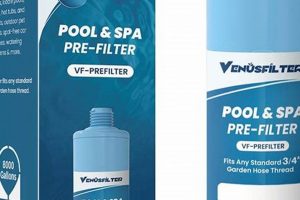
A device attached to a water source, typically a spigot or hose bib, designed to remove particulate matter from the water stream before it exits the hose. These filtration units trap sand, silt, rust, and other debris, preventing them from being distributed through the hose. A common example is a cylindrical housing containing a replaceable filter cartridge that connects directly to a garden hose.
Employing such a filtration method yields several advantages. It protects delicate irrigation systems, such as drip lines and micro-sprinklers, from clogging. Cleaner water promotes healthier plant growth by preventing sediment buildup on foliage and in the soil. Furthermore, it extends the lifespan of equipment like pressure washers and pumps by minimizing abrasive wear caused by suspended particles. The adoption of pre-hose filtration stems from a need to improve water quality for diverse outdoor applications, ranging from gardening to vehicle washing.
The subsequent sections will detail the various types of filtration units available, considerations for selecting the appropriate one for specific needs, and best practices for maintenance and longevity.
Enhancing Water Quality
Optimizing the performance and lifespan of particulate removal devices requires adherence to specific guidelines.
Tip 1: Select the Appropriate Micron Rating: Determine the particle size requiring filtration. Finer filtration (lower micron rating) removes smaller particles but may reduce water flow. Course filtration (higher micron rating) provides greater flow but removes larger debris only.
Tip 2: Regularly Inspect the Filter Cartridge: Examine the cartridge periodically for signs of clogging or damage. Replace the cartridge as soon as reduced water flow or visible sediment accumulation is observed.
Tip 3: Consider a Pre-Filter: For water sources with high sediment loads, installing a coarse pre-filter upstream can extend the lifespan of the primary filter cartridge.
Tip 4: Protect from Freezing Temperatures: Disconnect and drain the filtration unit during freezing conditions to prevent damage to the housing and cartridge.
Tip 5: Flush New Hoses: New hoses often contain manufacturing residues. Flush the hose thoroughly before connecting the filtration unit to prevent premature cartridge clogging.
Tip 6: Secure Connections: Ensure all connections are tight to prevent leaks, which can reduce water pressure and potentially damage the filtration unit.
Tip 7: Store Properly When Not in Use: When not in use, store the filtration unit in a dry, shaded location to prevent UV degradation and extend its lifespan.
Implementing these suggestions ensures efficient particle removal, prolongs equipment life, and promotes optimal water usage for various outdoor applications.
The following section will address troubleshooting common issues encountered with these filtration systems.
1. Filtration media type

The filtration media within a particle removal device is the component responsible for physically capturing sediment. The type of media directly influences the filter’s efficiency, lifespan, and suitability for different water qualities and applications. Selecting the appropriate media is crucial for optimal performance and protection of downstream equipment.
- Pleated Filters
Pleated media, typically constructed from polyester or polypropylene, offer a high surface area for particle capture. The pleated design allows for greater flow rates and increased dirt-holding capacity compared to other types. These are commonly used in residential and light commercial applications with moderate sediment loads. However, they may be less effective at removing very fine particles compared to other media.
- Spun Filters
Spun filters consist of layers of thermally bonded polypropylene fibers. The density of the fibers increases towards the core, providing depth filtration. This type is effective at removing a wide range of particle sizes and is relatively inexpensive. They are often used as pre-filters to extend the life of more expensive filtration media. However, they can become easily clogged with heavy sediment loads.
- String Wound Filters
String wound filters are created by winding a yarn or string, usually made of cotton, polypropylene, or nylon, around a core. The tightness of the winding determines the micron rating. These filters offer good dirt-holding capacity and are suitable for various applications, including those with viscous fluids. However, they may not provide as consistent filtration as pleated or spun filters.
- Screen Filters
Screen filters utilize a mesh screen, often made of stainless steel or plastic, to capture particles larger than the mesh size. These are typically used for coarse filtration, removing large debris like leaves and sand. They are cleanable and reusable, making them a cost-effective option for pre-filtration. However, they do not remove fine particles and are not suitable for applications requiring high water purity.
The selection of a specific media depends on factors such as the type and size of sediment present in the water, the required flow rate, and the desired level of filtration. Understanding the characteristics of each media type is essential for maximizing the effectiveness of particle removal devices in various applications.
2. Micron rating range

The effectiveness of sediment removal from a garden hose system hinges significantly on the appropriate micron rating. This rating indicates the size of particles a filter can capture, directly impacting water quality and the protection of downstream equipment. Selection of the appropriate micron rating requires careful consideration of the water source and the intended application.
- Defining Micron Rating
A micron, or micrometer, is a unit of measure equal to one millionth of a meter. The micron rating of a filter specifies the smallest particle size, in microns, that the filter is designed to capture with a certain efficiency. Lower micron ratings indicate finer filtration, removing smaller particles. For instance, a 5-micron filter will remove particles 5 microns or larger.
- Impact on Irrigation Systems
Drip irrigation systems and micro-sprinklers are particularly susceptible to clogging from fine particulate matter. Utilizing a filter with a lower micron rating (e.g., 50 microns or less) is essential to prevent blockage and maintain consistent water flow. Failure to do so can result in uneven watering and plant stress. A higher micron rating may suffice for sprinkler systems with larger nozzle openings.
- Matching Rating to Water Source
Water sourced from wells or surface water sources typically contains higher levels of sediment than municipal water supplies. Therefore, a filter with a lower micron rating is generally necessary for these sources. Municipal water may still benefit from filtration, but a higher micron rating may be adequate to remove rust or scale from aging pipes.
- Trade-offs with Flow Rate
Finer filtration, achieved with lower micron ratings, can reduce water flow. Selecting a filter with an excessively low micron rating for the application can lead to inadequate water pressure. It is crucial to balance the need for filtration with the desired flow rate for the intended use. Pre-filtration with a higher micron rating can extend the lifespan of a finer filter and mitigate flow reduction.
In summary, the micron rating is a critical factor in determining the efficacy of a sediment filter connected to a garden hose. Proper selection, based on water source, irrigation system requirements, and acceptable flow rate, ensures optimal performance and protects valuable equipment from damage and reduced functionality due to sediment accumulation.
3. Flow rate capacity

Flow rate capacity is a fundamental characteristic of sediment filters connected to garden hoses, dictating the volume of water that can pass through the filter within a given timeframe. Proper flow rate is essential for maintaining adequate water pressure for various outdoor applications, ranging from watering plants to operating pressure washers. Understanding this capacity and its relationship to filter selection and maintenance is crucial for efficient and effective water usage.
- Determinants of Flow Rate Capacity
Several factors influence the flow rate capacity of a sediment filter. These include the filter’s surface area, the type of filtration media used, and the micron rating. Filters with larger surface areas and coarser filtration media generally allow for higher flow rates. Conversely, finer filtration media and smaller filter sizes can restrict water flow. Internal filter design and the diameter of the inlet and outlet ports also play a role.
- Impact of Sediment Load
The amount of sediment present in the water source significantly affects flow rate capacity over time. As the filter captures sediment, the pores within the filtration media become clogged, reducing the filter’s ability to allow water to pass through freely. High sediment loads can lead to a rapid decline in flow rate, necessitating frequent filter replacement or cleaning. Pre-filtration can mitigate this issue by removing larger debris before it reaches the primary filter.
- Matching Flow Rate to Application
Selecting a filter with an appropriate flow rate capacity for the intended application is paramount. For example, a pressure washer requires a higher flow rate than a drip irrigation system. Using a filter with insufficient flow rate capacity for a pressure washer can result in reduced cleaning power. Conversely, using a filter with excessive flow rate capacity for a drip system might compromise filtration efficiency and allow finer particles to pass through, potentially clogging the irrigation emitters.
- Measuring and Monitoring Flow Rate
The flow rate through a sediment filter can be measured using a flow meter. Regular monitoring of the flow rate provides an indication of the filter’s performance and can help determine when filter replacement is necessary. A significant drop in flow rate, despite a relatively clean-looking filter, might indicate other issues such as internal blockages or a reduction in water pressure from the source.
The flow rate capacity is therefore a critical performance parameter for sediment filters used with garden hoses. Careful consideration of the factors that influence flow rate, coupled with regular monitoring, ensures that the selected filter meets the specific needs of the intended application, maintaining optimal water pressure and filtration efficiency.
4. Housing material durability

The material composition of a filtration unit’s housing is a critical factor directly impacting its longevity and functionality when connected to a garden hose. The housing’s ability to withstand environmental stressors and operational demands determines the filter’s overall lifespan and effectiveness.
- UV Resistance and Degradation
Prolonged exposure to ultraviolet (UV) radiation from sunlight can cause degradation in certain housing materials, particularly some plastics. This degradation can lead to cracking, brittleness, and eventual failure of the housing. Materials with inherent UV resistance or those treated with UV stabilizers are preferred for outdoor applications to mitigate this risk. For example, polypropylene housings without UV stabilizers are prone to damage compared to those made from UV-resistant polyethylene.
- Pressure Tolerance and Water Hammer
The housing material must possess sufficient tensile strength to withstand the water pressure exerted on it during operation. Sudden pressure surges, known as water hammer, can exert significant stress on the housing, potentially leading to cracks or bursts. Reinforced plastics or metals are commonly used to ensure adequate pressure tolerance. An example is the use of brass fittings and reinforced nylon housings in high-pressure applications.
- Chemical Resistance and Water Composition
The chemical composition of the water passing through the filtration unit can impact the housing material. Certain chemicals, such as chlorine or acidic compounds, can corrode or degrade specific materials over time. Selecting a housing material resistant to the chemicals present in the water is crucial for maintaining its integrity. Stainless steel or chemically resistant plastics are often employed in such scenarios.
- Impact Resistance and Physical Stress
Outdoor filtration units are susceptible to physical impacts from falling debris, accidental bumps, or freezing temperatures. The housing material should possess adequate impact resistance to prevent cracking or breakage under these conditions. Materials like reinforced plastics or metals offer greater impact resistance compared to more brittle plastics. For instance, a reinforced polycarbonate housing is less likely to shatter upon impact than a standard PVC housing.
The selection of an appropriate housing material, considering UV exposure, pressure tolerance, chemical resistance, and impact resistance, directly contributes to the reliability and lifespan of the particulate removal device when connected to a garden hose. Neglecting these factors can lead to premature failure and compromised water quality.
5. Connection size compatibility

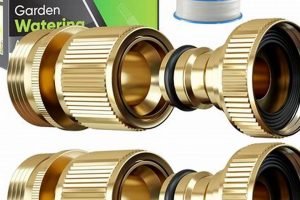
Connection size compatibility constitutes a critical aspect of particulate filtration systems designed for garden hose integration. The correspondence between the filter’s inlet and outlet port sizes and the standard dimensions of garden hose fi
ttings directly determines the ease and integrity of the connection. Mismatched connection sizes necessitate adapters, which introduce potential leak points and reduce water pressure. Standard garden hose thread (GHT) sizes, typically 3/4 inch, are prevalent, and adherence to these standards is essential for universal compatibility.
Incompatibility presents practical challenges. For example, attempting to connect a filter with a 1/2 inch NPT (National Pipe Thread) fitting directly to a standard 3/4 inch GHT garden hose results in a non-functional system. The lack of a secure connection leads to water leakage and renders the filtration ineffective. Furthermore, repeated attempts to force incompatible connections can damage the threads of both the filter and the hose, requiring replacement of components. Conversely, when using non-standard hoses or equipment, care must be taken to ensure that the filter connections match the hose or equipment connections. For example, pressure washers commonly use quick-connect fittings of various sizes, which may necessitate use of adapter fittings.
In summary, proper connection size compatibility ensures secure and leak-free integration of particulate filters with garden hose systems. This compatibility minimizes water waste, maintains optimal water pressure, and prevents damage to equipment. Addressing connection size requirements during the selection process streamlines installation and optimizes the performance of the overall filtration system.
6. Maximum pressure tolerance

The maximum pressure tolerance of a filtration unit intended for garden hose use constitutes a critical safety and performance parameter. Exceeding this limit can result in catastrophic failure of the housing, leading to water damage, equipment malfunction, and potential injury. This parameter dictates the upper limit of water pressure the filter can safely withstand, expressed in pounds per square inch (PSI). Manufacturers clearly specify this value, and adherence is paramount during operation. Connecting a filtration unit with an inadequate pressure rating to a high-pressure water source, such as some municipal water supplies or pressure washer booster pumps, creates a significant risk. For instance, a filter rated for 60 PSI connected to a water source delivering 80 PSI is highly likely to rupture, causing immediate water leakage and rendering the filtration system inoperable.
Selecting a filtration unit with an appropriate maximum pressure tolerance necessitates understanding the typical water pressure at the point of connection. Water pressure can fluctuate, and it is advisable to choose a filter with a pressure rating that exceeds the expected maximum pressure to provide a safety margin. Pressure regulators can be employed to mitigate the risk of exceeding the filter’s pressure limit, particularly in situations where the source pressure is known to be inconsistent or high. Regular inspection of the filter housing for signs of stress, such as bulging or cracking, serves as a proactive measure to identify potential pressure-related issues before failure occurs. For example, visual inspection might reveal a hairline crack forming on the housing after experiencing an unexpected pressure surge, prompting immediate replacement and preventing a complete rupture.
In summary, maximum pressure tolerance is an indispensable specification for filtration units used with garden hoses. Careful selection of a filter with a pressure rating that accommodates the water source, coupled with pressure regulation and routine inspection, ensures safe and reliable operation. Understanding and respecting this parameter prevents equipment damage, minimizes water waste, and safeguards against potential hazards associated with pressurized water systems.
7. Cartridge replacement frequency

The periodicity of replacing filter cartridges within a garden hose particulate filtration system is a critical maintenance consideration directly impacting water quality, flow rate, and the lifespan of downstream equipment. Optimal replacement intervals depend on several interconnected factors necessitating careful evaluation for efficient system operation.
- Source Water Quality
The presence and concentration of sediment, minerals, and organic matter in the water supply directly influence cartridge lifespan. High sediment loads necessitate more frequent replacements to prevent clogging and maintain adequate flow. For instance, well water typically requires more frequent cartridge changes than municipally treated water due to higher particulate concentrations. Ignoring this factor leads to reduced flow and potential damage to connected irrigation systems.
- Filter Micron Rating
Filters with lower micron ratings, designed to capture finer particles, tend to clog more rapidly than those with higher ratings. Consequently, finer filters require more frequent replacement to maintain optimal flow and filtration efficiency. For example, a 5-micron filter used in a drip irrigation system will likely need replacement more often than a 100-micron filter used for general washing purposes. Failure to replace fine filters promptly can cause a significant reduction in water pressure.
- Usage Patterns and Volume
The frequency and volume of water passing through the filter correlate directly with cartridge lifespan. Systems used heavily, such as those irrigating large gardens daily, will require more frequent cartridge changes compared to systems used sparingly. For example, a filter used for occasional car washing may last several months, whereas a filter used for daily greenhouse irrigation may require monthly replacement. Consistent monitoring of water flow provides an indicator of cartridge condition.
- Visual Inspection and Flow Rate Monitoring
Regular visual inspection of the cartridge and monitoring of water flow provide empirical data for determining replacement frequency. A cartridge visibly coated with sediment or a noticeable reduction in water flow indicates the need for replacement, regardless of predetermined schedules. For example, a brown-stained cartridge or a drop in water pressure from 40 PSI to 20 PSI signals imminent replacement. Reliance solely on predetermined schedules, without considering actual conditions, can lead to suboptimal performance.
Integrating these considerations into a proactive maintenance schedule for particulate removal systems connected to garden hoses ensures consistently clean water, protects downstream equipment from damage, and optimizes the overall efficiency of water usage. Understanding the interplay between water quality, filter characteristics, usage patterns, and direct observation is paramount for establishing an effective cartridge replacement strategy.
Frequently Asked Questions
This section addresses common inquiries regarding the selection, application, and maintenance of particulate removal devices designed for use with garden hoses.
Question 1: What constitutes an appropriate micron rating for a sediment filter used with a garden hose connected to a drip irrigation system?
For drip irrigation systems, a filter with a micron rating of 75 microns or lower is generally recommended to prevent clogging of the emitters. However, specific requirements may vary based on the emitter design and th
e sediment load of the water source.
Question 2: How frequently should the filter cartridge be replaced in a sediment filter used for garden hose applications?
The replacement frequency varies depending on the water quality and usage volume. Regular inspection is recommended, and the cartridge should be replaced when there is a noticeable reduction in water flow or visible sediment accumulation on the filter surface.
Question 3: What materials are commonly employed in the construction of housings for sediment filters used with garden hoses, and what are their respective advantages?
Common materials include polypropylene, nylon, and stainless steel. Polypropylene is cost-effective and chemically resistant but may degrade with prolonged UV exposure. Nylon offers higher strength and pressure tolerance. Stainless steel provides excellent durability and chemical resistance but is more expensive.
Question 4: How does the flow rate capacity of a sediment filter impact the performance of a garden hose-connected pressure washer?
An insufficient flow rate capacity can significantly reduce the pressure washer’s cleaning power. The filter’s flow rate should match or exceed the pressure washer’s minimum flow rate requirement to ensure optimal performance. Consult the pressure washer’s specifications for the required flow rate.
Question 5: What are the potential consequences of exceeding the maximum pressure tolerance of a sediment filter connected to a garden hose?
Exceeding the maximum pressure tolerance can lead to rupture of the filter housing, resulting in water leakage, equipment damage, and potential injury. A pressure regulator should be installed if the water source pressure exceeds the filter’s rating.
Question 6: Is it necessary to use a sediment filter with a garden hose when connected to a municipal water supply?
While municipal water supplies are generally treated, they may still contain sediment, rust, or scale. Using a sediment filter can protect sensitive equipment, such as drip irrigation systems, and improve the overall water quality for various applications.
The appropriate selection and maintenance of particulate removal systems attached to garden hoses, informed by these answers, contribute to efficient and effective water usage.
The subsequent section will delve into troubleshooting common issues encountered with these filtration systems.
Conclusion
The preceding discussion has elucidated the critical aspects of particulate removal devices for water distribution systems. A comprehensive understanding of filtration media, micron ratings, flow rate capacities, housing material durability, connection size compatibility, maximum pressure tolerance, and cartridge replacement frequency is essential for effective application. These elements collectively determine the performance and longevity of a sediment filter for garden hose.
The informed selection and diligent maintenance of these devices will optimize water quality, protect downstream equipment from damage, and ensure the efficient use of water resources. Prioritizing these factors represents a responsible approach to water management across a range of residential and commercial applications.
![Best 2 Inch Garden Hose For [X] & Reviews | The Ultimate Gardening Guide: Grow a Thriving Garden Year-Round](https://MyGardenPatch.com/wp-content/uploads/2025/07/th-5631-300x200.jpg "Best 2 Inch Garden Hose For [X] & Reviews The Ultimate Gardening Guide: Grow a Thriving Garden Year-Round")