



A device that allows a garden hose to rotate freely without twisting or kinking. It typically consists of two threaded ends that connect to the hose and spigot, joined by a swivel mechanism. This mechanism permits rotational movement, preventing the hose from becoming tangled during use. For instance, when watering a garden, the user can move around without the hose becoming twisted and restricting water flow.
The integration of this component provides numerous advantages for garden maintenance. It extends the lifespan of the hose by minimizing stress and wear caused by twisting. It also enhances user experience by allowing for easier maneuverability and preventing interruptions in water flow. Historically, such implements were developed to address the common problem of hose kinking, improving the efficiency and convenience of watering and cleaning tasks.
The subsequent sections will explore the various types available, their construction materials, installation procedures, maintenance requirements, and factors to consider when selecting an appropriate model for specific gardening needs.
Selection and Use Guidance
This section outlines important considerations for selecting and effectively utilizing a rotational hose coupling to optimize gardening and cleaning activities.
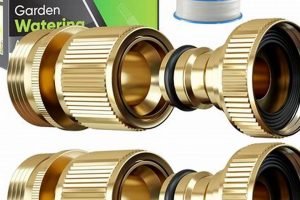
Tip 1: Material Selection: Prioritize brass or stainless steel for superior durability and resistance to corrosion. Polymeric variants may suffice for light-duty applications, but their longevity is generally lower.
Tip 2: Thread Compatibility: Verify that the selected fitting adheres to standard garden hose thread (GHT) specifications, typically 3/4-inch. Mismatched threads can lead to leaks and potential damage.
Tip 3: Flow Rate Considerations: Ensure that the fitting’s internal diameter does not restrict water flow significantly. A reduced internal diameter can diminish water pressure at the nozzle.
Tip 4: Swivel Mechanism Quality: Inspect the swivel mechanism for smooth, unrestricted rotation. A stiff or binding swivel will negate the intended benefit of preventing hose kinks.
Tip 5: Leak Prevention: Apply thread sealant tape or pipe dope to the threads prior to installation to ensure a watertight seal. Over-tightening can damage the fitting and lead to leaks.
Tip 6: Regular Inspection: Periodically inspect the fitting for signs of wear, corrosion, or leakage. Replace the fitting if any of these conditions are observed to maintain optimal performance.
Tip 7: Storage Practices: When not in use, store the rotational hose coupling in a dry environment to prevent corrosion and extend its lifespan.
Employing these guidelines will enhance the functionality and durability of the selected rotational hose coupling, optimizing its contribution to garden maintenance and cleaning tasks.
The concluding section will summarize the core advantages and key selection criteria for this beneficial device.
1. Durability

Durability is a primary attribute influencing the performance and lifespan of garden hose swivel connectors. The operating environment, characterized by exposure to water, sunlight, and physical stress, necessitates a robust design and appropriate material selection to ensure prolonged functionality.
- Material Composition and Corrosion Resistance
The choice of material directly impacts a connector’s resistance to corrosion, a common cause of failure. Brass and stainless steel alloys offer superior corrosion resistance compared to less expensive plastic alternatives, preventing degradation that can lead to leaks and structural weakness. For example, a connector fabricated from low-grade steel will rapidly corrode when exposed to water containing dissolved minerals, shortening its service life.
- Mechanical Stress and Fatigue
Connectors are subjected to repeated mechanical stress as the hose is moved, twisted, and subjected to water pressure. The connector’s design must accommodate these stresses to prevent fatigue and eventual failure. Reinforcement of critical stress points, such as the swivel joint, is essential. For instance, a connector with a poorly designed swivel may crack or break after repeated flexing.
- UV Degradation
Prolonged exposure to ultraviolet (UV) radiation from sunlight can degrade certain materials, particularly plastics, causing them to become brittle and prone to cracking. UV-resistant coatings or the selection of UV-stable materials are crucial for connectors used outdoors. An example would be a connector made of standard PVC which, without additives, degrades quickly under direct sunlight.
- Thread Integrity and Seal Longevity
The integrity of the threaded connections and the sealing surfaces directly affects the connector’s ability to maintain a leak-proof seal over time. High-quality threads that resist stripping and durable sealing washers contribute to a longer service life. An example of this can be seen with threads that are not deep enough, which strip easily when tightened onto a spigot, rendering the connector useless.
The interplay of material selection, design, and manufacturing processes collectively determines the durability of a garden hose swivel connector. By addressing the potential failure points associated with corrosion, mechanical stress, UV degradation, and thread integrity, manufacturers can produce connectors that withstand the rigors of outdoor use and provide reliable, long-lasting performance.
2. Material Composition

Material composition is a critical determinant of the performance, longevity, and overall value of a garden hose swivel connector. The materials employed directly influence the connector’s resistance to environmental factors, mechanical stress, and the potential for degradation over time, thereby impacting its reliability in garden and outdoor applications.
- Brass Alloys: Enhanced Corrosion Resistance and Durability
Brass alloys, typically composed of copper and zinc, offer excellent resistance to corrosion from water and environmental exposure. This inherent resistance minimizes the risk of rust and scaling, ensuring a consistent flow rate and preventing premature failure of the swivel mechanism. For example, a brass connector exposed to hard water will exhibit significantly less corrosion compared to one fabricated from standard steel, maintaining its structural integrity and functionality for a longer period.
- Stainless Steel: Superior Strength and Chemical Resistance
Stainless steel, an alloy of iron, chromium, and other elements, provides superior strength and resistance to a wider range of chemicals than brass. This makes stainless steel connectors suitable for applications involving fertilizers, pesticide
s, or cleaning solutions that may corrode other materials. In industrial or agricultural settings, stainless steel variants can withstand exposure to harsh chemicals, extending their operational lifespan. - Polymeric Materials: Lightweight and Cost-Effective Alternatives
Polymeric materials, such as reinforced nylon or polypropylene, offer lightweight and cost-effective alternatives to metal connectors. These materials are resistant to certain types of corrosion and can provide adequate performance in less demanding applications. However, they generally exhibit lower strength and heat resistance compared to metals. For residential use with moderate water pressure, a high-quality polymeric connector may suffice, but it is less suitable for heavy-duty commercial applications.
- Sealing Materials: Critical for Leak Prevention
The sealing materials used in the connector, such as rubber or synthetic washers, play a vital role in preventing leaks at the threaded connections. The material must be resistant to degradation from water, temperature fluctuations, and prolonged compression. Low-quality rubber washers may harden or crack over time, leading to leaks and requiring replacement. High-grade synthetic materials, like EPDM rubber, offer superior resistance to these factors, ensuring a reliable seal throughout the connector’s service life.
The selection of appropriate materials for a garden hose swivel connector is therefore a multifaceted decision, dependent on the intended application, environmental conditions, and desired level of performance. Balancing cost considerations with the need for durability and chemical resistance is crucial for optimizing the overall value and longevity of the component.
3. Thread Compatibility

Thread compatibility is a paramount consideration in the selection and installation of a garden hose swivel connector. The standardized nature of garden hose threads dictates that a properly matched interface between the connector and the hose or spigot is crucial for a secure and leak-free connection. Failure to ensure thread compatibility invariably results in a compromised seal, leading to water loss, reduced water pressure, and potential damage to the connector or the connected components. For example, attempting to connect a connector with metric threads to a hose with American National Standard threads will inevitably lead to cross-threading and a damaged, unusable connection.
The most common standard encountered in residential gardening applications is the Garden Hose Thread (GHT), often specified as 3/4-inch GHT. Deviation from this standard necessitates the use of adapters, which introduce additional points of potential failure and increase the complexity of the system. Furthermore, the presence of damaged or worn threads on either the connector or the hose diminishes the sealing capability, regardless of thread size conformity. Regular inspection and maintenance of threads are therefore essential to ensure the long-term integrity of the connection. The presence of dirt or debris within the threads can also impede proper sealing, emphasizing the importance of cleanliness during installation.
In summary, the selection of a garden hose swivel connector demands careful attention to thread compatibility to guarantee a reliable and efficient watering system. Adherence to established standards, coupled with regular inspection and proper installation techniques, mitigates the risk of leaks, minimizes water waste, and extends the operational lifespan of both the connector and the associated garden hose equipment. The seemingly simple act of ensuring matching threads is, in reality, a critical factor in achieving optimal performance and preventing costly repairs.
4. Swivel Smoothness
Swivel smoothness, in the context of a garden hose swivel connector, represents a critical performance characteristic directly influencing the ease of use, hose longevity, and overall functionality of the watering system. A smooth swivel action minimizes kinking and tangling, thereby preventing flow restrictions and extending the lifespan of the hose itself.
- Reduced Hose Stress and Kinking
A connector exhibiting smooth swivel action allows the hose to rotate freely in response to movement, significantly reducing torsional stress on the hose material. This prevents the formation of kinks, which can restrict water flow and weaken the hose structure over time. For instance, when maneuvering around obstacles in a garden, a smoothly swiveling connector enables the hose to adjust naturally, rather than being forced into sharp bends that compromise its integrity.
- Enhanced User Ergonomics
The ease with which the connector swivels directly impacts the user’s experience. A connector that requires excessive force to rotate or exhibits jerky movement can lead to fatigue and frustration during watering tasks. A smooth-swiveling connector, conversely, facilitates effortless hose management, allowing for more precise and comfortable watering.
- Internal Bearing Design and Friction Reduction
The internal design of the swivel mechanism plays a key role in determining its smoothness. High-quality connectors often incorporate bearings or low-friction materials to minimize resistance to rotation. The precision and quality of these internal components directly affect the swivel’s ability to provide consistent, smooth movement over its lifespan. A connector lacking adequate bearing surfaces, for example, will likely exhibit increased friction and stiffness with continued use.
- Impact of Material Selection on Swivel Action
The materials used in the swivel mechanism influence its smoothness and durability. Materials that are resistant to corrosion and wear, such as stainless steel or certain polymers, contribute to a smoother and more consistent swivel action over time. A swivel constructed from lower-grade materials may become corroded or develop surface irregularities, leading to increased friction and a reduction in swivel smoothness.
In conclusion, swivel smoothness is not merely a convenience feature but an essential attribute of a garden hose swivel connector that directly impacts its performance, usability, and longevity. A connector with a smooth, reliable swivel mechanism contributes to a more efficient and enjoyable gardening experience while simultaneously prolonging the life of the connected hose. The internal construction and material choices contribute to a long lasting and durable product.
5. Leak Prevention

Leak prevention is a critical factor in the performance and efficiency of any garden hose system incorporating a swivel connector. Uncontrolled water leakage not only results in resource wastage but can also lead to reduced water pressure, inefficient watering, and potential damage to surrounding areas. A properly designed and installed connector is essential for minimizing these risks.
- Thread Seal Integrity
The integrity of the threaded connections between the connector, the hose, and the water source is paramount. Thread sealants, such as polyt
etrafluoroethylene (PTFE) tape or pipe dope, are often employed to create a watertight barrier within the threads. Improper application or degradation of the sealant over time can compromise the seal, resulting in leakage. Regular inspection of the threads and reapplication of sealant as needed are crucial maintenance practices. For instance, neglecting to replace worn PTFE tape during connector installation will almost certainly lead to immediate leakage. - Washer Quality and Condition
Washers, typically made of rubber or synthetic materials, are strategically placed within the connector to create a compression seal. The quality and condition of these washers significantly impact their ability to prevent leaks. Over time, washers can become compressed, cracked, or degraded due to exposure to water, sunlight, and chemicals. Replacing damaged or worn washers is essential for maintaining a leak-proof connection. A cracked or hardened rubber washer, for example, will no longer conform to the mating surfaces, creating a pathway for water to escape.
- Connector Body Material and Construction
The material and construction of the connector body itself influence its ability to withstand water pressure and prevent leaks. High-quality connectors are typically made of durable materials, such as brass or stainless steel, and are designed to withstand high pressures without deformation or cracking. Inferior materials or poor construction can lead to structural weaknesses that result in leakage under pressure. A connector with thin walls or poorly cast threads, for instance, may rupture or leak at the threads when subjected to typical water pressure.
- Swivel Joint Design and Sealing
The swivel joint, which allows for rotational movement, is a potential point of leakage if not properly designed and sealed. High-quality swivel connectors often incorporate O-rings or other sealing elements within the joint to prevent water from escaping. The effectiveness of these seals depends on their material, compression, and the precision of the mating surfaces. A poorly designed swivel joint with inadequate sealing will exhibit leakage around the rotating mechanism, even if the threaded connections are properly sealed.
The multifaceted approach to leak prevention in garden hose swivel connectors underscores the importance of selecting high-quality components, employing proper installation techniques, and implementing regular maintenance practices. Addressing each potential source of leakage ensures a reliable and efficient watering system, minimizing water waste and maximizing resource utilization. Proper implementation of these facets allows for a seamless connection between water source and hose.
6. Flow Rate
Flow rate, in the context of a garden hose system incorporating a swivel connector, represents the volume of water delivered through the system per unit of time, typically measured in gallons per minute (GPM) or liters per minute (LPM). The swivel connector’s design and internal dimensions can significantly impact this flow rate, creating a potential bottleneck if not properly engineered. A restricted internal diameter within the connector, for example, will impede water flow, reducing the GPM available at the hose nozzle. This diminished flow rate can negatively affect watering efficiency, prolonging the time required to irrigate a garden or clean a surface. Consider a situation where a high-pressure cleaning task requires a consistent flow to dislodge debris; a flow-restricting swivel connector would render the task less effective and more time-consuming.
The internal design characteristics of the swivel connector directly influence the amount of flow, and in doing so determines its flow rate. Sharp bends, constrictions, and surface roughness within the connector’s internal passageways create turbulence, which impedes water flow and reduces overall flow rate. Selection of swivel connectors, particularly for applications requiring high flow rates, should prioritize models with smooth, unobstructed internal channels. For example, agricultural applications using large-diameter hoses for irrigation demand swivel connectors designed to minimize flow restriction to maintain optimal watering efficiency across large areas. The same holds for firefighting applications where high flow rates are essential for effective fire suppression.
In summary, flow rate is a key performance parameter for garden hose systems, and its optimization hinges on the proper selection and installation of swivel connectors. Choosing connectors with appropriate internal dimensions and smooth internal passageways minimizes flow restrictions, ensuring efficient water delivery and maximizing the effectiveness of watering and cleaning tasks. By understanding the relationship between swivel connector design and flow rate, users can optimize their garden hose systems for peak performance and resource conservation.
7. Ease of Installation

Ease of installation represents a significant factor influencing the selection and adoption of garden hose swivel connectors. The complexity of the installation process directly impacts user satisfaction and the likelihood of proper implementation, which, in turn, affects the connector’s performance and longevity.
- Tool Requirements and Complexity
The requirement for specialized tools or intricate procedures directly affects the ease of installation. Connectors that necessitate only basic tools, such as pliers or wrenches, are generally preferred. Complex installation processes increase the likelihood of errors, potentially leading to leaks or damage to the connector or the hose. For instance, a connector requiring precise thread alignment or specialized sealant application may present a challenge for users lacking experience in plumbing tasks.
- Thread Design and Compatibility
The design and compatibility of the threads on the connector significantly influence the ease of attachment to the hose and spigot. Connectors with well-defined, standardized threads facilitate smooth and secure connections. Mismatched or poorly formed threads increase the effort required for installation and elevate the risk of cross-threading or leaks. A connector with tapered threads, for example, may provide a tighter seal with less effort compared to a connector with straight threads.
- Instructions and Documentation
Clear and concise instructions are crucial for ensuring proper installation, particularly for users unfamiliar with garden hose systems. Well-written instructions, accompanied by diagrams or illustrations, guide the user through each step of the process, minimizing the potential for errors. Connectors lacking adequate documentation increase the likelihood of improper installation, leading to performance issues or premature failure. Visual aids can be particularly effective in conveying complex procedures, such as the correct application of thread sealant or the proper orientation of sealing washers.
- Quick-Connect Mechanisms
Certain garden hose swivel connectors incorporate quick-connect mechanisms that simplify the installation process. These mechanisms typically involve a push-and-click or lever-actuated design, eliminating the need for threaded connections. Quick-connect connectors offer a faster and more convenient installation option, particularly for u
sers who frequently change hose attachments. However, the reliability and durability of quick-connect mechanisms can vary depending on the design and materials used.
The ease of installation, therefore, is a multifaceted attribute of garden hose swivel connectors, encompassing tool requirements, thread design, documentation, and the availability of quick-connect mechanisms. Prioritizing connectors that offer a straightforward and intuitive installation process enhances user satisfaction, promotes proper implementation, and ultimately contributes to the reliable performance of the watering system.
Frequently Asked Questions
The following questions address common inquiries regarding the selection, usage, and maintenance of garden hose swivel connectors. The information provided aims to clarify misconceptions and offer practical guidance.
Question 1: What is the primary function of a garden hose swivel connector?
The primary function is to allow a garden hose to rotate freely at the point of connection, preventing kinks and tangles that can restrict water flow and damage the hose.
Question 2: What materials are best suited for a durable garden hose swivel connector?
Brass and stainless steel are generally preferred for their resistance to corrosion and mechanical stress. Polymeric materials may suffice for light-duty applications but typically offer lower longevity.
Question 3: How does thread compatibility affect the performance of a garden hose swivel connector?
Incompatible threads can lead to leaks and potential damage to the connector and the connected hose. Adherence to the Garden Hose Thread (GHT) standard, typically 3/4-inch, is crucial.
Question 4: How can leakage be prevented when installing a garden hose swivel connector?
The proper application of thread sealant tape or pipe dope to the threads before installation is recommended. Over-tightening should be avoided to prevent damage to the fitting.
Question 5: Does the internal diameter of a garden hose swivel connector affect water flow?
Yes, a reduced internal diameter can restrict water flow and diminish water pressure at the nozzle. Connectors with unobstructed internal channels are preferable.
Question 6: What maintenance is required for a garden hose swivel connector?
Periodic inspection for signs of wear, corrosion, or leakage is recommended. Replacement of damaged or worn components ensures optimal performance.
The selection of a garden hose swivel connector necessitates consideration of material, thread compatibility, flow rate, and leak prevention strategies. Regular maintenance extends the lifespan and ensures consistent performance.
The subsequent section will offer a concluding summary of the discussed benefits and key selection points.
Conclusion
The preceding analysis has underscored the importance of the garden hose swivel connector as a critical component within irrigation and water delivery systems. Its capacity to mitigate hose kinking, extend hose lifespan, and improve user ergonomics has been thoroughly examined. The evaluation of materials, thread compatibility, flow dynamics, leak prevention, installation ease, and swivel smoothness provides a comprehensive framework for informed decision-making.
Selecting an appropriate garden hose swivel connector is, therefore, not a trivial matter but a strategic investment in operational efficiency and resource conservation. Neglecting these considerations can lead to compromised performance, increased water waste, and premature equipment failure. Diligent application of the principles outlined herein will yield tangible benefits in both residential and commercial settings, ensuring reliable and sustainable water management practices.
![Best 2 Inch Garden Hose For [X] & Reviews | The Ultimate Gardening Guide: Grow a Thriving Garden Year-Round](https://MyGardenPatch.com/wp-content/uploads/2025/07/th-5631-300x200.jpg "Best 2 Inch Garden Hose For [X] & Reviews The Ultimate Gardening Guide: Grow a Thriving Garden Year-Round")