



A flexible conduit, often constructed from durable materials such as latex or thermoplastic polymers and encased in a protective woven fabric, extends significantly in length when pressurized with water. This type of hose offers a practical solution for a range of watering tasks, from irrigating gardens and lawns to washing vehicles and outdoor surfaces. For example, a unit specified as “100ft” will typically retract to a more manageable size, around 30-40 feet, when empty, facilitating easier storage.
The utility of this equipment stems from its lightweight nature and space-saving design. Unlike traditional rubber or PVC hoses, these models reduce the burden of hauling and coiling heavy, rigid tubing. This ease of use is particularly beneficial for individuals with limited mobility or smaller storage spaces. Early versions presented durability challenges; however, advancements in materials and manufacturing processes have led to improved resistance against leaks, bursts, and abrasion, enhancing longevity and reliability in modern iterations.
The following sections will delve deeper into the specific features, maintenance requirements, and selection criteria crucial for optimizing the performance and lifespan of this type of expandable watering system. This will include a comparative analysis of different construction materials, nozzle attachments, and user feedback, providing a comprehensive overview for informed decision-making.
Optimizing Performance
Maximizing the lifespan and functionality of this expandable watering system requires careful consideration of usage habits and maintenance practices. The following recommendations outline essential steps for prolonged performance.
Tip 1: Control Water Pressure: Excessive water pressure can compromise the integrity of the inner tubing, potentially leading to ruptures. It is advisable to utilize a pressure regulator to maintain optimal operating levels and prevent damage.
Tip 2: Avoid Dragging on Abrasive Surfaces: Dragging the hose across rough surfaces such as concrete or gravel can abrade the outer fabric, weakening its protective capabilities. Employ lifting techniques or utilize hose reels to minimize contact with abrasive environments.
Tip 3: Fully Drain After Each Use: Water left inside the hose can contribute to mold growth and deterioration of the internal materials, particularly in freezing temperatures. Ensure complete drainage after each use, ideally by hanging the hose vertically.
Tip 4: Store Properly When Not in Use: Direct sunlight and extreme temperatures can accelerate the degradation of both the inner tubing and outer fabric. Store the hose in a shaded, cool, and dry location when not in service.
Tip 5: Inspect Regularly for Leaks: Periodically examine the hose and fittings for signs of wear, cracks, or leaks. Addressing minor issues promptly can prevent more significant problems and extend the hose’s usability.
Tip 6: Utilize Appropriate Nozzle Attachments: Avoid using nozzles with overly restrictive flow rates, as this can create undue pressure on the hose. Select nozzles appropriate for the intended watering task and ensure compatibility with the hose’s pressure rating.
Implementing these simple yet crucial preventative measures can significantly enhance the longevity and efficiency of expandable watering systems, ensuring reliable performance for extended periods.
The subsequent sections will explore specific material considerations and advanced maintenance techniques to further optimize its use.
1. Material Composition

The material composition of a 100ft expanding garden hose directly dictates its performance characteristics, lifespan, and overall utility. The inner tubing, typically constructed from latex, thermoplastic polyurethane (TPU), or a similar flexible polymer, is responsible for containing the water pressure and expanding under its force. The outer covering, usually a woven fabric made from polyester or nylon, provides a protective layer against abrasion, UV degradation, and physical damage. The type and quality of these materials are crucial determinants of the hose’s ability to withstand repeated expansion and contraction cycles, exposure to environmental elements, and potential mechanical stress. For example, a hose with a triple-layer latex core and a high-density polyester fabric cover will generally exhibit superior durability compared to one made with single-layer latex and a lower-grade fabric.
A prime example of the impact of material composition is the hose’s burst pressure rating. Higher-quality materials, particularly in the inner tubing, allow the hose to withstand greater water pressure before failing. Cheaper materials are prone to bursting under typical household water pressures, leading to premature failure and potential water damage. Furthermore, the fabric weave density influences the hose’s resistance to abrasion when dragged across rough surfaces. Densely woven, durable fabrics offer greater protection, preventing leaks caused by punctures or tears. The fittings, typically made from brass or plastic, must also be constructed from corrosion-resistant materials to ensure a secure and leak-free connection to the water source and nozzle.
In conclusion, the material composition of a 100ft expanding garden hose is not merely a specification but a fundamental determinant of its performance and longevity. Understanding the interplay between the inner tubing material, the outer fabric cover, and the fitting construction enables informed purchasing decisions and ensures that the hose meets the specific demands of the user’s application. While seemingly insignificant, the quality of these components directly translates to a durable, reliable, and ultimately cost-effective watering solution.
2. Expansion Ratio

Expansion ratio, in the context of a 100ft expanding garden hose, denotes the proportion between the hose’s retracted length and its fully extended length under water pressure. This metric is crucial for assessing the hose’s practical utility. A higher expansion ratio signifies a more compact storage size when not in use, and a greater reach when operational. For instance, a hose marketed as “100ft” might retract to a mere 33 feet, yielding an expansion ratio of 3:1. This characteristic allows users to maneuver a full-length hose without the burden of storing and managing a traditional, rigid 100-foot alternative. Inadequate expansion ratio results in a hose that is either too cumbersome to store or fails to reach the intended target area, diminishing its value.
The expansion ratio is directly influenced by the materials used in construction, specifically the inner tubing. Thermoplastic elastomers (TPE) and latex are common choices, each with varying degrees of elasticity. A hose utilizing a less elastic material will exhibit a lower expansion ratio, potentially falling short of its a
dvertised length. Conversely, over-expansion risks material fatigue and premature failure, particularly if the protective outer fabric lacks adequate reinforcement. Therefore, optimal performance relies on a balanced expansion ratio achieved through careful selection of materials and design parameters. Practical applications span residential gardening, vehicle washing, and outdoor cleaning, each benefiting from the ease of storage and maneuverability facilitated by a well-defined expansion ratio.
Understanding the expansion ratio of a 100ft expanding garden hose is paramount for selecting a product that aligns with specific needs and spatial constraints. Challenges arise when manufacturers overstate the expansion capability, leading to consumer dissatisfaction. Clear and accurate specifications, alongside verified user reviews, are essential for mitigating this risk. The relationship between the advertised length and the actual performance under pressure is a critical factor in assessing the overall value and suitability of this type of hose.
3. Burst Pressure

Burst pressure represents a critical performance parameter for any 100ft expanding garden hose, defining the maximum internal water pressure the hose can withstand before experiencing catastrophic failure. Understanding this specification is paramount for ensuring safe and effective operation, preventing potential property damage, and maximizing the lifespan of the hose.
- Definition and Measurement
Burst pressure is typically expressed in pounds per square inch (PSI) and is determined through rigorous testing procedures. Manufacturers subject the hose to incrementally increasing water pressure until rupture occurs. This value represents the upper limit of the hose’s structural integrity. Ignoring this limit can lead to sudden hose failure, resulting in uncontrolled water release.
- Material Influence on Burst Pressure
The materials used in the construction of the hose core and outer covering significantly impact its burst pressure rating. Hoses with multi-layered latex or reinforced thermoplastic polyurethane (TPU) cores generally exhibit higher burst pressures compared to those with single-layer cores. The density and tensile strength of the woven fabric outer layer also contribute to the hose’s overall resistance to bursting. Premium materials command higher burst pressure ratings, ensuring greater reliability and longevity.
- Operating Pressure vs. Burst Pressure
It is crucial to distinguish between burst pressure and the recommended operating pressure. The operating pressure is the safe and efficient pressure range for normal use, typically significantly lower than the burst pressure. Exceeding the recommended operating pressure, even if below the burst pressure, can accelerate wear and tear on the hose, reducing its lifespan. A prudent approach involves selecting a hose with a burst pressure substantially higher than the expected maximum operating pressure.
- Fittings and Burst Pressure
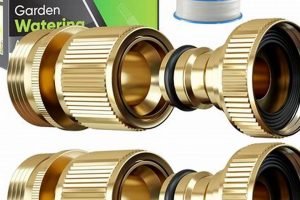
The fittings connecting the hose to the water source and nozzle also play a critical role in determining the overall burst pressure. Weak or poorly attached fittings can become points of failure, even if the hose itself is capable of withstanding higher pressures. Brass or reinforced polymer fittings are generally more durable than standard plastic fittings and contribute to a higher overall burst pressure rating for the complete hose assembly.
The interplay between burst pressure, material selection, operating pressure, and fitting quality underscores the importance of informed purchasing decisions. When selecting a 100ft expanding garden hose, careful consideration of these factors ensures a safe, reliable, and long-lasting watering solution. Disregarding the burst pressure rating introduces an avoidable risk of premature failure and potential water damage, diminishing the overall value proposition of the product.
4. Fitting Quality

Fitting quality is a critical determinant of the overall performance and longevity of a 100ft expanding garden hose. Deficiencies in fitting design, materials, or manufacturing processes can compromise the hose’s ability to maintain a secure and leak-free connection, leading to reduced water pressure, inefficient water usage, and premature product failure.
- Material Composition and Corrosion Resistance
Fittings are commonly manufactured from brass, aluminum, or various polymers. Brass fittings, while generally robust, are susceptible to dezincification in certain water conditions, leading to weakening and eventual failure. Aluminum fittings, if improperly treated, can corrode when exposed to dissimilar metals, causing galvanic corrosion. Polymer fittings offer corrosion resistance but may lack the mechanical strength of metal alternatives. The selection of appropriate fitting materials is essential for preventing leaks and ensuring long-term durability.
- Thread Design and Sealing Mechanism
The design of the threads and sealing mechanism on the fittings directly impacts the connection’s ability to withstand water pressure. Poorly designed threads may not provide a secure grip, leading to leaks under pressure. Similarly, inadequate sealing mechanisms, such as worn or improperly sized O-rings, can compromise the connection’s water-tightness. Precision machining and high-quality sealing components are necessary for achieving a reliable connection.
- Connection Strength and Pull-Out Resistance
The strength of the connection between the fitting and the hose material is crucial, particularly under the dynamic stress of repeated expansion and contraction. Inferior fittings may detach from the hose under pressure, causing sudden water loss and potential injury. The use of crimping or swaging techniques, coupled with robust fitting designs, enhances the connection’s resistance to pull-out forces, ensuring a secure and long-lasting bond.
- Compatibility with Water Source and Nozzle
Fittings must be compatible with both the water source and the intended nozzle or accessory. Incompatible threads or fitting sizes can result in leaks or difficulty in establishing a secure connection. Standardized fitting sizes and thread types are essential for ensuring interoperability and preventing cross-threading or damage to the connecting components. The choice of fitting style (e.g., quick-connect, threaded) should align with the user’s specific needs and preferences.
In summary, fitting quality significantly impacts the overall reliability and user experience of a 100ft expanding garden hose. Selection of appropriate materials, precise thread design, robust connection strength, and compatibility with other components are essential considerations for ensuring a leak-free, durable, and safe watering solution.
5. Storage Efficiency

Storage efficiency is a fundamental advantage offered by the 100ft expanding garden hose, stemming directly from its design. When not pressurized, the hose contracts significantly in length, often to a third or less of its extended size. This contr
action dramatically reduces the space required for storage, a critical factor for users with limited storage capacity in apartments, small gardens, or vehicles. The cause of this efficiency is the elastic nature of the inner core, which returns to its original, shorter state when water pressure is removed. An example of this benefit is evident in urban gardening, where space is often at a premium; a traditional 100ft hose would require substantial coiling and storage space, whereas its expanding counterpart can be compactly stowed in a small bucket or shelf. The importance of storage efficiency, therefore, is not merely a matter of convenience, but a practical necessity for many users.
The practical implications of this enhanced storage extend beyond mere space-saving. Reduced bulk translates to easier handling and portability. For instance, transporting a conventional hose can be cumbersome, particularly for individuals with physical limitations. The reduced weight and compact form of the expanding version simplify this task, enabling users to more easily move the hose between different areas of a garden or transport it for use at remote locations. Furthermore, improved storage minimizes the risk of kinking and tangling, common issues with traditional hoses that can lead to reduced water flow and premature wear. Properly stored expanding hoses are less susceptible to damage from UV exposure and extreme temperatures, further extending their service life.
In conclusion, the storage efficiency of the 100ft expanding garden hose is not simply an added feature but an integral component of its overall value proposition. This characteristic addresses a critical need for users facing space constraints and seeking a more manageable watering solution. While the expansion mechanism introduces potential durability concerns compared to traditional hoses, the ease of storage offers a compelling advantage that aligns with the evolving needs of modern gardening and outdoor maintenance practices. Ensuring appropriate storage practices, such as complete drainage and protection from direct sunlight, is crucial for maximizing the benefits of this feature and prolonging the hose’s usability.
6. Weight Reduction

Weight reduction is a significant attribute of the 100ft expanding garden hose, contributing directly to enhanced usability and convenience compared to traditional alternatives. This characteristic stems primarily from the materials and construction techniques employed in its manufacturing.
- Material Composition and Density
The choice of materials, specifically the inner tubing (typically latex or thermoplastic polyurethane) and the outer fabric covering (often polyester), results in a lighter overall weight. Traditional rubber or PVC hoses utilize denser materials, contributing significantly to their increased mass. For example, a standard 100ft rubber garden hose can weigh upwards of 20 pounds, whereas an expanding hose of comparable length may weigh less than 10 pounds. This difference in weight directly impacts ease of handling and maneuverability.
- Absence of Rigid Reinforcement
Traditional garden hoses often incorporate rigid reinforcement layers to maintain their shape and prevent kinking. Expanding hoses, by contrast, rely on the elasticity of the inner tubing and the support of the outer fabric covering. This eliminates the need for heavy, rigid reinforcement, contributing to a substantial reduction in weight. This design facilitates easier coiling and storage, as the hose is more pliable and less prone to retaining a fixed shape.
- Impact on Portability and Handling
The reduced weight of the expanding hose significantly enhances its portability and handling characteristics. Individuals with limited strength or mobility, such as the elderly or those with physical disabilities, find these hoses considerably easier to manage. Transporting the hose across a garden or moving it from one location to another becomes less strenuous. Furthermore, the lighter weight reduces the risk of accidental injury due to lifting or maneuvering a heavy object.
- Effect on Storage and Transportation
Weight reduction is essential for storage and transportation, particularly when space is limited. Lighter hoses are simpler to coil and store, occupying less physical space. This benefit is especially relevant for apartment dwellers or individuals with small storage areas. Moreover, lighter hoses are easier to transport in vehicles, facilitating their use in various locations, such as community gardens or remote watering sites.
The cumulative effect of these factors underscores the importance of weight reduction in the design and functionality of 100ft expanding garden hoses. This attribute not only enhances user convenience but also broadens the accessibility of gardening and outdoor maintenance activities for a wider range of individuals.
Frequently Asked Questions
This section addresses common inquiries regarding the 100ft expanding garden hose, providing concise and informative answers to aid in understanding its characteristics, usage, and maintenance.
Question 1: What is the typical lifespan of a 100ft expanding garden hose?
The lifespan varies significantly based on usage frequency, water quality, storage conditions, and the quality of materials used in its construction. Under typical residential use, a well-maintained unit may last between one to three years. Proper storage and avoiding excessive water pressure can extend its usability.
Question 2: Can a 100ft expanding garden hose be repaired if it develops a leak?
Minor leaks can sometimes be addressed with repair kits specifically designed for flexible hoses. However, significant damage or leaks near the fittings often render the hose irreparable, necessitating replacement. The success of a repair depends largely on the extent and location of the damage.
Question 3: What water pressure is recommended for operating a 100ft expanding garden hose?
The recommended operating pressure typically ranges from 40 to 60 PSI (pounds per square inch). Exceeding the maximum recommended pressure, often specified by the manufacturer, can lead to premature failure or bursting of the hose. A pressure regulator is advisable in areas with high water pressure.
Question 4: Is a 100ft expanding garden hose suitable for use with hot water?
Most expanding garden hoses are not designed for use with hot water. Elevated temperatures can degrade the elastic properties of the inner tubing and compromise the integrity of the outer fabric. Refer to the manufacturer’s specifications for temperature limitations.
Question 5: How should a 100ft expanding garden hose be stored to maximize its lifespan?
Proper storage involves draining the hose completely after each use and storing it in a cool, dry place away from direct sunlight. Avoid leaving the hose connected to the water source under pressure for extended periods. Coiling the hose loosely and storing it in a container or hanging it vertically can prevent kinks and tangles.
Question 6: What are the primary advantages of a 100ft expanding garden hose compared to a traditional rubber hose?
The primary advantages include lighter weight, more compact storage, and reduced risk of kinking. These features enhance usability and convenience, particularly for individuals with limited strength or storage space. However, traditional rubber hoses gen
erally offer greater durability and resistance to abrasion.
These answers provide a general overview of common concerns regarding 100ft expanding garden hoses. Consulting the specific product’s manual and considering individual usage conditions are essential for informed decision-making and optimal performance.
The subsequent section will address product selection criteria to ensure best practices.
Conclusion
This exploration has examined the 100ft expanding garden hose, detailing its defining characteristics, performance factors, and practical considerations. From material composition and expansion ratio to burst pressure and storage efficiency, a comprehensive understanding of these elements is paramount for informed consumer choice and optimal product utilization. Weight reduction and fitting quality further contribute to the hose’s overall value proposition, influencing ease of use and long-term reliability.
Ultimately, the selection and maintenance of a 100ft expanding garden hose represent an investment in efficient and convenient outdoor water management. Recognizing the trade-offs between portability and durability, informed consumers should prioritize quality materials and adherence to recommended operating pressures. Careful consideration of these factors will ensure a dependable and enduring solution for diverse watering needs.
![Best 2 Inch Garden Hose For [X] & Reviews | The Ultimate Gardening Guide: Grow a Thriving Garden Year-Round](https://MyGardenPatch.com/wp-content/uploads/2025/07/th-5631-300x200.jpg "Best 2 Inch Garden Hose For [X] & Reviews The Ultimate Gardening Guide: Grow a Thriving Garden Year-Round")