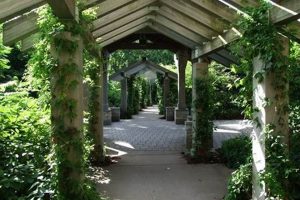
A structure crafted from metal, typically steel or wrought iron, designed to create a shaded passageway or focal point in outdoor spaces. It often features an open framework that supports climbing plants, transforming it into a living archway. These structures are frequently installed over walkways, entrances, or within garden beds to add vertical interest and architectural detail to the landscape.
These frameworks offer numerous advantages, including enhanced aesthetic appeal, provision of support for climbing flora, and the establishment of defined garden zones. Historically, similar architectural features have been employed to create romantic retreats and formal garden settings. The durability of the metallic construction ensures longevity and resistance to environmental elements, making it a practical and enduring garden element.
The following sections will delve into the various designs available, considerations for installation, suitable plant varieties, and maintenance strategies to ensure the continued beauty and structural integrity of such garden enhancements.
Enhancing the Metal Garden Arbor
The following guidelines offer practical advice for optimizing the integration and longevity of a metal framework within a garden environment.
Tip 1: Foundation Stability: Prioritize a solid foundation. Concrete footings, especially in regions with frost heave, provide crucial stability, preventing leaning or collapse over time. Ensure the footings extend below the frost line for maximum effectiveness.
Tip 2: Material Selection: Galvanized steel or powder-coated wrought iron offer superior rust resistance compared to untreated metal. Consider the local climate and choose materials accordingly to minimize maintenance requirements.
Tip 3: Plant Selection and Placement: Choose climbing plants appropriate for the structure’s size and load-bearing capacity. Avoid overly aggressive vines that could damage the framework. Proper spacing during planting is crucial to prevent overcrowding.
Tip 4: Pruning and Training: Regular pruning is essential to maintain the desired shape and prevent excessive weight on the framework. Train vines to grow evenly across the structure for balanced aesthetics and support.
Tip 5: Regular Inspection and Maintenance: Conduct routine inspections for rust, loose connections, or structural damage. Address any issues promptly to prevent further deterioration and costly repairs. Applying a rust inhibitor annually can extend its lifespan.
Tip 6: Consider Sun Exposure: When placing a structure, consider the amount of sunlight it will receive. This is crucial for the health of the climbing plants you choose. Ensure the location receives adequate sunlight based on the plant species chosen.
Tip 7: Drainage Considerations: Proper drainage around the base of the structure is vital. Avoid locations where water tends to pool, as this can accelerate corrosion and compromise the foundation.
Implementing these strategies will contribute to the enduring beauty and structural integrity of the structure, providing a lasting enhancement to the garden landscape.
The subsequent sections will explore design considerations and further refinement techniques.
1. Material Durability

The lifespan and visual appeal of a metal framework within a garden setting are intrinsically linked to the durability of its constituent materials. The selection of appropriate metallic compounds directly influences resistance to environmental stressors, maintenance needs, and long-term structural integrity.
- Corrosion Resistance
Metal structures are inherently susceptible to corrosion from moisture, humidity, and soil contact. Materials like galvanized steel, powder-coated aluminum, or wrought iron treated with rust inhibitors provide significantly enhanced protection. The presence of corrosion compromises structural integrity, leading to weakening and eventual failure of the framework. Proper material selection mitigates this risk.
- Load-Bearing Capacity Over Time
The selected metal must withstand the weight of mature climbing plants, as well as environmental loads such as wind and snow. Over time, weaker materials may fatigue, bend, or break under sustained stress. High-strength steel or appropriately treated wrought iron offers superior load-bearing capacity, ensuring stability and preventing collapse, particularly when supporting vigorous climbing species.
- Resistance to Environmental Degradation
Exposure to ultraviolet (UV) radiation, temperature fluctuations, and chemical exposure (e.g., fertilizers, pesticides) can degrade certain metals. Powder coating provides a protective barrier against UV damage and chemical corrosion, extending the material’s lifespan. Untreated metals may become brittle or discolored, detracting from the structure’s aesthetic value.
- Maintenance Requirements
Durable materials minimize the need for frequent repairs and replacements. Galvanized steel, for example, requires significantly less maintenance than untreated steel, reducing the overall cost and effort associated with upkeep. Lower maintenance translates to a longer service life and sustained aesthetic appeal with minimal intervention.
The strategic selection of durable materials for metal frameworks directly contributes to their longevity, structural soundness, and visual appeal within the garden. Prioritizing corrosion resistance, load-bearing capacity, environmental resilience, and minimized maintenance is essential for a lasting investment in garden architecture.
2. Structural Design

Structural design is paramount to the functionality, safety, and aesthetic appeal of a metal framework intended for garden use. A well-engineered design ensures the framework can withstand environmental loads, support climbing plants, and provide a lasting architectural element within the landscape.
- Load-Bearing Capacity and Stability
The framework’s design must account for the weight of mature climbing plants, wind resistance, and potential snow accumulation. Insufficient load-bearing capacity can lead to structural failure, posing a safety hazard and resulting in costly repairs. Designs incorporating adequate bracing, appropriately sized metal components, and secure anchoring systems are critical for stability and longevity.
- Material Distribution and Stress Management
Efficient material distribution minimizes stress concentrations, preventing localized weakening and potential fracture. Designs that evenly distribute weight across the structure, such as those with strategically placed support beams or reinforced joints, enhance overall structural integrity. Finite element analysis can be
employed to optimize material placement and ensure adequate stress management under various loading conditions. - Joint Design and Connection Strength
The design of joints, whether welded, bolted, or riveted, significantly impacts the structure’s overall strength. Weak or poorly executed joints are prone to failure, particularly under dynamic loading. Proper welding techniques, the use of high-strength fasteners, and reinforcement plates can bolster joint integrity and ensure secure connections between structural members.
- Geometric Configuration and Aesthetic Harmony
The geometric configuration, including arch shape, height, and width, influences both the structure’s visual appeal and its ability to support climbing plants. Designs that complement the surrounding landscape and provide adequate space for plant growth enhance the overall aesthetic harmony. The geometric form should also contribute to structural stability, avoiding excessively slender or unsupported elements.
Therefore, robust structural design is not merely an aesthetic consideration but a fundamental aspect ensuring that metal frameworks in gardens serve their intended purpose safely and effectively for years to come.
3. Plant Compatibility

The success of integrating a metal framework into a garden hinges significantly on the compatibility between the structure and the selected climbing plants. Incompatibility manifests in various forms, from stunted plant growth and structural damage to aesthetic disharmony. The framework’s design, material, and load-bearing capacity must align with the plant’s growth habits, mature size, and support requirements. For example, a delicate wrought iron structure may prove unsuitable for supporting vigorous wisteria vines, whose weight can cause bending or collapse. Conversely, a robust steel structure may visually overwhelm delicate climbing roses, creating an imbalance in the garden’s aesthetic composition.
Factors influencing plant compatibility include the framework’s height, width, and spacing of support elements. Plants requiring substantial sunlight necessitate a structure that allows ample light penetration, whereas shade-loving species benefit from denser foliage cover. The material of the framework also plays a role. Dark-colored metal can absorb excessive heat in sunny environments, potentially scorching plant stems and leaves. Proper plant selection involves considering the plant’s mature size, climbing method (twining, tendrils, clinging), and environmental needs. Climbing hydrangea, for instance, requires a sturdy surface to adhere to, while clematis thrives on thinner supports it can twine around.
Effective plant compatibility ensures both the plant’s health and the framework’s longevity. Choosing appropriate plant species prevents structural damage, reduces maintenance requirements, and enhances the overall aesthetic appeal of the garden. Careful consideration of these factors is crucial for creating a harmonious and sustainable garden feature.
4. Foundation Stability

The structural integrity and longevity of a metal framework are directly dependent on foundation stability. A compromised foundation undermines the entire structure, leading to leaning, distortion, and eventual collapse. The primary cause of foundation instability stems from inadequate soil bearing capacity, frost heave in colder climates, and improper drainage around the base. For example, the placement of a heavy metal arbor on poorly compacted soil, without appropriate footings, will inevitably result in settling and misalignment. Foundation stability is, therefore, not merely an ancillary concern, but a critical component for sustaining the integrity of a garden framework.
The impact of inadequate foundation support extends beyond structural concerns. A leaning or unstable framework presents a safety hazard, particularly in areas with high winds or heavy foot traffic. Furthermore, the visual appeal of the garden is diminished by a structure that appears to be failing. Practical applications of proper foundation techniques include the use of concrete footings that extend below the frost line in regions experiencing freezing temperatures. These footings, often reinforced with steel rebar, distribute the load of the structure over a wider area and prevent movement caused by soil expansion and contraction. Adequate drainage around the base further minimizes the risk of soil erosion and water damage.
In summary, the link between foundation stability and the overall success of a metal structure is undeniable. Addressing potential challenges, such as varying soil conditions and environmental factors, through careful planning and execution is essential. A robust foundation provides a solid base, ensuring the garden framework remains a stable, aesthetically pleasing, and safe addition to the landscape for years to come.
5. Aesthetic Integration
Aesthetic integration refers to the harmonious blending of a metal framework with its surrounding environment. The success of such integration determines whether the structure enhances or detracts from the overall visual appeal of the garden. Failure to consider the existing landscape design, architectural style of adjacent structures, and the natural color palette can result in a jarring or discordant effect. For instance, a starkly modern steel framework may appear out of place in a traditional cottage garden, disrupting the intended sense of tranquility and naturalism. Conversely, a rustic wrought iron structure may clash with the clean lines of a minimalist, contemporary outdoor space. The choice of material, design, and finish should, therefore, carefully complement the existing aesthetic context.
The scale and proportion of the framework, relative to the garden’s dimensions and surrounding features, are also crucial. An excessively large or imposing structure can overwhelm a small garden, creating a sense of claustrophobia and diminishing the visual impact of other elements. Conversely, a diminutive framework may appear insignificant or lost within a larger landscape. Plant selection plays a vital role in aesthetic integration. The color, texture, and growth habit of climbing plants should harmonize with the framework’s material and design. For example, climbing roses with delicate blooms may soften the angular lines of a steel structure, while bolder vines like wisteria can enhance the grandeur of a wrought iron arbor. Lighting, both natural and artificial, further influences aesthetic perception, accentuating the framework’s features and creating visual interest.
Effective aesthetic integration transforms a metal framework from a mere structural element into a seamless and captivating component of the garden landscape. Achieving this requires meticulous planning, a keen understanding of design principles, and a careful consideration of all factors that contribute to visual harmony. Overcoming challenges such as limited space, budget constraints, or differing design preferences demands creative solutions and a willingness to compromise, ensuring the final result reflects a cohesive and visually pleasing aesthetic.
6. Maintenance Requirements
The longevity and aesthetic appeal of a metal garden structure are directly correlated with adherence to regular maintenance protocols. Neglecting these requirements precipitates structural degradation, compromising both the visual charm and functional integrity of the framework.
- Rust Prevention
Corrosion poses a significant threat to ferrous metals. Regular application of rust inhibitors or protective coatings, particularly in humid climates or proximity to saltwater, is essential. Failing to address rust promptly leads to structural weakening and unsightly deterioration, necessitating costly repairs or replacement. Examples include annual application of anti-rust paint or the use of rust-converting primers on affected areas.
- Structural Inspection
Periodic inspection of joints, welds, and anchoring points is crucial for identifying signs of stress, loosening, or damage. Early detection allows for timely intervention, preventing minor issues from escalating into major structural failures. Visual inspection for cracks or deformation, coupled with tactile assessment of joint stability, should be conducted at least biannually.
- Vegetation Management
Climbing plants, while aesthetically pleasing, can exert considerable stress on the framework. Excessive weight, particularly from aggressive vines, can deform or even collapse the structure. Regular pruning and training of vegetation are necessary to maintain a balanced load and prevent encroachment on structural components. This involves strategic trimming to control plant size and directing growth along designated pathways.
- Cleaning and Debris Removal
Accumulation of debris, such as leaves, dirt, and bird droppings, fosters corrosion and obscures potential structural issues. Regular cleaning with mild soap and water, followed by thorough rinsing, helps maintain the framework’s appearance and prevents the buildup of harmful substances. Pressure washing, while effective for removing stubborn stains, should be approached cautiously to avoid damaging protective coatings.
The cumulative impact of these maintenance practices determines the lifespan and continued functionality of the garden framework. Diligent attention to these requirements not only preserves its aesthetic qualities but also safeguards against structural failures, ensuring its enduring presence within the garden landscape.
Frequently Asked Questions
The following questions address common inquiries regarding the selection, installation, and maintenance of metal garden structures. These answers aim to provide clarity and informed guidance for prospective and current owners.
Question 1: What is the typical lifespan of a metal garden structure?
The lifespan is contingent upon material composition, environmental conditions, and maintenance practices. Galvanized steel or powder-coated wrought iron, properly maintained, can endure for several decades. Neglecting rust prevention or subjecting the structure to extreme weather shortens its longevity.
Question 2: Is professional installation necessary for these structures?
Professional installation is advisable, particularly for larger or more complex designs. Correct anchoring and assembly are crucial for structural stability and safety. Improper installation can compromise the framework’s integrity and potentially lead to collapse.
Question 3: What types of climbing plants are best suited for a metal garden construction?
Plant selection should consider the framework’s load-bearing capacity and the plant’s growth habits. Lightweight vines, such as clematis or climbing roses, are suitable for delicate structures. Robust structures can accommodate heavier plants like wisteria or grapevines, provided regular pruning is implemented.
Question 4: How can rust be effectively prevented on metallic frameworks?
Rust prevention strategies include applying rust-inhibiting primers, paints, or coatings. Regular cleaning to remove debris and moisture also minimizes corrosion risk. Galvanized steel offers inherent rust resistance compared to untreated ferrous metals.
Question 5: Can a metal garden structure be painted or refinished?
Painting or refinishing is possible and can extend the structure’s lifespan and enhance its aesthetic appeal. Surface preparation, including rust removal and priming, is essential for proper paint adhesion. Select paints formulated for exterior metal surfaces to ensure durability.
Question 6: What considerations are important when choosing a location for installation?
Location selection should account for sunlight exposure, soil drainage, and proximity to existing structures or utilities. Adequate sunlight is crucial for plant growth, while proper drainage prevents soil erosion and water damage. Avoid placing the structure near underground utility lines.
These FAQs provide a foundational understanding of key considerations related to metallic garden enhancements. Proper planning and adherence to recommended practices are essential for maximizing their benefits.
The next section will delve into design trends and innovative applications of such enhancements.
Conclusion
This exploration has detailed the multifaceted considerations surrounding the selection, installation, and maintenance of metal garden arbor. From material durability and structural design to plant compatibility and aesthetic integration, each element contributes to the overall success and longevity of this landscape feature. Adequate foundation stability and consistent upkeep further safeguard against premature deterioration, ensuring sustained visual appeal and structural integrity.
Therefore, informed decision-making and diligent implementation of best practices are paramount to realizing the full potential of the metal garden arbor. By prioritizing quality materials, sound construction, and ongoing maintenance, individuals can create enduring garden enhancements that provide both aesthetic pleasure and functional value for years to come. The continued relevance of these structures within garden design necessitates a commitment to responsible ownership and a proactive approach to preserving their inherent beauty and resilience.
![[Stunning] Garden Pointe Seattle Clip Art Designs [Free] | The Ultimate Gardening Guide: Grow a Thriving Garden Year-Round](https://MyGardenPatch.com/wp-content/uploads/2025/07/th-9292-300x200.jpg "[Stunning] Garden Pointe Seattle Clip Art Designs [Free] The Ultimate Gardening Guide: Grow a Thriving Garden Year-Round")