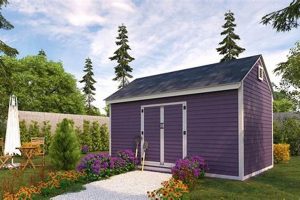
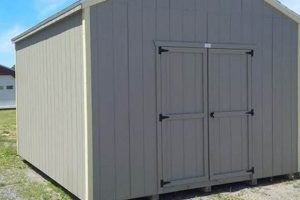
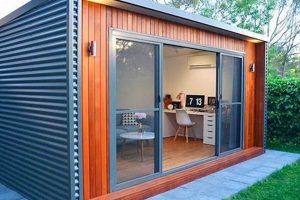
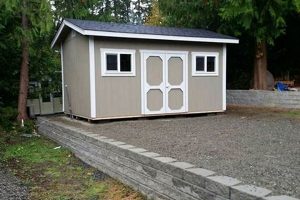
A combined structure provides dedicated space for both gardening equipment storage and project-based activities. This dual-purpose outbuilding typically features designated areas; one sheltered primarily for tools, fertilizers, and supplies related to landscaping, and another equipped for tasks such as woodworking, repairs, or hobby crafts.
Such a structure offers several advantages. It consolidates storage and workspace, maximizing land use and minimizing the need for separate buildings. Historically, these structures have evolved from simple storage solutions to more elaborate spaces incorporating electricity, workbenches, and specialized equipment. The integrated design enhances convenience and productivity for individuals engaged in both outdoor maintenance and indoor projects.
The following sections will delve into specific aspects of these combined structures, including design considerations, construction methods, organization strategies, and safety protocols to consider.
Tips for Optimizing a Combined Structure
Maximizing the functionality of a combined gardening supply storage and project workspace necessitates careful planning and organization. The following tips offer guidance for creating an efficient and productive environment.
Tip 1: Zoning for Functionality: Clearly delineate the gardening storage area from the workshop space. Utilize physical barriers, such as shelving units or partial walls, to prevent cross-contamination and maintain organization.
Tip 2: Vertical Storage Solutions: Employ wall-mounted shelving, pegboards, and hanging systems to maximize vertical space for tools, supplies, and equipment in both the gardening and workshop zones. This minimizes clutter and frees up floor space.
Tip 3: Adequate Lighting: Install sufficient lighting for both general illumination and task-specific activities. Consider overhead lighting for overall visibility and supplemental task lighting, such as work lamps or spotlights, for detailed work.
Tip 4: Ventilation and Climate Control: Ensure adequate ventilation to prevent moisture buildup and maintain a comfortable working environment. Consider installing a fan or ventilation system to remove dust, fumes, and odors, particularly in the workshop area.
Tip 5: Dedicated Workbench Area: Establish a sturdy and well-organized workbench specifically for project-based activities. Include storage for tools, materials, and supplies within easy reach.
Tip 6: Secure Tool Storage: Implement secure storage for valuable tools and equipment to prevent theft and unauthorized access. This may include lockable cabinets, tool chests, or wall-mounted security systems.
Tip 7: Regular Maintenance and Cleaning: Establish a routine for regular cleaning and maintenance to prevent the accumulation of debris, dust, and clutter. This ensures a safe and efficient working environment.
Implementing these organizational and maintenance strategies will enhance the utility and longevity of a combined gardening supply storage and project workspace.
The subsequent sections will address advanced design considerations, security enhancements, and long-term maintenance practices.
1. Design

The design phase is critical in determining the utility and efficiency of a combined gardening supply storage and project workspace. Careful consideration of several design facets ensures the structure meets intended needs and optimizes available space.
- Spatial Allocation
Spatial allocation dictates the distribution of space between gardening storage and project workspace. The relative proportion assigned to each area must align with the user’s primary activities. For example, an avid gardener requires a larger storage section, while a dedicated woodworker needs a more expansive workshop area. Improper spatial allocation leads to inefficiencies and hinders usability.
- Accessibility and Workflow
Accessibility refers to ease of movement and retrieval of items within both zones. Design must incorporate strategic placement of doors, pathways, and storage solutions to minimize obstructions and maximize workflow. For instance, positioning frequently used gardening tools near the entrance facilitates quick access for routine tasks. Similarly, a clear path between the workbench and material storage in the workshop improves project efficiency.
- Lighting and Ventilation Integration
Lighting and ventilation are fundamental design elements that influence user comfort and safety. The structure must incorporate sufficient natural light through windows and skylights, supplemented by artificial lighting for nighttime use. Adequate ventilation, either natural or mechanical, prevents moisture buildup, reduces odors, and ensures air quality, particularly important when working with chemicals or power tools.
- Structural Integrity and Material Selection
Structural integrity ensures the building’s stability and resistance to environmental factors. Design must adhere to local building codes and incorporate appropriate materials for framing, roofing, and cladding. Material selection influences durability, maintenance requirements, and aesthetic appeal. For example, choosing weather-resistant siding and a robust foundation prolongs the structure’s lifespan and minimizes repair costs.
Collectively, these design facets contribute to a functional and aesthetically pleasing combined structure. Prioritizing spatial allocation, accessibility, lighting, ventilation, and structural integrity during the design phase enhances the long-term utility and value of the combined gardening supply storage and project workspace.
2. Construction

The construction phase represents the tangible realization of the planned structure. Its execution determines the durability, safety, and overall functionality of the combined gardening supply storage and project workspace. Adherence to sound construction principles is paramount for a lasting and efficient outbuilding.
- Foundation Integrity
Foundation integrity is the bedrock of structural stability. Whether a concrete slab, pier blocks, or a gravel base, the foundation must provide a level and stable platform. An inadequate foundation leads to settling, warping, and potential structural failure. Real-world examples include sinking sheds on poorly prepared ground, resulting in jammed doors and cracked walls. The foundation directly impacts the lifespan and usability of the entire structure.
- Framing and Structural Support
Framing provides the skeletal framework that supports the walls and roof. Proper framing techniques, including accurate measurements, secure connections, and appropriate lumber selection, are essential. Weak framing compromises the building’s ability to withstand wind, snow, and other environmental stresses. Consider the consequences of undersized rafters leading to roof collapse under heavy snow loads; strong framing is non-negotiable.
- Weatherproofing and Exterior Cladding
Weatherproofing shields the interior from moisture, wind, and temperature fluctuations. Properly installed siding, roofing, and weather stripping prevent water damage, mold growth, and energy loss. Consider the implications of neglected weatherproofing, resulting in wood rot, pest infestations, and compromised storage conditions for valuable gardening supplies and project materials. Durable cladding contributes to long-term protection.
- Component Integration and Finishing
Component integration involves the installation of doors, windows, electrical wiring, and other essential elements. Correct installation ensures proper functionality and safety. Finishing encompasses painting, staining, and sealing to protect surfaces and enhance aesthetics. Poorly integrated electrical wiring creates a fire hazard, and inadequate sealing accelerates deterioration. Attention to detail during this phase elevates both the utility and longevity of the combined structure.
Each construction facet contributes directly to the overall performance of the combined gardening supply storage and project workspace. Neglecting any aspect jeopardizes the structure’s integrity and diminishes its value. Sound construction techniques translate to a durable, safe, and functional space for both gardening and project-related activities.
3. Organization

Effective organization within a combined gardening supply storage and project workspace is paramount for maximizing functionality, ensuring safety, and promoting productivity. Without structured arrangement, these spaces can quickly become cluttered and inefficient, hindering both gardening and project-related tasks. A well-organized structure transforms from a potential source of frustration into a valuable asset.
- Zonal Separation and Categorization
Zonal separation involves designating specific areas within the structure for distinct purposes, such as gardening tools, potting supplies, woodworking equipment, and hardware. Categorization entails grouping similar items together. Implementing a clear zonal system and categorizing items reduces search time, minimizes clutter, and optimizes workflow. For example, a dedicated shelving unit for gardening fertilizers, clearly labeled and separated from power tools, prevents accidental misuse and ensures safety.
- Vertical Storage Implementation
Vertical storage maximizes available space by utilizing wall-mounted shelving, pegboards, and hanging systems. This approach keeps items off the floor, reducing clutter and improving accessibility. A pegboard system for organizing hand tools allows for quick identification and retrieval, while shelving units accommodate bulkier items, such as soil bags or lumber. Without vertical storage, floor space becomes congested, hindering movement and limiting functionality.
- Inventory Management Systems
Inventory management involves tracking the quantity and location of supplies and tools. Implementing a system, such as labeling containers or using a digital spreadsheet, helps prevent overstocking, reduces waste, and ensures that necessary items are readily available. Consistently monitoring supply levels of frequently used items, like nails or seeds, streamlines project workflow. Lack of inventory control results in unnecessary purchases and potential project delays.
- Regular Decluttering and Maintenance
Regular decluttering involves periodically removing unwanted or unused items, while maintenance entails cleaning and organizing the space. Implementing a routine for decluttering and maintenance prevents the accumulation of clutter, ensuring that the structure remains functional and efficient. Discarding broken tools, expired supplies, and unused materials frees up valuable space and improves overall organization. Neglecting these practices leads to a disorganized and unproductive environment.
These organizational facets directly impact the utility and value of a combined gardening supply storage and project workspace. A well-organized structure not only enhances productivity but also promotes safety and extends the lifespan of tools and equipment. By prioritizing zonal separation, vertical storage, inventory management, and regular maintenance, individuals can transform a potentially chaotic space into a functional and efficient asset.
4. Functionality

The functionality of a combined gardening supply storage and project workspace is the linchpin of its utility and value. It dictates the degree to which the structure effectively serves its dual purpose: housing gardening equipment and facilitating project-based activities. A structure lacking in functionality, despite its aesthetic appeal or robust construction, ultimately fails to meet the user’s needs. This deficiency arises from a disconnect between the design, organization, and construction phases, resulting in a space that is cumbersome to navigate and inefficient to utilize. For example, a workspace without adequate lighting renders project work difficult and potentially dangerous, while a storage area lacking sufficient shelving necessitates stacking items on the floor, hindering accessibility and potentially damaging stored goods.
Functionality is not merely a desirable attribute; it is a critical component that directly impacts the productivity, safety, and overall satisfaction of the user. Consider a scenario where a gardener, mid-planting, requires a specific tool. A functional structure allows for its immediate retrieval, minimizing disruption and maximizing efficiency. Conversely, a poorly designed layout might necessitate an extensive search, delaying the task and leading to frustration. Similarly, in a workshop environment, a functional space provides a clear and organized work area, allowing for the safe and efficient execution of projects. Inadequate ventilation, insufficient electrical outlets, or a cramped layout can impede progress and compromise safety. Therefore, understanding the elements that contribute to functionality, such as efficient spatial allocation, strategic storage solutions, and ergonomic design principles, is essential for creating a successful combined structure.
Ultimately, the functionality of a combined gardening supply storage and project workspace serves as a tangible measure of its success. While design aesthetics and construction quality are important, the primary objective is to create a space that seamlessly integrates storage and work functions, promoting efficiency, safety, and user satisfaction. Challenges to achieving optimal functionality may include budget constraints, limited space, or a lack of planning expertise. However, prioritizing functionality during the design and construction phases, and implementing effective organizational strategies, can mitigate these challenges and ensure that the structure effectively serves its intended purpose. By recognizing functionality as the cornerstone of its design, builders and users can create a valuable asset that enhances both gardening and project-based activities.
5. Security
Security represents a crucial component in the overall utility and value of a combined gardening supply storage and project workspace. These structures, often located away from primary residences, are susceptible to theft and vandalism. The tools, equipment, and materials housed within often represent a significant financial investment, making them attractive targets. A lack of adequate security measures invites potential losses and disrupts both gardening and project-related activities. For example, a shed storing power tools without a robust locking system becomes vulnerable to opportunistic thieves, potentially leading to significant financial losses for the owner. Therefore, integrating comprehensive security measures is essential to protect assets and maintain the functionality of the space.
Specific security enhancements can include reinforced doors and windows, robust locking mechanisms, alarm systems, and security cameras. Solid core doors and window coverings provide a physical barrier against forced entry. High-quality deadbolt locks offer enhanced resistance compared to standard latches. Alarm systems, whether monitored or self-managed, provide an audible deterrent and alert homeowners to potential intrusions. Security cameras, strategically positioned, offer visual surveillance and can provide valuable evidence in the event of a crime. Implementing a combination of these measures creates a layered security approach, increasing the difficulty for potential intruders and deterring criminal activity. For example, installing motion-activated security lights can deter nighttime intrusions by increasing visibility and alerting neighbors to suspicious activity.
In conclusion, security is not an optional add-on but an integral element of a combined gardening supply storage and project workspace. Neglecting security measures increases the risk of theft and vandalism, leading to financial losses and disrupting intended use. Implementing a layered security approach, incorporating physical barriers, alarm systems, and surveillance technology, provides a robust defense against potential threats. Prioritizing security ensures the long-term value, functionality, and peace of mind for the owner of the structure.
6. Maintenance

The longevity and functionality of any structure are directly proportional to the diligence of its maintenance. For a combined gardening supply storage and project workspace, neglect translates to accelerated deterioration, compromising both its structural integrity and its utility. Routine maintenance prevents minor issues from escalating into costly repairs, ensuring the continued safe and efficient operation of the space. The absence of regular upkeep fosters an environment conducive to pest infestations, moisture damage, and structural weakening, impacting the storage of sensitive gardening supplies and the execution of precision projects. An example is the failure to treat a small area of wood rot, which can quickly spread, requiring extensive replacement of siding or framing members. Similarly, unlubricated door hinges seize, making access difficult, and neglected electrical connections become fire hazards.
Effective maintenance protocols encompass a range of activities tailored to the specific materials and design of the structure. Regular inspections identify potential problems early, allowing for timely intervention. Cleaning debris from gutters and downspouts prevents water damage to the foundation and siding. Applying sealant to cracks and joints protects against moisture intrusion and pest infestations. Maintaining a dry and well-ventilated interior reduces the risk of mold growth and corrosion. Treating wooden surfaces with preservatives safeguards against rot and insect damage. Proper storage of tools and materials minimizes wear and tear, extending their lifespan and maintaining a safe workspace. Another instance is that storing gardening tools and not cleaning them regularly. Cleaning gardening tools is part of maintenance that can increase the life of the tools and not spread pests and other bacteria.
Consistent maintenance is not an expense; it is an investment in the long-term value and usability of the combined gardening supply storage and project workspace. By implementing a proactive maintenance program, owners mitigate the risk of costly repairs, extend the lifespan of the structure, and ensure a safe and functional environment for both gardening and project-related activities. The challenge lies in establishing a routine and allocating the necessary time and resources for maintenance tasks. However, the benefits of proactive maintenance far outweigh the costs of neglect, solidifying its importance as a fundamental aspect of the structure’s overall performance.
Frequently Asked Questions
This section addresses common inquiries and misconceptions regarding combined gardening supply storage and project workspaces. The information presented aims to provide clarity and informed decision-making regarding design, construction, and maintenance.
Question 1: What are the primary benefits of combining gardening storage and a workshop in a single structure?
Combining these functions optimizes land use, consolidates storage, and provides a dedicated space for both gardening-related and project-based activities. It eliminates the need for separate buildings, reducing construction costs and maximizing efficiency.
Question 2: How should space be allocated between the gardening storage area and the workshop?
Space allocation should reflect the user’s primary activities. Individuals prioritizing gardening require a larger storage area, while those focused on woodworking or other projects need a more expansive workshop. A balanced approach is essential for optimal functionality.
Question 3: What are the most important design considerations for a combined structure?
Key design considerations include spatial allocation, accessibility, lighting, ventilation, structural integrity, and weatherproofing. Adherence to building codes and material selection appropriate for local climate conditions are also essential.
Question 4: What security measures are recommended for a garden shed and workshop?
Recommended security measures include reinforced doors and windows, robust locking mechanisms (deadbolts), alarm systems, and strategically placed security cameras. A layered security approach provides the most effective deterrent.
Question 5: How frequently should maintenance be performed on a combined gardening supply storage and project workspace?
Regular maintenance, including inspections for damage, cleaning gutters, and applying sealant to joints, should be conducted at least twice annually. More frequent inspections are advisable in regions with harsh weather conditions. Proper maintenance extends the lifespan of the structure and prevents costly repairs.
Question 6: What building codes typically apply to garden sheds and workshops?
Local building codes vary. It is essential to consult with the local permitting office to determine specific requirements for size, setback, foundation, electrical wiring, and plumbing (if applicable). Adhering to building codes ensures safety and avoids potential legal issues.
The insights provided underscore the importance of careful planning, sound construction, and consistent maintenance for a successful combined gardening supply storage and project workspace.
The following section provides a detailed summary of best practices.
Conclusion
The foregoing analysis has elucidated critical aspects of the garden shed and workshop, encompassing design, construction, organization, functionality, security, and maintenance. Each element contributes significantly to the structure’s overall utility and long-term value. Effective implementation of best practices in these areas ensures a secure, efficient, and productive environment for both gardening and project-related activities. Neglecting any of these key factors compromises the structure’s integrity and diminishes its potential benefits.
Therefore, prospective builders and owners are urged to prioritize comprehensive planning and diligent execution in the creation and upkeep of a garden shed and workshop. By adhering to the principles outlined, individuals can maximize the functionality and longevity of this valuable asset, fostering both creative endeavors and practical storage solutions.