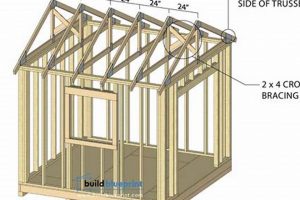
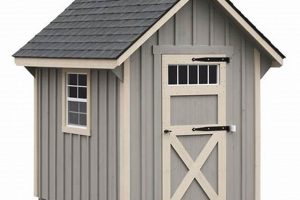
Relocating a prefabricated outdoor structure designed for storage and typically found in residential gardens involves detaching it from its foundation (if any), preparing it for transport, physically moving it to a new location, and securing it in place. This process can range from simple shifting of a small structure within a property to complex disassembly and reassembly for transport across longer distances.
The need for such a relocation arises from various circumstances, including property landscaping changes, the need for better access to the stored contents, or even a complete residential move. Successful execution provides continued utility of the structure, avoids the expense of purchasing a new one, and potentially enhances the overall aesthetic or functionality of the outdoor space. Historically, simple structures could be dragged or rolled across short distances; however, modern methods often involve specialized equipment to ensure efficiency and prevent damage.
Given the potential challenges and considerations involved, detailed planning and execution are vital. Subsequent sections will address key aspects such as assessing the structure, planning the move, selecting appropriate methods, and ensuring proper setup at the new location.
Relocation Guidance
The following guidelines aim to facilitate a smooth and efficient process when relocating a freestanding outdoor storage unit. Careful consideration of these points can minimize potential damage and ensure a successful outcome.
Tip 1: Assess the Structure’s Integrity. Thoroughly inspect the structure for any signs of rot, insect damage, or structural weakness. Address any existing issues prior to relocation to prevent further complications during the move.
Tip 2: Empty the Contents Completely. Remove all items stored within the structure. This reduces the overall weight, making it easier to handle and minimizing the risk of damage to both the structure and its contents.
Tip 3: Plan the Route. Carefully map out the intended path, considering potential obstacles such as trees, fences, or uneven terrain. Ensure adequate clearance to prevent collisions or snags.
Tip 4: Disassemble When Necessary. For larger or more complex structures, consider partial or complete disassembly. This can simplify the move and reduce the risk of structural damage. Document the disassembly process with photos or diagrams for easier reassembly.
Tip 5: Use Appropriate Equipment. Employ suitable moving equipment such as dollies, furniture sliders, or even a flatbed trailer, depending on the size and weight of the structure. Enlist assistance from individuals experienced in handling heavy objects.
Tip 6: Secure All Loose Components. If the structure is not fully disassembled, securely fasten any loose panels, doors, or windows to prevent them from detaching during transport. Use straps, rope, or tape as needed.
Tip 7: Prepare the New Site. Ensure the new location is level and properly prepared to receive the structure. This may involve clearing debris, leveling the ground, or constructing a new foundation.
Adhering to these recommendations contributes significantly to a safe and effective process, preserving the value and functionality of the storage unit.
The next section will provide information on potential challenges and solutions encountered during such a project.
1. Assessment

Prior to initiating the relocation of any prefabricated outdoor structure, a comprehensive assessment is critical. This process identifies potential challenges and informs subsequent steps, contributing significantly to a successful outcome. Neglecting this phase can result in structural damage, increased project costs, and potential safety hazards.
- Structural Integrity Evaluation
A detailed examination of the structure’s components including walls, roof, floor, and framing is necessary to identify any pre-existing damage, such as rot, insect infestation, or structural weaknesses. Addressing these issues prior to relocation prevents further deterioration during the move. For example, a shed with significant rot along the base should have that section repaired or reinforced before being lifted or transported to prevent collapse.
- Size and Weight Determination
Accurate measurement of the shed’s dimensions and an estimation of its weight are crucial for selecting appropriate moving equipment and personnel. Overestimating or underestimating these factors can lead to equipment failure, injury, or damage to the structure. A large, heavily-laden structure requires specialized machinery such as a flatbed trailer or crane, while a smaller, lighter structure may be manageable with a dolly and sufficient manpower.
- Accessibility Considerations
Evaluating both the current and proposed locations for ease of access is essential. This involves identifying potential obstructions such as trees, fences, or uneven terrain that might impede the movement of the shed. Limited access may necessitate dismantling the structure, requiring additional time, labor, and careful documentation for reassembly. For example, a shed situated behind a narrow gate may need to be disassembled to be moved.
- Foundation Analysis
The existing foundation, if any, must be assessed to determine its suitability for the relocation process. A crumbling concrete slab or a rotting wood base will need to be addressed to ensure a stable and level surface for the structure in its new location. Failure to do so can result in structural instability and potential long-term damage. The new location may also require a foundation which needs to be appropriately installed.
These facets of the initial assessment phase directly impact the feasibility and methodology of the entire relocation project. By meticulously evaluating structural integrity, size and weight, accessibility, and foundation requirements, individuals undertaking such a project can mitigate risks, optimize resources, and ensure a successful and sustainable relocation.
2. Preparation

The successful relocation of a freestanding outdoor storage structure is intrinsically linked to thorough preparation. Inadequate preparation frequently results in structural damage, logistical complications, and increased costs. Therefore, treating preparation as a crucial and distinct phase is essential.
Preparation encompasses several key actions. First, complete removal of all contents from the structure is paramount. This reduces the weight and minimizes potential shifting and damage to both the contents and the structure itself during the move. Consider, for instance, a case where a structure, only partially emptied, shifted during transport, resulting in damage to delicate stored items. Second, the route must be meticulously planned. This entails identifying potential obstacles, assessing ground conditions, and determining the necessary clearance. Overlooking this aspect can lead to delays, property damage, or even render the move impossible. A real-world example is a scenario where an improperly planned route encountered an unforeseen low-hanging branch, requiring on-the-spot adjustments and risking structural damage. Third, necessary tools and equipment must be procured in advance. This may include dollies, straps, ramps, and protective materials. Lack of appropriate equipment can result in inefficient movement, increased risk of injury, and potential damage to the structure. Failure to obtain the correct moving straps, for instance, could lead to uneven weight distribution and structural stress.
In conclusion, effective preparation directly correlates with a safer, more efficient, and ultimately successful relocation. By prioritizing thorough emptying, meticulous route planning, and adequate equipment procurement, challenges are mitigated, and the likelihood of adverse outcomes significantly reduced. Overlooking this crucial phase undermines the entire undertaking.
3. Disassembly

The decision to disassemble a prefabricated outdoor structure prior to relocation directly impacts the complexity, cost, and safety of the overall project. Disassembly involves the systematic deconstruction of the structure into smaller, more manageable components. This approach is often necessitated by size constraints, accessibility limitations, or structural vulnerabilities that preclude moving the structure intact. Failing to consider disassembly as a viable option can result in property damage, structural compromise, or complete project failure. As an example, attempting to move a large structure through a narrow gate without disassembly could cause irreparable damage to both the structure and surrounding property.
The scale and method of disassembly are contingent upon the structure’s design, materials, and the relocation route. Some structures may require complete disassembly down to individual panels and framing members, while others may only necessitate partial disassembly, such as removing the roof or specific wall sections. Irrespective of the scale, meticulous documentation of the disassembly process is paramount. This documentation, including photographs, diagrams, and labeling of components, facilitates accurate and efficient reassembly at the destination. The absence of such documentation frequently results in significant delays, improper reassembly, and structural instability. Moreover, the decision to disassemble often necessitates specialized tools and equipment, increasing the project’s overall cost and complexity.
Ultimately, the connection between disassembly and structure relocation is dictated by a confluence of factors related to size, accessibility, and structural integrity. While disassembly introduces additional complexity and labor, it frequently represents the only feasible solution for ensuring a safe and successful relocation. By carefully evaluating these factors and adopting a systematic, well-documented approach to disassembly, potential risks can be minimized, and the continued utility of the structure can be ensured.
4. Transportation

The physical relocation of a prefabricated outdoor storage structure is inextricably linked to the method of transportation employed. The size, weight, structural integrity, and distance of the move directly dictate the necessary transportation resources and logistical planning. Selecting an inappropriate transportation method invariably leads to damage, delays, or even complete failure of the relocation effort. For instance, attempting to move a fully assembled structure exceeding the weight capacity of a standard trailer results in equipment failure and potential structural collapse.
Transportation options range from simple manual methods for small structures moved short distances to sophisticated equipment for larger, more complex moves. Smaller structures can be moved using dollies, furniture sliders, or by manually lifting and carrying. Larger structures typically require specialized equipment such as flatbed trailers, forklifts, or cranes. The chosen method must account for potential obstacles along the route, including uneven terrain, narrow passageways, and overhead obstructions. Proper securing of the structure during transit is paramount to prevent shifting, tilting, or detachment, any of which can cause significant damage. Securing measures typically involve straps, ropes, and tie-downs that are appropriately rated for the weight and dimensions of the structure.
In conclusion, transportation represents a critical phase in the overall relocation process. A thorough assessment of the structure’s characteristics, the relocation route, and available resources informs the selection of an appropriate transportation method. Proper implementation of safety protocols and securement techniques minimizes the risk of damage and ensures the successful delivery of the structure to its new location, preserving its value and functionality. Careful planning and execution of the transportation phase are paramount to the success of the entire endeavor.
5. Reassembly

The act of reassembling a prefabricated outdoor storage structure following relocation is a critical phase directly influencing its structural integrity and long-term usability. It is the logical consequence of any disassembly undertaken for transportation and demands a meticulous approach to ensure the relocated structure functions as intended.
- Importance of Accurate Component Identification
Successful reassembly hinges on correctly identifying each component. Mislabeled or incorrectly identified parts can lead to structural weakness or misalignment. For example, failing to distinguish between similar-sized wall panels can compromise the integrity of the structure, potentially leading to leaks or instability. A detailed inventory and labeling system during disassembly are therefore crucial for accurate reassembly.
- Following Disassembly Documentation
The process of reassembly should strictly adhere to any documentation created during disassembly. This documentation, including photographs, diagrams, and written instructions, serves as a roadmap for reconstructing the structure. Deviating from the documented process increases the risk of errors and potential structural problems. As an example, if photographs document a specific orientation for roof trusses, ignoring this detail during reassembly can compromise the roof’s load-bearing capacity.
- Proper Fastening Techniques
The use of correct fasteners and appropriate fastening techniques is essential for a structurally sound reassembly. Using incorrect screws, nails, or bolts, or failing to tighten fasteners sufficiently, can compromise the integrity of the structure. For instance, using undersized screws to secure wall panels can result in panels detaching during strong winds. Adhering to manufacturer specifications regarding fastener types and torque levels is essential.
- Addressing Weatherproofing Concerns
During reassembly, particular attention must be paid to restoring weatherproofing measures. This includes properly sealing joints, applying caulk where necessary, and ensuring correct overlap of roofing materials. Neglecting these details can lead to water damage, mold growth, and accelerated deterioration of the structure. An example would be failing to properly seal the seams between roof panels, which allows rainwater to penetrate, leading to rot and structural weakening.
These aspects of reassembly demonstrate the critical link between careful dismantling and subsequent reconstruction. A well-executed disassembly process, coupled with diligent adherence to documentation and proper techniques during reassembly, guarantees the structural integrity and long-term functionality of the storage structure in its new location.
6. Foundation

The foundation, or lack thereof, represents a crucial consideration when undertaking the relocation of a prefabricated outdoor storage unit. Its presence and condition directly impact the feasibility, safety, and longevity of the move. A pre-existing foundation, such as a concrete slab or gravel base, must be assessed for suitability at the new location. Factors to consider include size, levelness, and structural integrity. An inadequate foundation at the original site does not negate the necessity of one at the new location; indeed, it may highlight the importance of establishing a proper base to prevent future structural issues. For example, a shed previously situated directly on soil may exhibit signs of rot or instability, underscoring the need for a well-drained and level foundation at the new site.
The establishment of a new foundation is often required to ensure the long-term stability and functionality of the relocated structure. Common foundation types include concrete slabs, gravel beds, and wooden platforms. The choice of foundation material depends on factors such as soil conditions, local climate, and the size and weight of the structure. Proper site preparation, including leveling and compaction, is essential for preventing settling and ensuring even weight distribution. The absence of a suitable foundation can lead to structural stress, door misalignment, and accelerated deterioration of the shed materials. Ignoring foundation requirements results in a structure that is more vulnerable to environmental factors and prone to premature failure. Consider a situation where a structure is moved onto uneven ground without a proper foundation; over time, the resulting stress will cause warping, cracking, and eventual collapse.
In conclusion, the foundation is not merely an optional accessory but an integral component of a successful relocation. A thorough assessment of the existing foundation, or the implementation of a new, appropriately designed foundation, is vital for ensuring the stability, longevity, and overall functionality of the relocated structure. Failure to address foundation requirements introduces significant risks that can compromise the entire undertaking.
Frequently Asked Questions about Relocating Outdoor Storage Structures
This section addresses common inquiries and misconceptions surrounding the relocation of prefabricated outdoor storage structures. The aim is to provide clear, concise, and factually accurate information to facilitate informed decision-making.
Question 1: Is professional assistance always required?
Professional assistance is not universally mandated; however, its necessity is dictated by several factors. These include the size and weight of the structure, the complexity of the relocation route, and the skill level of the individuals undertaking the task. Larger, heavier structures or those requiring navigation through difficult terrain often necessitate the expertise and equipment of professional movers.
Question 2: What are the potential risks associated with DIY relocation?
DIY relocation carries inherent risks. Structural damage to the structure is a primary concern, resulting from improper handling or inadequate support. Personal injury is another significant risk, stemming from lifting heavy objects or operating equipment without proper training. Property damage, such as damage to landscaping or surrounding structures, is also a possibility.
Question 3: How does weather impact the feasibility of such a project?
Adverse weather conditions significantly impede the feasibility of such projects. Rain, snow, or high winds increase the risk of accidents and structural damage. Wet conditions can make surfaces slippery and difficult to navigate, while strong winds can destabilize the structure during transport. Postponement until favorable weather conditions prevail is often advisable.
Question 4: Is it possible to relocate a structure with existing damage?
Relocating a structure with pre-existing damage is possible, but it requires careful consideration. The extent and nature of the damage must be thoroughly assessed, and appropriate reinforcement measures implemented. Failure to address existing weaknesses can exacerbate the damage during the move, potentially leading to structural collapse.
Question 5: How does the type of foundation influence the relocation process?
The type of foundation significantly influences the relocation process. Structures resting on concrete slabs require specialized lifting equipment, while those on gravel or dirt may be easier to maneuver. However, the absence of a proper foundation can indicate underlying structural issues that need to be addressed prior to relocation.
Question 6: What legal or regulatory considerations exist?
Legal and regulatory considerations vary depending on local ordinances and homeowner association rules. Some jurisdictions require permits for relocating structures, particularly if the move involves crossing property lines or disturbing public utilities. It is incumbent upon the individual undertaking the relocation to research and comply with all applicable regulations.
Thorough consideration of these FAQs contributes to a well-informed and risk-mitigated approach. Understanding these factors helps determine the appropriate course of action, promoting a safe and successful relocation.
The subsequent section will delve into case studies and real-world examples.
Concluding Remarks
The preceding sections have outlined the multifaceted considerations inherent in moving a garden shed. From the initial assessment of structural integrity and logistical planning to the critical execution phases of disassembly, transportation, and reassembly, a comprehensive understanding of the process is paramount. The establishment or maintenance of a stable foundation further ensures the structure’s longevity and continued utility.
Successful relocation necessitates meticulous attention to detail and adherence to established best practices. Neglecting any of these key aspects can result in structural damage, increased project costs, and potential safety hazards. Thorough planning and execution remain critical for ensuring the preservation and functionality of the storage structure, securing its value for years to come.