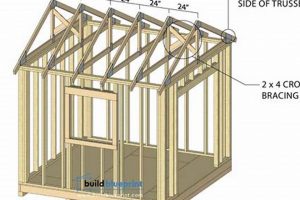
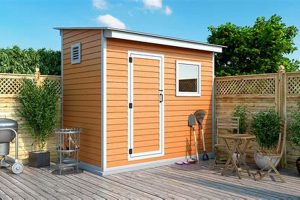
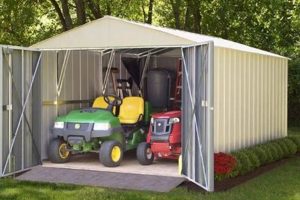
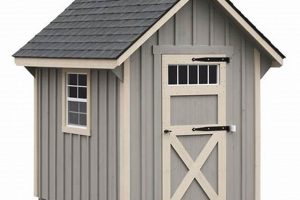
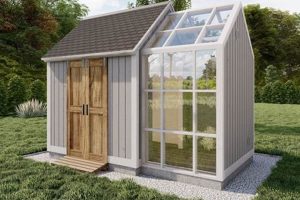
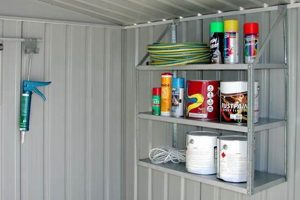
An auxiliary structure, typically located in a backyard or garden area, can be repurposed and equipped to serve as a sleeping quarter. This adaptation often involves transforming a pre-existing outbuilding into a functional, self-contained unit suitable for residential occupancy. For example, a homeowner may convert a storage building into a guest suite or a private retreat.
This type of conversion offers advantages such as increased living space without the need for extensive home additions. It can provide a cost-effective solution for accommodating family members, generating rental income, or creating a dedicated workspace separate from the main residence. Historically, the practice of utilizing outbuildings for living purposes dates back to agrarian societies where auxiliary structures often served multiple functions, including shelter.
The subsequent sections will delve into the planning considerations, regulatory compliance, construction techniques, and interior design aspects associated with creating a habitable space within a structure originally intended for storage or other non-residential uses. Furthermore, it will address the sustainability factors and potential challenges involved in such a project.
Considerations for Converting Auxiliary Structures into Sleeping Quarters
The conversion of a garden shed into a habitable bedroom requires careful planning and execution. Attention to detail is paramount to ensure code compliance, structural integrity, and occupant comfort.
Tip 1: Conduct a Thorough Site Assessment: Prior to commencing any work, assess the existing structure’s condition, foundation stability, and proximity to property lines. Identify potential challenges such as inadequate drainage or existing structural damage. A professional inspection may be necessary.
Tip 2: Adhere to Local Building Codes and Regulations: Research and comply with all relevant local building codes, zoning ordinances, and permitting requirements. This includes regulations pertaining to electrical wiring, plumbing, insulation, ventilation, and fire safety. Failure to comply can result in fines or mandatory demolition.
Tip 3: Prioritize Structural Integrity and Weatherproofing: Reinforce the structure as needed to ensure it can withstand local weather conditions. Implement proper insulation to regulate temperature and minimize energy consumption. Seal all gaps and cracks to prevent water intrusion, pest infestation, and drafts.
Tip 4: Install Adequate Electrical and Plumbing Systems: Engage licensed professionals to install safe and code-compliant electrical and plumbing systems. Consider the specific needs of a bedroom, including lighting, outlets, heating/cooling, and sanitation facilities.
Tip 5: Ensure Proper Ventilation and Air Quality: Implement a ventilation system to provide fresh air and prevent the buildup of moisture and odors. Consider installing an exhaust fan in any bathroom area and ensuring adequate airflow throughout the space.
Tip 6: Pay Attention to Fire Safety: Install smoke detectors and carbon monoxide detectors to provide early warning of potential hazards. Ensure that occupants have a clear and unobstructed escape route in the event of a fire. Consider fire-resistant materials during construction.
Tip 7: Optimize Space and Functionality: Design the interior layout to maximize usable space and functionality. Consider space-saving furniture and storage solutions. Ensure that the space is comfortable and conducive to relaxation and sleep.
These considerations are crucial for transforming a simple outdoor structure into a safe, comfortable, and legally compliant living space. Attention to these details will contribute significantly to the success of the project.
The following sections will further explore the design and aesthetic elements that contribute to creating a welcoming and functional sleeping quarter within a repurposed garden structure.
1. Legality

The legal framework surrounding the conversion of a garden shed into a habitable bedroom is a paramount consideration. Neglecting to adhere to relevant regulations can result in significant penalties, including fines, forced demolition, and legal liabilities. The following facets outline the critical components of legality in this context.
- Zoning Regulations
Zoning ordinances dictate the permissible uses of land within a municipality. Converting a structure initially intended for storage into a residential unit may violate zoning laws if the property is not zoned for additional dwelling units or accessory dwelling units (ADUs). For instance, many residential zones have restrictions on the number of permitted structures with sleeping quarters. Failure to comply with these regulations can lead to legal action from the local government.
- Building Codes
Building codes establish minimum standards for the construction and renovation of buildings to ensure safety and structural integrity. Converting a garden shed into a bedroom necessitates compliance with building codes pertaining to electrical wiring, plumbing, insulation, ventilation, fire safety, and egress. Examples include requirements for minimum ceiling heights, window sizes for emergency escape, and the installation of smoke detectors and carbon monoxide detectors. Non-compliance can jeopardize occupant safety and result in red tags or stop-work orders.
- Permitting Requirements
Most jurisdictions require property owners to obtain building permits before commencing construction or renovation projects. Converting a garden shed into a habitable space invariably necessitates securing the appropriate permits from the local building department. This process typically involves submitting detailed plans, paying fees, and undergoing inspections to ensure compliance with applicable codes and regulations. Undertaking the conversion without obtaining the necessary permits can result in fines, delays, and potential legal action.
- Habitability Standards
Habitability standards define the minimum requirements for a dwelling to be considered safe and livable. These standards typically address aspects such as adequate heating, ventilation, sanitation, and pest control. Converting a garden shed into a bedroom must meet these standards to be legally considered a habitable space. For example, the structure must be adequately insulated to maintain a reasonable temperature in both summer and winter. Failure to meet habitability standards can render the space uninhabitable and expose the property owner to legal liability.
In summary, the legal ramifications of converting a garden shed into a bedroom are significant. Adherence to zoning regulations, building codes, permitting requirements, and habitability standards is essential to ensure the safety, legality, and long-term viability of the project. Prior to commencing any work, property owners should consult with local building officials and legal professionals to ensure full compliance with all applicable laws and regulations.
2. Insulation
Insulation is a critical element in the transformation of a garden shed into a habitable bedroom. It directly impacts the thermal comfort of the occupants, the energy efficiency of the structure, and the overall usability of the space throughout the year. Without proper insulation, the converted shed may be excessively hot in summer and uncomfortably cold in winter, rendering it uninhabitable or significantly increasing heating and cooling costs.
- Thermal Performance
The primary function of insulation is to reduce heat transfer through the walls, roof, and floor of the structure. Adequate insulation minimizes heat loss during colder months and prevents excessive heat gain during warmer months, thereby maintaining a more stable and comfortable indoor temperature. For example, using fiberglass batts or spray foam insulation with a high R-value (a measure of thermal resistance) can significantly reduce the need for supplemental heating and cooling, contributing to lower energy bills and a more sustainable living environment.
- Moisture Control
Insulation also plays a vital role in managing moisture within the structure. Proper insulation combined with a vapor barrier can prevent condensation from forming within the walls, which can lead to mold growth, rot, and structural damage. For instance, installing a polyethylene vapor barrier on the warm side of the insulation can prevent moisture from migrating into the wall cavity during the winter months, protecting the insulation and the structure from moisture-related problems. Insufficient moisture control can lead to long-term structural damage and health issues for occupants.
- Soundproofing
In addition to thermal performance and moisture control, insulation can contribute to soundproofing the converted shed. Dense insulation materials can dampen sound transmission from the exterior, creating a quieter and more private living space. For example, using mineral wool insulation, which has excellent sound-absorbing properties, can help to reduce noise pollution from nearby roads, neighbors, or other external sources, making the interior more conducive to relaxation and sleep. Improving sound insulation enhances the overall quality of life within the converted structure.
- Fire Resistance
Certain types of insulation can also enhance the fire resistance of the structure. Materials such as mineral wool and some types of spray foam insulation are inherently fire-resistant, providing an added layer of protection in the event of a fire. For instance, using fire-resistant insulation can slow the spread of flames, giving occupants more time to escape and potentially reducing the extent of damage to the structure. Selecting insulation materials with a high fire-resistance rating is an important safety consideration when converting a garden shed into a habitable bedroom.
The selection and installation of appropriate insulation are fundamental to the success of a garden shed bedroom conversion. By addressing thermal performance, moisture control, soundproofing, and fire resistance, insulation contributes significantly to creating a comfortable, safe, and sustainable living space within a repurposed structure. Careful consideration of insulation materials and installation techniques is essential to maximize the benefits and ensure the long-term viability of the project.
3. Ventilation
Adequate ventilation is a crucial component in the conversion of a garden shed into a habitable bedroom. Insufficient airflow can lead to a myriad of issues, impacting occupant health, structural integrity, and overall comfort within the repurposed space.
- Moisture Control
Ventilation plays a pivotal role in managing moisture levels within the structure. Without proper airflow, moisture generated from respiration, bathing (if applicable), and cooking can accumulate, leading to condensation on surfaces. This condensation can foster mold growth, wood rot, and deterioration of building materials. For example, a poorly ventilated bedroom may experience condensation on windows and walls, creating a breeding ground for mold. Proper ventilation, either through natural means or mechanical systems, is essential to remove excess moisture and prevent these problems.
- Air Quality
Ventilation directly impacts the quality of air within the bedroom. Stagnant air can accumulate pollutants such as volatile organic compounds (VOCs) from building materials, furniture, and cleaning products, as well as allergens and dust. Proper ventilation introduces fresh air, diluting these pollutants and improving the overall air quality. Consider, for instance, the off-gassing of formaldehyde from new furniture. Adequate ventilation helps to disperse this gas, minimizing its concentration and reducing potential health risks. Conversely, a poorly ventilated space can lead to a buildup of harmful substances, impacting the health and well-being of the occupants.
- Temperature Regulation
Ventilation can assist in regulating temperature within the garden shed bedroom. In warmer months, natural ventilation through open windows or strategically placed vents can facilitate the removal of hot air, promoting passive cooling. In cooler months, controlled ventilation can prevent the buildup of stale, humid air, which can contribute to a feeling of dampness and cold. For example, cross-ventilation achieved through windows on opposite sides of the structure can create a natural breeze, reducing the need for air conditioning during milder weather. Effective ventilation contributes to a more comfortable and energy-efficient living environment.
- Code Compliance
Many building codes mandate minimum ventilation requirements for habitable spaces. These requirements typically specify a certain number of air changes per hour or a minimum amount of window area that must be operable for natural ventilation. Converting a garden shed into a bedroom must comply with these codes to ensure that the space meets basic standards for air quality and comfort. For example, local building codes may require the installation of an exhaust fan in a bathroom area to remove moisture and odors. Failure to comply with ventilation requirements can result in code violations and hinder the approval of building permits.
In conclusion, ventilation is not merely an afterthought but an integral component of a garden shed bedroom conversion. Its impact spans from preventing moisture-related issues and maintaining air quality to assisting with temperature regulation and ensuring code compliance. Proper planning and implementation of ventilation strategies are essential to creating a healthy, comfortable, and sustainable living space within a repurposed garden structure.
4. Accessibility

Accessibility, in the context of a repurposed auxiliary structure such as a “garden shed bedroom”, represents a fundamental consideration that directly impacts usability and safety. The conversion of an outbuilding into a habitable dwelling necessitates careful attention to physical entry and egress, particularly in situations where the structure may not have originally been designed with residential access standards in mind. Cause and effect are intrinsically linked; failure to adequately address accessibility concerns can lead to limited functionality for individuals with mobility impairments, increased risk of injury, and potential violations of accessibility regulations. The absence of features like ramps, widened doorways, or accessible bathrooms can effectively preclude certain individuals from utilizing the space, negating its value as a functional living area. The importance of accessibility cannot be overstated, as it directly determines the inclusivity and practicality of the converted structure.
Practical application of accessibility principles within a “garden shed bedroom” conversion might involve several key elements. Widening doorways to a minimum of 32 inches provides sufficient clearance for wheelchair users or individuals using mobility aids. Installing a ramp with a gentle slope ensures safe and independent entry for those who cannot navigate steps. Modifying the bathroom to include grab bars, a roll-in shower, and an accessible toilet facilitates independent hygiene. Furthermore, ensuring adequate turning space within the bedroom allows for ease of maneuvering. These modifications, while potentially requiring additional construction effort, significantly enhance the utility and inclusivity of the space. In a real-world example, a homeowner converting a shed for an elderly parent might prioritize a zero-step entry and accessible bathroom fixtures to enable independent living. Similarly, a conversion intended as a rental unit could attract a broader range of potential tenants by incorporating accessible features.
In summary, accessibility represents a critical component of a “garden shed bedroom” conversion, impacting both functionality and legal compliance. Addressing accessibility requirements during the planning and construction phases is essential to creating a space that is usable, safe, and inclusive for all individuals. Overcoming challenges such as limited space and budget constraints necessitates innovative design solutions and a commitment to prioritizing the needs of all potential occupants. The successful integration of accessibility principles ultimately enhances the overall value and practicality of the converted garden shed.
5. Plumbing

The integration of plumbing systems is a fundamental requirement for transforming a basic garden shed into a functional bedroom. Without plumbing, the space remains limited in utility, lacking essential facilities for sanitation and hygiene. The inclusion of plumbing facilitates the installation of a bathroom, complete with a toilet, sink, and shower, as well as potentially enabling a small kitchenette area with a sink for food preparation. The absence of these features significantly diminishes the space’s habitability and reduces its appeal as a comfortable living area. A practical example would be a shed converted into a guest suite; without plumbing, guests would need to access the main house for basic restroom facilities, impacting both their privacy and the homeowner’s convenience.
Implementing plumbing in a garden shed conversion presents unique challenges. The existing structure is unlikely to have pre-existing plumbing connections, necessitating the extension of water supply lines and drainage systems from the main residence or a separate water source. This often involves trenching and burying pipes, requiring adherence to local building codes regarding pipe depth, materials, and backflow prevention. Furthermore, the location of the shed relative to the main sewer line may necessitate the installation of a sewage ejector pump to lift wastewater to the appropriate elevation for drainage. The choice of plumbing fixtures and materials must also consider factors such as space constraints and freeze protection, particularly in colder climates. For example, using smaller-scale bathroom fixtures and insulating pipes can optimize space and prevent damage from freezing temperatures.
In conclusion, the effective integration of plumbing is critical for converting a garden shed into a viable bedroom. It significantly enhances the functionality and habitability of the space, providing essential sanitation and hygiene facilities. While the process presents challenges related to extending existing plumbing systems and adhering to building codes, careful planning and professional installation can overcome these obstacles. Prioritizing plumbing during the conversion process ensures a comfortable, convenient, and self-contained living space.
6. Electrification
Electrification constitutes a core requirement for the transformation of a garden shed into a habitable bedroom. Its significance stems from the necessity to provide essential services that support modern living standards. The absence of electrification renders the space unsuitable for typical residential use, limiting functionality and habitability. Practical amenities such as lighting, heating, cooling, and the operation of electronic devices become impossible without a reliable electrical supply. The correlation between electrification and a functional “garden shed bedroom” is direct: the presence of a safe and code-compliant electrical system directly enables the use of the space as a comfortable and practical living area.
Implementation of electrical systems in a garden shed conversion necessitates careful planning and execution. Extending electrical circuits from the main residence to the outbuilding typically involves trenching and burying conduit, as well as adhering to local electrical codes regarding wire gauge, grounding, and circuit protection. The electrical system must be designed to accommodate the anticipated load, including lighting, appliances, and heating/cooling equipment. Considerations must also be given to safety features such as ground fault circuit interrupters (GFCIs) in wet locations and arc fault circuit interrupters (AFCIs) for bedroom circuits. Real-world examples of this process include hiring a licensed electrician to install a subpanel within the shed, running underground wiring from the main house, and ensuring all outlets and fixtures are properly grounded. The consequences of inadequate electrification are significant; improper wiring can lead to fire hazards, electrical shocks, and code violations, compromising the safety of the occupants and potentially resulting in legal repercussions.
In summary, electrification is not merely an optional addition but a critical element in the creation of a habitable garden shed bedroom. It facilitates basic functionalities, supports modern amenities, and ensures the safety and comfort of the occupants. Adherence to electrical codes, proper planning, and professional installation are essential to mitigate risks and maximize the benefits of electrification. The successful integration of a reliable electrical system transforms a simple storage structure into a fully functional and comfortable living space, thereby enhancing the property’s value and utility.
Frequently Asked Questions
The following section addresses common inquiries regarding the conversion of a garden shed into a functional bedroom. Information presented aims to clarify key aspects of this type of project.
Question 1: Is converting a garden shed into a bedroom legally permissible?
The legality of such a conversion hinges on local zoning regulations and building codes. Many jurisdictions require permits and adherence to specific standards for habitable structures. Consult with local authorities to determine compliance requirements.
Question 2: What are the primary considerations for insulation in a garden shed bedroom?
Effective insulation is essential for thermal comfort and energy efficiency. Key factors include R-value, moisture control, and the type of insulation material used. Proper insulation can mitigate temperature fluctuations and reduce energy consumption.
Question 3: How is adequate ventilation achieved in a garden shed bedroom?
Ventilation is crucial for maintaining air quality and preventing moisture buildup. Options include natural ventilation through windows and vents, as well as mechanical ventilation systems like exhaust fans. Compliance with ventilation standards is typically mandated by building codes.
Question 4: What accessibility modifications are commonly required for garden shed bedroom conversions?
Depending on intended use and local regulations, accessibility modifications may be necessary. These can include widened doorways, ramps, accessible bathrooms, and sufficient turning space. Addressing accessibility ensures usability for individuals with mobility limitations.
Question 5: What are the key steps involved in integrating plumbing into a garden shed bedroom?
Plumbing integration requires extending water supply and drainage lines from an existing source or installing a separate system. Compliance with plumbing codes is essential, including proper pipe materials, depth, and backflow prevention measures. Consider the necessity of a sewage ejector pump if gravity drainage is not feasible.
Question 6: How is electrification safely implemented in a garden shed bedroom conversion?
Electrification necessitates extending circuits from the main residence or installing a separate electrical panel. Adherence to electrical codes is paramount, encompassing proper wiring gauge, grounding, circuit protection, and the use of GFCI and AFCI outlets. Engage a qualified electrician to ensure safety and code compliance.
Successfully converting an outbuilding into a habitable dwelling requires adherence to established guidelines and regulations. Prior planning and professional consultation can help navigate the complexities of such projects.
The subsequent section will explore design and aesthetic considerations for optimizing space and creating a comfortable living environment within the repurposed structure.
Concluding Remarks on the Garden Shed Bedroom
The preceding exploration has delineated critical aspects of transforming an ordinary garden shed into a habitable bedroom. Key considerations span regulatory compliance, structural integrity, utilities integration (including plumbing and electrification), insulation, ventilation, and accessibility. Each element plays a crucial role in determining the feasibility, legality, safety, and overall comfort of the resulting living space. The complexities inherent in such conversions necessitate careful planning and adherence to established building standards.
The successful conversion of a garden shed into a bedroom represents a viable solution for expanding living space, provided due diligence is exercised. Prospective converters are strongly advised to engage with qualified professionals and local authorities to ensure adherence to all applicable regulations and best practices. The future utility and value of any converted space are inextricably linked to the quality of execution and the commitment to responsible building practices. Prioritize safety, legality, and long-term habitability in all conversion endeavors.