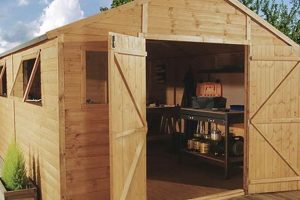
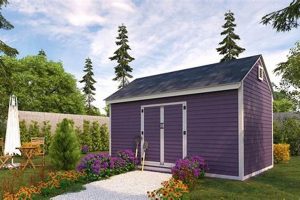
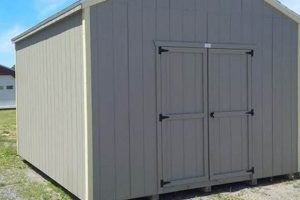
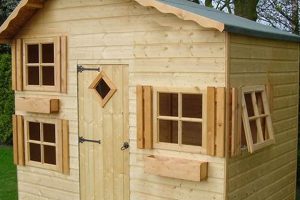
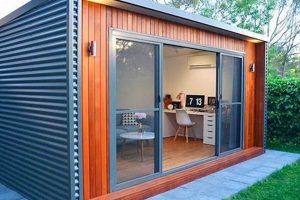
The visual appearance of outbuildings significantly contributes to overall garden aesthetics. Selecting appropriate exterior paint schemes enhances the structure’s integration with the surrounding environment. Colour choices can range from blending with natural elements to creating a contrasting focal point within the landscape. For example, a shed painted a muted green can disappear into foliage, while a brightly coloured shed becomes a deliberate design feature.
Strategic exterior finishing provides benefits beyond mere decoration. Appropriate hues can influence perceived size, create a sense of harmony, and even offer practical advantages like camouflage. Historically, shed colours were often limited by available materials, but contemporary options offer a wide spectrum of possibilities, enabling homeowners to customize their outdoor spaces reflecting personal preferences and architectural style, subsequently increasing property appeal.
The following sections will delve into various colour palettes suitable for enhancing garden sheds, exploring their impact on visual perception, and offering guidance on selecting the optimum finishing solutions. This includes considerations for material, environmental factors, and coordinating the outbuilding’s colour with the broader landscape design. We will also discuss the impact of colour psychology and trends in exterior design.
Exterior Enhancement Strategies
Optimizing the appearance of garden structures involves careful selection of appropriate finishing. The following recommendations provide guidance on making informed decisions that complement both the structure and the surrounding environment.
Tip 1: Consider the Surrounding Landscape: Prioritize colours that either blend with or deliberately contrast the natural setting. For integration, muted greens, browns, and greys are suitable. For visual impact, consider complementary colours that offer contrast, such as deep blues against lush greenery.
Tip 2: Assess Natural Lighting Conditions: The amount of sunlight a structure receives impacts how the exterior finishing appears. Darker shades appear more intense in direct sunlight, while lighter shades can wash out. Sample colours in the structure’s actual environment before committing to a final selection.
Tip 3: Harmonize with Existing Structures: The finishing selection should complement the primary residence and other outbuildings on the property. Consider architectural style and existing palettes to maintain a cohesive aesthetic.
Tip 4: Factor in Material Compatibility: Different finishing perform differently on various surfaces. Wood may require specific primers and paints, while metal structures benefit from rust-inhibiting coatings. Ensure compatibility to maximize durability and lifespan.
Tip 5: Account for Colour Psychology: Certain hues evoke specific emotions and perceptions. Lighter shades can make a small structure appear larger, while darker shades can create a sense of depth and enclosure. Select hues that align with the desired atmosphere.
Tip 6: Prioritize Durability and Weather Resistance: Opt for exterior-grade finishing formulated to withstand exposure to the elements. Consider factors such as UV resistance, moisture protection, and resistance to fading to ensure long-term aesthetic appeal.
Tip 7: Research Current Trends, but Prioritize Timelessness: While staying informed about contemporary design trends is beneficial, choose colours that possess lasting appeal. Avoid overly trendy selections that may quickly appear dated.
These considerations will allow for the successful application of visual strategies. The outcome is enhanced appeal and seamless integration of the garden shed into its environment.
The subsequent section will explore specific colour palettes suitable for garden sheds, providing practical examples and inspiration for various design preferences.
1. Environmental Harmony

Environmental harmony, in the context of garden shed finishing, refers to the selection of hues and materials that complement or seamlessly integrate with the surrounding natural environment. This concept extends beyond mere aesthetics, influencing the structure’s perceived presence and overall contribution to the garden’s ecosystem.
- Color Palettes Mimicking Natural Tones
Selecting exterior paint shades that emulate the colours found in the immediate landscape achieves visual cohesion. Earthy browns, muted greens, and stone greys allow the shed to blend into the backdrop of foliage, soil, and rock formations. For instance, a shed painted a dark forest green will recede into a densely wooded area, while a beige structure will harmonize with a gravel path and surrounding vegetation. The absence of stark contrasts minimizes visual disruption and promotes a sense of tranquility.
- Consideration of Local Flora and Fauna
Environmental harmony requires consideration of local ecosystems. Some brighter colour shades can deter beneficial insects or attract unwanted pests. Utilizing paints with low VOC (volatile organic compounds) minimizes environmental impact, preserving the health of surrounding plants and wildlife. Furthermore, the shade might reflect the colors of blooming flowers in the garden during spring season to make a visually pleasing garden view.
- Integration of Natural Materials
Beyond the color of the paint, the material and texture contribute to environmental compatibility. Using reclaimed wood for siding or adding a green roof planted with native species further enhances the integration of the structure with its surroundings. The addition of natural elements creates a seamless transition between the built environment and the natural world.
- Seasonal Adaptation
The appearance of the garden changes throughout the year. Colors that appear harmonious in summer may clash during winter months. Therefore, it’s essential to consider how the shed will look year-round. Neutral colors that adapt well to changing seasonal conditions are a safe and practical choice.
By carefully considering these facets of environmental harmony, the finishing process contributes to a visually pleasing and ecologically responsible outcome. The shed becomes an unobtrusive, yet functional, element within the broader garden ecosystem, enhancing rather than detracting from its natural beauty. The integration of the shed with its surroundings creates a cohesive and aesthetically pleasing garden design.
2. Architectural Style

Architectural style serves as a foundational element in determining appropriate exterior finishes for garden sheds. The style of the primary residence, as well as the overall aesthetic of the garden, necessitates a coherent approach to color selection. Disregarding architectural context can lead to visual dissonance, diminishing the overall property value and aesthetic appeal. For instance, a Victorian-era home paired with a modern, minimalist shed painted in stark, contrasting colors creates a jarring visual incongruity. Adherence to the existing architectural language ensures the shed complements, rather than detracts from, its surroundings.
Different architectural styles necessitate specific color palettes. Traditional styles, such as Colonial or Craftsman, often benefit from muted, earthy tones that reflect the historical context of the design. Conversely, contemporary architecture may allow for bolder, more vibrant choices. Consider, for example, a Cape Cod-style residence. A shed painted in a classic white or light grey with complementary trim colors would maintain the integrity of the style. In contrast, a modern farmhouse might accommodate a shed with a darker, more dramatic hue, such as charcoal grey or navy blue, provided it remains consistent with the overall design scheme.
The selection of exterior finishes based on architectural style contributes to a unified and harmonious outdoor space. Ignoring this principle can result in a visually disjointed property. Understanding the inherent characteristics of each architectural style, and applying this knowledge to outbuilding finishing, is crucial for achieving a cohesive design. The resulting visual harmony significantly enhances the aesthetic appeal of the entire property. This approach avoids potential challenges associated with mismatched styles, ultimately leading to a more aesthetically pleasing and valuable outcome.
3. Material Durability

Material durability plays a crucial role in realizing longevity and maintaining the aesthetic appeal of garden sheds. The interaction between the chosen finishing and the structure’s material directly impacts resistance to environmental stressors, affecting long-term color retention and structural integrity. Consequently, informed material selection is integral to realizing the intended visual outcome.
- Wood Type and Paint Compatibility
Different wood types exhibit varying levels of porosity and resin content, influencing paint adhesion and longevity. Softwoods, such as pine, require priming to prevent resin bleed and ensure uniform absorption. Hardwoods, like cedar, possess natural oils that enhance weather resistance but necessitate specific primers for optimal paint adhesion. Selecting compatible paints and primers is crucial to prevent peeling, cracking, and premature fading. For instance, using an oil-based primer on redwood can inhibit tannin bleed-through, preventing discoloration of lighter finishes.
- Metal Corrosion Resistance and Coating Adhesion
Metal sheds are susceptible to corrosion, necessitating protective coatings. Galvanization provides a sacrificial barrier against rust, but subsequent paint layers must be compatible with the galvanized surface to ensure long-term adhesion. Specialized primers designed for galvanized metal promote a strong bond, preventing chipping and peeling caused by oxidation. Powder coating offers a durable, corrosion-resistant finish with excellent color retention, but it requires specialized application equipment. Failing to address corrosion can lead to structural weakening and unsightly paint degradation.
- Composite Materials and UV Resistance
Composite materials, such as fiber cement siding, offer enhanced durability and resistance to moisture and insect damage. However, these materials may still be susceptible to UV degradation, leading to color fading over time. Selecting paints formulated with UV inhibitors protects the finish from sunlight-induced breakdown, preserving color vibrancy. Acrylic latex paints provide excellent UV resistance and flexibility, accommodating the material’s expansion and contraction with temperature changes. Ignoring UV protection can result in premature fading and necessitate more frequent repainting.
- Surface Preparation and Finishing Longevity
Proper surface preparation is paramount regardless of material type. Cleaning, sanding, and priming remove contaminants, create a uniform surface, and enhance adhesion. Inadequate preparation results in poor paint bonding, leading to peeling, blistering, and reduced lifespan. For wood surfaces, sanding smooths imperfections and creates a mechanical key for the primer. For metal, removing rust and scale ensures a clean, stable surface for coating application. Thorough surface preparation is a prerequisite for achieving a durable, long-lasting finish that effectively protects the structure and maintains its aesthetic appeal.
The preceding considerations illustrate the intrinsic link between material durability and the longevity of garden shed finishes. By carefully selecting compatible coatings, prioritizing surface preparation, and accounting for material-specific characteristics, it is possible to significantly extend the lifespan of the exterior finish, preserving the intended visual outcome and minimizing the need for frequent maintenance. A proactive approach to material selection and finishing ensures sustained aesthetic appeal and structural integrity.
4. Sunlight Exposure

Sunlight exposure exerts a significant influence on the perceived appearance and longevity of exterior paints applied to garden sheds. The intensity and duration of sunlight directly impact color vibrancy, fade resistance, and the overall integrity of the finish. South-facing structures, receiving the most intense sunlight, experience accelerated fading compared to those facing north. Darker shades absorb more heat, leading to expansion and contraction cycles that can weaken the paint film, resulting in cracking and peeling. Consequently, the orientation and degree of sun exposure constitute critical factors in material selection and color palette decisions.
The selection of light reflective value (LRV) plays a role in mitigating the adverse effects of sunlight. Lighter colors, with higher LRV values, reflect a greater portion of the incoming solar radiation, reducing heat buildup and minimizing thermal stress on the paint film. Conversely, darker colors absorb more heat, accelerating degradation. Real-world examples illustrate this principle: a navy blue shed facing south may exhibit noticeable fading within a few years, while a similarly situated white shed retains its original hue for a longer duration. Furthermore, paint formulations with enhanced UV inhibitors offer increased protection against fading, regardless of color. Understanding this relationship enables informed decision-making, ensuring long-term aesthetic satisfaction and reduced maintenance requirements.
In conclusion, sunlight exposure represents a pivotal variable in the successful application of exterior paint schemes. Recognizing the impact of solar radiation on color stability and paint film integrity allows for proactive mitigation strategies. Employing lighter colors or UV-resistant formulations minimizes the deleterious effects of sunlight, extending the lifespan and preserving the visual appeal. Neglecting this consideration results in accelerated fading, increased maintenance demands, and potential structural damage, ultimately compromising the value and aesthetic integration of the garden shed. A comprehensive understanding of sunlight’s influence empowers property owners to make judicious choices, ensuring durable and visually harmonious outcomes.
5. Perceived Size

Exterior paint application directly influences the perceived dimensions of garden structures. Color choices create optical illusions, altering the visual volume and spatial presence of the shed within the landscape. Lighter hues reflect more light, causing surfaces to appear larger and more expansive. Conversely, darker tones absorb light, making objects seem smaller and more compact. This principle applies directly to garden sheds, where strategic application of contrasting colors can either minimize or accentuate their physical scale.
For example, a small shed painted in a pale, monochromatic palette, such as off-white or light grey, will appear larger than an identical shed painted in a dark, saturated color. The lighter color reflects sunlight, blurring the edges and creating a sense of openness. Conversely, a larger shed can be visually subdued by employing darker colors, allowing it to recede into the background and minimize its visual impact on the garden. Furthermore, the use of contrasting trim colors can further manipulate perceived size. A dark trim against a light body color will define the edges of the structure, making it appear more defined and, consequently, potentially smaller. Conversely, a light trim can soften the edges, contributing to a sense of expansion.
Effective utilization of color contributes significantly to the overall visual harmony of the garden. Understanding the interplay between color and spatial perception enables informed design decisions that optimize the integration of the shed into the landscape. Careful selection mitigates potential challenges associated with disproportionate structures, resulting in a more aesthetically pleasing and functionally cohesive outdoor environment. Successfully employing this knowledge enhances property value and creates a more visually appealing and balanced setting.
6. Personal Preference

Individual aesthetic values inevitably shape the selection of exterior finishes. While environmental harmony, architectural style, and material durability represent objective considerations, personal preference introduces a subjective dimension that influences the final aesthetic outcome. Understanding the interplay between individual tastes and established design principles is crucial for achieving a result that is both visually appealing and personally satisfying.
- Expression of Individuality
Exterior finishing provides an opportunity to express personal style and create a unique visual statement. Color selections can reflect individual personality, cultural background, or artistic inclinations. A homeowner with a fondness for vintage aesthetics may opt for pastel hues and distressed finishes, while a minimalist may prefer a monochromatic scheme with clean lines. The absence of prescriptive rules allows for self-expression, enabling homeowners to create garden structures that resonate with their individual tastes.
- Alignment with Interior Design
Exterior finishing choices can mirror or complement the interior design of the primary residence. Creating a visual connection between the interior and exterior spaces enhances the overall cohesiveness of the property. For example, if the interior features a nautical theme, the shed could be painted in shades of blue and white, incorporating maritime-inspired details. This approach fosters a sense of continuity and reinforces the homeowner’s design vision.
- Consideration of Emotional Response
Colors evoke distinct emotional responses, influencing the perceived atmosphere of the garden. Warm colors, such as yellows and oranges, create a sense of energy and excitement, while cool colors, such as blues and greens, promote tranquility and relaxation. Selecting colors that align with the desired emotional ambiance enhances the overall enjoyment of the outdoor space. For instance, a potting shed designed for relaxation may benefit from a calming color palette of soft greens and lavender.
- Balancing Personal Taste with Resale Value
While expressing personal preference is important, it is prudent to consider the potential impact on resale value. Overly unconventional or polarizing choices may deter potential buyers. Striking a balance between personal expression and broader market appeal ensures that the exterior finish enhances, rather than detracts from, the property’s overall value. Consulting with a real estate professional can provide valuable insights into local market preferences.
Ultimately, the most successful projects reflect a harmonious blend of objective design principles and subjective personal tastes. By carefully considering the interplay between these factors, property owners create garden structures that are not only visually appealing but also deeply personal and emotionally resonant. Successfully integrating personal preference into the finishing process results in a unique outdoor space.
7. Camouflage/Visibility

The selection of exterior finishes for garden sheds hinges significantly on whether the desired outcome is camouflage or high visibility. This choice dictates the overall palette and, consequently, the shed’s integration or prominence within the landscape. Camouflage aims to minimize the shed’s visual impact, blending it seamlessly with its surroundings. High visibility, conversely, seeks to draw attention to the structure, making it a focal point of the garden. The intended function of the shed, as well as the overall aesthetic vision for the garden, informs this fundamental decision.
Achieving effective camouflage necessitates careful consideration of the surrounding environment. Color palettes mirroring natural tones greens, browns, and grays facilitate integration with foliage, soil, and shadows. For instance, a shed painted a muted olive green will recede into a wooded area, while a dark brown structure will blend with the bark of nearby trees. Furthermore, incorporating natural textures, such as wood siding or climbing vines, enhances the camouflage effect. Conversely, achieving high visibility requires bolder color choices that contrast with the environment. Bright reds, yellows, or blues create visual impact, drawing the eye to the shed. Strategically placed lighting can further enhance visibility, particularly at night. Consider a potting shed painted a vibrant turquoise to stand out against a backdrop of green foliage. The shed, instead of blending into the background, becomes a design feature of the garden. The strategic choice of placement also becomes imperative as location also contribute to visual camouflage as well as visibility.
Ultimately, the choice between camouflage and high visibility depends on the desired aesthetic and functional role of the garden shed. Camouflage offers a subtle, understated approach, seamlessly integrating the structure into the landscape. High visibility, on the other hand, transforms the shed into a design element, adding visual interest and personality to the garden. Understanding the implications of each approach enables homeowners to make informed decisions that align with their individual preferences and create a visually cohesive outdoor space. The successful application of either strategy enhances property value and contributes to a more enjoyable and functional garden environment. Careful execution of this decision can result in a space that is both practical and visually harmonious.
Frequently Asked Questions
The following questions address common concerns and misconceptions regarding the selection and application of exterior finishes for garden structures. Each answer provides concise and informative guidance to facilitate informed decision-making.
Question 1: What constitutes the most critical factor in selecting an exterior finish?
Compatibility with the shed’s primary construction material is paramount. Wood, metal, and composite materials necessitate specific primers and coatings to ensure proper adhesion, corrosion resistance, and UV protection.
Question 2: How does sunlight exposure influence exterior finish longevity?
Sunlight, particularly on south-facing elevations, accelerates fading and degradation of paints. Lighter colors and UV-resistant formulations mitigate these effects, extending the lifespan of the finish.
Question 3: What role does architectural style play in finish selection?
The shed’s finish should complement the architectural style of the primary residence and surrounding landscape. Coherence in style prevents visual discord and enhances overall property aesthetics.
Question 4: How does one balance personal preference with potential resale value?
While expressing individual taste is important, overly unconventional choices may deter potential buyers. Select finishes that align with broader market preferences to maintain or enhance property value.
Question 5: Does color choice affect the perceived size of the shed?
Yes. Lighter colors reflect more light, causing the structure to appear larger, while darker colors absorb light, making it seem smaller. Strategic use of color manipulates visual perception.
Question 6: How important is surface preparation prior to painting?
Thorough surface preparation, including cleaning, sanding, and priming, is essential for optimal paint adhesion and longevity. Inadequate preparation results in premature peeling, blistering, and reduced lifespan of the finish.
Careful consideration of these factors ensures a durable, aesthetically pleasing, and functionally appropriate exterior finish that enhances the overall value and enjoyment of the garden space.
The subsequent section provides practical tips and strategies for achieving professional-quality application results.
Garden Shed Colour Ideas
The preceding analysis has explored various facets influencing exterior finishing choices for garden structures. Factors ranging from environmental integration and architectural coherence to material durability and the manipulation of perceived size were examined. The effective application of these principles necessitates careful consideration of site-specific conditions, material properties, and desired aesthetic outcomes. The thoughtful integration of these elements enables the creation of visually harmonious and functionally appropriate outdoor spaces.
The selection and execution of exterior finishes represent a long-term investment in property value and aesthetic appeal. The implications of informed decision-making extend beyond mere decoration, impacting structural integrity and the overall ambiance of the garden environment. Therefore, careful planning and meticulous execution are paramount in realizing a successful and sustainable outcome.