![Shed Comfort: Best Insulation for Garden Sheds [Guide]](data:image/svg+xml;base64,PHN2ZyB4bWxucz0iaHR0cDovL3d3dy53My5vcmcvMjAwMC9zdmciIHdpZHRoPSI0NzQiIGhlaWdodD0iNzQiIHZpZXdCb3g9IjAgMCA0NzQgNzQiPjxyZWN0IHdpZHRoPSIxMDAlIiBoZWlnaHQ9IjEwMCUiIHN0eWxlPSJmaWxsOiNjZmQ0ZGI7ZmlsbC1vcGFjaXR5OiAwLjE7Ii8+PC9zdmc+ "Shed Comfort: Best Insulation for Garden Sheds [Guide] The Ultimate Gardening Guide: Grow a Thriving Garden Year-Round")
Effective thermal management within a detached outdoor structure is achieved through the application of materials designed to minimize heat transfer. The selection of such materials depends on factors including local climate, intended use of the structure, budget, and ease of installation. Numerous options exist, each with specific thermal resistance (R-value) and installation requirements.
Maintaining a stable internal environment within a garden building offers multiple advantages. It protects stored items from temperature extremes and moisture damage, creates a more comfortable workspace, and can reduce energy consumption if the structure is heated or cooled. Historically, the use of natural materials like straw and earth served as rudimentary thermal barriers; modern solutions offer significantly improved performance and durability.
The following sections will examine different types of materials suitable for regulating temperature within a garden building, outlining their characteristics, installation methods, and relative cost-effectiveness, enabling informed decisions regarding thermal management strategies.
Practical Considerations for Optimal Thermal Regulation in Detached Outdoor Structures
Achieving effective temperature control in a garden building requires careful planning and material selection. The following recommendations provide a structured approach to enhancing thermal performance.
Tip 1: Assess Climatic Conditions: Evaluate local temperature extremes and humidity levels to determine the required R-value for thermal materials. Regions with harsh winters necessitate higher R-values.
Tip 2: Consider Intended Use: If the structure serves as a workshop or hobby space, prioritize materials with high thermal resistance to maintain a comfortable environment year-round. Storage-only structures may require less intensive solutions.
Tip 3: Prioritize Air Sealing: Address air leaks around doors, windows, and seams before installing thermal materials. Proper air sealing significantly reduces heat loss and drafts, improving overall energy efficiency.
Tip 4: Choose Appropriate Material Type: Select a material that suits the structure’s construction and your skill level. Options include rigid foam boards, fiberglass batts, and spray foam, each with distinct installation procedures.
Tip 5: Ensure Proper Installation: Adhere strictly to manufacturer guidelines during installation. Improperly installed materials can lose their effectiveness and potentially create moisture problems.
Tip 6: Ventilate the Structure: Implement adequate ventilation to prevent moisture buildup and condensation, which can degrade thermal materials and compromise structural integrity. Ridge vents and soffit vents are common solutions.
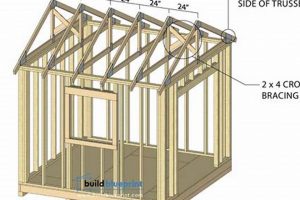
Tip 7: Address Thermal Bridging: Mitigate thermal bridging by covering exposed framing members with thermal materials. Thermal bridging occurs when heat bypasses the main thermal barrier through conductive materials.
By implementing these strategies, a garden building can achieve improved temperature regulation, enhancing its usability and protecting its contents from environmental damage.
The following sections will delve into specific material comparisons and cost analyses, providing further guidance for informed decision-making regarding thermal management.
1. R-value importance

R-value is a critical metric in determining optimal thermal management for garden buildings. It quantifies a material’s resistance to conductive heat transfer; a higher R-value signifies greater insulation capacity. In the context of a garden building, appropriate thermal resistance directly influences internal temperature stability, impacting usability and protecting stored contents from temperature extremes. The selection of insulating materials without consideration of R-value can result in suboptimal energy efficiency and compromised environmental control. For instance, if a structure houses temperature-sensitive equipment, an inadequately low R-value could lead to equipment malfunction or failure due to overheating or freezing.
The R-value must be considered in conjunction with other factors, such as climate and structural design. A garden building located in a region with severe winters will necessitate materials with significantly higher R-values compared to a structure in a temperate climate. Improper material selection, even with adequate R-value, can still lead to issues; an R-13 fiberglass batt will perform poorly if compressed or improperly installed, reducing its effective resistance. Similarly, air leakage around the thermal material compromises the overall thermal performance, regardless of the material’s nominal R-value.
In summary, R-value is a fundamental component of effective thermal management in garden buildings. Careful consideration of local climate, intended use, and installation practices is essential to realize the benefits of a specific material’s R-value. Ignoring R-value considerations results in potentially costly inefficiencies and structural vulnerabilities. Furthermore, the understanding and application of R-value principles extends beyond material selection, informing broader design and maintenance decisions concerning air sealing, ventilation, and moisture control.
2. Material Moisture Resistance

Maintaining structural integrity and thermal performance in a garden building necessitates careful consideration of material susceptibility to moisture. Water intrusion, condensation, and ground moisture can significantly degrade insulating materials, reducing their effectiveness and fostering environments conducive to mold and rot. Selecting moisture-resistant materials is therefore paramount to ensure the longevity and efficacy of the insulating system.
- Reduced Thermal Performance
Moisture accumulation within insulating materials substantially diminishes their thermal resistance. Water, being a far better conductor of heat than air, displaces the air pockets within the material, accelerating heat transfer. This reduction in R-value increases energy consumption for heating or cooling and can lead to uncomfortable internal conditions. For example, fiberglass batts, when saturated, lose a significant portion of their insulating capacity, rendering them far less effective at maintaining temperature.
- Promotion of Mold and Rot
Damp conditions created by moisture penetration provide an ideal environment for the growth of mold, mildew, and wood-decaying fungi. These organisms can compromise the structural integrity of the garden building, causing rot in wooden framing and sheathing. Mold growth also poses health risks, potentially leading to respiratory problems for individuals using the structure. Closed-cell spray foam, while generally moisture-resistant, can still harbor mold growth if water becomes trapped behind it due to improper installation or vapor barrier failure.
- Structural Degradation
Prolonged exposure to moisture can cause corrosion of metallic components, such as fasteners and flashing, leading to structural weakening. Wood framing members are particularly vulnerable to rot and decay when continuously exposed to damp conditions. This can result in costly repairs and, in severe cases, necessitate complete reconstruction of affected sections of the garden building. Pressure-treated lumber and proper drainage are essential strategies to mitigate moisture-related structural damage.
- Impact on Air Quality
Water damage within insulation can lead to the release of volatile organic compounds (VOCs) from deteriorating materials and the proliferation of mold spores. These contaminants negatively impact indoor air quality, potentially causing allergic reactions, respiratory irritation, and other health problems. Selecting low-VOC materials and ensuring proper ventilation are crucial steps to maintaining healthy air quality within the garden structure.
The interconnectedness of these factors underscores the critical role of moisture resistance in the selection process. Employing materials inherently resistant to moisture, coupled with meticulous installation techniques and effective moisture management strategies, is essential for safeguarding the investment in insulation and ensuring the long-term performance and durability of the garden building.
3. Ease of installation

The practicality of any material considered suitable for thermal regulation hinges significantly on the simplicity of its installation. The labor and expertise required to correctly install directly influence project costs and timelines and determine the suitability of a particular material for a given user.
- Material Format and Handling
The physical form of thermal materials directly affects installation difficulty. For instance, rigid foam boards are typically easy to cut and fit into place, requiring basic tools and minimal expertise. Conversely, spray foam insulation necessitates specialized equipment and professional application due to its expanding nature and potential health hazards if mishandled. The weight and dimensions of the material also play a role; heavy, bulky materials increase the physical demands of the installation process. The appropriate material, in this context, balances R-value with manageable format for a project.
- Required Tools and Equipment
The complexity of the tools required for installation significantly impacts the overall ease. Materials like fiberglass batts require only a utility knife and measuring tape for basic installation, making them accessible to a wide range of users. More complex materials, such as spray foam or certain types of rigid board insulation, may necessitate specialized saws, spray equipment, or safety gear, increasing the barrier to entry. The availability and cost of these tools must be factored into the decision-making process. This aspect of simplicity could sway a project towards more expensive, yet simpler insulation, if tools and equipment are considered.
- Skill Level and Expertise
The level of skill required for proper installation influences the suitability of different materials. Some, like unfaced fiberglass batts, are relatively forgiving and can be installed by individuals with minimal experience. Others, such as spray foam, demand a high degree of precision and expertise to ensure proper coverage, prevent air gaps, and avoid potential health hazards. Improper installation can negate the material’s intended thermal performance and potentially lead to moisture problems or structural damage. Expert installation could boost the R-value, overall, offsetting installation concerns.
- Time Investment and Labor Costs
The time required to install a particular material translates directly into labor costs, whether that labor is paid or self-performed. Materials that are quick and easy to install can significantly reduce project timelines and overall expenses. More complex installations, on the other hand, can require significantly more time and effort, potentially exceeding the available budget or pushing back project completion dates. The speed of installation, for example, might be prioritized over a product with a slightly better R-value, saving time and labor costs.
Therefore, the “best insulation for garden shed” is not solely determined by its R-value or cost per square foot, but also by the practical considerations of installation. Choosing a material that aligns with the user’s skill level, available tools, and time constraints is crucial for achieving optimal thermal performance and ensuring a successful outcome. Balancing these factors against long-term benefits yields the most effective solution.
4. Cost-effectiveness
The selection of materials for optimal thermal management is significantly influenced by economic considerations. A truly suitable material will balance upfront expense with long-term operational savings and durability, representing effective allocation of resources.
- Initial Material Costs vs. Long-Term Energy Savings
The initial price of materials often dictates initial choices. However, it’s crucial to consider the life-cycle costs. A more expensive material with a higher R-value might yield significant energy savings over time, particularly if the structure is heated or cooled regularly. Lower initial expenses can become false economy. For example, while fiberglass batts are less expensive upfront compared to spray foam, their lower R-value may lead to increased heating costs in colder climates, eroding initial savings.
- Installation Expenses and Labor Considerations
The cost of installation contributes significantly to the overall project budget. Materials that are easy to install can reduce labor costs, whether the work is performed by a professional or a homeowner. Conversely, materials requiring specialized skills or equipment will increase installation expenses. DIY solutions should be weighed against the risk of incorrect installation, which can negate the benefits of even the best materials. A lower cost insulation with challenging installation, therefore, can reduce the savings from cheaper products.
- Durability and Replacement Frequency
The lifespan of materials impacts the long-term cost-effectiveness. Durable materials that resist moisture, pests, and physical damage will require less frequent replacement, reducing maintenance expenses. Less durable options may need to be replaced sooner, incurring additional costs and labor. For instance, closed-cell spray foam, while initially more expensive, offers excellent moisture resistance and longevity compared to fiberglass, potentially offsetting the higher initial investment over the structure’s lifespan.
- Impact on Property Value
Investments in high-quality thermal materials can increase the overall property value. Energy-efficient homes and outbuildings are increasingly desirable to potential buyers, particularly in regions with high energy costs. While this benefit is not immediately realized, it represents a long-term return on investment. Conversely, poorly insulated structures may be less attractive to buyers, potentially impacting resale value. An insulated garden shed adds more value to a property than a poorly insulated one.
Effective insulation choice is therefore not solely about minimizing initial expenditure but understanding the interplay between upfront costs, energy savings, maintenance requirements, and potential property value appreciation. A comprehensive cost-benefit analysis will reveal materials which provide the most economically sound solution for long-term temperature regulation.
5. Longevity & durability

The selection of materials for thermal regulation in detached outdoor structures must prioritize resistance to degradation over extended periods. The inherent vulnerability of these structures to environmental factors necessitates robust performance from materials, influencing the overall cost-effectiveness and structural integrity. Material longevity, therefore, directly impacts the sustained efficacy of insulation systems, contributing to their suitability for long-term use.
Environmental stressors, including moisture, temperature fluctuations, and pest activity, accelerate material deterioration. For instance, fiberglass batts, while cost-effective initially, are susceptible to moisture absorption, leading to reduced R-value and potential mold growth. This necessitates premature replacement, negating initial cost savings. Conversely, closed-cell spray foam exhibits superior resistance to moisture and pests, maintaining its insulating properties over an extended lifespan. Such materials minimize the need for frequent maintenance or replacement, enhancing the structure’s long-term resilience. Proper installation, however, remains critical, even with durable materials, as improper sealing can create pathways for moisture intrusion.
Understanding the interplay between longevity, durability, and environmental resistance is essential for informed decision-making. The optimal material represents a balance between upfront expense and long-term performance, minimizing life-cycle costs and ensuring sustained thermal regulation. Failure to adequately address these factors can lead to premature material failure, compromising the structure’s integrity and negating the benefits of thermal management.
6. Space considerations

The internal dimensions of a garden structure often impose limitations on the selection of suitable thermal materials. Available space dictates the practical thickness of insulation and impacts the overall usable area. Consequently, the relationship between material thickness, R-value, and available space is critical in determining the optimal approach to thermal management.
- Thickness and Usable Area
Thicker insulation materials, while offering higher R-values, can significantly reduce the internal usable space within a garden building. In structures with limited dimensions, this reduction in space may be unacceptable. Therefore, selecting materials with high R-values per unit thickness is crucial to maximize both thermal performance and usable area. For example, vacuum insulated panels offer exceptionally high R-values in minimal thickness, but their cost may be prohibitive for most applications.
- Framing Depth and Cavity Size
The depth of the wall and roof framing members dictates the maximum thickness of insulation that can be installed within the cavities. Standard framing dimensions may limit the choice to materials that fit snugly within these spaces, such as fiberglass batts or blown-in cellulose. Alternatively, additional framing may be required to accommodate thicker insulation, increasing material and labor costs. The material itself should fill the intended space completely, not leaving any gap, as it can significantly decrease the efficiency of the product.
- Material Compression and Performance
Compressing insulation materials to fit within limited spaces can significantly reduce their R-value. Materials like fiberglass batts rely on trapped air pockets for their thermal resistance; compression diminishes these air pockets, reducing their effectiveness. Selecting materials that maintain their R-value even when slightly compressed is essential to ensure optimal thermal performance in constrained spaces. Rigid foam boards and spray foam insulation are less susceptible to R-value reduction due to compression.
- Installation Access and Maneuverability
Restricted access within a garden structure can complicate the installation of certain materials. Large, unwieldy insulation panels may be difficult to maneuver in tight spaces, increasing installation time and labor costs. Materials that can be easily cut, shaped, and installed in confined areas are preferable in such situations. Loose-fill insulation, such as cellulose or mineral wool, can be blown into hard-to-reach areas, offering a practical solution for complex geometries.
These spatial considerations require careful evaluation to identify the material that maximizes thermal performance while minimizing the impact on usable space and installation complexity. The optimal selection will balance R-value, material thickness, ease of installation, and cost, ensuring effective thermal management without compromising the functionality of the garden building.
7. Fire resistance

The selection of materials for thermal regulation in detached garden structures necessitates careful consideration of fire-resistant properties. Fire safety is paramount, influencing material selection and installation practices to mitigate fire hazards effectively.
- Flame Spread Rating and Smoke Development
Material classification based on flame spread rating and smoke development is critical in assessing fire resistance. Lower flame spread ratings indicate slower flame propagation across the material’s surface, providing more time for occupants to evacuate and emergency responders to arrive. Smoke development ratings measure the quantity and density of smoke produced during combustion. Materials with low smoke development ratings enhance visibility during a fire, improving evacuation safety. Selecting materials with favorable ratings is essential for minimizing fire hazards.
- Ignition Temperature and Combustibility
A material’s ignition temperature, the minimum temperature required for sustained combustion, directly impacts its fire resistance. Non-combustible or materials with high ignition temperatures contribute to overall fire safety. Combustible materials can rapidly accelerate fire spread, increasing the risk of structural damage and personal injury. Integrating non-combustible barriers can enhance fire protection, particularly in structures storing flammable materials or located near potential ignition sources.
- Thermal Barrier Protection
Fire-resistant materials serve as thermal barriers, slowing the transfer of heat to structural elements and delaying structural collapse. These barriers maintain their integrity during a fire, providing critical time for fire suppression efforts. Effective thermal barriers protect wooden framing members from ignition, preventing rapid fire spread within the structure. Materials such as gypsum board and mineral wool provide excellent thermal barrier protection, enhancing the fire resistance of the overall building assembly.
- Building Codes and Regulations
Compliance with local building codes and fire safety regulations is paramount in selecting thermal materials. Codes specify minimum fire resistance requirements for various building components, ensuring adequate protection against fire hazards. Failure to comply with these regulations can result in fines, legal liabilities, and increased risk of fire-related incidents. Consulting with local building officials and fire safety professionals is essential to ensure code compliance and proper material selection.
Integrating fire-resistant properties into thermal material selection is a critical aspect of safeguarding garden structures. Prioritizing materials with favorable flame spread ratings, high ignition temperatures, and effective thermal barrier protection enhances fire safety and minimizes potential risks. Adhering to local building codes and fire safety regulations ensures compliance and provides adequate protection against fire-related incidents. These factors collectively define the approach to fire safety within garden structures.
Frequently Asked Questions
This section addresses common inquiries and misconceptions concerning the optimization of thermal properties within detached garden buildings. Clear and precise answers are provided to aid in informed decision-making.
Question 1: Is thermal material truly necessary for a garden building?
The necessity depends largely on the intended use and geographic location. In regions with extreme temperatures, thermal materials protect stored items and ensure a more comfortable environment for work or leisure activities. For simple storage in temperate climates, its necessity is reduced, yet still provides benefits.
Question 2: What R-value is generally recommended for garden buildings?
No single R-value is universally appropriate. The recommendation depends on climatic conditions and intended use. Consultation with local building codes and energy efficiency guidelines is advised to determine optimal R-values for a specific region.
Question 3: Can thermal materials be installed in existing garden buildings?
Retrofitting thermal material into an existing structure is possible, though it requires careful planning and execution. Addressing air leaks and moisture issues prior to installation is critical. The accessibility of wall and roof cavities will influence the ease and cost of the retrofit.
Question 4: Are there specific types of material that should be avoided in garden buildings?
Materials highly susceptible to moisture damage, such as unfaced fiberglass batts in damp environments, should be avoided. Similarly, materials that pose significant fire hazards or release harmful chemicals should be carefully evaluated or excluded.
Question 5: How does ventilation interact with thermal materials?
Proper ventilation is essential for preventing moisture buildup within structures. Ventilation systems must work in concert with thermal materials to maintain a dry and stable environment, preventing degradation and promoting long-term performance.
Question 6: What are the long-term maintenance requirements for thermal materials?
Maintenance requirements vary depending on the material type. Regular inspections for moisture damage, pest infestations, and physical degradation are recommended. Addressing any issues promptly will extend the lifespan and maintain the effectiveness of the thermal material.
A comprehensive understanding of these frequently asked questions assists in making well-informed decisions regarding thermal management strategies. A balanced approach considering climate, use, and budget is key.
The subsequent sections will address specific types of materials, providing detailed information on their properties, benefits, and drawbacks, to further aid in the selection process.
Conclusion
The preceding analysis has explored the multifaceted considerations surrounding the selection of optimal materials for temperature regulation within detached garden structures. Factors including thermal resistance, moisture vulnerability, installation complexity, economic feasibility, material longevity, spatial constraints, and fire safety have been examined to provide a comprehensive understanding of the trade-offs inherent in various thermal management strategies. The “best insulation for garden shed” is therefore contingent upon a nuanced evaluation of these interconnected variables, tailored to the specific requirements of the structure and its intended use.
Effective thermal management necessitates a commitment to informed decision-making and adherence to best practices in installation and maintenance. Continued advancements in material science and building technologies promise further improvements in the efficiency and sustainability of thermal regulation systems for garden structures. Prioritizing long-term performance and environmental responsibility remains essential for ensuring the enduring value and functionality of these outdoor spaces.