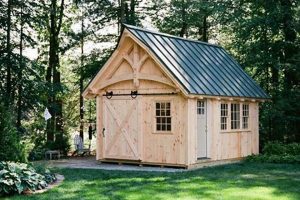
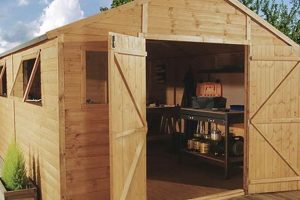
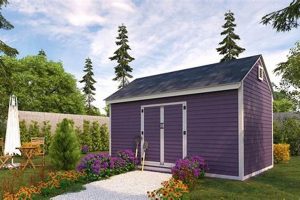
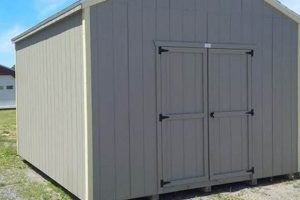
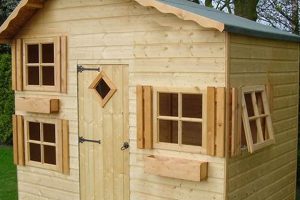
A structure of this size offers 150 square feet of storage space, suitable for a variety of purposes in a residential setting. Such a unit commonly features a rectangular footprint, with dimensions of ten feet on one side and fifteen feet on the other. The structure can accommodate tools, equipment, and supplies often associated with outdoor maintenance and hobbies.
The relatively generous area afforded by this type of outbuilding provides significant advantages. It can facilitate organized storage, protecting items from weather damage and potential theft. Historically, such structures have served to free up space in primary residences or garages, creating a more clutter-free living environment. The dimensions allow for the inclusion of workbenches or shelving, enabling project-based activities separate from the main house.
Subsequent sections will explore specific design considerations, regulatory aspects relevant to such structures, and potential uses beyond basic storage. These topics aim to provide a comprehensive understanding of planning, building, and utilizing an outbuilding of this size effectively.
Tips for Optimizing a 10 x 15 Garden Shed
These recommendations are designed to enhance the functionality and longevity of a structure of this size. Careful planning and execution are crucial for maximizing its utility.
Tip 1: Site Selection is Paramount: Ensure the ground is level and well-drained to prevent structural issues and moisture damage. Consider proximity to utilities if electrical or water access is desired.
Tip 2: Foundation Considerations: A solid foundation, such as a concrete slab or gravel base, is essential for stability and longevity. Skimping on the foundation can lead to shifting and premature deterioration.
Tip 3: Optimize Vertical Space: Utilize shelving and wall-mounted storage solutions to maximize usable area. Overhead storage racks can accommodate less frequently used items, freeing up floor space.
Tip 4: Ventilation is Critical: Adequate ventilation prevents moisture buildup, reducing the risk of mold and mildew. Install vents strategically to promote airflow.
Tip 5: Secure Entry Points: Invest in a quality locking mechanism to deter theft and unauthorized access. Consider additional security measures such as motion-activated lighting.
Tip 6: Consider Material Choices: Select materials that are durable and weather-resistant, appropriate for the local climate. Pressure-treated lumber, metal siding, and composite roofing are options to consider.
Tip 7: Organize Internal Layout: Plan the layout of storage based on frequency of use. Keep frequently accessed items near the entrance for ease of retrieval.
Implementing these strategies will contribute to a more functional and durable outbuilding. Careful attention to detail during the planning and construction phases is a worthwhile investment.
The subsequent section will address regulatory considerations and permit requirements often associated with structures of this size.
1. Storage Capacity

The storage capacity of a ten-foot by fifteen-foot outbuilding is a direct consequence of its dimensions. The available 150 square feet provides a tangible measure of what can be accommodated within. This capacity is a primary determinant of the structure’s utility, defining the scope of its intended purpose. For example, a homeowner seeking to store lawn equipment, gardening tools, and seasonal items will assess whether the available space is sufficient to house these items without causing undue congestion or accessibility issues. The choice of this specific size often stems from a need for more storage than smaller options can provide, while remaining manageable in terms of cost and property footprint.
Effective utilization of the storage capacity requires careful consideration of layout and organization. Maximizing vertical space through shelving units and wall-mounted storage solutions is crucial. The type of items stored will influence optimal configuration; long-handled tools may necessitate vertical storage, while smaller items benefit from shelving. Consider the accessibility requirements of frequently used items. Failure to optimize the internal layout can negate the advantage of the available square footage, resulting in a disorganized and inefficient space. A well-planned configuration maximizes the usefulness of the 150 square feet, allowing for efficient storage and retrieval of items.
In summary, storage capacity is intrinsically linked to the dimensions of the outbuilding. Understanding this relationship is vital for selecting an appropriate size and for effectively managing the interior space. The practical significance of storage capacity lies in its direct impact on the structure’s ability to fulfill its intended purpose, from housing gardening supplies to serving as a workshop. Challenges arise in balancing the need for storage with the limitations of the footprint and the cost implications. Ultimately, an informed assessment of storage needs is essential for a successful outcome.
2. Material Durability
The longevity and overall value of a 10 x 15 garden shed are inextricably linked to the durability of the materials used in its construction. Material selection directly influences the structure’s ability to withstand environmental stressors and maintain its integrity over time. Compromises on material quality can result in premature deterioration, necessitating costly repairs or even replacement.
- Weather Resistance
Exposure to the elements, including rain, snow, sun, and wind, places significant demands on exterior materials. Materials such as pressure-treated lumber, metal siding, and composite roofing are chosen for their resistance to moisture, UV radiation, and physical damage. Failure to select weather-resistant materials can lead to rot, warping, fading, and ultimately, structural failure.
- Pest and Insect Resistance
Certain materials are more susceptible to damage from insects and pests, such as termites and rodents. Untreated wood is particularly vulnerable, requiring preventative measures or alternative material choices. Metal and composite materials offer inherent resistance to pest infestation, reducing the need for chemical treatments and extending the lifespan of the structure.
- Structural Integrity
The structural framework of the outbuilding must be constructed from materials capable of bearing loads and withstanding stress. Lumber used for framing should meet specific grade requirements to ensure adequate strength and stability. Compromising on structural integrity can lead to sagging, collapse, and safety hazards.
- Maintenance Requirements
Material durability directly impacts the level of maintenance required over the structure’s lifespan. Low-maintenance materials, such as vinyl siding or metal roofing, require less frequent painting, staining, or repairs. Selecting durable materials can significantly reduce the long-term cost of ownership and minimize upkeep efforts.
In conclusion, the choice of materials for a ten-foot by fifteen-foot outbuilding is a critical factor determining its durability, longevity, and overall value. Selecting appropriate materials based on climate, pest prevalence, and structural demands is essential for ensuring a sound investment that provides reliable storage or workspace for years to come. Overlooking material durability can result in costly repairs, premature deterioration, and diminished utility of the structure.
3. Foundation Integrity

The stability and longevity of a 10 x 15 garden shed are directly contingent upon the integrity of its foundation. The foundation serves as the critical interface between the structure and the ground, bearing the weight of the building and resisting forces that could lead to settling, shifting, or collapse. A compromised foundation can manifest in various structural issues, ranging from minor inconveniences like sticking doors to severe problems such as cracked walls and a compromised roofline. Real-world examples abound: improperly prepared foundations leading to sheds leaning precariously, or inadequate footings resulting in seasonal ground movement that damages the shed’s frame. Foundation integrity is not merely a desirable feature; it is a fundamental requirement for a durable and functional outbuilding.
The type of foundation appropriate for a structure of this size varies depending on local soil conditions, climate, and budget. Common options include concrete slabs, gravel pads, and pier foundations. Each method offers distinct advantages and disadvantages regarding cost, ease of installation, and long-term performance. For example, a concrete slab provides a solid, level surface and superior moisture barrier, but requires significant excavation and concrete work. A gravel pad offers a more cost-effective and less labor-intensive option but may not provide the same level of structural support in unstable soil conditions. The selection of the appropriate foundation type necessitates a thorough understanding of local building codes and best practices.
In summary, foundation integrity is a non-negotiable aspect of constructing a reliable ten-foot by fifteen-foot outbuilding. Ignoring the importance of a properly designed and installed foundation will inevitably lead to structural problems and diminished value. Careful consideration of soil conditions, climate, and budget is essential for selecting the appropriate foundation type and ensuring the long-term stability of the shed. The practical significance of this understanding lies in preventing costly repairs and maintaining a safe and functional storage or workspace for years to come.
4. Permitting Regulations

The construction of a 10 x 15 garden shed is frequently subject to local permitting regulations. These regulations, enforced by municipal or county authorities, govern various aspects of building construction to ensure safety, compliance with zoning ordinances, and preservation of community standards. Failure to adhere to these regulations can result in fines, stop-work orders, or even the forced removal of the structure. For example, a homeowner who erects an outbuilding without obtaining the necessary permits may face legal action from the local government, requiring them to dismantle the structure at their own expense. Understanding these regulations is a critical component of the planning process.
Permitting requirements typically address several factors, including setbacks from property lines, maximum building height, allowable square footage for accessory structures, and adherence to specific building codes. Setback requirements dictate the minimum distance an outbuilding must be located from property boundaries, preventing encroachment on neighboring properties and ensuring adequate access for maintenance. Building codes specify minimum standards for construction materials, structural integrity, and electrical or plumbing systems (if applicable), safeguarding the health and safety of occupants and preventing potential hazards. The practical application involves researching local ordinances, submitting detailed plans for review, and obtaining the necessary approvals before commencing construction. This process may involve multiple inspections at various stages of the project.
In summary, compliance with permitting regulations is an essential step in the construction of a ten-foot by fifteen-foot outbuilding. These regulations serve to protect property owners, neighbors, and the community as a whole by ensuring safety, adherence to zoning laws, and preservation of aesthetic standards. Neglecting to obtain the necessary permits can result in significant legal and financial consequences. Therefore, thorough research and diligent adherence to local building codes are crucial for a successful and legally compliant project.
5. Layout Optimization

Effective layout optimization is paramount for maximizing the utility of a 10 x 15 garden shed. The limited square footage necessitates careful planning to ensure efficient storage and accessibility. Thoughtful organization transforms a potentially cluttered space into a functional asset.
- Vertical Space Utilization
Exploiting vertical space is crucial within a 150-square-foot structure. Shelving units, wall-mounted organizers, and overhead storage racks significantly expand storage capacity without consuming valuable floor area. For instance, installing shelves along the walls allows for storing gardening supplies, tools, and seasonal items, while leaving ample space for larger equipment. Failure to utilize vertical space results in a cramped and inefficient environment.
- Accessibility Considerations
Strategic placement of frequently used items is essential for efficient workflow. Tools needed for daily gardening tasks should be positioned near the entrance for easy access. Items used less frequently can be stored in less accessible areas, such as higher shelves or the back of the outbuilding. Neglecting accessibility results in wasted time and effort searching for items.
- Zoning and Categorization
Dividing the interior into distinct zones based on function enhances organization. Designating separate areas for gardening supplies, tools, and workshop activities promotes efficiency and prevents clutter. For example, one corner could serve as a potting station, while another houses power tools and workbenches. Clear zoning facilitates quick retrieval and minimizes the likelihood of misplaced items.
- Traffic Flow Management
Optimizing the layout to facilitate smooth traffic flow is important, especially when working within the outbuilding. Arranging storage in a manner that avoids obstructions and allows for easy movement minimizes the risk of accidents and improves overall efficiency. Ensuring adequate space for maneuvering around equipment and accessing storage areas enhances the usability of the structure.
The principles of layout optimization are fundamental to transforming a standard outbuilding into a highly functional and organized space. By strategically employing vertical space, prioritizing accessibility, implementing zoning strategies, and managing traffic flow, one maximizes the utility of a 10 x 15 garden shed.
Frequently Asked Questions
The following questions address common inquiries regarding structures of this size, providing concise and informative answers to aid in decision-making and planning.
Question 1: What are the primary applications for a structure of this size?
Answer: These units serve primarily for storage of lawn and garden equipment, tools, and seasonal items. They can also function as workshops or hobby spaces.
Question 2: What are the typical foundation options for a structure of these dimensions?
Answer: Common foundation choices include concrete slabs, gravel pads, and pier foundations. The selection depends on soil conditions, budget, and local building codes.
Question 3: Are permits generally required for constructing an outbuilding of this size?
Answer: Permit requirements vary by locality. It is essential to consult with local authorities to determine specific regulations and obtain necessary approvals prior to construction.
Question 4: What material considerations are most important for ensuring longevity?
Answer: Selecting weather-resistant materials, such as pressure-treated lumber, metal siding, and composite roofing, is crucial for withstanding environmental stressors.
Question 5: How can storage capacity be maximized within the available square footage?
Answer: Effective utilization of vertical space through shelving, wall-mounted organizers, and overhead storage is essential for maximizing storage capacity.
Question 6: What are the potential drawbacks of ignoring local building codes?
Answer: Failure to comply with building codes can result in fines, stop-work orders, or the forced removal of the structure.
These answers provide a basic understanding of key considerations related to ten-foot by fifteen-foot outbuildings. Further research and consultation with professionals may be necessary for specific projects.
The subsequent section will provide a detailed checklist for planning and executing the construction of such a structure.
Conclusion
The preceding sections have explored the multifaceted considerations surrounding the construction and utilization of a 10 x 15 garden shed. From assessing storage needs and selecting durable materials to ensuring foundation integrity and complying with permitting regulations, a comprehensive approach is essential. Furthermore, optimizing the internal layout to maximize usable space contributes significantly to the structure’s overall functionality.
The decision to erect a 10 x 15 garden shed represents a significant investment. Thorough planning, adherence to best practices, and compliance with local regulations are paramount to ensure a durable, functional, and legally compliant structure that serves its intended purpose effectively for years to come. Careful deliberation is advised before proceeding.