Effective arrangement of a backyard storage structure transforms it from a cluttered repository into a functional workspace. The process involves categorizing contents, optimizing vertical space, and implementing accessible storage solutions to create an efficient and safe environment. An example includes allocating specific zones for tools, gardening supplies, and seasonal items within the structure.
A well-ordered outdoor storage area contributes significantly to property value, safety, and efficient task completion. Historically, such spaces were often overlooked, leading to disorganization and potential hazards. However, recognition of the benefits of an organized storage solution has grown, emphasizing improved access to equipment, reduced risk of accidents, and prolonged lifespan of stored items.
The following sections will outline methods for sorting contents, maximizing available space through shelving and hanging systems, and implementing labeling strategies for sustained order. These strategies are applicable across diverse structure sizes and storage requirements.
Strategies for Shed Arrangement
The following strategies provide a framework for systematically arranging the contents of a backyard storage structure, promoting efficiency and accessibility.
Tip 1: Conduct a Comprehensive Inventory. Initiate the process by removing all items from the structure. Categorize each item based on function: gardening tools, lawn care equipment, seasonal decorations, and hardware supplies. Discard items that are broken, obsolete, or no longer needed.
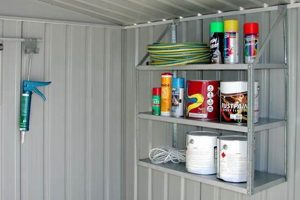
Tip 2: Implement Vertical Storage Solutions. Utilize wall-mounted shelving units to maximize available space. Install adjustable shelves to accommodate items of varying heights. Consider incorporating pegboards for hanging smaller tools and accessories, keeping them readily accessible.
Tip 3: Employ Clear, Consistent Labeling. Label all storage containers, shelves, and drawers with clear, concise descriptions of their contents. Use a durable labeling system that withstands temperature fluctuations and moisture to ensure long-term readability.
Tip 4: Designate Zones for Specific Activities. Establish distinct zones within the structure to facilitate specific tasks. Create a potting station with designated space for soil, pots, and planting tools. Allocate an area for tool maintenance and repair, equipped with necessary supplies.
Tip 5: Optimize Floor Space. Store large, infrequently used items along the back walls to minimize obstruction of walkways. Utilize overhead storage racks for storing bulky items, such as lumber or seasonal decorations, freeing up floor space for more frequently accessed equipment.
Tip 6: Prioritize Safety Considerations. Secure hazardous materials, such as pesticides and fertilizers, in locked cabinets out of reach of children and pets. Ensure adequate ventilation to prevent the buildup of fumes from flammable substances. Install proper lighting to enhance visibility and prevent accidents.
Tip 7: Maintain Consistent Order. Regularly declutter and reorganize the structure to prevent the accumulation of unnecessary items. Schedule periodic maintenance to address any structural issues and ensure the continued functionality of storage solutions.
Implementing these strategies streamlines the organization process, enhancing both the functionality and longevity of the storage structure. The result is a safer, more efficient workspace.
The subsequent section will discuss the ongoing maintenance requirements for sustained organization.
1. Declutter Regularly

Sustained organization of a backyard storage structure necessitates consistent decluttering practices. This process prevents the accumulation of unnecessary items, thereby preserving the functionality and accessibility of the space. Regular decluttering is not merely a periodic task but an integral component of maintaining an efficiently organized environment.
- Reduced Clutter, Increased Efficiency
Accumulated possessions impede access to frequently used items and diminish available storage capacity. Periodic decluttering mitigates this issue by removing redundant or obsolete items. This results in a more streamlined environment, facilitating efficient retrieval of needed tools and supplies.
- Enhanced Space Utilization
Decluttering liberates valuable storage space, allowing for more effective organization of remaining items. This may involve reconfiguring storage solutions or consolidating similar items into fewer containers. The result is a more efficient use of the structure’s capacity, maximizing its functionality.
- Improved Safety Profile
Unnecessary clutter presents potential safety hazards, including tripping hazards and obstructed pathways. Decluttering eliminates these hazards, creating a safer working environment. Removal of flammable materials or improperly stored chemicals further enhances the safety profile of the storage area.
- Facilitated Inventory Management
A decluttered space allows for easier tracking and management of stored items. By removing unnecessary possessions, it becomes simpler to assess existing inventory and identify items requiring replacement or replenishment. This streamlines the process of maintaining necessary supplies and equipment.
The integration of consistent decluttering practices significantly enhances the overall organization and functionality of a backyard storage structure. By reducing clutter, maximizing space, improving safety, and facilitating inventory management, regular decluttering promotes a more efficient and productive storage environment. This ultimately contributes to the long-term usability and value of the storage space.
2. Vertical Space

Optimal utilization of vertical space represents a cornerstone of efficient arrangement within a backyard storage structure. The effective deployment of vertical storage solutions transforms limited floor area into expansive storage capacity, maximizing the utility of the structure.
- Shelving Systems: Maximizing Accessibility and Capacity
Shelving units are primary components in vertical space organization. Adjustable shelves accommodate items of varying heights, while wall-mounted shelving frees up floor space. Examples include storing gardening supplies, tools, and seasonal items, categorized by frequency of use. The implications extend to improved accessibility and a reduction in floor clutter, enhancing the overall functionality of the storage space.
- Pegboards: Efficient Tool Storage and Visibility
Pegboards provide an efficient method for storing tools and smaller items, maximizing visibility and accessibility. Hooks and brackets can be configured to hold a variety of tools, keeping them organized and within easy reach. Real-world applications include storing gardening shears, hand trowels, and other small implements. The resulting enhancement is a reduction in search time and improved organization of essential tools.
- Overhead Storage: Securing Infrequently Used Items
Overhead storage racks leverage unused space near the ceiling for storing bulky or infrequently used items. These racks are suitable for storing seasonal decorations, lumber, or other large items that do not require frequent access. An example includes storing holiday decorations during the off-season. The consequence is the freeing up of valuable floor space and improved overall storage capacity.
- Wall-Mounted Cabinets: Secure Storage for Hazardous Materials
Wall-mounted cabinets provide secure and organized storage for hazardous materials such as pesticides, fertilizers, and flammable liquids. These cabinets should be lockable and properly ventilated to ensure safety. A practical application involves storing garden chemicals away from children and pets. The ramifications include enhanced safety and compliance with storage regulations, contributing to a secure storage environment.
The strategic incorporation of shelving systems, pegboards, overhead storage, and wall-mounted cabinets transforms a disorganized structure into an efficient and accessible storage space. These vertical solutions optimize space utilization, improve safety, and enhance overall organization. Such applications underscore the necessity of vertical storage in effectively managing a backyard storage structure.
3. Categorize Items

Systematic categorization of items constitutes a fundamental prerequisite for effective storage structure arrangement. The act of classifying contents according to type, function, or frequency of use directly impacts accessibility, space utilization, and overall efficiency within the storage environment. This process establishes a logical framework upon which all subsequent organizational strategies are built. Failure to categorize possessions effectively often results in a disorganized, inefficient, and potentially hazardous storage space. For example, if gardening tools, automotive supplies, and seasonal decorations are intermixed without distinction, locating a specific item becomes time-consuming and frustrating. Conversely, a categorized system, such as one segregating lawn care equipment from potting supplies, streamlines retrieval and promotes a more manageable inventory.
The practical significance of item categorization extends beyond mere convenience. It contributes to enhanced safety by segregating hazardous materials (e.g., pesticides, flammable liquids) from general storage. Well-defined categories also facilitate efficient space allocation, enabling the user to determine appropriate storage solutions for each category. For example, long-handled tools can be grouped together and stored vertically, while smaller items can be consolidated within bins or drawers. Similarly, seasonal decorations can be stored in designated areas and readily accessible during the appropriate time of year. The creation of a detailed inventory aligned with these categories further enhances management, enabling quick identification of missing items and prevention of unnecessary duplicate purchases.
In summary, item categorization serves as the bedrock of a structured and well-ordered storage structure. While challenges may arise in determining appropriate categories and maintaining consistent classification, the benefits of improved accessibility, efficient space utilization, and enhanced safety far outweigh the effort required. The implementation of a comprehensive categorization system is therefore essential for realizing the full potential of any storage structure and maximizing its long-term utility.
4. Proper Labeling

The implementation of a consistent and informative labeling system is a critical component of maintaining an organized backyard storage structure. Without clear and accurate labels, the benefits of sorting and categorizing items are significantly diminished, negating the overall objective of an efficient storage solution.
- Improved Accessibility and Retrieval Efficiency
Clearly labeled containers and shelves facilitate the rapid identification and retrieval of stored items. This reduces time spent searching for specific tools or supplies. For example, a container labeled “Gardening Gloves” allows for immediate identification of its contents, eliminating the need to open and inspect multiple containers. This directly improves efficiency and minimizes disruption during projects.
- Reduced Redundancy and Waste
Proper labeling aids in inventory management by providing a visual reminder of stored items. This can prevent the unnecessary purchase of duplicates. A shelf labeled “Fertilizer” informs the user of existing stock, potentially averting the acquisition of excess supplies. This reduces financial waste and optimizes storage space.
- Enhanced Safety Through Identification of Contents
The labeling of hazardous materials is crucial for promoting safety and preventing accidents. Containers of pesticides, herbicides, or flammable liquids should be clearly marked with appropriate warnings and hazard symbols. For instance, a cabinet labeled “Flammable Materials” alerts individuals to the presence of potentially dangerous substances, enabling them to take necessary precautions.
- Maintenance of Organizational Structure Over Time
Effective labeling provides a lasting framework for maintaining order within the structure. It reinforces the designated locations for specific items and encourages adherence to the established organizational system. Labeled shelves and containers serve as constant reminders, guiding users to return items to their designated locations, thus sustaining the organizational structure over time.
The integration of a comprehensive labeling strategy is essential for maximizing the efficiency and effectiveness of any structured storage plan. This simple yet vital element ensures that the benefits of sorting, categorizing, and optimizing storage space are fully realized, contributing to a well-organized and user-friendly storage environment.
5. Accessibility
Within the context of efficient storage structure arrangement, accessibility denotes the ease and speed with which stored items can be located and retrieved. This concept is a central determinant of a spaces overall functionality and utility, directly influencing task completion times and user satisfaction. A disorganized space inherently hinders accessibility, leading to wasted time and potential frustration.
- Strategic Item Placement
The placement of items within the storage structure should prioritize those used most frequently. Items needed daily or weekly should be located in readily accessible areas, such as within arm’s reach on shelves or near the entrance. Conversely, infrequently used items can be stored higher or in more remote locations. This strategic arrangement minimizes the time required to retrieve commonly used items, streamlining tasks and enhancing overall efficiency. Examples include storing gardening gloves and frequently used tools near the door, while seasonal decorations are placed on higher shelves.
- Clear Pathways and Obstruction-Free Zones
Maintaining clear pathways and unobstructed zones within the storage structure is essential for accessibility and safety. Items should be stored in a manner that avoids blocking walkways or access to other stored items. Implementing a system of designated storage areas and regular decluttering prevents the accumulation of clutter that impedes movement and obstructs access. This is especially important for larger items such as lawnmowers or wheelbarrows, which require sufficient space for maneuvering.
- Appropriate Storage Solutions for Specific Needs
The selection of appropriate storage solutions significantly impacts accessibility. Shelving units, pegboards, and drawers should be chosen based on the size, shape, and frequency of use of the items they will hold. Adjustable shelves allow for customization based on varying item heights, while pegboards provide readily accessible storage for tools. Drawers offer concealment and protection for smaller items, preventing them from becoming lost or damaged. The judicious selection of storage solutions enhances both accessibility and organization.
- Visible Labeling and Inventory Systems
Visible labeling of containers, shelves, and drawers is crucial for quick identification and retrieval of items. Clear, concise labels enable users to locate items without having to open multiple containers or search through disorganized piles. Implementing a basic inventory system, whether digital or manual, further enhances accessibility by providing a comprehensive overview of stored items and their locations. This combination of visible labeling and inventory management facilitates efficient retrieval and reduces the likelihood of misplaced or forgotten items.
These facets of accessibility, when thoughtfully integrated into the organizational structure of a storage building, transform a potentially chaotic space into an efficient and user-friendly resource. By prioritizing accessibility, users can minimize wasted time, enhance safety, and maximize the utility of their storage space, optimizing their ability to retrieve and store items effectively.
6. Safety First

Adherence to “Safety First” principles is an intrinsic component of effective storage structure arrangement. The absence of safety considerations during the planning and execution of “how to organise garden shed” directly correlates with increased risk of accidents, injuries, and property damage. These risks range from minor slips and falls to more severe incidents involving hazardous materials or structural instability. Therefore, incorporating safety measures is not merely a supplementary step, but a fundamental element of the organizational process.
Storage structures often house potentially dangerous items such as sharp tools, power equipment, pesticides, and flammable liquids. Proper arrangement mitigates risks associated with these materials. For example, storing sharp tools with blades exposed increases the likelihood of lacerations. Conversely, securing tools in designated holders or sheaths minimizes this risk. Similarly, improper storage of flammable liquids, such as gasoline, poses a fire hazard. Storing these substances in approved containers within a well-ventilated area reduces the risk of ignition and explosion. Structural integrity also constitutes a critical safety factor. Overloading shelves or failing to properly secure heavy items can lead to collapse, causing injury and damage. Implementing load limits and reinforcing shelves ensures structural stability and prevents accidents.
In summary, integrating “Safety First” principles into the process of “how to organise garden shed” directly mitigates a wide range of potential hazards. The implementation of secure storage methods for tools and hazardous materials, coupled with a focus on structural integrity, creates a safer and more functional environment. This approach not only reduces the risk of accidents but also promotes long-term usability and preservation of property. The challenge lies in consistently prioritizing safety during the arrangement and maintenance of the storage space, reinforcing the critical link between organization and safety.
Frequently Asked Questions
This section addresses common inquiries regarding the effective arrangement of backyard storage structures, providing concise and informative answers to facilitate optimal organization.
Question 1: What constitutes the initial step in arranging a disorganized storage structure?
The initial step involves a comprehensive removal of all contents to facilitate assessment and categorization. This allows for the identification of obsolete or redundant items, enabling a streamlined organization process.
Question 2: How can vertical space be effectively utilized within a limited-capacity storage structure?
Vertical space utilization can be optimized through the implementation of wall-mounted shelving units, pegboards for tool storage, and overhead racks for storing bulky, infrequently accessed items. This maximizes available space without compromising floor area.
Question 3: What labeling practices contribute to sustained organization within the structure?
Clear, concise, and durable labeling of all containers, shelves, and storage zones is essential for sustained organization. Labels should accurately reflect the contents and withstand temperature fluctuations and moisture.
Question 4: What safety precautions should be observed when storing hazardous materials within the structure?
Hazardous materials, such as pesticides and flammable liquids, should be stored in locked, well-ventilated cabinets, out of reach of children and pets. Proper labeling and adherence to safety guidelines are crucial to prevent accidents.
Question 5: How frequently should a storage structure be decluttered and reorganized?
Regular decluttering and reorganization should be conducted at least twice annually, ideally during seasonal transitions. This prevents the accumulation of unnecessary items and ensures sustained accessibility and efficiency.
Question 6: What measures can be taken to protect stored items from moisture damage?
Employing moisture-resistant containers, ensuring adequate ventilation, and elevating items off the floor can mitigate the risk of moisture damage. Addressing any leaks or structural deficiencies promptly is also essential.
Effective arrangement of a backyard storage structure necessitates a systematic approach encompassing decluttering, space optimization, labeling, safety protocols, and routine maintenance. Adherence to these principles ensures a functional and secure storage environment.
The following section will provide a checklist for optimal arrangement of your backyard storage building.
Effective Storage Building Arrangement
This exploration of “how to organise garden shed” has outlined key principles: comprehensive decluttering, strategic use of vertical space, systematic categorization, precise labeling, prioritized accessibility, and paramount safety protocols. The integration of these elements transforms a potentially chaotic space into a functional and secure storage environment, optimizing the utilization of limited area and safeguarding stored items and users.
The enduring significance of these practices rests in their contribution to efficient resource management, reduced risk of accidents, and the preservation of property value. Consistent application of these principles ensures a sustained level of organization, transforming the storage structure from a source of frustration into a valuable asset. The future utility of any storage space is directly dependent on the sustained commitment to these organizational imperatives.