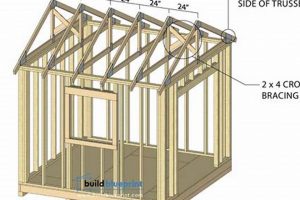
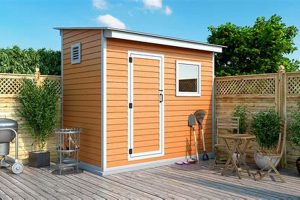
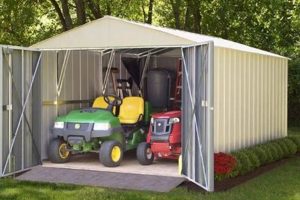
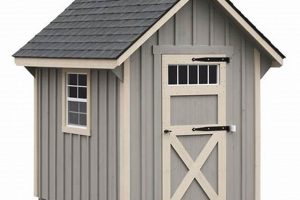
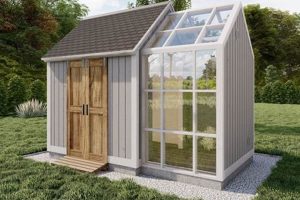
Securing a garden structure to the earth involves employing various methods to prevent movement due to wind, ground shifting, or other external forces. These techniques typically use physical connections between the shed’s frame and the underlying soil or a concrete foundation. For example, ground anchors, concrete piers, or specialized anchoring kits can be used to achieve this stability.
The practice of securing outbuildings offers several advantages. It significantly reduces the risk of damage from storms, prolongs the lifespan of the structure by preventing warping or shifting, and can even deter theft. Historically, anchoring has evolved from rudimentary methods like burying posts to sophisticated systems incorporating engineered fasteners and load distribution strategies.
Understanding the specific soil conditions, shed construction, and local building codes is critical when determining the most appropriate strategy. Factors influencing the choice of method include soil type, wind exposure, and the presence of a foundation. The following sections will detail several common and effective ways to ensure a garden shed remains firmly in place.
Anchoring Guidance for Garden Sheds
The following guidelines provide essential considerations when securing a garden shed, ensuring its stability and longevity.
Tip 1: Assess Soil Conditions: Before commencing any anchoring procedure, conduct a thorough soil assessment. Different soil types, such as clay, sand, or loam, possess varying load-bearing capabilities, which directly influence the choice of anchoring method. Sandy soil, for instance, necessitates deeper or more robust anchoring systems compared to denser clay soils.
Tip 2: Employ Ground Anchors for Stability: Ground anchors, available in various designs including screw-in and plate anchors, offer a reliable method for securing a shed. These anchors are driven deep into the ground, providing a strong point of resistance against uplift forces. The selection should align with soil type and the anticipated wind load on the structure.
Tip 3: Consider Concrete Piers for Permanent Structures: For more substantial or permanent sheds, concrete piers provide a stable and durable foundation. These piers extend below the frost line, preventing movement due to freezing and thawing cycles. Sheds are then bolted or connected to the piers using appropriate fasteners.
Tip 4: Utilize Anchoring Kits for Ease of Installation: Pre-packaged anchoring kits offer a convenient solution for securing sheds, particularly those without existing foundations. These kits typically include all necessary hardware and instructions, simplifying the installation process. However, it is crucial to select a kit designed for the specific shed size and local wind conditions.
Tip 5: Inspect and Maintain Anchoring Systems: Regularly inspect the anchoring system for signs of corrosion, loosening, or damage. Periodic tightening of fasteners and replacement of worn components ensure the continued effectiveness of the anchoring system. This maintenance is particularly crucial after severe weather events.
Tip 6: Account for Wind Load: Wind load is a critical factor in anchoring design. Determine the prevailing wind speed in the area and calculate the anticipated force exerted on the shed. This information guides the selection of anchoring systems capable of withstanding these forces, preventing wind-related damage.
Tip 7: Adhere to Local Building Codes: Compliance with local building codes and regulations is paramount. Many jurisdictions have specific requirements for anchoring structures, particularly in areas prone to high winds or seismic activity. Consult with local building officials to ensure adherence to these regulations.
Implementing these tips significantly enhances a garden shed’s stability and resilience. Proper anchoring mitigates risks associated with weather-related events, prolongs the shed’s structural integrity, and safeguards stored contents.
Having explored essential methods, the subsequent section will address the practical considerations of implementing these techniques, further solidifying the knowledge base required for a successful project.
1. Soil Assessment

Soil assessment represents a critical preliminary step when determining how to anchor a garden shed to the ground. The composition and characteristics of the soil directly influence the load-bearing capacity and the effectiveness of various anchoring methods. For example, sandy soil, due to its loose particulate structure, offers significantly less resistance to uplift forces compared to clay-rich soil. Consequently, anchoring strategies suitable for clay may prove inadequate for sand, potentially leading to structural instability.
Failure to adequately assess the soil can result in several detrimental outcomes. Insufficient anchoring, attributable to misjudging soil properties, may lead to the shed shifting or overturning during high wind events. Conversely, over-engineered anchoring systems, based on inaccurate assumptions about soil conditions, represent an unnecessary expenditure of resources. Real-world examples of sheds detached from their moorings following storms underscore the practical significance of accurate soil assessment.
In conclusion, a detailed understanding of soil composition is essential for selecting and implementing appropriate anchoring techniques. This involves considering soil type, moisture content, and drainage characteristics to ensure the long-term stability and safety of the garden shed. Ignoring this step elevates the risk of structural failure, leading to potential property damage and financial loss.
2. Anchor Selection

The selection of appropriate anchors forms a critical element within the broader methodology of securing a garden shed. The chosen anchor type directly dictates the system’s capacity to resist forces that could displace the structure. Factors such as shed size, soil type, and anticipated wind loads must inform the decision-making process.
- Ground Anchors (Screw-In Type)
These anchors, characterized by a helical design, are screwed into the ground to depths determined by the soil’s resistance. Their effectiveness is amplified in compacted soil, providing a strong connection between the shed and the earth. An example would be their use in securing a small shed on clay soil where moderate wind conditions are expected. The implications of improper selection can be seen in instances where undersized screw anchors fail during storm events, resulting in shed displacement.
- Ground Anchors (Plate Type)
Plate anchors, distinguished by a flat plate embedded in the soil, offer a broader surface area for resistance against uplift. These are often coupled with cables or straps that connect to the shed’s frame. They are frequently employed in situations involving looser soil or when a shallower anchoring depth is required. A real-world application would be securing a shed on sandy soil where depth penetration is limited. Failure to account for the soil’s instability can compromise the anchor’s effectiveness.
- Concrete Anchors
When a concrete foundation or slab is present, specialized concrete anchors provide a secure attachment point. These anchors are embedded directly into the concrete, offering high resistance to both uplift and lateral forces. Concrete anchors are appropriate for larger, more permanent sheds, particularly those storing valuable items. Ignoring the correct installation procedures, such as adequate embedding depth, can lead to anchor pull-out and structural failure.
- Chemical Anchors
Chemical anchors involve the injection of a resin or adhesive into a pre-drilled hole in concrete or masonry. This resin hardens, creating a strong bond between the anchor and the surrounding material. Chemical anchors are useful when mechanical anchors are not feasible or when high load-bearing capacity is required. An example might include reinforcing the anchoring of an existing shed on a pre-existing concrete pad. An improperly mixed or applied chemical anchor can result in a significantly weakened connection.
The interplay between anchor selection, soil properties, and anticipated environmental forces determines the overall efficacy of the anchoring strategy. A well-informed decision, predicated on accurate data and appropriate engineering principles, is paramount in safeguarding a garden shed against displacement and damage.
3. Foundation Type

The foundation upon which a garden shed rests exerts a substantial influence on the methodology employed to secure it. Foundation type acts as a primary determinant for suitable anchoring strategies, dictating the connection methods and materials required. A shed situated on a concrete slab, for instance, benefits from anchoring systems that utilize embedded bolts or expansion anchors, providing a rigid and secure attachment point. Conversely, a shed placed directly on the ground or a gravel base necessitates alternative approaches, such as ground anchors or earth augers, to resist uplift forces.
A concrete foundation, by virtue of its mass and rigidity, inherently provides a degree of stability, reducing the susceptibility to movement from wind or ground settling. This inherent stability simplifies the anchoring process, allowing for the use of readily available and reliable fastening solutions. However, even with a concrete foundation, proper anchoring remains crucial to prevent lateral movement and to ensure the structure can withstand extreme weather conditions. The absence of a solid foundation, such as in the case of a shed placed directly on soil, introduces complexities. Anchoring systems must then penetrate deeper into the earth to achieve sufficient resistance, requiring more robust and specialized hardware. The choice of anchor is also constrained by soil composition, demanding careful consideration of the soil’s load-bearing capacity.
In summary, the foundation type serves as a pivotal factor in the design and implementation of an effective anchoring system. The stability afforded by a concrete foundation streamlines the process, while alternative foundations demand more intricate and specialized solutions. Understanding the interplay between foundation characteristics and anchoring techniques is indispensable for ensuring the long-term stability and structural integrity of a garden shed.
4. Wind Resistance

Wind resistance constitutes a critical design parameter in determining the appropriate anchoring methodology for a garden shed. Wind forces exert substantial pressure on the shed’s surfaces, potentially leading to uplift, overturning, or structural damage if the structure is inadequately secured. The magnitude of these forces is directly proportional to the shed’s surface area exposed to the wind and the prevailing wind speeds in the region. Consequently, sheds located in areas prone to high winds necessitate more robust anchoring systems compared to those in sheltered locations. Neglecting wind resistance considerations can have catastrophic consequences, as evidenced by numerous cases of sheds being displaced or destroyed during severe weather events. The design of the anchoring system, therefore, must explicitly account for the anticipated wind loads to ensure structural integrity.
Several strategies contribute to enhancing a shed’s ability to withstand wind forces. Streamlining the shed’s shape, reducing the roof overhang, and minimizing the number of openings can mitigate wind pressure. However, these design modifications are often insufficient on their own, necessitating a properly engineered anchoring system. The selection of appropriate anchors, their spacing, and the method of attachment to the shed’s frame are all critical factors. For instance, screw-in ground anchors, when installed correctly, provide significant resistance to uplift, while concrete anchors offer superior stability in areas with high wind speeds and suitable soil conditions. Local building codes often specify minimum wind resistance requirements, serving as a valuable guide for designing a safe and effective anchoring system.
In conclusion, the interplay between wind resistance and anchoring is paramount in safeguarding a garden shed against wind-related damage. A comprehensive understanding of wind loads, combined with the implementation of appropriate design modifications and a properly engineered anchoring system, is essential for ensuring the structure’s long-term stability and resilience. Failure to address wind resistance adequately increases the risk of structural failure, potentially resulting in property damage and safety hazards.
5. Code Compliance

Adherence to local building codes represents a non-negotiable aspect of securing a garden shed. These codes, often established and enforced by municipal or regional authorities, are designed to ensure public safety and structural integrity. Ignoring code requirements can result in legal penalties, necessitate costly rework, or compromise the safety of the structure and its surroundings.
- Permitting Requirements
Many jurisdictions mandate a building permit prior to the construction or installation of a garden shed, particularly if it exceeds a certain size or is considered a permanent structure. The permit application process typically involves submitting detailed plans that outline the shed’s dimensions, construction materials, and anchoring methodology. Failure to obtain the required permit can lead to fines, stop-work orders, and even the forced removal of the shed. The permitting process ensures that the proposed construction meets minimum safety and structural standards.
- Wind Load Specifications
Building codes frequently specify minimum wind load requirements for structures, including garden sheds. These specifications dictate the anchoring capacity necessary to withstand anticipated wind forces in a given geographic area. Wind load requirements are typically expressed in terms of pounds per square foot (PSF) and are determined based on factors such as the region’s historical wind speeds and terrain characteristics. Compliance with these specifications ensures that the shed’s anchoring system is capable of resisting uplift and overturning forces during high wind events.
- Foundation Requirements
Certain building codes stipulate minimum foundation requirements for garden sheds, depending on their size, intended use, and permanency. These requirements may range from a simple gravel base to a full concrete slab foundation. The foundation serves to provide a stable and level platform for the shed, distributing the load evenly and preventing settling or shifting. Code compliance with foundation requirements helps to ensure the long-term structural integrity of the shed and minimizes the risk of damage from ground movement.
- Anchor Spacing and Depth
Building codes often specify the minimum spacing and depth for ground anchors used to secure garden sheds. These specifications are designed to ensure that the anchors provide sufficient resistance to uplift and lateral forces. The required spacing and depth depend on factors such as the soil type, the shed’s size, and the anticipated wind loads. Adherence to these requirements helps to prevent the anchors from pulling out of the ground during high wind events, maintaining the shed’s stability.
The intersection of code compliance and anchoring practices serves to underscore the critical importance of aligning construction activities with established regulatory standards. Compliance not only mitigates legal risks but also provides assurance that the shed is constructed safely and will withstand the anticipated environmental forces. Therefore, a thorough understanding of local building codes is essential for any garden shed construction project.
6. Regular Inspection
Regular inspection of a garden shed’s anchoring system is not merely a preventative measure but a critical component in ensuring long-term structural integrity and safety. Without consistent monitoring, the efficacy of the initial anchoring implementation can degrade over time due to environmental factors, ground shifting, or material fatigue. The following details the essential facets of regular inspection in relation to maintaining a properly anchored garden shed.
- Visual Assessment of Anchor Points
A routine visual inspection of all anchor points, where the shed connects to the ground, is paramount. Examine the anchors themselves for signs of corrosion, bending, or cracking. Note any separation between the shed’s frame and the anchoring hardware. For instance, if screw-in ground anchors exhibit rust, their structural capacity is compromised, potentially leading to failure during a wind event. A proactive approach to identifying and addressing these visual cues is essential for preventing catastrophic failure.
- Monitoring Soil Conditions Around Anchors
The soil surrounding the anchors is a key indicator of the system’s stability. Observe for any evidence of soil erosion, settling, or heaving. For example, if soil pulls away from the base of a concrete pier, it suggests compromised support, potentially resulting from frost heave or water runoff. Such conditions can undermine the anchor’s effectiveness, requiring immediate remedial action to restore ground stability.
- Checking Fastener Tightness and Integrity
Inspect all bolts, nuts, and screws connecting the shed’s frame to the anchoring system. Ensure these fasteners are securely tightened to the manufacturer’s specifications. Over time, vibrations, temperature fluctuations, and general wear can cause fasteners to loosen, reducing the system’s overall strength. A common scenario involves loose bolts on a shed anchored to a concrete slab, leading to increased stress on the remaining connections and potentially causing structural damage. Regular tightening of fasteners helps maintain the integrity of the entire anchoring system.
- Assessing Cable and Strap Tension
If the anchoring system utilizes cables or straps to secure the shed, verify that these components maintain appropriate tension. Sagging cables or frayed straps indicate a potential loss of anchoring force. Environmental exposure and continuous stress can weaken these components. For example, a cable anchor exposed to prolonged sunlight may experience UV degradation, reducing its tensile strength. Regular inspection and replacement of worn or damaged cables and straps are crucial for maintaining the system’s effectiveness.
The consistent application of these inspection practices ensures that the anchoring system remains effective throughout the shed’s lifespan. Identifying and addressing potential problems proactively avoids costly repairs and significantly reduces the risk of structural failure, ultimately contributing to the longevity and safety of the garden shed. Neglecting regular inspection is akin to undermining the initial effort invested in securing the structure, rendering it vulnerable to unforeseen environmental challenges.
Frequently Asked Questions
The following addresses common inquiries concerning the proper methods for securing a garden shed to the ground, ensuring stability and longevity.
Question 1: Is anchoring a garden shed truly necessary?
Anchoring is essential, particularly in regions prone to high winds or unstable soil conditions. Without proper anchoring, sheds are susceptible to displacement or damage, potentially leading to significant property loss and safety hazards.
Question 2: What factors determine the most suitable anchoring method?
The appropriate method depends on several factors, including soil type, shed size, local wind conditions, and the presence of a foundation. A thorough assessment of these elements is necessary to select an effective anchoring strategy.
Question 3: How can soil type impact the anchoring process?
Different soil types exhibit varying load-bearing capacities. Sandy soil requires deeper or more robust anchoring systems compared to clay-rich soil. A comprehensive soil analysis is crucial for informed decision-making.
Question 4: Are there specific building codes that govern shed anchoring?
Many jurisdictions have building codes regulating the anchoring of structures, including garden sheds. These codes specify minimum requirements for wind resistance, foundation types, and anchor spacing. Compliance with these regulations is mandatory to ensure safety and avoid legal complications.
Question 5: What maintenance is required for shed anchoring systems?
Regular inspection of the anchoring system is essential to identify signs of corrosion, loosening, or damage. Periodic tightening of fasteners and replacement of worn components is necessary to maintain the system’s effectiveness.
Question 6: Can anchoring a shed deter theft?
While not the primary purpose, a robust anchoring system can serve as a deterrent to theft by making it more difficult to remove the shed. However, additional security measures may be necessary to provide comprehensive protection.
Effective anchoring represents a critical investment in the longevity and safety of a garden shed. Proper planning, selection of appropriate methods, and adherence to building codes are paramount for achieving optimal results.
The subsequent section will provide a detailed, step-by-step guide to implement various anchoring methods, offering practical instruction for securing garden sheds.
Securing Garden Sheds
This exploration of how to anchor a garden shed to the ground has highlighted key aspects of ensuring structural integrity. From soil assessment to anchor selection, wind resistance considerations, code compliance, and regular inspection, each element contributes to a stable and secure structure. Proper implementation of these principles mitigates the risk of damage from environmental factors and enhances the longevity of the shed.
The process of securing a garden shed represents a commitment to responsible construction practices. By prioritizing stability and adhering to established guidelines, property owners can safeguard their investment and contribute to a built environment characterized by resilience and safety. The continued application of these principles will ensure that garden sheds remain steadfast against the forces of nature for years to come.