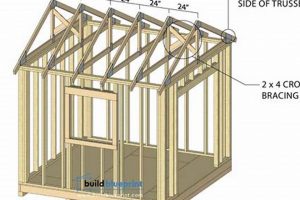
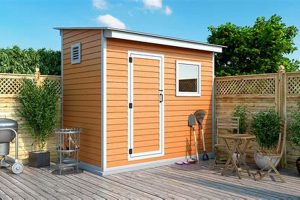
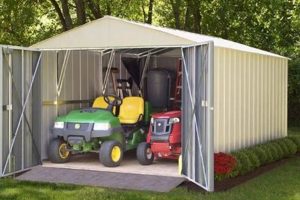
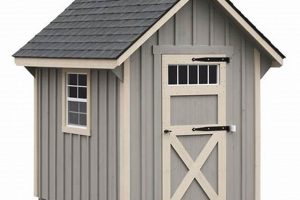
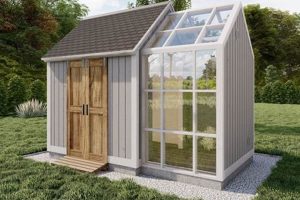
A combined outdoor structure integrates storage with an overhead framework, typically latticed, designed for climbing plants or shade. It is a freestanding building offering enclosed space for tools and equipment, complemented by an attached open structure creating a transition area or shaded seating. This hybrid design blends functionality with aesthetic appeal, offering both practical storage and an attractive garden feature.
The integration of storage with an overhead framework provides a multi-faceted approach to garden design. This combination maximizes usable space by providing secure storage while simultaneously enhancing the garden’s visual appeal. Historically, similar structures evolved from simple tool storage solutions to more elaborate garden features incorporating elements of outdoor living and landscape architecture, reflecting a growing emphasis on the garden as an extension of the home.
The subsequent sections will delve into the design considerations, material choices, construction techniques, and potential applications of these combined structures, offering a comprehensive overview of their integration into various garden settings.
Optimizing Garden Integration
Effective utilization of combined structures necessitates careful planning and consideration of several key factors. The following guidelines provide a framework for maximizing the benefits of integrating storage solutions with overhead frameworks within garden spaces.
Tip 1: Site Selection: Prioritize locations with adequate sunlight and drainage. Consider proximity to existing garden features and accessibility for maintenance. Orient the structure to maximize shade during peak sunlight hours.
Tip 2: Material Harmony: Select construction materials that complement the surrounding landscape and architectural style of the home. Opt for durable, weather-resistant options that minimize maintenance requirements.
Tip 3: Structural Integrity: Ensure the framework is adequately supported and capable of bearing the weight of climbing plants, snow, or other environmental factors. Consult with a structural engineer for complex designs.
Tip 4: Zoning and Functionality: Delineate clear zones within the structure for storage, seating, and plant cultivation. Optimize spatial arrangements to maximize usability and minimize clutter.
Tip 5: Plant Selection: Choose climbing plants that are appropriate for the local climate and soil conditions. Consider factors such as growth habit, flowering period, and maintenance requirements.
Tip 6: Ventilation and Airflow: Incorporate ventilation features to prevent moisture buildup and promote air circulation within the enclosed storage area. Consider louvers, vents, or breathable membrane materials.
Tip 7: Lighting and Electrical: Integrate lighting fixtures to extend usability into the evening hours. Consider electrical outlets for power tools or garden appliances. Ensure all electrical installations comply with local codes and regulations.
By adhering to these guidelines, individuals can optimize the integration of combined structures within their gardens, maximizing both functionality and aesthetic appeal.
The next section will explore common challenges encountered during construction and offer practical solutions for overcoming them.
1. Structural Integrity

The structural integrity of a combination storage and overhead structure is paramount. It dictates the overall safety, longevity, and functionality of the unit within the garden environment. Compromised structural integrity can lead to catastrophic failure, rendering the structure unusable and potentially hazardous.
- Foundation Stability
The foundation is the base upon which the entire structure rests. Uneven settling, inadequate load-bearing capacity, or improper drainage can lead to structural instability. For example, a poorly compacted gravel base can cause the shed to shift over time, weakening the connections and compromising the overhead framework. Proper site preparation and a robust foundation are crucial for long-term stability.
- Material Selection and Load Capacity
The choice of materials significantly impacts structural integrity. Using undersized lumber for framing or roofing can result in sagging or collapse under heavy snow or wind loads. Similarly, utilizing untreated wood in contact with the ground will lead to rot and eventual structural failure. Selecting appropriate materials with adequate load-bearing capacity, coupled with proper treatment and protection, is essential.
- Joint Connections and Fasteners
The points where structural members connect are often the weakest links. Insufficient or improperly installed fasteners, such as nails or screws, can lead to joint failure. Using inappropriate connectors, like drywall screws in an outdoor environment, will result in corrosion and weakening of the connection. Properly designed and executed joint connections, utilizing appropriate fasteners and techniques, are critical for maintaining structural integrity.
- Roof Design and Water Management
Roof design plays a crucial role in managing water runoff and preventing water damage. Inadequate roof pitch, improper flashing, or clogged gutters can lead to water accumulation and eventual leakage into the storage area or weakening of the overhead framework. Designing a roof with adequate slope, proper flashing, and effective drainage systems is essential for protecting the structure from water damage and maintaining structural integrity.
These interconnected aspects of structural integrity directly impact the overall performance and lifespan of the combination structure. Prioritizing sound construction practices and selecting appropriate materials ensures a safe, durable, and aesthetically pleasing addition to the garden landscape.
2. Material Compatibility

Material compatibility is a critical determinant in the construction of combination garden structures, directly impacting durability, aesthetics, and long-term maintenance requirements. The selection of materials must consider not only individual properties but also their interactions within the integrated structure.
- Wood-Metal Interaction
The conjunction of wood framing with metal fasteners and roofing introduces potential galvanic corrosion. Dissimilar metals in contact with moisture create an electrolytic cell, accelerating corrosion of the more anodic metal. For example, using untreated steel fasteners with cedar can lead to premature fastener failure and wood staining. Implementing barrier methods, such as coated fasteners and separation membranes, mitigates this risk.
- Polymer-Wood Adhesion
Synthetic materials, such as composite decking and PVC trim, exhibit distinct thermal expansion rates compared to wood. Direct adhesion without accounting for differential movement can result in joint stress, cracking, and eventual detachment. For instance, adhering PVC trim directly to a wood frame without expansion gaps may lead to buckling in warm weather. Employing flexible adhesives and expansion joints accommodates these differences.
- Concrete-Wood Interface
The direct contact of wood with concrete or masonry can accelerate moisture absorption and subsequent decay. Concrete’s inherent alkalinity and porous nature draw moisture, creating a favorable environment for fungal growth in adjacent wood members. A common example is ground-level wood posts embedded directly in concrete, leading to rot. Implementing a physical barrier, such as a damp-proof membrane or elevated base, prevents direct contact and moisture transfer.
- Paint/Stain and Wood Type
The compatibility of wood finishing products with the chosen wood species significantly affects the coating’s performance and longevity. Some wood species, like redwood and cedar, contain natural extractives that can interfere with paint adhesion and cause discoloration. Using an appropriate primer designed for extractive-rich woods is crucial for achieving a durable and aesthetically pleasing finish.
The careful selection and application of compatible materials are essential for ensuring the structural integrity and aesthetic harmony of garden storage structures. Ignoring these considerations leads to premature deterioration, increased maintenance costs, and compromised structural performance. Attention to material properties and their interactions is paramount for a durable and visually appealing outdoor structure.
3. Spatial Optimization

Spatial optimization is an indispensable element in the successful integration of a storage building with an overhead framework. The dimensions and layout of both components directly influence the structure’s utility, accessibility, and visual harmony within the garden. Inefficient allocation of space results in restricted movement, reduced storage capacity, and compromised aesthetic appeal. A poorly planned structure may occupy excessive garden area without providing commensurate functional benefits, effectively diminishing the usable space within the broader landscape.
Effective optimization involves a meticulous assessment of storage needs, intended uses of the overhead structure, and available garden space. For instance, a compact garden might benefit from a vertical design incorporating shelving and a narrow footprint, while a larger garden could accommodate a more expansive structure with designated zones for tool storage, potting activities, and sheltered seating. Optimizing the framework’s design considers sunlight penetration for plant growth, minimizing shading of adjacent garden beds while providing sufficient coverage for seating areas. An example is integrating built-in benches within the framework’s supports to maximize seating without occupying additional ground space. Precise planning ensures the structure complements the garden’s layout and enhances overall functionality.
In conclusion, spatial optimization dictates the degree to which a storage structure with a pergola contributes to the garden’s functionality and aesthetic. Overcoming the challenge of balancing storage requirements with garden aesthetics requires careful consideration of dimensions, layout, and the interplay between the structure and its surroundings. A well-optimized design enhances the garden’s usability, visual appeal, and overall value, while a poorly planned one can detract from both. A fundamental understanding of these principles is crucial for maximizing the benefits of integrating combined structures into various garden settings.
4. Climatic Resilience

Climatic resilience is a critical design consideration for any outdoor structure, especially for a garden shed with a framework. The structure’s capacity to withstand prevailing weather patterns directly influences its lifespan, maintenance demands, and overall utility. Failure to account for climatic factors can result in premature deterioration, structural damage, and diminished functionality. For instance, in regions with heavy snowfall, a roof designed without adequate load-bearing capacity is susceptible to collapse. Conversely, in coastal areas, untreated materials may rapidly degrade due to saltwater exposure and high humidity. Therefore, understanding local climatic conditions and incorporating appropriate design strategies are paramount for ensuring structural integrity and longevity. Climatic resilience includes elements of weather, temperature, wind and protection.
The selection of materials is central to enhancing climatic resilience. For example, using pressure-treated lumber for framing provides resistance against rot and insect infestation in humid environments. Employing corrosion-resistant fasteners mitigates the risk of galvanic corrosion in coastal regions. Implementing proper drainage systems prevents water accumulation around the structure’s base, minimizing the risk of frost heave in cold climates. Furthermore, the framework design should consider wind resistance, incorporating features such as reinforced connections and strategically placed supports to withstand high winds. In hot climates, selecting light-colored roofing materials and incorporating ventilation features reduces heat absorption and minimizes interior temperature buildup. Thoughtful material choices and construction techniques contribute directly to the structure’s capacity to endure diverse weather conditions.
Ultimately, integrating climatic resilience into the design of a combination storage structure protects the investment and extends its operational lifespan. While initial construction costs may increase due to the selection of weather-resistant materials and robust construction methods, these costs are offset by reduced maintenance expenses and a prolonged service life. A structure designed to withstand the local climate provides reliable storage and functional outdoor space for years to come. Considering these factors enhances the investment for the long time.
5. Aesthetic Integration

Aesthetic integration is a crucial component in the successful incorporation of a storage structure with a pergola into any garden setting. The visual harmony between the structure, the surrounding landscape, and the adjacent architecture directly influences the perceived value and enjoyment of the outdoor space. A design that clashes with its environment can detract from the garden’s overall appeal, diminishing the intended aesthetic and potentially reducing property value. Conversely, a thoughtfully integrated structure enhances the garden’s beauty, creating a cohesive and inviting atmosphere. As an example, a structure clad in rustic, reclaimed wood would blend seamlessly into a cottage-style garden, while a sleek, modern design might complement a contemporary landscape.
The practical applications of aesthetic integration extend beyond mere visual appeal. A well-integrated structure can serve as a focal point in the garden, drawing the eye and creating a sense of depth and dimension. Careful consideration of color palettes, material textures, and structural forms ensures that the combination shed and framework complements the existing garden features. For instance, mirroring the roofline of the house in the structure’s design creates a sense of architectural continuity. Similarly, using local stone or timber can tie the structure to its regional context. Plant selection also plays a key role; choosing climbing plants that complement the structure’s color and form further enhances visual harmony.
In conclusion, aesthetic integration is not merely an optional design consideration but an essential factor in maximizing the value and enjoyment derived from a storage structure with an overhead framework. Challenges to aesthetic integration often arise from budget constraints, limited design expertise, or a lack of awareness regarding the interplay between structure and environment. Overcoming these challenges requires careful planning, attention to detail, and a commitment to creating a cohesive and visually pleasing outdoor space. The key insight here is that thoughtful planning delivers a worthwhile structure.
6. Functional Zoning

Functional zoning, the strategic division of space according to specific purposes, is crucial in optimizing the utility and efficiency of a combination garden structure. Careful partitioning allows for the integration of diverse activities within a limited footprint, maximizing usability and minimizing spatial conflicts. This approach transforms a simple storage building into a multi-purpose garden asset, enhancing both its practical and aesthetic value.
- Storage Allocation
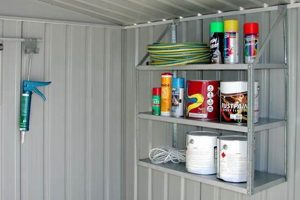
Dedicated storage zones, tailored to specific tools and equipment, are fundamental. Shelving units, pegboards, and vertical organizers accommodate various items, from gardening implements to outdoor furniture. Efficient storage allocation minimizes clutter, enhances accessibility, and protects stored items from the elements. For instance, allocating a separate, weather-sealed compartment for power tools ensures their safe and secure storage, extending their lifespan.
- Potting and Workspace Division
Designating a potting or workspace allows for horticultural tasks without disrupting storage areas. A workbench, integrated with storage for soil, pots, and fertilizers, provides a dedicated area for transplanting, seed starting, and other garden-related activities. This division ensures a clean and organized workspace, separate from storage zones, improving workflow and preventing contamination.
- Sheltered Seating Integration
The framework component offers an ideal opportunity for integrating sheltered seating. Benches, chairs, or even a small dining set can be incorporated beneath the overhead structure, creating a comfortable outdoor living space. This zone should be distinct from storage and workspace areas, providing a relaxing environment for enjoying the garden. For instance, positioning seating to maximize views and capture sunlight creates an inviting retreat.
- Plant Cultivation Zone
The framework can facilitate a vertical plant cultivation zone. Trellises, hanging baskets, or climbing plant supports transform the structure into a living wall, adding aesthetic appeal and providing additional gardening opportunities. This zone should be carefully planned to ensure adequate sunlight and water access for the chosen plants. Vines create a natural screen or shade, enhancing both the visual appeal and functionality of the structure.
Effective functional zoning maximizes the utility of a combined structure, transforming it from a mere storage unit into a versatile garden feature. These distinct zones, carefully integrated, enhance both the practical and aesthetic aspects of the structure, providing a harmonious and functional addition to any garden landscape. The proper functional zoning increases the value of the structure, therefore increase property value.
Frequently Asked Questions
The following addresses common inquiries regarding the design, construction, and maintenance of combined storage and overhead framework structures.
Question 1: What are the primary considerations for selecting a suitable location for a structure?
Optimal placement considers sunlight exposure, drainage, proximity to existing garden features, and accessibility. Locations with excessive shade or poor drainage should be avoided to prevent moisture damage and promote plant growth.
Question 2: Which materials are most appropriate for constructing a durable and weather-resistant structure?
Pressure-treated lumber, cedar, and redwood offer natural resistance to decay and insect infestation. Corrosion-resistant fasteners, such as stainless steel or coated screws, are essential for preventing galvanic corrosion. Composite decking and roofing materials provide durability and low maintenance.
Question 3: What are the key structural elements that ensure stability and safety?
A solid foundation, properly sized framing members, and secure joint connections are critical. The roof design should accommodate local snow and wind loads. Consulting with a structural engineer is recommended for complex designs or in regions with extreme weather conditions.
Question 4: How can ventilation be effectively integrated into the storage area?
Ventilation can be achieved through louvers, vents, or breathable membrane materials. Proper ventilation minimizes moisture buildup, prevents mold growth, and promotes air circulation within the storage area.
Question 5: What are the best practices for selecting climbing plants for the overhead framework?
Consider the local climate, soil conditions, and available sunlight. Choose plants with appropriate growth habits, flowering periods, and maintenance requirements. Avoid aggressive species that can damage the structure or outcompete other garden plants.
Question 6: How can lighting be effectively integrated to extend the structure’s usability into the evening hours?
Low-voltage lighting fixtures, strategically placed to illuminate pathways, seating areas, and focal points, enhance the structure’s nighttime ambiance. Solar-powered lights offer an energy-efficient alternative. All electrical installations must comply with local codes and regulations.
These answers provide guidance for informed decision-making regarding the construction and maintenance of combined garden structures, promoting long-term functionality and aesthetic appeal.
The following section will provide details for maintaining your new structure.
Conclusion
This exploration has demonstrated the multifaceted nature of the “garden shed with pergola.” It has emphasized the structural integrity, material compatibility, spatial optimization, climatic resilience, aesthetic integration, and functional zoning. Addressing each of these facets contributes to a robust, visually pleasing, and highly functional addition to any garden.
The effective implementation of a “garden shed with pergola” provides both secure storage and an aesthetically appealing outdoor space, significantly enhancing the value and usability of the property. Continued innovation in materials and design will further refine the concept, offering increasingly sophisticated solutions for the modern garden.