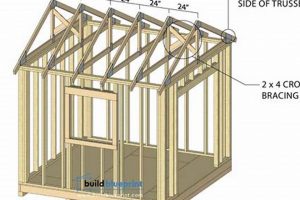
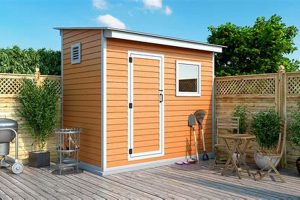
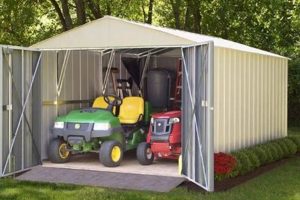
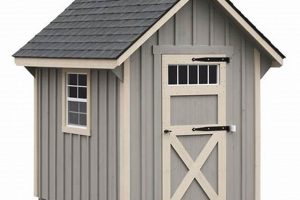
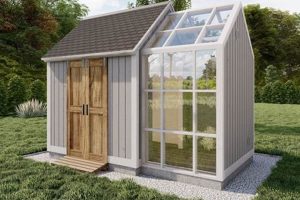
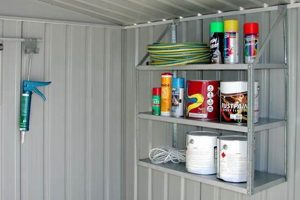
Effective storage solutions for garden buildings are systems and structures designed to maximize space and maintain order within these typically compact areas. These solutions encompass a variety of products, including shelving units, wall-mounted racks, and modular container systems specifically designed to accommodate gardening tools, equipment, and supplies. For example, a wall-mounted tool rack keeps shovels, rakes, and hoes neatly stored and easily accessible, while clear plastic bins can organize seeds, fertilizers, and smaller items.
Maintaining an organized garden building offers multiple advantages. It enhances efficiency by facilitating quick retrieval of necessary items, reduces the risk of accidents associated with cluttered spaces, and protects equipment from damage caused by improper storage. Historically, the need for systematic storage in garden structures has grown alongside the increasing complexity and quantity of gardening tools and materials, reflecting an evolution from basic storage to sophisticated organizational systems.
The following sections will delve into specific types of these solutions, discuss factors influencing their selection, and provide guidance on optimizing the internal layout of a garden building for enhanced functionality.
Optimizing Space Within Garden Structures
Effective utilization of space within garden buildings requires careful planning and implementation of appropriate storage strategies. The following tips provide guidance on maximizing the functionality and organization of these spaces.
Tip 1: Employ Vertical Storage Solutions: Maximize available wall space by installing shelving units and wall-mounted racks. This strategy allows for the storage of items at varying heights, freeing up valuable floor area.
Tip 2: Utilize Clear, Stackable Containers: Transparent containers allow for easy identification of contents without the need to open each container. Stackable designs further optimize space utilization, particularly for smaller items such as seeds and hand tools.
Tip 3: Implement a Pegboard System: Pegboards offer a versatile solution for hanging tools and equipment. Hooks and accessories can be easily repositioned to accommodate items of different sizes and shapes.
Tip 4: Construct a Workbench with Integrated Storage: A workbench with drawers and shelves provides a dedicated workspace while simultaneously offering storage for tools, hardware, and project materials.
Tip 5: Categorize and Label Items: Group similar items together and clearly label each container or storage area. This practice facilitates efficient retrieval and reduces the time spent searching for specific items.
Tip 6: Consider a Loft or Overhead Storage: If the structure’s design allows, a loft or overhead storage area can provide additional space for seasonal items or materials used less frequently.
Tip 7: Regularly Declutter and Reorganize: Periodically assess the contents of the garden building and remove any unnecessary or unused items. Reorganize remaining items to optimize space and improve accessibility.
Implementing these space-saving techniques will result in a more functional, organized, and efficient garden building, ultimately contributing to a more enjoyable gardening experience.
The subsequent discussion will address specific product recommendations and design considerations for creating a highly efficient garden storage system.
1. Spatial Optimization

Spatial optimization, in the context of garden structures, refers to the strategic arrangement of tools, equipment, and materials to maximize usable area and improve operational efficiency. The principles of spatial optimization are integral to the selection and implementation of effective arrangements, influencing everything from shelving placement to tool storage methods.
- Vertical Storage Solutions
Vertical storage systems, such as shelving units and wall-mounted racks, exploit underutilized vertical space, freeing up valuable floor area. For instance, installing a multi-tiered shelving unit allows for storing potted plants, gardening chemicals, and propagation trays without consuming horizontal space. This approach is particularly beneficial in smaller structures where floor space is at a premium.
- Modular and Configurable Systems
Modular arrangements offer flexibility and adaptability by allowing components to be rearranged or reconfigured as storage needs evolve. For example, a pegboard system with adjustable hooks enables the user to customize tool storage based on the size and shape of individual tools. This adaptability ensures that storage solutions remain effective even as the inventory of tools and supplies changes.
- Strategic Placement of Large Items
The placement of larger items, such as wheelbarrows, lawnmowers, and bags of soil, significantly impacts overall space utilization. Implementing storage solutions that minimize the footprint of these items, such as wall-mounted racks for wheelbarrows or designated corner storage for large bags, maximizes available space and improves maneuverability within the structure. Consider a small, portable garden shed. If the shed is not correctly planned and organized, most if not all of the tools and implements would not fit into the space.
- Accessibility and Workflow
Spatial optimization must also consider the ease of access to frequently used items and the natural workflow within the structure. Positioning tools and supplies used in conjunction with each other in close proximity, and ensuring that pathways remain clear and unobstructed, enhances efficiency and reduces the time spent retrieving items. For instance, storing potting soil, pots, and trowels near a workbench facilitates the potting process.
By carefully considering these facets of spatial optimization, individuals can transform a cluttered and inefficient garden building into an organized and functional workspace. The application of these principles, through the selection and implementation of appropriate arrangements, directly contributes to a more enjoyable and productive gardening experience. This attention to detail not only maximizes space but also improves safety and reduces the risk of damage to tools and equipment.
2. Accessibility Enhancement

Accessibility enhancement, in the context of structures designed for horticultural activities, directly impacts efficiency and safety. Properly designed organizational systems facilitate the swift retrieval and storage of tools and materials. The cause-and-effect relationship is evident: optimized arrangements lead to reduced search times and minimized physical strain. For instance, a disorganized structure necessitates rummaging through piles of equipment, increasing the potential for injury and wasted time. The implementation of effective arrangements mitigates these risks by ensuring each item has a designated location.
Importance of enhanced accessibility is its contribution to the overall functionality and safety of a garden structure. An organized system reduces the likelihood of accidents by ensuring pathways remain clear and tools are stored safely. Moreover, improved accessibility streamlines gardening tasks, allowing individuals to focus on the activity itself rather than struggling with inefficient storage. Consider the practical example of a potting bench: if potting soil, pots, and tools are readily accessible, the task becomes significantly more efficient and enjoyable. Conversely, if these items are scattered throughout the structure, the potting process becomes laborious and time-consuming.
In summary, improved accessibility is not merely a matter of convenience but a fundamental component of an efficient and safe gardening environment. By prioritizing accessibility in the design and implementation of structures, individuals can significantly enhance their gardening experience and minimize potential risks. However, challenges exist in maintaining organization over time, necessitating regular assessments and adjustments to storage systems to ensure continued effectiveness.
3. Categorized Placement

Categorized placement, a core tenet of effective organization, significantly enhances the utility of garden buildings. Its implementation involves grouping similar items together based on function, size, or usage frequency. This method directly impacts the speed and ease with which gardening tools and materials can be located. For example, storing all hand tools (trowels, hand forks, pruners) in a designated area, such as a wall-mounted rack or labeled bin, eliminates the need to search through a jumbled collection of items. Similarly, grouping fertilizers and pesticides separately from seed packets and watering equipment promotes safety and prevents accidental contamination. The effectiveness of any arrangement is directly proportional to the rigor applied to its categorization.
The importance of categorized placement extends beyond simple convenience. It minimizes the risk of accidents by preventing the mixing of potentially hazardous materials, such as chemical fertilizers and organic compost. It reduces the likelihood of misplacing or losing small items, such as seed packets or plant labels. Furthermore, it facilitates efficient inventory management, allowing individuals to quickly assess their stock of supplies and identify items that need replenishing. A practical example is the storage of watering equipment: grouping hoses, sprinklers, and watering cans together in a designated area near the door or water source streamlines the watering process and prevents tangled hoses. Proper categorization enhances the longevity of the tools, as it protects them from elements.
In summary, categorized placement is not merely an aesthetic consideration but a practical necessity for optimizing the functionality and safety of garden buildings. By implementing a well-defined system of categorized storage, individuals can significantly improve their gardening efficiency, minimize risks, and extend the lifespan of their tools and supplies. The challenge lies in maintaining this organization over time, requiring regular assessments and adjustments to storage strategies as needs evolve, emphasizing the cyclical nature of inventory management. An effective system would also benefit from implementing weatherproof cabinets to protect sensitive items from the elements.
4. Weather Protection

The integration of weather protection into the design and implementation of organizational systems for garden structures is paramount. External conditions exert a significant influence on the longevity and functionality of tools, equipment, and supplies stored within these structures. Therefore, arrangements must incorporate strategies to mitigate the adverse effects of moisture, temperature fluctuations, and direct sunlight.
- Moisture Control
Excessive humidity and direct contact with water can lead to corrosion, rust, and mildew growth, particularly affecting metal tools and wooden structures. Organizational systems should incorporate elevated storage solutions, such as shelving units with proper drainage, to prevent direct contact with damp floors. Furthermore, utilizing moisture-absorbing materials, such as silica gel packets, within storage containers can help regulate humidity levels and protect sensitive items. For example, storing metal hand tools in a closed container with a desiccant reduces the risk of rust formation.
- Temperature Regulation
Extreme temperature fluctuations can damage certain materials, such as plastics and rubber, causing them to become brittle or degrade. Effective arrangements should consider insulating storage containers or utilizing materials resistant to temperature changes. Avoiding direct sunlight exposure is also crucial, as prolonged exposure can lead to fading, cracking, and warping of items. Storing temperature-sensitive items in a shaded area or within insulated containers mitigates these risks. An example of that would be storing plastic pots in an elevated rack out of the sun.
- Protection from Direct Sunlight
Ultraviolet (UV) radiation from sunlight can cause significant damage to a wide range of materials, including plastics, fabrics, and wood. Organizational systems should incorporate shading strategies, such as opaque containers or placement within areas sheltered from direct sunlight. UV-resistant coatings or films can also be applied to storage containers and the structure itself to further protect stored items. Seed packets, for instance, should be stored in opaque containers to prevent degradation from sunlight exposure, thus preserving seed viability.
- Structural Integrity
The structural integrity of the organizational system is essential for withstanding weather-related stresses. Shelving units and racks should be constructed from durable, weather-resistant materials, such as treated lumber or powder-coated metal. Secure anchoring and bracing are necessary to prevent collapse or damage during strong winds or heavy rain. For instance, a wall-mounted shelving unit should be securely fastened to studs to withstand the weight of stored items and resist wind forces acting on the structure.
The integration of these weather protection strategies into the design and implementation of organizational systems for garden structures is not merely a matter of preservation, but a crucial investment in the longevity and functionality of gardening equipment and supplies. By addressing these considerations, individuals can ensure that their tools remain in optimal condition, ready for use when needed, thus maximizing efficiency and minimizing the cost of replacements.
5. Inventory Management

Effective inventory management within a garden building is inextricably linked to the utility of storage solutions. The organization and accessibility afforded by appropriate arrangements directly influence the ability to track and manage gardening supplies. Poor inventory control, characterized by overstocking or depletion of essential items, can result in unnecessary expenditures or delays in gardening tasks. Conversely, a well-managed inventory, facilitated by structured shelving, labeled containers, and a systematic tracking process, optimizes resource allocation and reduces waste. A direct cause-and-effect relationship exists: the organization afforded by effective arrangements enables precise tracking of gardening supplies, leading to efficient resource allocation and cost savings. For instance, clearly labeled bins containing fertilizers, pesticides, and seeds allow gardeners to quickly assess their stock levels, preventing unnecessary purchases and ensuring they have the necessary resources when needed. Effective inventory management is crucial.
The importance of inventory management as a component of organizational systems stems from its contribution to overall efficiency and cost-effectiveness. Without a system for tracking inventory, gardeners may find themselves repeatedly purchasing items they already possess, leading to wasted resources and cluttered storage spaces. Furthermore, a lack of inventory control can result in the expiration of perishable items, such as seeds and fertilizers, rendering them unusable. Implementing a simple inventory tracking system, whether it is a written list, a spreadsheet, or a dedicated inventory management software, allows gardeners to maintain optimal stock levels and prevent unnecessary waste. This system can be integrated directly into storage arrangements by labeling containers with quantities and expiration dates, providing a visual reminder of stock levels and preventing the use of expired products. The presence of such systems allows the tool shed to function optimally.
In summary, the connection between inventory management and efficient setups for garden structures is clear and consequential. Well-designed arrangements, characterized by clear labeling, organized storage, and a systematic tracking process, enable gardeners to effectively manage their supplies, minimize waste, and optimize resource allocation. The challenge lies in consistently maintaining this organization over time, requiring regular inventory audits and adjustments to storage solutions as gardening needs evolve. Over time, the most efficient solutions are refined and adapted for the purposes to which they are purposed.
Frequently Asked Questions
The following questions address common inquiries regarding systems for garden structures, providing concise and informative answers to assist in optimizing storage solutions.
Question 1: What are the primary benefits of implementing effective structures for garden sheds?
Effective arrangements maximize space utilization, enhance accessibility to tools and supplies, protect equipment from weather damage, and improve overall organization, leading to increased efficiency and reduced clutter.
Question 2: What types of structures are most suitable for small garden sheds?
Vertical storage solutions, such as shelving units and wall-mounted racks, are particularly effective for small structures, as they maximize the use of available wall space without consuming valuable floor area. Stackable containers and pegboard systems also provide versatile storage options.
Question 3: How can moisture be effectively controlled within garden structures?
Moisture control can be achieved through the use of elevated storage solutions, such as shelving units with proper drainage, and the incorporation of moisture-absorbing materials, such as silica gel packets, within storage containers. Proper ventilation also helps to reduce humidity levels.
Question 4: What materials are best suited for constructing or purchasing these setups?
Durable, weather-resistant materials, such as treated lumber, powder-coated metal, and high-density polyethylene (HDPE) plastic, are ideal for constructing or purchasing the above-mentioned setups. These materials offer resistance to moisture, temperature fluctuations, and UV radiation.
Question 5: How often should a garden structure be reorganized and decluttered?
A garden structure should be reorganized and decluttered at least twice per year, typically in the spring and fall. Regular maintenance ensures that the arrangement remains efficient and prevents the accumulation of unnecessary items.
Question 6: What strategies can be employed to prevent theft of tools and equipment from garden structures?
Security measures, such as installing sturdy locks on doors and windows, securing valuable items with chains or cables, and installing motion-activated lighting, can deter theft. Additionally, consider concealing the structure from public view with landscaping or fencing.
Effective strategies, combined with diligent maintenance and security measures, contribute to a more organized, efficient, and secure gardening environment.
The next section will provide a detailed overview of specific product recommendations for creating a highly functional garden shed storage system.
Garden Shed Organizers
The preceding discussion has comprehensively examined aspects crucial to maximizing space and maintaining order within garden structures. Key areas explored include spatial optimization, accessibility enhancement, categorized placement, weather protection, and inventory management. The implementation of strategies in these areas is paramount for ensuring the long-term functionality and utility of garden buildings.
Consistent application of organizational principles is not merely a matter of aesthetics; it represents a strategic investment in the longevity of tools, the efficiency of gardening practices, and the overall value of the garden space. Diligent planning and execution remain essential for realizing the full potential of these solutions. Further research and adaptation may be necessary to suit individual needs and evolving gardening requirements.