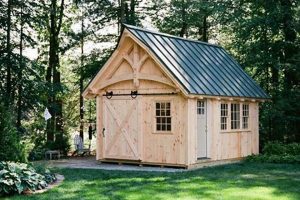
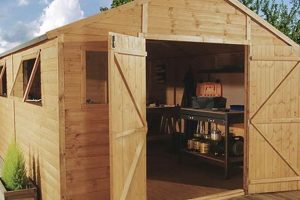
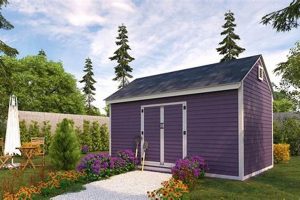
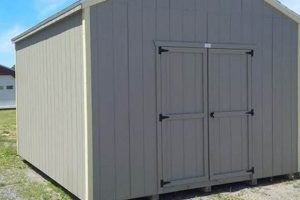
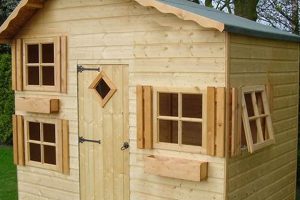
A small, outdoor structure designed to store gardening tools and supplies, reflecting the aesthetic principles prevalent from roughly the mid-1940s to the late 1960s. Characteristics often include clean lines, a minimalist design, functional forms, and the integration of natural materials, potentially featuring flat or slightly angled roofs, large windows or geometric cutouts for natural light, and materials such as wood, glass, and metal. For example, one might observe a shed constructed with redwood siding, a butterfly roof, and clerestory windows all hallmarks of the specified design movement.
Such constructions offer organized storage solutions while simultaneously enhancing the visual appeal of the landscape. The style’s emphasis on simplicity and functionality lends itself well to efficient use of space and ease of maintenance. Furthermore, incorporating a design element from this specific era can complement the overall architectural theme of a property, adding value through cohesive design principles. Historically, this design approach aimed to bring modern living to the outdoors, blurring the boundaries between indoor and outdoor spaces.
Understanding the core principles of mid-century modern design is essential for creating or selecting an appropriate structure. Subsequent discussion will delve into material choices, design considerations, and practical applications for achieving this distinctive aesthetic in outdoor storage solutions. Topics explored will encompass roof styles, material options for cladding, and techniques for maximizing internal organization.
Design Considerations for a Mid Century Modern Garden Shed
The following recommendations are provided to assist in the design and construction of a garden structure adhering to the aesthetic principles of the mid-century modern movement.
Tip 1: Prioritize Clean Lines and Simple Forms: The design should emphasize geometric shapes and avoid excessive ornamentation. A rectangular or square footprint with a flat or slightly angled roof is often appropriate.
Tip 2: Incorporate Natural Materials: Wood, particularly redwood, cedar, or pine, is a common choice for siding. Consider using natural stone or concrete for foundation elements.
Tip 3: Maximize Natural Light: Large windows, skylights, or clerestory windows contribute to the airy feel characteristic of the style. Consider incorporating geometric cutouts for both visual interest and illumination.
Tip 4: Choose a Low-Profile Roof: A flat, gabled, or butterfly roof design aligns with the aesthetic. Overhanging eaves can provide shade and protection from the elements.
Tip 5: Select Appropriate Hardware and Fixtures: Opt for minimalist hardware in materials such as brushed aluminum or stainless steel. Consider incorporating period-appropriate lighting fixtures.
Tip 6: Optimize Interior Organization: Shelving, pegboards, and storage containers should be selected for both functionality and visual appeal. Keep the interior uncluttered and organized.
Tip 7: Integrate Landscaping: Complement the structure with landscaping elements that reflect the style, such as drought-tolerant plants, gravel pathways, and geometric planters.
Adherence to these guidelines will contribute to a cohesive and functional structure that embodies the principles of mid-century modern design.
Further examination will consider specific material choices and their impact on the overall aesthetic, followed by a discussion of landscaping options.
1. Clean lines
The principle of clean lines is fundamental to the aesthetic of a mid century modern garden shed. This emphasis on simplicity and uncluttered forms dictates the structure’s overall appearance and contributes significantly to its functionality and visual appeal.
- Structural Simplicity
Clean lines manifest in the shed’s basic form, characterized by rectangular shapes and a lack of ornate detailing. Flat roofs or gently sloping gables further reinforce this streamlined design. The absence of extraneous decorative elements ensures the focus remains on the structure’s inherent geometry.
- Unadorned Surfaces
Exterior surfaces, such as siding and doors, typically feature smooth, untextured finishes. Horizontal wood siding, for example, contributes to the clean lines, offering a simple, linear pattern. Avoiding excessive trim or molding further enhances this minimalist approach.
- Minimalist Hardware
Hardware components, including door handles, hinges, and fasteners, are selected for their functionality and understated design. Simple, geometric shapes in materials such as brushed metal or stainless steel complement the overall aesthetic without drawing undue attention.
- Defined Edges and Forms
The intersection of walls, roof, and foundation should be sharply defined, creating a sense of order and precision. A clear distinction between different planes emphasizes the geometric structure and reinforces the clean lines characteristic of mid century modern design.
These elements contribute to a cohesive and visually harmonious design, where the absence of clutter and unnecessary detail allows the inherent form and function of the garden structure to take precedence. By adhering to the principle of clean lines, the mid century modern garden shed becomes a functional and aesthetically pleasing addition to the landscape.
2. Natural Materials

The utilization of natural materials is integral to the design philosophy of mid century modern garden sheds. These materials contribute significantly to the aesthetic appeal, functionality, and overall integration of the structure within its environment.
- Wood Siding
Wood, particularly redwood, cedar, and fir, is a common cladding choice. These species exhibit natural resistance to decay and weathering, rendering them suitable for outdoor applications. Horizontal plank siding, a frequent application, accentuates the clean lines characteristic of the style. The warmth and texture of wood provide a counterpoint to the geometric forms, contributing to a balanced aesthetic.
- Stone and Concrete Foundations
Foundations constructed from natural stone or poured concrete ground the structure and establish a connection with the landscape. The inherent durability of these materials ensures structural stability and longevity. Exposed aggregate concrete, for example, can add visual interest while maintaining the minimalist design ethos.
- Glass Integration
Large windows and glass panels are incorporated to maximize natural light and blur the boundary between interior and exterior spaces. This emphasis on transparency aligns with the mid-century modern principle of bringing the outdoors in. The use of natural light also reduces the need for artificial illumination, contributing to energy efficiency.
- Natural Landscaping Elements
The surrounding landscape should complement the structure through the use of native plants, gravel pathways, and natural stone accents. Avoiding overly manicured lawns and formal gardens reinforces the connection to the natural environment. The integration of these elements creates a cohesive and harmonious outdoor space.
The strategic selection and application of natural materials reinforce the fundamental design principles of mid-century modern architecture, thereby enhancing the visual appeal and functional integrity of garden sheds designed within this aesthetic framework. The considered use of wood, stone, glass, and complementary landscaping promotes a seamless integration of the structure with its surrounding environment.
3. Functional Design

Functional design is a cornerstone of the mid century modern garden shed, dictating not only its layout and construction but also its overall effectiveness as a storage solution and landscape element. The adherence to functional principles ensures that the structure serves its intended purpose efficiently while maintaining the aesthetic integrity of the design movement.
- Efficient Space Utilization
Functional design in the context of a garden shed prioritizes the optimal use of available space. This often involves incorporating built-in shelving, vertical storage solutions, and adaptable organization systems. For example, a shed designed with varying shelf heights can accommodate both small hand tools and larger gardening equipment. The careful planning of interior space minimizes clutter and maximizes storage capacity.
- Accessibility and Ergonomics
The placement of doors, windows, and storage compartments should facilitate easy access and ergonomic use. Wide doorways allow for the effortless maneuvering of wheelbarrows and large equipment. Strategically positioned windows provide natural light, reducing the need for artificial illumination and improving visibility. The height of work surfaces and shelves should be tailored to minimize strain and maximize user comfort.
- Durability and Weather Resistance
Functional design necessitates the selection of durable materials and construction techniques that withstand environmental factors. A well-designed shed will incorporate features such as proper drainage, weather-resistant siding, and a structurally sound roof. For example, using pressure-treated lumber for the foundation and roofing materials designed to shed water effectively can extend the lifespan of the structure and protect its contents.
- Adaptability and Multi-Functionality
A functionally designed garden shed may incorporate features that allow for adaptability and multi-functionality. This could include a built-in potting bench that serves as both a workspace and a storage area, or a convertible roof panel that can be opened for ventilation or increased natural light. Such features enhance the versatility of the structure and allow it to serve multiple purposes within the garden setting.
The incorporation of efficient space utilization, accessibility, durability, and adaptability demonstrates how functional design principles are crucial in transforming a simple garden shed into an organized, long-lasting, and practical extension of a property. These considerations optimize the structure’s utility while upholding the minimalist and streamlined aesthetic valued in mid-century modern design.
4. Indoor/outdoor flow

The concept of indoor/outdoor flow is a defining characteristic of mid century modern architecture, profoundly influencing the design and integration of garden structures. The garden shed, in this context, is not merely a storage facility but an extension of the living space, blurring the boundaries between the domestic and natural realms. This connection is carefully considered through specific architectural and design elements.
- Large Glazed Openings
Expansive windows and sliding glass doors are crucial for establishing a visual and physical connection between the interior of a home and the garden shed. These openings provide unobstructed views of the surrounding landscape, allowing natural light to flood both spaces. The strategic placement of glazing can create a seamless transition, making the shed feel like an integral part of the outdoor living area. For example, a shed with a large sliding glass door facing a patio allows for easy access to gardening tools and equipment, effectively extending the work and leisure space.
- Consistent Material Palette
Using similar materials for both the home and the garden shed creates a sense of visual continuity. Matching the siding, roofing, or trim details helps to unify the architecture and reinforce the connection between the structures. For instance, if a house features redwood siding and a low-pitched roof, mirroring these elements in the shed design will enhance the sense of cohesion. This consistent material palette minimizes the visual separation between the buildings, contributing to a seamless indoor/outdoor flow.
- Direct Access and Pathways
Well-defined pathways and direct access points facilitate easy movement between the home and the garden shed. A paved walkway, for example, provides a clear and accessible route, encouraging frequent interaction with the outdoor space. Consider the proximity of the shed to the main living areas of the home; a shed located close to a patio or deck can serve as a convenient extension of these spaces, blurring the distinction between indoor and outdoor activities. This ease of access promotes a fluid and natural transition between the built and natural environments.
- Extended Living Spaces
The design of the garden shed can incorporate features that extend the living space into the outdoors. This might include a covered patio attached to the shed, providing a sheltered area for outdoor activities. Integrating elements such as outdoor furniture, planters, and lighting fixtures further enhances the sense of connection. By blurring the lines between the shed and the surrounding garden, this approach transforms the structure into an integral part of the outdoor living experience.
These facets collectively contribute to the seamless indoor/outdoor flow characteristic of mid century modern design. By employing large glazed openings, maintaining a consistent material palette, ensuring direct access, and creating extended living spaces, the garden shed transcends its purely functional role and becomes an integral component of a cohesive and visually harmonious living environment. The strategic application of these principles enhances the usability and aesthetic appeal of both the shed and the surrounding landscape.
5. Minimalist aesthetic

The minimalist aesthetic is a core tenet of mid century modern design, directly influencing the form, function, and overall appeal of garden structures built within this stylistic framework. Its impact is evident in the intentional reduction of ornamentation, the prioritization of essential elements, and the pursuit of uncluttered simplicity.
- Reduction of Ornamentation
Minimalism, in this context, necessitates the elimination of unnecessary embellishments. A mid century modern garden shed will typically eschew elaborate trim, decorative moldings, and superfluous details. The focus remains on the inherent form and materials of the structure. For example, siding might consist of simple, unadorned planks, and hardware will be selected for its functionality rather than its aesthetic flourishes. The absence of ornamentation ensures that the shed’s primary function remains the central focus.
- Emphasis on Essential Forms
The design prioritizes clear, geometric shapes and functional layouts. Sheds often feature rectangular or square footprints with flat or gently sloping roofs. The structural components are exposed rather than concealed, celebrating the building’s inherent construction. For instance, exposed roof beams or simple post-and-beam construction showcase the skeletal framework of the structure. The emphasis on essential forms creates a sense of order and clarity, reflecting the minimalist ethos.
- Uncluttered Spaces and Storage Solutions
Minimalism extends to the interior of the garden shed, advocating for uncluttered spaces and efficient storage solutions. Built-in shelving, pegboards, and concealed storage compartments help to maintain a clean and organized environment. The design encourages the storage of tools and equipment in a manner that is both accessible and visually unobtrusive. For example, tools might be hung on a wall-mounted pegboard, keeping them readily available while minimizing clutter. The focus on uncluttered spaces enhances functionality and contributes to the overall minimalist aesthetic.
- Strategic Material Palette
The choice of materials is deliberate and purposeful, favoring natural elements such as wood, glass, and metal. These materials are often used in their raw or minimally processed state, showcasing their inherent texture and character. The color palette is typically restrained, featuring neutral tones and earthy hues. For instance, a shed might be clad in redwood siding with a natural stain, complemented by black metal hardware and clear glass windows. The strategic material palette enhances the minimalist aesthetic by celebrating the beauty of natural elements while avoiding excessive ornamentation or artificial embellishments.
By embracing these facets of the minimalist aesthetic, mid century modern garden sheds achieve a harmonious blend of form and function. The reduction of ornamentation, emphasis on essential forms, uncluttered spaces, and strategic material palette contribute to a design that is both visually appealing and functionally efficient, embodying the core principles of the style. The result is a structure that complements the surrounding landscape while providing a practical and organized storage solution.
Frequently Asked Questions
The following section addresses common inquiries regarding the design, construction, and maintenance of garden structures adhering to the mid-century modern aesthetic.
Question 1: What are the defining characteristics of a mid century modern garden shed?
Key attributes include clean lines, minimalist design, a focus on functionality, the integration of natural materials such as wood and glass, flat or low-pitched roofs, and large windows to maximize natural light.
Question 2: What materials are typically used in the construction of such structures?
Common materials encompass redwood, cedar, and other natural woods for siding; concrete or stone for the foundation; and glass for windows and doors. Metal accents, such as brushed aluminum, are also frequently incorporated.
Question 3: How does one integrate the garden shed with the overall landscape design?
Cohesive integration can be achieved through the use of similar materials and design elements as the primary residence. Natural landscaping, such as drought-tolerant plants and geometric planters, further enhances the connection with the surroundings.
Question 4: What type of roof is most appropriate for this style of shed?
Flat roofs, slightly angled roofs, and butterfly roofs are all consistent with the mid-century modern aesthetic. Overhanging eaves can provide shade and protection from the elements.
Question 5: How can one maximize storage space within a limited footprint?
Efficient storage solutions include built-in shelving, vertical storage systems, and adaptable organization. Keeping the interior uncluttered and organized is crucial.
Question 6: What are some common mistakes to avoid when designing a mid century modern garden shed?
Pitfalls include excessive ornamentation, failure to incorporate natural light, neglecting the surrounding landscape, and using materials inconsistent with the aesthetic.
Understanding these essential considerations is paramount for creating a functional and aesthetically pleasing garden shed that adheres to the principles of mid-century modern design.
Subsequent discussion will explore practical applications and real-world examples of these structures.
Conclusion
The preceding examination has detailed the core elements defining the mid century modern garden shed. From its emphasis on clean lines and natural materials to its commitment to functional design and indoor/outdoor flow, the aesthetic provides a framework for creating outdoor structures that are both visually appealing and practically efficient. Careful consideration of these elementsminimalist aesthetics, material choices, and structural designis essential to achieving a cohesive and authentic embodiment of the specified style.
The enduring appeal of the mid century modern garden shed lies in its ability to seamlessly integrate functional storage with refined design. Its principles offer a valuable approach to enhancing outdoor spaces, urging a commitment to simplicity, utility, and harmony with the surrounding environment. Continued adherence to these principles ensures the continued relevance and aesthetic value of this particular design approach.