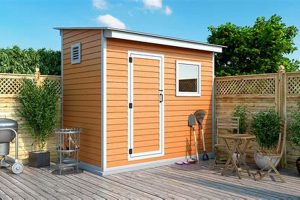
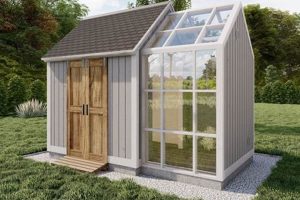
Structures designed for outdoor storage and typically located in residential gardens are frequently enhanced with a protective and decorative coating. This surface treatment serves not only an aesthetic purpose, allowing customization to complement the surrounding landscape, but also provides a barrier against the elements, extending the lifespan of the structure. An example would be a wooden outbuilding coated in a weather-resistant, muted green hue, harmonizing with the garden’s foliage.
The application of colored finishes to these outdoor buildings provides several key advantages. Beyond visual appeal, the coating acts as a crucial defense against moisture, ultraviolet radiation, and insect infestation, thereby preventing rot and decay. Historically, the practice of treating wooden structures with protective coatings dates back centuries, evolving from simple oil-based treatments to sophisticated, long-lasting formulas designed for specific environmental conditions. This ultimately increases the building’s value and longevity.
The following sections will delve into the various types of protective and decorative coatings available, considerations for selection based on climate and material composition, proper application techniques for optimal performance, and maintenance strategies to ensure lasting beauty and functionality.
Essential Considerations for Color-Coated Outdoor Storage
Proper selection and application techniques are critical to maximizing the longevity and aesthetic appeal of outdoor storage structures. The following guidelines outline key considerations for ensuring a durable and visually pleasing result.
Tip 1: Surface Preparation is Paramount: Prior to application, meticulously clean and prepare the surface. Remove any loose paint, dirt, or mildew. Sanding may be required to create a smooth, receptive surface for optimal adhesion.
Tip 2: Select a Weather-Resistant Formulation: Opt for exterior-grade products specifically designed to withstand environmental stressors such as ultraviolet radiation, fluctuating temperatures, and moisture. Acrylic latex formulas are generally recommended for their durability and flexibility.
Tip 3: Prioritize Primer Application: Applying a primer before the final coat is essential for promoting adhesion and providing a uniform base. A tinted primer, matched to the finish color, can enhance color saturation and reduce the number of finish coats required.
Tip 4: Apply Multiple Thin Coats: Avoid applying thick coats, as this can lead to runs, drips, and cracking. Instead, apply two or three thin, even coats, allowing sufficient drying time between each application.
Tip 5: Choose Colors Strategically: Consider the surrounding landscape and architectural style when selecting colors. Lighter colors reflect sunlight and can help keep the interior cooler, while darker colors may fade more quickly in direct sunlight.
Tip 6: Ensure Proper Ventilation: When working indoors or in enclosed spaces, ensure adequate ventilation to prevent the buildup of fumes. Use appropriate respiratory protection as needed.
Tip 7: Regular Maintenance is Key: Periodically inspect the coating for signs of wear or damage. Touch up any areas that show peeling, cracking, or fading to prevent further deterioration.
Implementing these strategies will contribute significantly to the long-term protection and aesthetic enhancement of outdoor storage structures.
The subsequent sections will address common issues encountered during the coating process and provide troubleshooting solutions for achieving professional-quality results.
1. Aesthetic Integration

Aesthetic integration, in the context of painted garden sheds, refers to the harmonious blending of the structure’s appearance with its surrounding environment. It signifies a deliberate design approach that considers the shed not merely as a functional storage unit but as an integral component of the garden’s overall visual landscape.
- Color Palette Synchronization
Color palette synchronization involves selecting hues for the structure’s exterior that complement or subtly contrast with the existing flora, landscaping elements, and the primary residence. For instance, a shed painted in muted earth tones can blend seamlessly into a natural, rustic garden setting. Conversely, a shed finished in a vibrant, complementary color can serve as a focal point, drawing the eye and adding visual interest to the space. Poor color choices can disrupt the visual harmony of the garden, making the structure appear jarring and out of place.
- Architectural Style Alignment
Architectural style alignment necessitates that the design of the shed, including its shape, roofing material, and decorative elements, corresponds with the architectural character of the primary residence or the overarching aesthetic theme of the garden. A contemporary, minimalist home may be best complemented by a shed with clean lines, a flat roof, and a neutral color scheme. Conversely, a Victorian-style home might benefit from a shed with ornate detailing, a gabled roof, and a more elaborate color palette. Discrepancies in architectural style can create a sense of incongruity, detracting from the overall aesthetic appeal of the property.
- Material Selection Coordination
Material selection coordination ensures that the materials used in the shed’s construction and finish are visually compatible with the surrounding environment. Natural wood finishes, for example, can lend a warm, organic feel to a garden, while metal accents can provide a more modern, industrial aesthetic. The choice of finish, whether it’s a matte, semi-gloss, or high-gloss paint, can also impact the shed’s visual integration within the garden. A matte finish, for instance, tends to blend more seamlessly into the background, while a high-gloss finish can reflect light and draw attention to the structure.
- Scale and Proportion Considerations
Scale and proportion considerations involve ensuring that the shed’s size and dimensions are appropriate for the overall scale of the garden. A large, imposing shed can overwhelm a small garden, while a diminutive shed might appear insignificant in a sprawling landscape. The shed’s proportions, including the height of its walls, the pitch of its roof, and the size of its windows and doors, should also be carefully considered to create a visually balanced and harmonious composition. Imbalances in scale and proportion can disrupt the sense of visual equilibrium within the garden, making the structure appear either too dominant or too insignificant.
Achieving successful aesthetic integration in painted garden sheds requires careful consideration of color, architectural style, material selection, and scale. When these elements are thoughtfully coordinated, the shed can transform from a mere storage unit into a visually appealing and harmonious component of the garden landscape. The goal is to enhance the overall aesthetic appeal of the property by creating a cohesive and visually pleasing outdoor environment.
2. Weather protection

Exterior coatings on garden storage structures provide a critical defense against environmental degradation, directly impacting the longevity and structural integrity of the building. Effective protection mitigates the harmful effects of various weather elements, preventing costly repairs and extending the useful life of the shed.
- Moisture Resistance
Exterior coatings act as a barrier against moisture intrusion, preventing water from penetrating the wood and causing rot, decay, and structural weakening. Properly applied coatings repel rain, snow, and humidity, minimizing the risk of moisture-related damage. For example, a high-quality acrylic latex finish can effectively seal wood surfaces, preventing water absorption and maintaining structural soundness. The implications of inadequate moisture protection include wood warping, fungal growth, and eventual structural failure.
- Ultraviolet (UV) Radiation Shielding
Prolonged exposure to UV radiation from sunlight degrades the lignin in wood, causing it to fade, crack, and become brittle. Exterior coatings containing UV inhibitors or pigments reflect or absorb UV radiation, preventing its damaging effects on the underlying wood. Examples of coatings with UV protection include those formulated with titanium dioxide or UV-absorbing polymers. The lack of UV protection can result in significant aesthetic and structural deterioration over time, requiring costly repairs or replacement.
- Temperature Fluctuation Mitigation
Extreme temperature fluctuations cause wood to expand and contract, leading to stress, cracking, and warping. Flexible exterior coatings accommodate these dimensional changes, minimizing the risk of cracking and maintaining the structural integrity of the shed. Elastomeric coatings, for instance, possess high elasticity and can stretch and contract with the wood, preventing stress fractures. Inadequate protection against temperature fluctuations can lead to significant structural damage, compromising the stability and safety of the shed.
- Physical Abrasion Resistance
Exterior coatings provide a protective layer against physical abrasion from windblown debris, hail, and other environmental factors. Durable coatings resist scratching, chipping, and erosion, maintaining the shed’s appearance and preventing damage to the underlying wood. Examples of abrasion-resistant coatings include those formulated with hard resins or additives. Without adequate abrasion resistance, the coating can deteriorate rapidly, exposing the wood to further damage and reducing the shed’s lifespan.
Effective weather protection through appropriate exterior coatings is essential for preserving the structural integrity and aesthetic appeal of garden storage structures. By mitigating the harmful effects of moisture, UV radiation, temperature fluctuations, and physical abrasion, these coatings significantly extend the lifespan of the shed and minimize the need for costly repairs.
3. Material Compatibility

The success of any applied coating on garden storage structures hinges on material compatibility, the degree to which the coating adheres to and interacts favorably with the substrate. Incompatible combinations lead to premature failure of the coating, negating protective and aesthetic benefits. The constituent materials of the shed, typically wood, metal, or composite, dictate the suitable types of paints, primers, and sealants. Selecting a coating designed for a different material results in issues such as poor adhesion, blistering, cracking, or discoloration. For instance, applying a latex paint directly to untreated cedarwood, known for its oil content, inhibits proper adhesion due to the wood’s natural resins interfering with the paint’s bonding process. This incompatibility diminishes weather resistance and necessitates frequent recoating.
Practical application demonstrates the importance of informed selection. Water-based paints generally adhere well to properly prepared wood, providing flexibility and breathability, which are crucial for outdoor structures subject to moisture fluctuations. Conversely, oil-based paints, while offering superior durability, can become brittle over time, potentially leading to cracking on wood surfaces. On metal sheds, rust-inhibiting primers are essential prior to applying any topcoat to prevent corrosion. Incorrect application, such as skipping the primer or using an inappropriate primer, accelerates rust formation, compromising the structure’s integrity and lifespan. Composite materials require specific coatings that bond effectively with their unique composition, often requiring specialized primers for optimal adhesion and weather protection.
In summary, material compatibility forms the foundation for effective coating of garden storage structures. Understanding the interaction between coating and substrate is essential for ensuring long-term protection and aesthetic preservation. Disregarding this principle results in diminished performance, increased maintenance costs, and a shortened lifespan for both the coating and the structure itself. Thorough evaluation of material properties and adherence to manufacturer guidelines are crucial for achieving optimal results.
4. Application technique

The longevity and aesthetic quality of a coating on garden storage structures depend significantly on the application technique employed. Improper application undermines even the highest quality paints and primers, leading to premature failure, diminished protection, and a compromised visual appearance. Surface preparation constitutes a critical first step. Failure to adequately clean, sand, and prime the structure creates a weak foundation, inhibiting proper adhesion and resulting in peeling, blistering, and cracking. For example, neglecting to remove mildew from a wooden surface before painting traps moisture, accelerating decay beneath the coating. Similarly, applying paint to a glossy surface without prior sanding reduces adhesion, leading to rapid degradation of the finish.
The method of application also plays a pivotal role. Applying paint too thinly results in inadequate coverage and diminished protection against the elements, while applying it too thickly can lead to runs, drips, and uneven drying. The use of appropriate tools, such as high-quality brushes, rollers, or sprayers, ensures a uniform and consistent application. For instance, using a low-quality brush leaves brushstrokes and uneven texture, detracting from the aesthetic appeal of the structure. Spraying, while offering a smooth finish, requires careful technique to avoid overspray and ensure even coverage. Environmental conditions during application also affect the outcome. Painting in direct sunlight or during periods of high humidity can impede drying and curing, leading to imperfections and reduced durability. Following manufacturer instructions regarding drying times, temperature ranges, and recommended application methods is crucial for achieving optimal results.
In conclusion, the application technique represents a critical component of achieving a durable and aesthetically pleasing finish on garden storage structures. Rigorous surface preparation, meticulous application methods, appropriate tool selection, and adherence to manufacturer guidelines are essential for maximizing the protective and visual benefits of the coating. Neglecting these aspects results in a compromised finish, increased maintenance costs, and a shortened lifespan for the structure. Therefore, understanding and implementing best practices in application technique are paramount for ensuring the long-term performance and aesthetic value of painted garden storage structures.
5. Longevity enhancement

The practice of coating garden storage structures significantly contributes to their prolonged lifespan, acting as a primary defense against environmental factors that accelerate deterioration. The application of paint or protective finishes establishes a barrier against moisture, ultraviolet radiation, and physical abrasion, effectively mitigating the causes of wood rot, decay, and structural weakening. For instance, a wooden shed left untreated is demonstrably more susceptible to water damage and insect infestation compared to a similarly constructed shed with a quality exterior coating. This protective layer extends the period before structural repairs or replacement becomes necessary.
The benefits of coating a garden structure extend beyond mere protection from the elements. The practice also serves to maintain the structural integrity of the building by reducing expansion and contraction caused by temperature fluctuations. Flexible coatings accommodate these dimensional changes, preventing cracking and warping, thereby prolonging the useful life of the structure. Furthermore, coatings enhance aesthetic appeal, preserving the building’s visual attractiveness and increasing its resale value, which is particularly relevant for properties with meticulously maintained gardens. Therefore, coating these structures is not simply a superficial aesthetic choice but a practical investment in their long-term preservation.
In conclusion, longevity enhancement through the application of protective coatings is an indispensable element in maintaining garden storage structures. By addressing the primary causes of deterioration, these coatings provide a tangible extension of the structure’s lifespan, delivering both economic and aesthetic benefits. While the specific choice of coating and application technique may vary based on material and environmental conditions, the fundamental principle of proactive protection remains consistent. The strategic application of coatings is not merely an added expense, but a prudent investment in the long-term value and functionality of garden structures.
6. Resale Value
The presence and condition of outbuildings, including garden storage structures, contribute measurably to a property’s overall market valuation. Structures that exhibit diligent maintenance and aesthetic appeal, such as those benefiting from regular coating, command a higher appraisal than similar properties lacking these features. Potential buyers often perceive well-maintained outbuildings as indicative of the overall care and attention invested in the entire property, signaling a reduced likelihood of encountering deferred maintenance issues elsewhere. A well-presented storage structure eliminates a potential point of negotiation during property sales, justifying a higher listing price. For instance, a real estate listing highlighting a “newly coated garden shed” with matching trim to the main residence suggests value beyond simple storage, appealing to buyers prioritizing aesthetics and functionality.
Beyond pure aesthetics, the functional utility and durability afforded by a properly coated structure translate directly to increased property value. A weather-resistant outbuilding preserves stored items, such as gardening equipment or seasonal decorations, protected from damage or deterioration, offering tangible benefits that resonate with prospective purchasers. Conversely, a dilapidated shed with peeling coating, structural damage, or visible signs of rot detracts from the property’s curb appeal and raises concerns about potential repair costs, diminishing the overall perceived value. The cost of replacing a neglected outbuilding significantly exceeds the expense of routine maintenance and coating, making proactive preservation a financially sound investment.
In summary, the correlation between the coating of garden storage structures and resale value is demonstrably positive. Well-maintained and aesthetically pleasing structures enhance curb appeal, reflect diligent property care, and offer functional advantages that appeal to potential buyers. Therefore, investing in routine coating maintenance constitutes a cost-effective strategy to maximize a property’s market valuation and facilitate a smoother sales transaction. Neglecting the condition of these outbuildings, however, presents a potential devaluation risk, impacting the overall attractiveness and marketability of the property.
Frequently Asked Questions
This section addresses common inquiries regarding the application and maintenance of exterior coatings on garden storage structures, providing clarity on best practices and mitigating potential issues.
Question 1: What type of coating is most suitable for wooden garden sheds?
Acrylic latex-based paints are generally recommended for wooden structures. These paints offer excellent adhesion, flexibility, and weather resistance, accommodating the natural expansion and contraction of wood. Oil-based paints, while durable, can become brittle over time and are less environmentally friendly.
Question 2: How often should exterior coatings be reapplied?
The frequency of reapplication depends on several factors, including the type of coating, climate conditions, and exposure to sunlight. As a general guideline, expect to recoat every 3-5 years, inspecting the surface annually for signs of wear, cracking, or peeling.
Question 3: Is surface preparation essential before coating a garden shed?
Surface preparation is critical for ensuring proper adhesion and longevity of the coating. This process involves cleaning the surface to remove dirt, mildew, and loose paint, followed by sanding to create a smooth, receptive surface. Priming is also recommended to provide a uniform base and enhance adhesion.
Question 4: Can coatings be applied directly to pressure-treated wood?
Pressure-treated wood requires a period of weathering, typically 6-12 months, before coatings can be applied. This allows the wood to dry and release chemicals used in the treatment process, ensuring proper adhesion of the coating. Always consult the wood treatment manufacturer’s guidelines.
Question 5: What steps should be taken to prevent mildew growth on coated surfaces?
To prevent mildew growth, choose coatings formulated with mildewcides. Ensure proper ventilation around the shed to minimize moisture buildup. Regularly clean the surface with a solution of water and bleach (follow safety precautions) to remove any existing mildew spores.
Question 6: How does color selection impact the performance of exterior coatings?
Lighter colors reflect sunlight and can help keep the shed’s interior cooler, but may show dirt more readily. Darker colors absorb more heat and may fade more quickly in direct sunlight. Consider the local climate and the shed’s orientation when selecting colors.
The information provided aims to clarify best practices for coating garden storage structures, ensuring both aesthetic enhancement and long-term protection. Proper preparation, selection of suitable materials, and regular maintenance are essential for achieving optimal results.
The following section will explore common problems encountered during the coating process and offer troubleshooting solutions.
Painted Garden Sheds
This exploration of painted garden sheds has underscored the multifaceted importance of exterior coatings on these structures. It has highlighted how thoughtful selection and application of materials contribute to enhanced aesthetic appeal, robust weather protection, improved material compatibility, optimized longevity, and augmented property resale value. Proper surface preparation, appropriate product selection, and skillful execution have been consistently emphasized as determinants of a successful outcome.
The information presented herein serves as a foundational guide for property owners seeking to preserve and enhance their garden storage structures. By embracing the principles of informed decision-making and diligent execution, stakeholders can ensure that their painted garden sheds not only serve a practical purpose but also contribute significantly to the overall value and aesthetic integrity of their properties. Further research and consultation with industry professionals are encouraged to tailor these guidelines to specific project requirements.