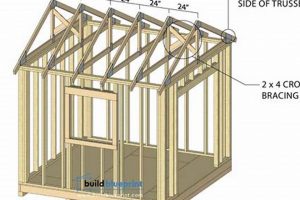
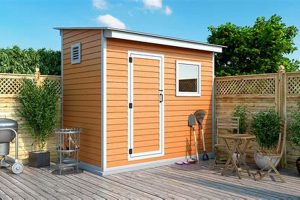
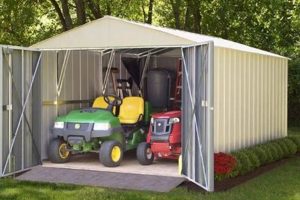
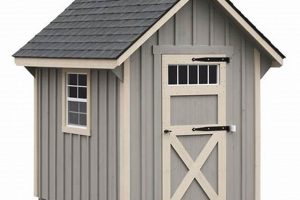
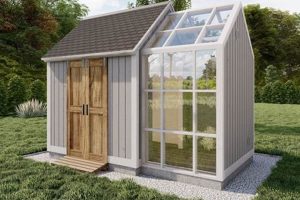
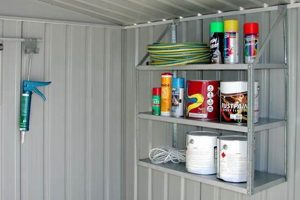
A pre-packaged set containing all the necessary materials and instructions to construct a small outdoor storage structure with nominal dimensions of 8 feet by 10 feet designed for gardens or yards. These packages typically include lumber, roofing materials, siding, doors, windows (sometimes), hardware, and a detailed assembly guide. As an example, a consumer might purchase one of these packages to store gardening tools, lawn equipment, or seasonal decorations.
These structures provide a convenient and relatively affordable solution for individuals seeking additional storage space. They eliminate the need to source materials individually, potentially saving time and reducing the risk of errors in material estimation. Their prevalence has grown with increasing homeownership and a desire for organized outdoor living spaces, reflecting a shift towards maximizing the functionality of residential properties.
The subsequent sections will delve into specific aspects such as material options, construction considerations, regulatory compliance, and factors influencing purchase decisions, providing a thorough understanding of these outdoor storage solutions.
Assembly and Preparation Recommendations
Proper planning and execution are crucial for a successful construction. Adhering to these guidelines will contribute to a durable and aesthetically pleasing final product.
Tip 1: Site Preparation: Ensure the ground is level and adequately prepared before beginning construction. A stable foundation, such as a gravel base or concrete slab, is essential to prevent settling and structural issues.
Tip 2: Inventory Components: Thoroughly check all components against the provided parts list upon delivery. Report any missing or damaged items to the supplier immediately to avoid project delays.
Tip 3: Review Instructions: Carefully read and understand the assembly manual before commencing work. Familiarize yourself with the step-by-step process and any specific techniques required.
Tip 4: Use Appropriate Tools: Employ the recommended tools for each stage of construction. Utilizing the correct tools will enhance efficiency, improve accuracy, and minimize the risk of damage to components.
Tip 5: Secure Fasteners: Ensure all screws, nails, and bolts are properly tightened. Loose fasteners can compromise structural integrity and lead to premature failure.
Tip 6: Apply Protective Coatings: Apply weather-resistant paint or sealant to the exterior surfaces to protect against moisture, UV radiation, and other environmental factors. This will extend the lifespan of the structure.
Tip 7: Adhere to Local Codes: Verify compliance with all local building codes and regulations before, during, and after construction. Obtain necessary permits to avoid potential fines or legal issues.
Following these recommendations will result in a well-constructed, long-lasting structure that meets both functional and aesthetic requirements.
The following sections will address considerations for maintenance and long-term care, ensuring sustained value and utility.
1. Material Durability

Material durability is a paramount consideration in the selection and longevity of an 8 x 10 garden shed kit. The choice of materials directly influences the structure’s resistance to environmental factors such as moisture, sunlight, and temperature fluctuations, thus impacting its overall lifespan. For example, a shed constructed from untreated softwood will degrade significantly faster than one built with pressure-treated lumber or composite materials. This degradation manifests as rot, warping, and eventual structural failure, requiring costly repairs or replacement.
Consider the practical implications. A homeowner in a region with high rainfall will require a shed kit with superior moisture resistance, potentially opting for vinyl or metal siding over traditional wood. Similarly, in areas with intense sun exposure, UV-resistant roofing materials are crucial to prevent premature cracking and fading. The initial investment in durable materials may be higher, but it translates to long-term savings by minimizing maintenance and extending the service life of the structure. Conversely, neglecting material durability can result in a seemingly cheaper initial purchase that ultimately incurs greater expenses over time.
In conclusion, material durability is inextricably linked to the performance and value of an 8 x 10 garden shed kit. Understanding the specific environmental challenges of the intended location is essential for making informed material choices. While budget constraints may influence decisions, prioritizing durable materials represents a strategic investment that safeguards the structure against premature failure and ensures long-term utility. Neglecting this crucial aspect can lead to significant challenges and increased costs in the future.
2. Assembly Complexity

The assembly complexity associated with 8 x 10 garden shed kits is a crucial factor determining the ease and cost-effectiveness of their installation. The level of intricacy can vary significantly across different kits, influencing the required skillset, tools, and time investment. Kits with pre-cut, pre-drilled components and clear, well-illustrated instructions typically present a lower assembly complexity compared to those requiring extensive cutting, measuring, or modification. A direct correlation exists between the complexity of the assembly process and the potential need for professional assistance. For instance, a novice DIY enthusiast might successfully assemble a simple kit with basic hand tools, while a more intricate design may necessitate the involvement of a skilled contractor. This additional labor cost significantly impacts the overall project budget.
Several factors contribute to assembly complexity. The number of unique parts, the intricacy of the structural design, and the quality of the provided instructions all play a pivotal role. A kit with a large number of small, difficult-to-align components can be significantly more challenging to assemble than one with fewer, larger pieces. The presence of pre-fabricated elements, such as pre-hung doors or pre-assembled wall panels, reduces complexity and simplifies the installation process. The clarity and completeness of the instructions are equally important. Poorly written or inadequately illustrated instructions can lead to confusion, errors, and project delays. A well-designed manual should include step-by-step guidance, detailed diagrams, and troubleshooting tips.
In summary, assembly complexity is a critical determinant of the overall success and cost-effectiveness of an 8 x 10 garden shed kit project. Evaluating the complexity level, considering individual skillsets, and factoring in potential labor costs are essential steps in the purchasing process. Choosing a kit that aligns with one’s capabilities minimizes the risk of errors, reduces the need for professional assistance, and ultimately contributes to a more satisfying and cost-effective outcome. Addressing this upfront eliminates post-purchase difficulties, ensuring a seamless assembly experience.
3. Foundation Requirements

The establishment of a proper foundation is paramount for the structural integrity and longevity of any 8 x 10 garden shed kit. It serves as the critical interface between the shed and the ground, distributing weight and mitigating the detrimental effects of soil movement, moisture, and environmental factors. The selection and implementation of a suitable foundation are therefore not merely aesthetic considerations but essential components of responsible shed construction.
- Load-Bearing Capacity
The foundation must possess adequate load-bearing capacity to support the shed’s weight and the weight of its contents. Insufficient capacity results in settling, uneven floors, and structural stress. For example, a gravel foundation may suffice for a lightly loaded shed on stable soil, while a concrete slab is necessary for heavier loads or unstable soil conditions. Failure to account for this results in costly repairs.
- Drainage and Moisture Control
Effective drainage is crucial to prevent moisture buildup beneath the shed, which leads to rot, mold, and insect infestation. Proper grading, the use of a gravel base, and the incorporation of a vapor barrier are all essential elements of a moisture-resistant foundation. For instance, elevating the shed on concrete blocks allows for air circulation and reduces direct contact with the ground. Without these measures, the shed’s lifespan diminishes significantly.
- Leveling and Stability
A level and stable foundation ensures proper alignment of the shed’s components, preventing racking, warping, and difficulty in opening and closing doors and windows. Precise leveling during foundation construction is therefore critical. Using shims to correct minor imperfections is acceptable, but significant discrepancies indicate a more fundamental problem. A lack of stability impacts functionality and structural integrity.
- Adherence to Local Codes
Local building codes often specify minimum foundation requirements for sheds, including depth, materials, and construction methods. Failure to comply with these codes results in fines, legal action, and the potential requirement to remove or rebuild the shed. Permits are frequently necessary before construction can begin, and inspections are conducted to ensure compliance. Ignoring these regulations can lead to significant complications.
In summary, appropriate foundation selection and construction are non-negotiable elements in ensuring the durability and compliance of any 8 x 10 garden shed kit. Neglecting these requirements compromises the structural integrity of the entire structure, leading to costly repairs and potential safety hazards. A comprehensive understanding of site conditions, load requirements, and local regulations is essential for successful shed construction.
4. Permitting Regulations

Compliance with permitting regulations is a critical, often overlooked, aspect of installing an 8 x 10 garden shed kit. Failure to adhere to these regulations can result in fines, legal action, and the potential removal of the structure. Navigating the intricacies of local zoning laws and building codes is therefore an essential step in the shed installation process.
- Zoning Restrictions
Zoning ordinances dictate permissible land use and structure placement, including sheds. These ordinances may specify setback requirements (distance from property lines), height limitations, and allowable square footage. For example, a municipality might require that a shed be located at least five feet from the property line and cannot exceed a height of ten feet. Ignoring these restrictions can lead to the structure being deemed non-compliant and subject to removal.
- Building Codes
Building codes establish minimum standards for construction materials, methods, and safety features. Sheds, despite their relatively small size, often fall under these codes. Requirements might include specific foundation types, framing techniques, and roofing materials. In certain jurisdictions, electrical wiring within the shed necessitates inspection by a licensed electrician. Non-compliance poses safety risks and can result in rejected inspections.
- Homeowners Association (HOA) Rules
In addition to municipal regulations, homeowners associations frequently impose their own set of rules governing shed placement, design, and appearance. These rules often dictate acceptable colors, materials, and architectural styles to maintain aesthetic consistency within the community. Before installation, consulting HOA guidelines is essential to avoid conflicts and potential fines.
- Easements and Rights-of-Way
Easements and rights-of-way grant certain entities (e.g., utility companies) the right to access portions of a property for specific purposes. Constructing a shed within an easement can obstruct access and lead to forced relocation of the structure. Prior to installation, verifying the existence of any easements or rights-of-way is crucial to avoid potential conflicts.
In conclusion, navigating the complex landscape of permitting regulations is an indispensable aspect of successfully installing an 8 x 10 garden shed kit. Thoroughly researching local zoning laws, building codes, HOA rules, and easements ensures compliance, prevents costly mistakes, and promotes responsible construction practices. Failure to address these regulations not only exposes individuals to legal risks but also undermines the long-term value and utility of the shed.
5. Cost Implications

The acquisition of an 8 x 10 garden shed kit entails a range of cost considerations extending beyond the initial purchase price. A comprehensive understanding of these cost implications is essential for effective budgeting and informed decision-making. The initial investment in the kit itself represents only a fraction of the total expense. Subsequent expenditures, such as site preparation, foundation construction, assembly labor (if not self-performed), and required permits, significantly contribute to the overall cost. For example, uneven terrain necessitating extensive grading or the need for a reinforced concrete foundation substantially increases project expenses. Similarly, complex assembly instructions may necessitate professional installation, adding hundreds or even thousands of dollars to the final cost. Furthermore, ongoing maintenance, including painting, roofing repairs, and pest control, must be factored into the long-term financial planning.
Material selection also plays a significant role in determining cost implications. Kits constructed from durable, weather-resistant materials, such as pressure-treated lumber or metal, typically command a higher price point but offer extended lifespans and reduced maintenance requirements. Conversely, cheaper kits utilizing lower-quality materials may require more frequent repairs and replacements, ultimately negating any initial cost savings. Geographic location influences material costs as well. Lumber prices, for instance, fluctuate regionally, impacting the overall price of wood-based kits. Moreover, the decision to add features such as windows, shelving, or electrical wiring further increases the expenditure. Failure to adequately account for these variable costs can lead to budget overruns and project delays.
In conclusion, a thorough assessment of cost implications is indispensable when considering the purchase of an 8 x 10 garden shed kit. This assessment should encompass not only the kit’s price but also the associated expenses related to site preparation, foundation, assembly, permits, and ongoing maintenance. Prudent material selection and a clear understanding of potential additional features contribute to effective cost management. Disregarding these crucial elements results in inaccurate budgeting and potentially unsustainable financial burdens. By proactively addressing these cost implications, individuals can ensure a successful and financially responsible shed installation project.
6. Storage Capacity
The storage capacity afforded by an 8 x 10 garden shed kit directly dictates its utility and appropriateness for a given purpose. This capacity, measured in cubic feet, determines the volume of items that can be housed within the structure. Insufficient capacity renders the shed inadequate for its intended use, necessitating either the acquisition of a larger shed or the continued reliance on alternative, potentially less convenient, storage solutions. As a direct consequence, a careful assessment of storage needs is paramount prior to purchasing a kit of this size. Consider, for instance, a homeowner seeking to store a riding lawnmower, a rototiller, and various gardening tools. If the combined volume of these items exceeds the usable storage capacity of an 8 x 10 structure, a larger model or alternative storage arrangements become essential. The selection process therefore demands a precise evaluation of existing and anticipated storage requirements.
Several factors influence the actual usable storage capacity within an 8 x 10 structure. These include the presence of internal shelving, the headroom available, and the configuration of the door opening. Shelving, while enhancing organization, reduces the overall volume available for larger items. Low headroom limits the stacking of vertically oriented objects. Narrow door openings restrict the passage of bulky equipment. Practical considerations, such as the need for aisle space to access stored items, further reduce usable capacity. Therefore, theoretical storage capacity, as derived from the shed’s dimensions, often differs significantly from the realistically achievable storage volume. Addressing these considerations helps ensure functionality and avoids potential challenges when loading objects into the structure.
In summary, storage capacity forms a critical link between the physical dimensions of an 8 x 10 garden shed kit and its practical utility. An accurate assessment of storage needs, coupled with a careful consideration of internal features and access limitations, is essential for selecting a kit that effectively fulfills its intended purpose. Overlooking this critical aspect leads to either insufficient storage space or the unnecessary expense of acquiring an overly large structure. Prioritizing a comprehensive understanding of storage capacity maximizes the value and functionality of this storage solution.
Frequently Asked Questions
This section addresses common inquiries and misconceptions regarding 8 x 10 garden shed kits, providing concise and informative answers.
Question 1: Are permits invariably required for the construction of an 8 x 10 garden shed?
Permitting requirements vary significantly based on local regulations. Jurisdictions often establish specific thresholds for shed size and location, triggering permit requirements. It is incumbent upon the purchaser to consult local building codes and zoning ordinances to determine the necessity of obtaining permits prior to construction. Failure to comply with these regulations may result in fines or mandated removal of the structure.
Question 2: What foundation types are suitable for an 8 x 10 garden shed kit?
Acceptable foundation types depend on soil conditions, local climate, and intended use of the shed. Common options include gravel pads, concrete slabs, and pre-cast concrete blocks. Gravel pads offer cost-effectiveness and good drainage, while concrete slabs provide superior stability and load-bearing capacity. The selection should be based on a careful assessment of site-specific conditions and adherence to local building codes.
Question 3: What is the typical lifespan of an 8 x 10 garden shed kit?
The lifespan of an 8 x 10 garden shed kit is contingent upon the materials used in its construction and the level of maintenance it receives. Sheds constructed from pressure-treated lumber or durable composite materials generally exhibit longer lifespans compared to those built with untreated wood. Regular maintenance, including painting, sealing, and pest control, further extends the structure’s longevity. A well-maintained shed can last for several decades.
Question 4: Can an 8 x 10 garden shed kit be readily assembled by a single individual?
The feasibility of assembling an 8 x 10 garden shed kit by a single individual depends on the individual’s skill level, the complexity of the kit’s design, and the availability of appropriate tools. Simpler kits with pre-cut components and clear instructions may be manageable for experienced DIY enthusiasts. However, more complex kits or those requiring extensive cutting and measuring often necessitate the assistance of a second person or professional installer.
Question 5: What security measures are recommended for an 8 x 10 garden shed kit?
Security measures are essential to protect the contents of an 8 x 10 garden shed kit from theft or vandalism. Recommended measures include installing a robust locking mechanism on the door, reinforcing windows, and considering the installation of a security system or motion-activated lighting. Securing the shed to the foundation further deters forced entry.
Question 6: How should condensation within an 8 x 10 garden shed kit be managed?
Condensation can be a significant issue within enclosed structures, leading to mold growth and material degradation. Mitigation strategies include ensuring adequate ventilation through the installation of vents, using a vapor barrier beneath the floor, and avoiding the storage of excessively moist items. Dehumidifiers can also be employed in particularly humid environments.
In summary, these FAQs offer a foundational understanding of crucial considerations pertaining to 8 x 10 garden shed kits. Careful evaluation of these factors facilitates informed purchasing decisions and contributes to a successful shed installation project.
The subsequent section will delve into specific product recommendations and vendor comparisons, offering practical guidance for selecting the optimal 8 x 10 garden shed kit for individual needs.
Conclusion
This exploration has elucidated critical aspects of these outdoor structures, spanning material durability, assembly complexity, regulatory compliance, and cost implications. The preceding sections underscore the necessity of meticulous planning and informed decision-making throughout the acquisition and implementation processes. Successfully integrating one of these structures into a landscape requires a thorough understanding of both its inherent limitations and its potential benefits.
Ultimately, the selection of suitable garden storage represents a considered investment, demanding careful deliberation to ensure functional alignment with individual storage requirements and sustained structural integrity. Further diligent research and prudent application of the presented information will lead to the successful acquisition and long-term utilization of an appropriately chosen outdoor storage solution.