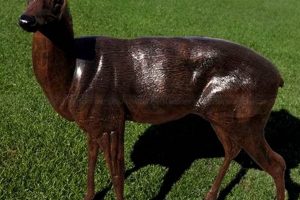
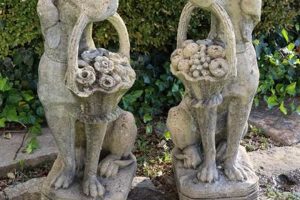
These substantial, solid forms serve as outdoor ornamentation, crafted from a composite material that includes cement, water, and aggregates. The resulting product emulates the look of stone or other natural materials, but with the advantage of relative affordability and moldability. Examples range from figurative representations of animals and historical figures to abstract sculptural designs.
Their implementation in landscaping projects provides visual weight and a sense of permanence. The substantial presence of these objects can establish a focal point in a garden, define spatial boundaries, or complement architectural styles. Historically, similar adornments have denoted status and provided artistic expression within formalized garden settings. The durability of the construction material allows for enduring aesthetic contributions to outdoor spaces.
The subsequent sections will detail the selection process, considerations for placement, and methods for the long-term maintenance of these significant landscape features, ensuring their continued contribution to the overall aesthetic.
Essential Considerations for Placement and Preservation
The selection, installation, and ongoing care of substantial outdoor ornamentation demand careful attention to ensure longevity and aesthetic integration within the landscape.
Tip 1: Foundation Preparation: Prior to installation, a stable and level foundation is crucial. Uneven surfaces can lead to structural stress and potential cracking. Consider a compacted gravel base or a poured concrete pad, depending on the size and weight of the object.
Tip 2: Weight Distribution: Carefully assess the weight distribution of the piece to avoid concentrated pressure points. Use shims or a layer of sand to evenly distribute the load across the foundation.
Tip 3: Climate Considerations: In regions experiencing freeze-thaw cycles, select pieces constructed with admixtures designed to enhance resistance to frost damage. Ensure proper drainage to prevent water accumulation, which can exacerbate freezing damage.
Tip 4: Sealing and Protection: Apply a concrete sealant to protect against water penetration, staining, and algae growth. Reapply the sealant periodically according to the manufacturer’s recommendations.
Tip 5: Cleaning Protocols: Regularly clean the surface with a mild detergent and soft brush to remove dirt and debris. Avoid using harsh chemicals or abrasive cleaners, as these can damage the surface.
Tip 6: Winterization Strategies: In colder climates, consider covering the ornamentation with a breathable tarp to protect it from snow and ice accumulation. This can minimize the risk of surface damage.
Tip 7: Professional Consultation: For particularly large or complex installations, consult with a qualified landscape architect or contractor to ensure proper placement and structural integrity.
Adhering to these recommendations will contribute to the long-term preservation of these prominent landscape elements, safeguarding their aesthetic appeal and structural soundness.
The concluding section will explore the diverse artistic styles and design trends associated with concrete ornamentation, offering insights into incorporating these elements into various garden styles.
1. Scale

Scale is a fundamental consideration in the selection and placement of substantial concrete garden ornamentation. It directly influences the visual impact and integration of these elements within the overall landscape architecture. An inappropriate scale can diminish the aesthetic quality of both the statue and the surrounding environment.
- Visual Dominance and Focal Points
The size of a concrete statue dictates its ability to act as a visual anchor. An excessively large statue can overwhelm a small garden, creating an unbalanced composition. Conversely, a statue that is too small may become insignificant and fail to establish a focal point within a larger landscape. The appropriate scale should complement the surrounding vegetation and architectural features, drawing the eye without dominating the space.
- Proportional Harmony with Surroundings
The dimensions of the statue must harmonize with nearby structures and plantings. A colossal neoclassical figure may be appropriate for a formal estate garden but would appear incongruous in a compact, contemporary backyard. Consideration should be given to the height of surrounding trees, the width of pathways, and the overall size of the garden to ensure a cohesive design. A statue’s height should generally be proportionate to the height of nearby architectural elements.
- Perspective and Viewing Distance
The perceived size of a statue is affected by viewing distance. A statue designed to be viewed from afar may require a larger scale to maintain its visual impact. Conversely, a statue intended for close-up viewing should have finer details and a more intimate scale. Architects often employ perspective studies to determine the optimal size and placement of landscape elements, ensuring a pleasing visual experience from various vantage points.
- Weight and Structural Considerations
Scale directly correlates with weight and structural requirements. Larger statues necessitate robust foundations to prevent sinking or instability. Engineering calculations are essential to ensure the statue can withstand wind loads and other environmental stresses. Transportation and installation also become more complex and costly as the size and weight increase, requiring specialized equipment and expertise.
The successful integration of large concrete garden statues hinges on a thoughtful assessment of scale. By carefully considering visual dominance, proportional harmony, perspective, and structural implications, designers can create outdoor spaces that are both aesthetically pleasing and structurally sound. The appropriate scale ensures that the statue becomes an integral part of the landscape, enhancing its beauty and value.
2. Material Composition

The durability, aesthetic qualities, and long-term performance of substantial concrete garden ornamentation are fundamentally determined by its material composition. Careful selection and proportioning of constituent materials are essential to withstand environmental stresses and maintain visual appeal.
- Cement Type and Content
The type of cement used, typically Portland cement, significantly impacts the concrete’s strength, setting time, and resistance to chemical attack. Higher cement content generally increases strength and durability but can also elevate the risk of shrinkage cracking. Sulfate-resistant cements are often specified in environments with high soil sulfate concentrations. The cement acts as the binder, holding the aggregate materials together in a hardened matrix. Different types, such as Type I, Type II, or Type V, offer varying levels of resistance to specific environmental factors.
- Aggregate Selection and Grading
Aggregates, including sand, gravel, and crushed stone, constitute the bulk of the concrete mixture and influence its workability, strength, and thermal properties. Well-graded aggregates, with a balanced distribution of particle sizes, minimize voids and improve compaction. The use of durable, non-reactive aggregates prevents alkali-aggregate reaction, a destructive process that can lead to cracking and disintegration. For example, using granite or basalt as coarse aggregate enhances the compressive strength and wear resistance of the statue.
- Water-Cement Ratio
The water-cement ratio (w/c) is a critical factor affecting concrete strength and permeability. Lower w/c ratios result in denser, stronger, and less permeable concrete, enhancing its resistance to freeze-thaw damage and chemical ingress. However, excessively low w/c ratios can reduce workability, making placement and consolidation more difficult. Proper control of the w/c ratio is achieved through careful measurement and mixing techniques. A w/c ratio of 0.4 to 0.5 is commonly used for durable concrete exposed to outdoor conditions.
- Admixtures and Additives
Admixtures are chemical or mineral substances added to concrete to modify its properties. Air-entraining agents improve freeze-thaw resistance by creating microscopic air bubbles that relieve internal pressure. Water-reducing admixtures increase workability while maintaining a low w/c ratio. Pozzolanic materials, such as fly ash or silica fume, enhance strength and durability by reacting with calcium hydroxide, a byproduct of cement hydration. For instance, adding a superplasticizer allows for a lower water content, resulting in a stronger, more durable statue that can withstand harsh weather conditions.
The careful orchestration of these components within the concrete mixture is crucial for the creation of enduring and aesthetically pleasing large concrete garden statues. The selection and proportioning of cement, aggregates, water, and admixtures must be tailored to the specific environmental conditions and design requirements of each individual piece, ensuring its long-term structural integrity and visual appeal.
3. Surface Finish

The surface finish of substantial concrete garden ornamentation exerts a significant influence on its aesthetic appeal, perceived value, and resistance to environmental degradation. The treatment applied to the exposed concrete surface dictates not only its visual texture and color but also its susceptibility to staining, weathering, and biological growth. A carefully considered surface finish can elevate a simple concrete form into a work of art, while a poorly executed finish can detract from its overall impact.
Surface finishes are achieved through a variety of techniques, each imparting unique characteristics. Acid etching creates a textured, matte surface by dissolving the cement paste, exposing the aggregate beneath. Sandblasting achieves a similar effect but utilizes abrasive media propelled by compressed air. Polishing, conversely, produces a smooth, glossy surface that highlights the inherent beauty of the concrete. Applied coatings, such as sealants and paints, provide protection against moisture penetration and UV degradation while also enabling a wide range of color options. For example, a statue of a Roman Emperor might benefit from an acid-etched finish to simulate the appearance of weathered stone, while a contemporary abstract sculpture could feature a polished surface to emphasize its clean lines and geometric forms.
The selection of an appropriate surface finish must consider the intended aesthetic, the environmental context, and the maintenance requirements of the piece. Rougher finishes, such as those achieved through acid etching or sandblasting, tend to be more resistant to staining and algae growth but may also accumulate dirt and debris more readily. Smoother finishes, while easier to clean, can be more susceptible to scratching and UV damage. Ultimately, the optimal surface finish represents a balance between visual appeal, durability, and practicality, ensuring the long-term preservation and enjoyment of the concrete garden ornament.
4. Structural Integrity

The enduring aesthetic and functional value of substantial concrete garden ornamentation is inextricably linked to its structural integrity. This facet encompasses the ability of the concrete form to withstand imposed loads, environmental stresses, and material degradation over an extended period. Compromised structural integrity leads to cracking, spalling, and eventual failure, negating the artistic intent and posing potential safety hazards.
- Load-Bearing Capacity and Stability
A primary aspect of structural integrity is the capacity to bear its self-weight and any additional imposed loads, such as wind pressure, snow accumulation, or accidental impacts. Internal reinforcement, typically steel rebar, is strategically embedded within the concrete matrix to enhance tensile strength and prevent cracking under stress. Insufficient reinforcement or improper placement can result in structural instability and potential collapse. For example, a large figurative statue subjected to high winds requires robust reinforcement to resist overturning moments.
- Resistance to Cracking and Spalling
Concrete is inherently susceptible to cracking due to shrinkage, thermal expansion, and freeze-thaw cycles. Proper mix design, including the use of appropriate aggregates and admixtures, minimizes shrinkage cracking. Air-entraining agents enhance freeze-thaw resistance by creating microscopic air voids that relieve internal pressure. Surface sealants further protect against moisture penetration, reducing the risk of spalling. A lack of these preventative measures can lead to surface deterioration and compromised structural integrity. The presence of hairline cracks, while sometimes unavoidable, can act as pathways for water ingress, accelerating the degradation process.
- Foundation Stability and Soil Interaction
The structural integrity of a large concrete garden statue is fundamentally dependent on the stability of its foundation and its interaction with the underlying soil. An unstable foundation, resulting from inadequate compaction or poor drainage, can lead to differential settlement and structural stress. The bearing capacity of the soil must be sufficient to support the weight of the statue without excessive deformation. Geotechnical investigations are often necessary to assess soil conditions and design appropriate foundation systems. Failure to adequately address foundation stability can compromise the long-term structural integrity of the statue, regardless of the quality of the concrete itself. A properly engineered foundation ensures that the statue remains level and stable, preventing the development of stress concentrations that could lead to cracking or failure.
- Material Durability and Environmental Resistance
The constituent materials of the concrete mixture must exhibit inherent durability and resistance to environmental degradation. The use of high-quality cement, well-graded aggregates, and appropriate admixtures enhances resistance to chemical attack, abrasion, and UV degradation. Proper curing practices are essential to ensure complete hydration of the cement and optimal strength development. The application of protective coatings, such as sealants and anti-graffiti agents, can further extend the service life of the statue. The selection of materials with proven long-term performance characteristics is crucial for maintaining structural integrity over decades of exposure to the elements. Materials that resist the effects of acid rain, salt spray, and extreme temperature fluctuations are essential for ensuring the longevity of the statue’s structure.
The interplay of these facetsload-bearing capacity, cracking resistance, foundation stability, and material durabilitycollectively defines the structural integrity of substantial concrete garden ornamentation. A comprehensive approach, encompassing meticulous design, careful material selection, proper construction techniques, and ongoing maintenance, is essential to ensure the long-term preservation and safety of these significant landscape elements.
5. Placement Context
The environmental and architectural setting surrounding substantial concrete garden statuary exerts a profound influence on its visual impact and perceived value. Careful consideration of this placement context is paramount to ensure harmonious integration within the landscape and avoid incongruous juxtapositions.
- Architectural Style and Period
The prevailing architectural style of adjacent buildings significantly informs the appropriate aesthetic of the statuary. A formal, neoclassical garden may be enhanced by representations of classical figures or geometric forms, while a contemporary architectural setting may demand abstract sculptures or minimalist designs. Conversely, placing a highly ornate Victorian statue within a starkly modern landscape would likely create visual dissonance. The statue should complement the architectural period and avoid clashing with its established visual vocabulary. Examples include placing Romanesque statues in a garden adjoining similar-style buildings, and choosing abstract sculptures that enhance a minimalist home’s aesthetic.
- Garden Design and Layout
The existing garden design, including the arrangement of pathways, planting beds, and water features, dictates suitable locations and orientations for the statuary. A symmetrical, formal garden calls for balanced placement and clear sightlines, whereas a more informal, naturalistic garden allows for greater freedom in positioning. The statue should complement the existing landscape features and not obstruct pathways or views. Consideration should be given to the scale of the garden and the surrounding vegetation, ensuring that the statue neither overwhelms nor is overwhelmed by its environment. For instance, a small statue could be placed near a pond as a subtle complement, and a larger one might be used as a grand focal point within a spacious lawn area.
- Natural Light and Shadow Patterns
The interplay of sunlight and shadow significantly affects the perceived form and texture of the statuary. Careful consideration should be given to the orientation of the statue relative to the sun’s path, as well as the presence of any overhanging trees or structures that may cast shadows. The goal is to illuminate the statue in a way that enhances its features and creates visual interest throughout the day. Backlighting can create dramatic silhouettes, while direct sunlight can highlight surface textures and details. The positioning should also prevent excessive glare, which can detract from the viewing experience. An example includes placing a statue to catch the soft light of dawn for a gentle glow, and another to use strong shadows to create dramatic effect.
- Surrounding Vegetation and Color Palette
The types of plants, their colors, and their heights all affect how a large concrete garden statue is perceived within a space. The statue’s color, texture, and size should harmonize with the surrounding plant life. For example, a statue with a rough, textured surface might contrast well with smooth, manicured lawns, while a brightly colored statue could complement a garden filled with similar vibrant hues. The height of the surrounding plants should also be considered, to ensure that the statue is not obscured or dwarfed by the vegetation. The goal is to create a cohesive and visually appealing landscape, where the statue and the plants work together to enhance the overall aesthetic. Consider using tall grasses to soften the harsh lines of a modern statue, or planting flowering vines to climb on a classical sculpture, blending nature with art.
These facets underscore that successful integration of such structures requires careful assessment of its immediate surroundings and a thoughtful approach to optimizing its impact within the established landscape. This ensures the piece will complement and enhance its location.
6. Artistic Style
Artistic style, as it relates to substantial concrete garden statuary, represents a critical determinant of aesthetic integration and contextual relevance within a landscape. The chosen style dictates the visual language of the piece, influencing its ability to complement or contrast with the surrounding environment.
- Classical and Neoclassical Styles
These styles, characterized by idealized forms, symmetry, and references to ancient Greek and Roman art, evoke a sense of formality, grandeur, and historical continuity. Statues in this vein often depict mythological figures, idealized portraits, or architectural elements such as columns and pediments. Their implementation in formal gardens reinforces a sense of order and tradition. A concrete rendering of Venus de Milo serves as a quintessential example.
- Art Deco and Art Nouveau Styles
These early 20th-century styles exhibit a departure from classical forms, embracing stylized natural motifs, geometric patterns, and streamlined designs. Art Deco pieces often incorporate stepped forms and sleek surfaces, while Art Nouveau pieces favor flowing lines and organic shapes. Their incorporation in gardens introduces a sense of modernity and elegance. A concrete fountain featuring stylized floral motifs exemplifies the Art Nouveau aesthetic.
- Modern and Contemporary Styles
These styles encompass a broad range of approaches, from minimalist abstractions to bold, geometric constructions. Emphasis is placed on form, texture, and the interplay of light and shadow. Modern statuary often rejects representational forms in favor of pure geometric shapes or abstract compositions. Contemporary styles may incorporate unconventional materials or explore social and political themes. A large concrete sphere or cube exemplifies the minimalist aesthetic, while a multi-faceted abstract sculpture reflects contemporary design trends.
- Folk Art and Whimsical Styles
These styles often incorporate naive or primitive forms, bright colors, and playful themes. Folk art statuary may depict animals, human figures, or everyday objects in a simplified and often humorous manner. Whimsical styles embrace fantasy and imagination, creating a sense of delight and surprise. A concrete rendering of a cartoon character or a brightly painted animal exemplifies these stylistic trends.
The selection of a particular artistic style for concrete garden statuary involves a nuanced assessment of architectural context, garden design, and personal preferences. The chosen style serves as a visual bridge, connecting the concrete form to its surrounding environment and imbuing it with a specific character and meaning.
7. Environmental Resistance

The longevity and aesthetic integrity of substantial concrete garden statuary are inextricably linked to its environmental resistance. Concrete, by its nature, is susceptible to degradation from a range of environmental factors, including freeze-thaw cycles, chemical attack, and biological growth. The extent to which a concrete statue can withstand these stressors determines its lifespan and visual appeal over time. Neglecting environmental resistance during the design and construction phases invariably leads to premature deterioration, necessitating costly repairs or replacement. For instance, a statue placed in a region with frequent freeze-thaw cycles will experience cracking and spalling if the concrete mix is not formulated with appropriate air-entraining agents and a low water-cement ratio. Similarly, exposure to acid rain can dissolve the cement matrix, leading to surface erosion and loss of detail. The implementation of preventative measures, such as the use of durable materials, protective coatings, and proper drainage systems, is essential to mitigate these risks and ensure the long-term viability of these landscape elements.
The practical applications of understanding environmental resistance are diverse. Selection of appropriate concrete mixtures is paramount; high cement content, the inclusion of pozzolanic materials (like fly ash or silica fume), and optimized aggregate grading contribute to denser, less permeable concrete. Surface treatments such as penetrating sealants, hydrophobic coatings, or anti-graffiti agents are regularly employed to protect against water penetration, staining, and vandalism. In coastal environments, consideration is given to the use of sulfate-resistant cements to counteract the effects of saltwater exposure. Regular maintenance practices, including cleaning and the reapplication of protective coatings, extend the lifespan of the statue by preventing the accumulation of dirt, algae, and other contaminants. A real-world example includes applying a silane-based sealant to a concrete statue located in a park, effectively preventing water absorption and reducing the likelihood of freeze-thaw damage.
In summary, environmental resistance is a crucial component of substantial concrete garden statuary, directly influencing its durability and visual appeal. Challenges include accurately assessing site-specific environmental stressors and selecting appropriate materials and construction techniques. However, the practical significance of understanding environmental resistance lies in the ability to create landscape features that endure for decades, providing lasting aesthetic value and minimizing long-term maintenance costs. The principles of environmental resistance are therefore integral to the design, construction, and preservation of these enduring elements of the built environment.
Frequently Asked Questions
The following section addresses common inquiries regarding the selection, placement, and maintenance of significant concrete landscape features.
Question 1: What factors determine the long-term durability of a large concrete garden statue?
The longevity of a concrete statue is primarily influenced by the quality of materials used in its construction, proper installation techniques, and the implementation of regular maintenance practices. Selecting a concrete mix with high cement content, using durable aggregates, and applying a protective sealant are critical for minimizing degradation from environmental factors. A stable foundation and periodic cleaning further contribute to its durability.
Question 2: How should a suitable location for a substantial concrete garden statue be determined?
The ideal placement is contingent upon several factors, including the scale of the statue, the architectural style of surrounding structures, and the existing landscape design. Statues should complement the overall aesthetic of the garden and not obstruct pathways or views. Consideration should also be given to sun exposure and potential shading from trees or buildings.
Question 3: What maintenance practices are necessary to preserve the appearance of concrete garden statues?
Regular cleaning with a mild detergent and soft brush is recommended to remove dirt, algae, and other surface contaminants. The periodic application of a concrete sealant helps prevent water penetration and staining. In regions with freeze-thaw cycles, covering the statue with a breathable tarp during winter months can minimize damage from ice and snow.
Question 4: How can potential damage from freeze-thaw cycles be mitigated?
Employing a concrete mix with air-entraining agents is crucial for improving freeze-thaw resistance. These agents create microscopic air bubbles that relieve internal pressure caused by freezing water. Ensuring proper drainage around the base of the statue can also prevent water accumulation and subsequent ice formation.
Question 5: Are there specific considerations for placing a concrete statue near a water feature?
When positioning a statue near a water feature, the potential for water splash and prolonged moisture exposure must be considered. Applying a water-resistant sealant to the statue can protect it from water damage and staining. Selecting a statue made with sulfate-resistant cement is recommended if the water source has high sulfate concentrations.
Question 6: How does artistic style affect the choice of a concrete garden statue?
The artistic style should align with the overall design aesthetic of the garden and surrounding architecture. Classical or neoclassical statues are well-suited for formal gardens, while modern or abstract designs may be more appropriate for contemporary landscapes. The chosen style should reflect the desired mood and character of the outdoor space.
Proper selection, placement, and maintenance are key to ensuring these features endure for decades.
Large Concrete Garden Statues
The preceding exploration has illuminated the multi-faceted considerations inherent in selecting, implementing, and maintaining substantial concrete ornamentation within landscape designs. From scale and material composition to artistic style and environmental resistance, the successful integration of large concrete garden statues demands meticulous planning and informed decision-making. The durable nature and aesthetic versatility of this medium offer enduring possibilities for enhancing outdoor spaces, provided that appropriate attention is paid to structural integrity and long-term preservation.
The lasting impact of these prominent features hinges upon a commitment to responsible stewardship. By embracing best practices in design, construction, and maintenance, landscape architects, garden designers, and property owners can ensure that large concrete garden statues continue to enrich outdoor environments for generations to come, serving as enduring testaments to artistic expression and structural resilience. Careful deliberation and proactive care will safeguard their continued contribution to the landscape’s enduring beauty and value.