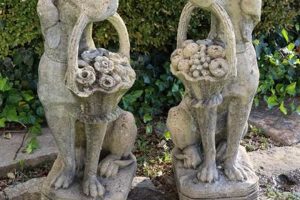
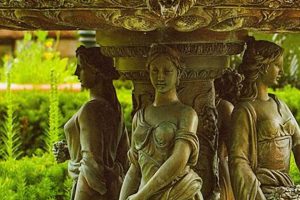
Sculptural elements designed for outdoor spaces, reflecting current artistic trends and design sensibilities, are increasingly utilized in landscaping. These pieces, ranging from abstract forms to stylized representations of nature or figures, serve as focal points and aesthetic enhancements within a garden environment. For example, a stainless-steel geometric form or a cast resin depiction of a reclining figure could exemplify this type of outdoor ornamentation.
The integration of art into external environments offers numerous advantages. Strategically placed artwork can elevate the overall visual appeal of a garden, transforming it from a mere collection of plants into a curated outdoor living space. Historically, gardens have incorporated statuary, from classical marble figures to ornate fountains. The modern application provides an opportunity to explore novel materials, textures, and themes, reflecting evolving artistic practices and personal tastes.
The following discussion will delve into various aspects related to selecting and incorporating artistic pieces into outdoor settings. Topics will include material considerations, style compatibility with existing landscape designs, scale and proportion guidelines, and methods for ensuring the longevity of these artistic investments within diverse climate conditions. Further discussion will address the increasing trend of eco-friendly and sustainable options available in this sector of garden design.
Enhancing Outdoor Spaces
The incorporation of artistic elements into external landscapes requires careful consideration. The following guidelines address crucial aspects of selecting and positioning these pieces for optimal visual impact and long-term preservation.
Tip 1: Material Selection Based on Environmental Factors: The chosen material must withstand prevailing weather conditions. Bronze and stainless steel offer durability in diverse climates, while resin-based composites provide cost-effective alternatives with varying degrees of weather resistance. Research material properties before committing to a purchase.
Tip 2: Scale and Proportion in Relation to Landscape: A large, imposing form can overwhelm a small garden, while a diminutive piece may be lost in a vast landscape. Assess the dimensions of the intended location and select artwork that complements the existing spatial relationships.
Tip 3: Style Compatibility with Architectural and Landscape Design: Ensure the chosen artistic style harmonizes with the overall aesthetic of the property. A minimalist sculpture might clash with a traditionally designed Victorian garden, while a rustic piece may be out of place in a modern architectural setting.
Tip 4: Strategic Placement for Visual Impact: Consider sightlines and focal points within the garden. Placing a sculpture at the end of a pathway or near a water feature can draw the eye and create a sense of depth and intrigue. Lighting can further enhance the visual drama, especially at night.
Tip 5: Foundation and Stability: Proper installation is crucial to prevent tipping or movement, particularly in areas prone to high winds or ground shifting. Securely anchor larger pieces to a solid foundation or concrete base. Smaller, lighter pieces may require careful placement on stable ground.
Tip 6: Long-Term Maintenance and Preservation: Implement a regular cleaning regimen to remove dirt, debris, and environmental contaminants. Apply protective coatings or sealants to safeguard against fading, corrosion, or other forms of degradation. Consult with a professional conservator for specialized care of valuable pieces.
Tip 7: Consider the Element of Surprise: Unexpected placement can add an element of delight and discovery. Tucking a small sculpture among the foliage or behind a flowering shrub can create a sense of hidden beauty.
Adherence to these guidelines can transform an ordinary outdoor space into a visually engaging and aesthetically pleasing environment. Strategic placement, mindful material selection, and consistent maintenance practices ensure the longevity and impact of these artistic investments.
The subsequent sections will explore specific design trends and innovative applications, providing further insight into the evolving role of art in contemporary landscape architecture.
1. Material Durability

Material durability constitutes a primary consideration in the selection of contemporary garden sculptures. The inherent exposure to environmental elements necessitates careful evaluation of material properties to ensure longevity and minimize degradation.
- Resistance to Weathering
Weathering, encompassing the effects of sunlight, precipitation, and temperature fluctuations, directly impacts material integrity. Sculptures fabricated from materials susceptible to corrosion, cracking, or fading will exhibit diminished aesthetic appeal and structural integrity over time. Stainless steel, certain treated woods, and specific types of stone are chosen for their ability to resist these effects.
- Impermeability to Moisture
Moisture penetration can lead to a variety of detrimental effects, including freeze-thaw damage, fungal growth, and the weakening of structural components. Materials exhibiting low permeability, such as high-density polymers or sealed metals, are preferred to mitigate these risks. In colder climates, this is particularly critical.
- Resistance to Chemical Degradation
Exposure to airborne pollutants, acidic rain, and fertilizers can chemically degrade certain materials. Selecting materials inherently resistant to these chemicals, or applying protective coatings, can prolong the lifespan of the sculpture. Consider the environmental factors specific to the garden’s location.
- Structural Integrity and Stability
The material’s capacity to withstand physical stress, including wind loads and accidental impacts, is crucial for ensuring stability and preventing damage. Sculptures composed of materials with high tensile strength and impact resistance are less likely to succumb to structural failure. A stable base and appropriate anchoring are often necessary.
The enduring appeal of contemporary garden sculptures hinges significantly on the appropriate selection of durable materials. Failing to account for the aforementioned factors can lead to premature deterioration, diminishing the aesthetic and economic value of the artwork. The material’s resilience is integral to its continued presence within the garden landscape.
2. Stylistic Harmony

Stylistic harmony represents a critical aspect in the successful integration of contemporary garden statues within an outdoor setting. The aesthetic alignment between the sculptural art and the surrounding environment dictates the overall visual coherence and impact of the landscape design. A discordant pairing can detract from the intended aesthetic, while a harmonious blend enhances the garden’s overall appeal.
- Architectural Coherence
The architectural style of the adjacent building or primary residence exerts significant influence on the selection of sculptural art. A modern, minimalist dwelling typically benefits from abstract or geometric sculptures executed in materials such as polished metal or concrete. Conversely, a traditional Victorian home may be better complemented by classical or figurative sculptures crafted from materials like stone or bronze. Disregarding architectural context can lead to visual incongruity.
- Landscape Design Compatibility
Existing landscape design principles, including planting schemes, hardscaping materials, and spatial arrangements, should inform the choice of sculptural art. A formal garden characterized by symmetrical layouts and manicured hedges may accommodate classically inspired statues, while a naturalistic garden featuring flowing lines and native plants could be enhanced by organic forms or abstract sculptures that mimic natural elements. The color palette of the garden should also be considered to ensure visual unity.
- Thematic Consistency
A cohesive theme can unify the garden design and enhance the impact of sculptural art. A Japanese-inspired garden, for example, might feature minimalist stone lanterns or stylized water features that complement the overall aesthetic. Similarly, a Mediterranean-themed garden could incorporate terracotta sculptures or mosaic artwork that evoke the region’s artistic traditions. Maintaining thematic consistency strengthens the narrative and visual appeal of the outdoor space.
- Personal Aesthetic Expression
While adherence to architectural and landscape design principles is important, the integration of sculptural art also provides an opportunity for personal aesthetic expression. The selected pieces should reflect the homeowner’s individual taste and preferences, adding a unique layer of character to the garden. Balancing personal expression with stylistic coherence ensures that the sculptures enhance, rather than detract from, the overall aesthetic appeal of the outdoor environment.
Ultimately, stylistic harmony in the context of contemporary garden statues involves a careful consideration of architectural influences, landscape design compatibility, thematic consistency, and personal aesthetic expression. By thoughtfully integrating these elements, one can create an outdoor space that is both visually appealing and personally meaningful. The successful integration of sculptural art depends on a holistic approach that prioritizes aesthetic coherence and enhances the overall character of the garden.
3. Scale Appropriateness

The principle of scale appropriateness is paramount in the selection and placement of contemporary garden statues. The dimensions of a sculpture, relative to the surrounding landscape and architectural elements, directly impact visual harmony and spatial balance. A statue that is too large can overwhelm a small garden, creating a sense of claustrophobia and disrupting the natural flow. Conversely, an undersized piece may be lost amidst the foliage or overshadowed by larger features, rendering it visually insignificant. The intended impact and aesthetic objective of the sculptural element must be considered in relation to the available space.
The effect of scale appropriateness can be illustrated through various examples. A sprawling estate garden, characterized by expansive lawns and mature trees, might accommodate a monumental abstract sculpture, serving as a dramatic focal point. Such a piece would likely appear incongruous in a small urban garden, where a more modest, human-scale sculpture would be better suited. Similarly, the proximity of a statue to a building can influence its perceived size. A large sculpture placed close to a house may appear disproportionate, while the same sculpture positioned farther away can achieve a more balanced relationship with the architectural backdrop. Therefore, the relationship between a statue’s dimensions and its immediate environment requires careful consideration.
Ultimately, the application of scale appropriateness in the realm of contemporary garden statues seeks to achieve a visual equilibrium that enhances the overall aesthetic of the landscape. Understanding the interplay between a sculpture’s size and its surroundings is essential for creating a harmonious and visually compelling outdoor space. Challenges may arise when attempting to integrate pre-existing sculptures into new or renovated gardens, requiring adjustments to the landscape design to accommodate the existing artwork. Nevertheless, adherence to the principle of scale appropriateness remains a key determinant of success in integrating sculptural art into the garden environment, contributing to a cohesive and aesthetically pleasing outdoor experience.
4. Spatial Integration

Spatial integration, concerning the strategic placement of objects within a defined area, holds paramount importance in the effective incorporation of contemporary garden statues. The statue must not merely occupy space, but rather engage with its surroundings in a manner that enhances both the artwork and the overall aesthetic of the garden.
- Viewpoint Optimization
The strategic positioning of a sculpture in relation to primary viewing points is critical. A statue placed at the terminus of a garden path, for example, acts as a visual focal point, drawing the eye and creating a sense of depth. Alternatively, positioning a sculpture to be partially obscured by foliage can generate an element of surprise and discovery. The consideration of viewing angles significantly influences the statue’s perceived impact.
- Landscape Architecture Interaction
The interplay between the statue and existing landscape architecture, including plants, water features, and hardscaping elements, must be carefully orchestrated. A minimalist sculpture can complement the clean lines of a modern patio, while a more organic form may harmonize with a naturalistic planting scheme. Disregarding the existing landscape context can result in visual discord and a diminished aesthetic effect.
- Environmental Contextualization
The surrounding environment, encompassing factors such as sunlight, shade, and prevailing wind patterns, should inform the statue’s placement. A light-colored sculpture positioned in direct sunlight may create an undesirable glare, while a darker piece placed in deep shade may become visually lost. The statue’s material and finish should be selected to complement the prevailing environmental conditions.
- Functional Integration
The statue’s placement can contribute to the overall functionality of the garden space. A strategically positioned sculpture can serve as a visual barrier, delineating different areas within the garden. Alternatively, a sculpture integrated with seating elements can provide a functional and aesthetically pleasing resting point. Functional integration enhances the statue’s value beyond its purely artistic merit.
The success of spatial integration in relation to contemporary garden statues hinges on a comprehensive understanding of viewpoint optimization, landscape architecture interaction, environmental contextualization, and functional integration. The statue must not be viewed as an isolated object, but rather as an integral component of the overall garden design, contributing to a harmonious and visually engaging outdoor environment.
5. Artistic Expression

Artistic expression serves as the foundational impetus behind the creation and selection of contemporary garden statues. These objects, extending beyond mere ornamentation, embody the artistic vision of their creators and the aesthetic preferences of their owners. The integration of sculptural art into outdoor environments provides a tangible outlet for artistic intent, transforming gardens from functional spaces into personalized galleries.
The impact of artistic expression is demonstrably evident in the diversity of styles and materials employed in garden statuary. From minimalist abstract forms crafted from polished stainless steel to representational sculptures rendered in cast bronze, each piece reflects a deliberate artistic choice. A garden featuring fluid, biomorphic sculptures may represent an affinity for organic forms and natural processes, while a garden adorned with geometric constructions suggests a preference for order and precision. The selection of specific artists or artistic movements further underscores the importance of individual expression. For instance, a garden showcasing sculptures inspired by Constantin Brncui may reveal an appreciation for modernism and simplified forms, whereas a collection of pieces reminiscent of Henry Moore may indicate a fascination with the human figure and its relationship to the landscape. The careful selection and arrangement of these pieces result in an immersive and deeply personal artistic statement.
The value of understanding artistic expression within the context of contemporary garden statues lies in its ability to inform informed design choices. By recognizing the underlying artistic motivations and aesthetic principles that guide the creation and selection of sculptural art, landscape designers and homeowners can create outdoor spaces that are not only visually appealing but also resonate with personal meaning and artistic integrity. Challenges may arise in balancing individual expression with stylistic harmony and spatial considerations. However, a deep understanding of artistic principles can facilitate the creation of a garden that serves as a compelling testament to both artistic vision and personal taste. The connection between artistic expression and contemporary garden statues serves to elevate the garden from a simple outdoor space to a carefully curated work of art.
Frequently Asked Questions
The following addresses common inquiries regarding the selection, placement, and maintenance of contemporary garden sculptures, providing factual information to aid in informed decision-making.
Question 1: What materials are best suited for outdoor sculptures in regions with harsh winters?
Materials exhibiting high resistance to freeze-thaw cycles and minimal moisture absorption are recommended. Suitable options include stainless steel, bronze, and certain types of treated stone. Porous materials, such as some unsealed ceramics, are susceptible to cracking and degradation in freezing temperatures.
Question 2: How does one ensure a newly acquired sculpture harmonizes with an existing landscape design?
Consider the architectural style of the adjacent structures, the existing planting schemes, and the overall aesthetic theme of the garden. The sculpture’s style, material, and scale should complement, rather than clash with, the established design elements. Consulting with a landscape architect can provide valuable guidance.
Question 3: What are the primary factors to consider when determining the appropriate size of a garden sculpture?
The dimensions of the surrounding space, the height of adjacent trees and structures, and the intended focal point of the garden are key determinants. A sculpture that is too large can overwhelm a small garden, while a piece that is too small may be lost in a vast landscape. Careful measurement and visual assessment are essential.
Question 4: How can one protect outdoor sculptures from vandalism or theft?
Securing sculptures to a solid foundation or concrete base can deter theft and prevent accidental tipping. Installing motion-activated lighting and security cameras can provide added protection. For valuable pieces, consider insurance coverage specifically designed for outdoor art.
Question 5: What maintenance practices are necessary to preserve the aesthetic appeal of contemporary garden sculptures?
Regular cleaning to remove dirt, debris, and environmental contaminants is essential. Applying protective coatings or sealants can guard against fading, corrosion, and other forms of degradation. Consult with a professional conservator for specialized care of valuable or delicate pieces.
Question 6: Are there any sustainable or environmentally friendly options available in the market for garden sculptures?
Sculptures crafted from recycled materials, such as reclaimed metal or recycled plastic, offer environmentally conscious alternatives. Supporting local artists who utilize sustainable practices minimizes transportation emissions and promotes regional craftsmanship. Consider the environmental impact of the materials and manufacturing processes used in the creation of the sculpture.
These answers provide a foundational understanding of the factors involved in integrating sculptural art into outdoor settings. Careful consideration of these aspects will contribute to the longevity and aesthetic impact of these artistic investments.
The subsequent section will delve into emerging trends and innovative applications, providing further insights into the evolving landscape of art in contemporary garden design.
Contemporary Garden Statues
This exploration has traversed the critical facets of contemporary garden statues, underscoring the importance of material durability, stylistic harmony, scale appropriateness, spatial integration, and artistic expression. Adherence to these principles facilitates the effective incorporation of sculptural art into outdoor environments, transforming landscapes into curated extensions of the living space. The long-term aesthetic impact and financial value of these investments are directly proportional to the diligence exercised in their selection and maintenance.
The integration of art into the garden, whether executed on a grand or intimate scale, represents a commitment to aesthetic enrichment and personalized expression. As the artistic landscape continues to evolve, a discerning approach to the selection and preservation of these pieces remains paramount. Further research into emerging materials, sustainable practices, and innovative design applications is encouraged to ensure the continued vitality and relevance of art in the garden.