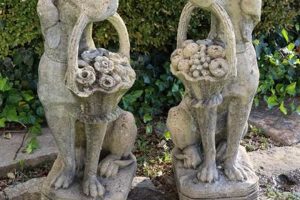
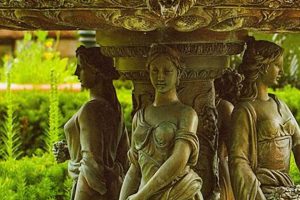
Ornamental figures designed for outdoor placement to enhance the aesthetic appeal of horticultural spaces constitute a category of decorative art. These objects, frequently crafted from materials resistant to weather and environmental degradation, serve as focal points within gardens, courtyards, and other open-air environments. For example, a concrete depiction of a classical deity nestled among flowering shrubs exemplifies this form of embellishment.
The incorporation of such artistic elements into landscapes has a long history, dating back to ancient civilizations who utilized sculpture to symbolize status, religious beliefs, or appreciation of natural beauty. Modern applications of these features often aim to evoke specific moods, complement existing landscaping designs, or express the property owners personal taste. Their presence can significantly augment property value and contribute to a sense of tranquility and visual interest.
Subsequent sections will delve into the various materials employed in their construction, explore diverse design styles and themes, and offer guidance on selecting and positioning these decorative elements to maximize their impact within different types of garden settings.
Enhancing Gardens with Ornamental Figures
The following guidelines offer practical advice on selecting, placing, and maintaining ornamental figures within garden environments to achieve optimal aesthetic and functional outcomes.
Tip 1: Material Selection for Longevity: Prioritize materials such as cast stone, bronze, or treated hardwoods known for their resistance to weathering, cracking, and fading. For instance, a bronze figure, while initially more costly, often outlasts resin-based alternatives in outdoor settings.
Tip 2: Scale and Proportion Considerations: Choose figures that correspond appropriately to the dimensions of the garden area. A large, imposing figure may overwhelm a small courtyard, while a miniature sculpture could be lost within an expansive lawn. A careful evaluation of scale is critical.
Tip 3: Theme Cohesion for Visual Harmony: Ensure that the figure’s style aligns with the overarching theme of the garden. A classical-style figure would be incongruous within a contemporary, minimalist landscape. Consistent thematic elements promote visual coherence.
Tip 4: Strategic Placement for Focal Point Creation: Position figures in locations that naturally draw the eye, such as at the end of a pathway, within a flower bed, or near a water feature. Thoughtful placement maximizes the figure’s visual impact and enhances the garden’s overall design.
Tip 5: Securing Stability Against Environmental Factors: Properly secure the figure to its base or the ground to prevent displacement by wind, animals, or accidental contact. Employ concrete footings or anchoring systems as needed, particularly for taller or heavier figures.
Tip 6: Regular Maintenance for Preserving Appearance: Clean figures periodically to remove dirt, algae, and other environmental debris. Apply protective coatings or sealants as recommended by the manufacturer to prevent fading, corrosion, or other forms of degradation. Consistent upkeep preserves the figure’s aesthetic appeal over time.
Tip 7: Illumination for Evening Ambiance: Consider incorporating landscape lighting to illuminate the figure during nighttime hours. Uplighting or spotlighting can create dramatic effects and extend the figure’s visual presence beyond daylight.
By implementing these practical guidelines, property owners can effectively integrate ornamental figures into their gardens, enhancing their beauty and creating visually engaging outdoor spaces. Careful planning and diligent maintenance are essential for maximizing the long-term benefits of these decorative elements.
The subsequent sections will explore specific design styles and the historical significance of garden art, providing a deeper understanding of this enduring decorative tradition.
1. Material Longevity
The endurance of a garden figure, a key element in the overall visual appeal of outdoor spaces, is intrinsically linked to the material from which it is constructed. The selected material dictates the object’s resistance to environmental factors, influencing its long-term aesthetic integrity and structural stability.
- Weather Resistance
Specific materials exhibit varying degrees of resistance to moisture, temperature fluctuations, and ultraviolet radiation. Bronze, for instance, forms a protective patina over time, minimizing corrosion, while untreated wood is susceptible to rot and insect infestation. Choosing materials known for their inherent weather resistance is crucial for preserving the figure’s original form and preventing premature degradation.
- Structural Integrity
The inherent strength and durability of the material determine the figure’s ability to withstand physical stresses, such as impacts from falling debris or the settling of the ground beneath. Cast stone, due to its density and compressive strength, provides a robust foundation for larger sculptures, whereas hollow resin figures are more vulnerable to cracking or shattering.
- Maintenance Requirements
The level of maintenance required to preserve the figure’s appearance and structural soundness is directly affected by the material composition. Materials like marble require periodic cleaning and sealing to prevent staining and erosion from acidic rain, while materials like powder-coated aluminum offer superior resistance to corrosion and require minimal upkeep.
- Aesthetic Evolution
Some materials undergo a natural aesthetic transformation over time, which may be desirable or undesirable depending on the intended design aesthetic. Copper develops a distinctive verdigris patina, which some find aesthetically pleasing, while others prefer the original polished finish and invest in regular cleaning and polishing. Understanding the material’s aging characteristics is essential for aligning the figure’s long-term aesthetic with the desired garden design.
The selection of a figure’s material is a pivotal decision impacting its longevity, maintenance requirements, and aesthetic evolution within the garden environment. A thorough evaluation of these factors ensures the figure remains a visually appealing and structurally sound element of the landscape for years to come.
2. Scale appropriateness

Scale appropriateness is a critical determinant of the visual harmony and impact of figures in garden settings. The size of the figure, relative to the surrounding landscape, influences how it is perceived and its contribution to the overall aesthetic. A mismatch in scale can create visual dissonance, detracting from the garden’s intended design and potentially diminishing the figure’s artistic merit. For example, placing an oversized figure in a small, enclosed courtyard will likely overwhelm the space, creating a sense of imbalance. Conversely, a miniature figure in an expansive garden may become insignificant, failing to serve as a focal point or contribute meaningfully to the landscape.
Effective scale consideration requires assessing the dimensions of the garden space, the size of surrounding plants and structures, and the figure’s intended role within the design. In smaller gardens, smaller figures or strategically placed groupings of smaller items are often more effective. Larger gardens can accommodate larger figures that command attention and provide a sense of grandeur. Furthermore, the figure’s proportions should be in harmony with its setting. A tall, slender figure may complement vertical elements in the garden, while a wider, more grounded figure may be appropriate for anchoring a horizontal landscape. Gardens designed with distinct focal points require properly scaled statues to draw the eye to the intended area.
In summary, scale appropriateness is not merely a matter of size, but a carefully considered relationship between the figure and its environment. By carefully calibrating the size and proportions, designers and garden owners can ensure that the figure serves as an effective and visually pleasing element within the broader landscape, creating a cohesive and aesthetically enriching outdoor space.
3. Thematic Coherence

Thematic coherence, in the context of ornamental figures, refers to the harmonious integration of a figure’s style, subject matter, and material with the pre-existing aesthetic and design principles of a garden. The attainment of such coherence ensures that the figure complements rather than detracts from the overall visual appeal of the outdoor space. A lack of thematic alignment can result in a discordant aesthetic, disrupting the sense of unity and purpose within the garden design.
- Historical Period and Style Matching
Figures should align with the historical or stylistic theme of the garden. For instance, a formal, French-style garden might feature neoclassical marble figures, whereas a rustic, cottage-style garden would be more appropriately adorned with terracotta or weathered stone figures depicting pastoral scenes or whimsical creatures. Incongruous pairings, such as placing a modern, abstract sculpture in a Victorian-era garden, undermine the intended aesthetic.
- Material and Color Palette Coordination
The materials and colors of figures should complement the existing color palette and textures within the garden. A garden dominated by earth tones and natural materials would benefit from figures crafted from materials like wood, stone, or bronze, whereas a more contemporary garden might accommodate figures made from metal or brightly colored resin. The selection of materials and colors should enhance, not clash with, the surrounding vegetation and hardscape.
- Subject Matter and Narrative Consistency
The subject matter or narrative depicted by a figure should be consistent with the overall theme or story of the garden. A zen garden designed to evoke tranquility and contemplation would be well-suited to a figure of a meditating Buddha or a simple stone lantern, while a children’s garden might feature figures of animals or fairytale characters. The selected figures should reinforce the intended mood and atmosphere of the garden.
- Scale and Proportion Integration
While primarily a matter of scale appropriateness, the proportions and style of a figure must also cohere with the overarching theme. A miniature fairy in a expansive, gothic setting would be out of place and uninspired. Similarly a large, ornate classical statue would seem absurd in a small, understated Zen Garden. The scale has to fit the theme.
In conclusion, thematic coherence in the selection of ornamental figures extends beyond mere aesthetic appeal. It requires a careful consideration of historical context, material harmony, narrative consistency, and scale integration. By adhering to these principles, garden designers and owners can ensure that figures enhance the overall aesthetic and contribute to a unified and visually pleasing outdoor space.
4. Strategic positioning

The placement of ornamental figures, a core aspect of garden design, significantly impacts their visual effectiveness and the overall ambiance of the outdoor space. Strategic positioning, in this context, transcends simply placing a figure in a garden; it involves a careful consideration of sightlines, focal points, and the interaction between the figure and its surrounding environment. The intended effect of a figure, whether to evoke contemplation, add a touch of whimsy, or serve as a historical reference, can only be fully realized through thoughtful placement.
The effects of strategic positioning are multifaceted. A figure placed at the terminus of a garden path draws the eye and encourages exploration, creating a sense of anticipation. Conversely, a figure partially obscured by foliage introduces an element of discovery and intrigue. The direction of light is also crucial; a figure facing the rising sun can be dramatically illuminated in the morning, while one positioned against the setting sun may be silhouetted against the evening sky. For example, the placement of a classical statue amidst a formal rose garden directly influences the garden’s perceived elegance and sophistication, whereas the whimsical placement of a gnome statue at the base of a tree in an informal cottage garden invokes an altogether different emotional response.
Understanding the practical significance of strategic positioning allows for the creation of outdoor spaces that are not only visually appealing but also emotionally resonant. Strategic positioning is the key element, enabling a statues full impact as a piece of garden decor. Achieving a balanced and visually enriching environment requires an understanding of the interplay between the figure, its surroundings, and the viewer’s perspective. Thoughtful strategic positioning ensures that each statue fulfills its intended aesthetic and narrative role within the garden.
5. Secure anchoring

The stability of figures within outdoor environments is paramount, necessitating secure anchoring to mitigate the risks posed by environmental factors and accidental disturbances. This aspect is not merely a practical consideration; it directly influences the longevity and aesthetic integrity of such garden embellishments.
- Resistance to Wind Forces
Wind exerts considerable force on vertical objects, potentially toppling unsecured figures, particularly those with a high center of gravity. Anchoring systems, such as concrete footings or ground stakes, distribute the wind load and prevent displacement. For example, coastal gardens, frequently exposed to high winds, necessitate robust anchoring for all figures, regardless of size. Failure to do so can result in damage to the figure and surrounding landscaping.
- Protection Against Vandalism and Theft
Unsecured figures are vulnerable to vandalism and theft, especially in publicly accessible gardens or areas with high pedestrian traffic. Anchoring systems deter unauthorized removal, adding a layer of security. A notable example is the use of hidden bolts or epoxy to secure figures to their bases, making them significantly more difficult to steal or damage. Such measures protect the owner’s investment and preserve the aesthetic value of the garden.
- Mitigation of Ground Settling and Frost Heave
Ground settling and frost heave can destabilize figures over time, causing them to lean or even topple. Proper anchoring, particularly the use of deep footings that extend below the frost line, minimizes these effects. For example, in regions with cold winters, frost heave can exert tremendous upward pressure on figures, necessitating a robust anchoring system to prevent displacement. Addressing this aspect ensures the long-term stability and aesthetic appeal of the figure.
- Prevention of Accidental Displacement
Accidental contact from lawnmowers, vehicles, or even children playing can displace unsecured figures, leading to damage or injury. Anchoring systems reduce the risk of such incidents. Consider a scenario where a lawnmower accidentally strikes an unsecured figure, potentially causing it to fall and injure someone nearby. Secure anchoring mitigates this risk, promoting a safer garden environment.
These facets collectively emphasize the critical role of secure anchoring in preserving the integrity and safety of figures. By addressing these factors, garden owners can ensure that their ornamental figures remain stable, secure, and visually appealing for years to come. Secure anchoring is an essential element to statue for garden decor.
6. Routine Upkeep

Consistent maintenance practices are essential for preserving the aesthetic appeal and structural integrity of figures within outdoor environments. Routine upkeep directly influences the long-term viability of figures as decorative elements, mitigating the effects of weathering, biological growth, and physical damage.
- Surface Cleaning and Debris Removal
Regular removal of surface contaminants such as dirt, dust, pollen, and bird droppings is crucial for preventing staining, discoloration, and the growth of algae or lichen. Periodic washing with mild soap and water, followed by thorough rinsing, effectively removes these contaminants. For example, accumulated dirt on a marble figure can etch the surface over time, diminishing its clarity and luster. Consistent cleaning prevents this degradation.
- Protective Coating Application and Reapplication
The application of protective coatings, such as sealants or waxes, creates a barrier against moisture penetration, ultraviolet radiation, and environmental pollutants. These coatings minimize fading, cracking, and corrosion, extending the figure’s lifespan. For instance, applying a sealant to a bronze figure inhibits the formation of verdigris, preserving its original finish. Reapplication of these coatings is necessary at regular intervals to maintain their effectiveness.
- Crack and Damage Repair
Prompt repair of cracks, chips, or other forms of physical damage prevents further deterioration and structural instability. Small cracks can be filled with epoxy resin or patching compounds designed for the specific material of the figure. For example, repairing a crack in a cast stone figure prevents water from entering and exacerbating the damage through freeze-thaw cycles. Timely repairs preserve both the aesthetic and structural integrity of the figure.
- Biological Growth Control
Algae, lichen, and moss can thrive on damp or shaded figures, discoloring the surface and potentially damaging the material. Regular application of algaecides or fungicides inhibits their growth. Consider a stone figure shaded by trees, which is prone to moss growth. Periodic treatment with an algaecide prevents this growth, maintaining the figure’s original appearance.
Consistent implementation of these routine upkeep practices is paramount for maintaining the visual appeal and longevity of figures in outdoor settings. Proper maintenance not only preserves the aesthetic value of these decorative elements but also protects the investment in their acquisition. Neglecting routine upkeep will inevitably lead to accelerated degradation, necessitating costly repairs or premature replacement.
7. Illumination integration
The strategic integration of illumination with figures significantly augments their visual impact, extending their presence beyond daylight hours and transforming their aesthetic properties. When figures are carefully lit, their forms are accentuated, and details that might be lost in shadows during the day are revealed. This integration enhances the perceived depth, texture, and overall artistry of the figure, effectively converting it from a static garden element into a dynamic focal point.
Different lighting techniques yield varied effects. Uplighting, for example, creates a dramatic effect by emphasizing the height and grandeur of a figure, casting long shadows that add to its visual presence. Spotlighting can be used to highlight specific features, such as the face of a statue or the intricate details of its drapery. Backlighting creates a silhouette effect, emphasizing the figure’s outline and form against the background. Furthermore, color temperature plays a crucial role. Warm-toned lighting can create a sense of intimacy and warmth, while cool-toned lighting can evoke a sense of serenity and sophistication. For example, the use of strategically placed spotlights to illuminate classical statues in a formal garden at night creates a captivating display that enhances the garden’s overall elegance. Another example can be an ornamental figure in a zen garden, softly illuminated by concealed LED lights, promotes a meditative atmosphere.
In summary, the thoughtful integration of illumination with figures enhances their aesthetic impact and extends their presence into the night. By carefully selecting lighting techniques and color temperatures, it’s possible to transform these elements into dynamic features that enrich outdoor spaces. However, poor lighting choices can distract from the figure’s inherent qualities. Balancing illumination and the overall landscape aesthetic creates harmonious nightscapes. Therefore, illumination is crucial to statue for garden decor, to maintain both function and aesthetic.
Frequently Asked Questions
The following addresses common inquiries regarding the selection, placement, and maintenance of figures within garden environments. The information presented aims to clarify prevalent misconceptions and provide guidance on optimizing the integration of these decorative elements.
Question 1: What materials offer the greatest longevity in outdoor environments?
Materials exhibiting high resistance to weathering, corrosion, and UV degradation are preferable. Bronze, cast stone, and treated hardwoods are generally regarded as durable options for outdoor use. However, the specific longevity of a material depends on regional climate conditions and consistent maintenance practices.
Question 2: How does scale impact the visual effectiveness of a figure?
The size of the figure relative to its surroundings significantly influences its visual impact. A figure that is disproportionately large may overwhelm a small garden, while a miniature figure may be lost within a larger landscape. Careful consideration of scale is essential for achieving visual harmony and balance.
Question 3: What measures should be taken to prevent theft or vandalism?
Securing the figure to its base or the ground using concrete footings, anchoring systems, or hidden bolts can deter theft and vandalism. In high-risk areas, consider installing surveillance cameras or employing security lighting to further protect the figure.
Question 4: How frequently should garden figures be cleaned and maintained?
The frequency of cleaning and maintenance depends on the material of the figure and the environmental conditions. Generally, figures should be cleaned at least once per year to remove dirt, algae, and other contaminants. Protective coatings should be reapplied as needed, typically every one to two years.
Question 5: What lighting techniques are most effective for illuminating garden figures?
Uplighting, spotlighting, and backlighting can all be used effectively to illuminate garden figures. Uplighting emphasizes height and grandeur, spotlighting highlights specific features, and backlighting creates a silhouette effect. The choice of lighting technique depends on the desired aesthetic and the figure’s design.
Question 6: How does thematic coherence contribute to the overall garden design?
Thematic coherence ensures that the figure’s style, subject matter, and material align with the overarching design principles of the garden. A lack of thematic alignment can disrupt the sense of unity and purpose within the garden, resulting in a discordant aesthetic.
These responses provide a foundational understanding of key considerations related to the figures within garden spaces. Careful attention to these details will assist in selecting and maintaining figures that enhance the beauty and value of any landscape.
The subsequent section will delve into the historical context of garden figures, providing a deeper appreciation for their enduring presence in landscape design.
Concluding Remarks on Statue for Garden Decor
The preceding sections have explored the multifaceted considerations involved in the selection, placement, and maintenance of statue for garden decor. The importance of material longevity, scale appropriateness, thematic coherence, strategic positioning, secure anchoring, routine upkeep, and illumination integration has been emphasized as essential elements in creating visually harmonious and enduring outdoor spaces.
Successful integration of statue for garden decor requires a commitment to thoughtful planning and meticulous execution. By adhering to the principles outlined, individuals can enhance the aesthetic value of their gardens and cultivate outdoor environments that reflect their personal style and appreciation for artistic expression. Continued diligence in maintaining these decorative elements will ensure their enduring beauty and contribution to the overall landscape.