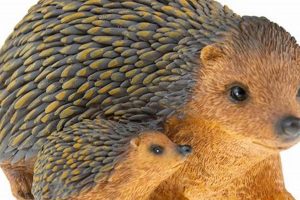
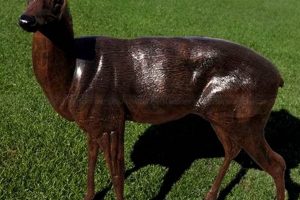
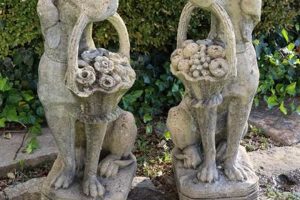
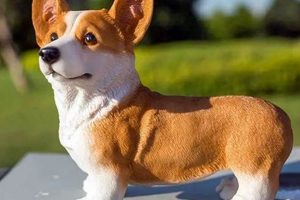
Figurines of cervids, often crafted from materials like resin, stone, or metal, are frequently employed as decorative elements in outdoor spaces. These representations of deer, positioned within lawns, flowerbeds, or near water features, contribute to the aesthetic appeal of residential and commercial landscapes.
The inclusion of such statuary provides a sense of tranquility and connection to nature, imbuing gardens with a touch of woodland charm. These ornaments can serve as focal points, drawing the eye and enhancing the overall design of the outdoor environment. Historically, animal sculptures have been used to symbolize attributes like grace, gentleness, and prosperity, adding layers of meaning to the landscape design.
The subsequent sections will delve into the various styles, materials, and placement considerations for integrating animal-themed ornamentation into garden settings, providing practical guidance for enhancing the visual impact of outdoor spaces.
Enhancing Landscapes with Cervid Sculptures
The integration of deer-themed statuary into garden design requires careful consideration to maximize aesthetic impact and ensure long-term durability. The following tips provide guidance on selecting, placing, and maintaining these ornamental features.
Tip 1: Material Selection: Opt for weather-resistant materials such as cast stone, bronze, or high-quality resin to withstand exposure to the elements. Porous materials may degrade rapidly in freeze-thaw cycles.
Tip 2: Scale and Proportion: Choose a size that is proportionate to the surrounding landscape. An excessively large sculpture can overwhelm a small garden, while a miniature figurine may be lost in a vast expanse.
Tip 3: Strategic Placement: Position the statuary to create visual interest and complement existing features. Consider placing it near a focal point, such as a water feature or a mature tree, to enhance its impact.
Tip 4: Contextual Integration: Select a style that harmonizes with the overall design of the garden. A rustic, woodland-themed garden would benefit from a naturalistic portrayal, while a formal garden may call for a more stylized or classical representation.
Tip 5: Security Measures: Implement strategies to prevent theft or vandalism, particularly in public or easily accessible areas. This may involve securing the sculpture to a solid base or installing discreet security cameras.
Tip 6: Regular Maintenance: Clean the statuary periodically to remove dirt, debris, and algae. Use a gentle cleaning solution and a soft brush to avoid damaging the surface.
Tip 7: Seasonal Protection: In regions with harsh winters, consider covering or storing the statuary to protect it from extreme temperatures and ice damage. This is especially important for pieces crafted from delicate materials.
Thoughtful application of these principles ensures the successful incorporation of cervid sculptures into landscapes, resulting in visually appealing and enduring garden features.
The following sections will explore specific styles and design concepts for integrating these sculptures within diverse landscape settings, providing inspiration and practical advice for enhancing outdoor environments.
1. Material Durability

Material durability is a paramount consideration when selecting a deer garden statue. The statue’s intended outdoor placement necessitates resilience against environmental stressors, including ultraviolet radiation, temperature fluctuations, precipitation, and potential physical impacts. The statue’s longevity and aesthetic appeal are directly correlated to the intrinsic properties of the chosen material. For example, resin-based statues, while often cost-effective, may exhibit cracking or discoloration under prolonged exposure to sunlight and extreme temperatures. Conversely, statues crafted from bronze or cast stone demonstrate superior resistance to weathering, ensuring a more extended lifespan and preserving their visual integrity.
The practical implications of material choice extend beyond mere aesthetics. Statues constructed from fragile materials require more frequent maintenance and may necessitate seasonal storage to mitigate potential damage. This increases the overall cost of ownership and detracts from the intended purpose of providing a low-maintenance, visually pleasing garden element. In contrast, durable materials minimize maintenance requirements and provide greater assurance against accidental damage from lawnmowers, falling branches, or other common outdoor hazards. The selection of an appropriate material, therefore, represents a crucial upfront investment that yields long-term benefits.
In conclusion, prioritizing material durability when acquiring a deer garden statue is essential for ensuring both its longevity and visual appeal. The selection process should carefully consider the specific environmental conditions to which the statue will be exposed, weighing the benefits of various materials against their associated costs and maintenance requirements. The resulting informed decision promotes a more sustainable and aesthetically satisfying garden design.
2. Size Proportionality

Size proportionality dictates the visual harmony between a deer garden statue and its surrounding environment. An appropriately sized statue complements the landscape, enhancing aesthetic appeal, while a disproportionate one disrupts visual balance, diminishing the overall effect.
- Garden Scale and Statue Dimensions
The size of the garden dictates the appropriate dimensions of the statue. A large statue in a small garden overwhelms the space, creating a cramped and unbalanced feel. Conversely, a miniature statue in a vast landscape may become visually insignificant, failing to make a noticeable impact. Successful integration requires careful measurement and consideration of the garden’s overall scale.
- Focal Point Hierarchy
The deer garden statue may serve as a focal point, but its size must be proportional to other focal elements within the garden. A statue that dwarfs surrounding plants, water features, or architectural elements disrupts the visual hierarchy, leading to an imbalanced composition. The statue’s size should complement and enhance existing focal points, rather than overpowering them.
- Viewing Distance and Perspective
The intended viewing distance influences the perception of size proportionality. A statue viewed from afar may require larger dimensions to maintain visibility and impact. Conversely, a statue positioned in close proximity should be smaller and more detailed to avoid appearing overwhelming. The anticipated viewing distance must be considered during the selection process to ensure optimal visual impact.
- Style Consistency and Relative Scale
Different artistic styles may influence the perceived size proportionality. A highly stylized or abstract statue may appear larger or smaller than a realistically rendered one of similar physical dimensions. The statue’s style should be consistent with the overall garden design, and its relative scale should be carefully considered in relation to other decorative elements.
Ultimately, effective size proportionality in deer garden statuary depends on a holistic assessment of the garden’s dimensions, focal points, viewing distances, and stylistic elements. The goal is to achieve visual harmony, where the statue seamlessly integrates into the landscape, enhancing its overall aesthetic appeal and creating a balanced and pleasing environment.
3. Placement Strategy

Strategic positioning is crucial to maximizing the aesthetic impact of a deer garden statue within a landscape. The placement strategy dictates how the statue interacts with its surroundings, influencing its visibility, prominence, and overall contribution to the garden’s design.
- Visibility and Focal Point Creation
Placement directly affects the statue’s visibility and its ability to serve as a focal point. Positioning along a primary sightline, near an entrance, or at the termination of a path draws the eye and establishes the statue as a key element. Conversely, concealment within dense foliage diminishes its impact. Visibility depends on the surrounding landscape architecture and intentional design choices.
- Contextual Harmony and Thematic Reinforcement
Placement should complement the surrounding environment and reinforce the garden’s theme. A woodland setting benefits from positioning the statue amidst ferns and native plants, creating a naturalistic tableau. A formal garden necessitates a more deliberate and symmetrical placement, possibly near a geometric water feature or manicured hedges. The statue’s location must align with the established stylistic vocabulary.
- Spatial Relationships and Scale Considerations
The statue’s spatial relationship with surrounding elements, such as trees, shrubs, and buildings, influences its perceived scale and proportion. Placing a small statue near a towering tree diminishes its visual presence, while positioning a large statue in an open space can amplify its impact. Careful consideration of these spatial relationships is essential for achieving visual balance.
- Environmental Factors and Material Preservation
Placement should also consider environmental factors that may affect the statue’s longevity. Positioning under a deciduous tree reduces exposure to direct sunlight and precipitation, mitigating potential damage from weathering. Avoiding placement in areas prone to water accumulation prevents deterioration due to moisture. Environmental considerations contribute to the long-term preservation of the statue.
In summary, an effective placement strategy for a deer garden statue involves deliberate consideration of visibility, contextual harmony, spatial relationships, and environmental factors. Thoughtful placement optimizes the statue’s visual impact, reinforces the garden’s theme, and contributes to the overall aesthetic quality of the outdoor space.
4. Style Cohesion

Style cohesion, in the context of deer garden statuary, refers to the harmonious integration of the statue’s aesthetic characteristics with the existing design elements of the surrounding landscape. A lack of style cohesion diminishes the visual appeal of both the statue and the garden, resulting in a disjointed and aesthetically unpleasing outcome. Conversely, a well-integrated statue enhances the overall design, contributing to a unified and visually compelling environment. Style cohesion encompasses considerations such as artistic period, material, color palette, and level of realism. For example, a highly stylized, modern deer statue crafted from polished metal would be incongruous in a rustic, cottage-style garden dominated by natural stone and traditional plantings. Similarly, a classical marble statue would appear out of place in a minimalist, Zen-inspired garden.
Practical application of style cohesion principles involves careful assessment of the garden’s existing design vocabulary. Identifying the dominant style whether formal, informal, contemporary, or traditional serves as the foundation for selecting a statue that complements and reinforces that style. Consider a formal English garden characterized by symmetrical layouts, manicured hedges, and precisely arranged flowerbeds. A bronze deer statue, rendered in a classical style with smooth lines and realistic anatomical details, would align seamlessly with this established aesthetic. This alignment extends to material choices; a stone statue in a stone garden, or a metal statue that reflects surrounding metallic elements, ensures visual unity. The scale of the statue should further correspond to the existing features to avoid visual imbalance.
Achieving style cohesion is not without its challenges. Eclectic garden designs, incorporating diverse elements from various periods and styles, require a nuanced approach. In such cases, a unifying element, such as a consistent color palette or a recurring material, can help bridge stylistic disparities. The ultimate goal is to create a visually engaging composition where the deer garden statue functions as an integral component of the overall design, enhancing the aesthetic harmony of the entire landscape. Disregard for style cohesion results in a visually jarring and ultimately unsatisfying garden experience.
5. Symbolic Meaning

The integration of a deer garden statue extends beyond mere ornamentation; it frequently involves the deliberate incorporation of symbolic meaning, deeply rooted in cultural history and individual interpretation. The presence of a deer figure, therefore, is not arbitrary but intentionally imbued with associations ranging from grace and gentleness to prosperity and longevity. Understanding these symbolic connotations is crucial because it transforms the statue from a simple decorative object into a conduit for conveying specific messages or fostering particular emotional responses within the garden environment. The choice of a specific depiction, such as a watchful stag or a peaceful doe, directly impacts the symbolism and, consequently, the overall atmosphere of the space. For example, in some cultures, the deer symbolizes guidance and protection, imbuing the statue with a sense of benevolent guardianship over the garden.
The practical significance of recognizing this symbolic dimension lies in its capacity to enhance the garden’s narrative and create a more profound connection with its inhabitants. The placement of a deer statue in a location known for attracting natural wildlife, for instance, can amplify its symbolic connection to nature and harmony. Conversely, placing the same statue near a home entrance could subtly convey a message of welcome and tranquility to visitors. Furthermore, awareness of cultural nuances is essential; the deer’s symbolism varies across different societies. In some East Asian cultures, the deer is a symbol of prosperity and success, whereas in certain indigenous North American traditions, it represents spiritual wisdom and connection to the land. Therefore, careful consideration of the statue’s intended audience and the desired message is paramount to effective symbolic communication.
In conclusion, the symbolic meaning associated with a deer garden statue represents a crucial, often overlooked, component of its overall value. While aesthetic appeal and material quality are undoubtedly important, the incorporation of symbolic intention elevates the statue beyond mere decoration, transforming it into a meaningful element that enriches the garden’s narrative and fosters a deeper connection with its observers. Challenges arise in navigating the diverse and sometimes conflicting interpretations of deer symbolism across cultures; however, a thoughtful and informed approach ensures that the statue effectively conveys its intended message and enhances the overall aesthetic and emotional impact of the garden.
6. Garden Harmony

The successful integration of a deer garden statue necessitates achieving overall garden harmony. This harmony represents a state of aesthetic equilibrium, where all elements plants, structures, and decorative objects coalesce to form a unified and visually pleasing composition. The deer statue, while potentially a focal point, must contribute to, rather than detract from, this holistic aesthetic. A poorly chosen or inappropriately placed statue disrupts this harmony, creating visual discord and diminishing the garden’s overall impact. The statue’s style, size, and placement must align with the existing garden design principles to ensure a seamless integration.
Garden harmony’s relationship with a deer garden statue involves a cause-and-effect dynamic. The statue, introduced as a cause, subsequently affects the existing harmony of the garden. If the effect is positive the statue complements existing elements the harmony is enhanced. Conversely, a negative effect disrupts the harmony, leading to visual imbalance. The statue’s design should echo or amplify elements in the wider garden, a flowerbed’s color, stone wall’s texture, thereby acting as a cohesive and pleasing addition.
The practical significance of understanding garden harmony when selecting a deer garden statue lies in preventing costly aesthetic missteps. Investing in a visually appealing statue that ultimately clashes with the overall garden design represents a wasted resource. Awareness of design principles, coupled with a keen understanding of the statue’s aesthetic attributes, enables informed purchasing decisions that ensure long-term aesthetic satisfaction. The application of informed design choices helps in maximizing the garden’s potential, increasing its value and enhancing the overall quality of the outdoor space.
Frequently Asked Questions
This section addresses common inquiries regarding the selection, placement, and maintenance of cervid-themed garden ornamentation, providing practical guidance for enhancing landscape aesthetics.
Question 1: What materials are best suited for outdoor deer garden statues, considering long-term durability?
Durable materials like cast stone, bronze, or high-quality resin are recommended for outdoor statuary. These materials exhibit superior resistance to weathering, ultraviolet radiation, and temperature fluctuations, ensuring longevity.
Question 2: How does the size of a deer garden statue impact the overall visual balance of a landscape?
The size of the statuary must be proportional to the surrounding garden. An excessively large statue can overwhelm a small space, while a miniature figurine may be lost in a vast landscape. Scale considerations are critical for achieving visual harmony.
Question 3: What are the key factors to consider when determining the optimal placement for a deer garden statue?
Placement should maximize visibility, complement existing garden features, and align with the garden’s overall theme. Consider sightlines, focal points, and environmental conditions when positioning the statuary.
Question 4: How can one ensure that a deer garden statue harmonizes with the existing style of a garden?
Select a statue style that complements the garden’s dominant aesthetic. A rustic garden benefits from naturalistic portrayals, while a formal garden may call for stylized or classical representations. Maintain consistency in material and color palette.
Question 5: What maintenance practices are recommended for preserving the condition of a deer garden statue?
Regular cleaning with a gentle solution and soft brush is essential. In regions with harsh winters, consider covering or storing the statuary to protect it from extreme temperatures and ice damage.
Question 6: Does the symbolic meaning associated with a deer garden statue hold significance in garden design?
Yes, the deer figure carries symbolic weight, often associated with grace, gentleness, and prosperity. Understanding these connotations allows for the intentional incorporation of meaning into the landscape design, enriching the overall narrative.
Careful consideration of these factors ensures the successful integration of deer garden statuary into landscapes, resulting in visually appealing and enduring garden features.
The next section will delve into diverse design concepts for incorporating these sculptures within various landscape settings.
Concluding Thoughts on Deer Garden Statues
This exploration of deer garden statues has emphasized the importance of material selection, size proportionality, strategic placement, stylistic cohesion, and symbolic meaning. Successful integration requires careful consideration of these elements to achieve a visually harmonious and thematically resonant landscape.
The enduring appeal of deer garden statues stems from their capacity to evoke a sense of tranquility, connection to nature, and cultural symbolism. Continued attention to design principles and environmental factors will ensure the lasting beauty and significance of these ornamental features in outdoor spaces.