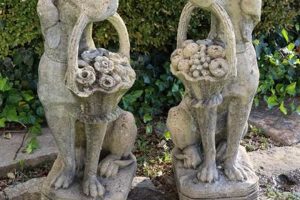
Contemporary outdoor sculptures serve as aesthetic focal points within landscaped environments. These artistic elements, crafted from a variety of materials including metal, stone, and resin, often reflect abstract or minimalist design principles. A geometric steel form placed amidst lush foliage exemplifies this integration of art and nature.
The incorporation of such pieces enhances the visual appeal and perceived value of outdoor spaces. Historically, gardens featured classical statuary; however, current trends favor innovative designs that complement modern architectural styles. This transition provides opportunities for individual expression and the creation of unique outdoor environments.
The following sections will delve into specific materials used in their construction, considerations for placement within a garden setting, and the impact of these artistic features on overall landscape design.
Guidelines for Integrating Contemporary Outdoor Sculptures
Effective integration of contemporary outdoor sculptures requires careful consideration of various factors to maximize their aesthetic impact and ensure harmony within the landscape.
Tip 1: Scale and Proportion. Select sculpture sizes that are proportionate to the surrounding environment. An oversized piece can overwhelm a small garden, while an undersized one may be lost in a larger landscape.
Tip 2: Material Selection. Choose materials that complement the existing architectural style and withstand the elements. Metal sculptures offer durability and a modern aesthetic, while stone provides a more natural and timeless feel.
Tip 3: Placement and Visibility. Strategically position sculptures to create visual interest from multiple vantage points. Consider sightlines from within the residence and throughout the garden.
Tip 4: Lighting Considerations. Incorporate lighting to highlight sculptures at night. Uplighting emphasizes form and texture, while spotlighting creates dramatic effects.
Tip 5: Contextual Harmony. Ensure the sculpture’s style and theme align with the garden’s overall design. A minimalist sculpture may be incongruous in a traditional, formal garden.
Tip 6: Foundation and Stability. Provide a stable foundation for the sculpture, particularly for larger or heavier pieces, to prevent movement or damage.
Tip 7: Maintenance and Upkeep. Regularly clean and maintain sculptures to preserve their appearance and prevent corrosion or deterioration. Different materials require specific cleaning methods.
Careful attention to these guidelines ensures that contemporary outdoor sculptures enhance the beauty and value of the landscape, creating a cohesive and visually appealing outdoor space.
The subsequent section will provide a deeper exploration of specific materials used in the creation of outdoor sculptures.
1. Abstract Forms

Abstract forms in contemporary outdoor sculpture represent a departure from traditional representational art. The absence of recognizable imagery encourages viewers to engage with the artwork on a purely visual and emotional level. This departure is a defining characteristic of many modern garden statues, influencing their selection and placement within landscaped environments. The effect is to shift the focus from literal depiction to the interplay of shape, texture, and material. For example, a sculpture composed of intersecting stainless steel planes does not attempt to replicate a natural form; instead, it interacts with light and shadow, creating a dynamic visual experience. Understanding this shift is critical for appreciating the artistic intent and maximizing the visual impact of such installations.
The incorporation of abstract forms allows for greater flexibility in design and placement. These sculptures can complement a wide range of garden styles, from minimalist to contemporary. Their non-representational nature also reduces the risk of stylistic clashes with existing architectural features. Consider the example of a large, amorphous stone sculpture placed within a Japanese garden; its abstract form provides a counterpoint to the garden’s carefully structured elements, creating a sense of balance and visual interest. Moreover, the selection of specific abstract forms can be tailored to evoke particular emotions or concepts, further enhancing the overall aesthetic experience of the garden.
In summary, abstract forms play a crucial role in defining the aesthetic of contemporary outdoor sculpture. Their non-representational nature encourages viewers to engage with the artwork on a more profound level, and their design flexibility allows for seamless integration into diverse garden settings. The challenge lies in selecting forms that resonate with the individual’s artistic sensibilities and complement the existing landscape. Ultimately, the successful incorporation of abstract sculpture elevates the garden to a realm of artistic expression, transforming it into a dynamic and engaging outdoor space.
2. Material Durability

Material durability is a critical attribute of outdoor sculpture, influencing its longevity and aesthetic integrity. The selection of robust materials directly impacts the sculpture’s ability to withstand environmental stressors, including temperature fluctuations, precipitation, solar radiation, and potential physical damage. Without adequate durability, degradation will inevitably occur, diminishing the sculpture’s visual appeal and potentially leading to structural failure. For instance, untreated steel will corrode rapidly when exposed to moisture, while certain types of stone may crack or crumble under freeze-thaw conditions. The implications of material selection extend beyond aesthetic considerations, affecting the long-term economic viability of the art installation. Therefore, understanding material properties and their interaction with environmental factors is paramount in ensuring the lasting value of outdoor sculpture.
The practical significance of material selection is evident in the range of materials commonly employed in contemporary outdoor sculpture. Stainless steel, due to its corrosion resistance, is frequently chosen for installations in coastal environments or regions with high levels of industrial pollution. Bronze, known for its inherent durability and ability to develop a protective patina over time, is another popular option, particularly for more traditional or figurative works. Composite materials, such as fiberglass-reinforced polymers, offer lightweight alternatives that can be molded into complex shapes and finished to resemble stone or metal. The decision regarding which material to use must consider the specific environmental conditions, the desired aesthetic, and the available budget. Furthermore, proper surface treatments, such as sealants and protective coatings, can significantly extend the lifespan of even relatively less durable materials.
In conclusion, material durability is not merely a desirable characteristic but an essential component of successful outdoor sculpture. Its impact extends from aesthetic preservation to structural integrity and economic viability. The selection of appropriate materials, coupled with proper surface treatments and maintenance, ensures that these artworks can withstand the elements and continue to enrich outdoor environments for years to come. The challenges lie in balancing aesthetic considerations with the practical realities of material performance and cost, requiring a thorough understanding of both artistic design and materials science.
3. Landscape Integration

Landscape integration, in the context of contemporary outdoor sculpture, denotes the seamless harmonization of artistic elements with the surrounding natural environment. The effectiveness of this integration directly impacts the overall aesthetic appeal and experiential quality of the outdoor space. A poorly integrated sculpture, regardless of its individual artistic merit, can appear discordant and detract from the intended design. The placement, scale, material, and form of the artwork must be carefully considered in relation to the existing vegetation, topography, architectural features, and prevailing light conditions. For instance, a polished stainless steel sculpture positioned within a dense woodland setting could create an unsettling contrast, disrupting the natural ambiance. Conversely, a rough-hewn stone sculpture might seamlessly blend into the same environment, enhancing the sense of tranquility and organic connection. Therefore, a nuanced understanding of landscape integration principles is crucial for achieving a cohesive and visually pleasing outdoor composition.
The practical application of landscape integration principles involves a detailed site analysis, including assessments of soil conditions, sun exposure, prevailing wind patterns, and existing plant communities. This information informs the selection of appropriate materials and sculptural forms that will thrive within the specific microclimate and complement the surrounding vegetation. Consider the example of a sculpture designed for a desert environment. The material chosen should be heat-resistant and require minimal maintenance in arid conditions. Furthermore, the form of the sculpture might echo the geometric patterns found in the desert landscape, creating a sense of visual continuity. Similarly, in a formal garden setting, a symmetrical sculpture crafted from materials such as marble or bronze could reinforce the structured elegance of the design. The success of these integration efforts hinges on a thorough understanding of the interplay between art and nature, and a commitment to creating a harmonious and sustainable outdoor environment.
In summary, landscape integration is a pivotal factor in determining the success of contemporary outdoor sculpture. It requires a holistic approach, encompassing careful consideration of the artwork’s aesthetic qualities, environmental compatibility, and overall impact on the landscape. The challenges lie in balancing artistic expression with ecological sensitivity, and in creating installations that both enhance the beauty of the natural world and provide meaningful aesthetic experiences. By prioritizing landscape integration, designers can transform outdoor spaces into harmonious and inspiring environments that celebrate the symbiotic relationship between art and nature.
4. Scale Appropriateness

Scale appropriateness represents a fundamental design consideration in the integration of contemporary outdoor sculpture. The dimensions of the artwork must harmonize with the surrounding environment to avoid visual imbalances or the creation of a disjointed aesthetic. An oversized sculpture can overwhelm a smaller garden, creating a sense of visual crowding and diminishing the impact of other landscape elements. Conversely, an undersized sculpture risks becoming lost within a larger space, failing to capture attention or contribute meaningfully to the overall design. The intended effect of the sculpture, whether it is to serve as a dominant focal point or to subtly enhance the existing landscape, dictates the appropriate scale. For instance, a monumental abstract sculpture might be suitable for a expansive public park, whereas a smaller, more delicate piece would be better suited for a private garden.
The practical application of scale appropriateness involves a careful assessment of the site’s dimensions, architectural features, and existing vegetation. Consider a modern, minimalist garden with clean lines and restrained planting. A large, ornate sculpture would likely clash with the garden’s inherent simplicity. Instead, a smaller, geometric piece, crafted from materials such as stainless steel or polished concrete, would complement the garden’s aesthetic and enhance its sense of balance and proportion. Alternatively, in a more expansive and naturalistic landscape, a larger sculpture could be used to draw the eye towards a specific area or to create a sense of drama and visual interest. The selection of the appropriate scale requires a discerning eye and a thorough understanding of spatial relationships.
In summary, scale appropriateness is a critical determinant of the success of modern garden statues. It influences the visual impact of the artwork, its relationship to the surrounding environment, and its overall contribution to the aesthetic quality of the outdoor space. The challenge lies in accurately assessing the site’s characteristics and selecting a sculpture that is both visually compelling and harmoniously integrated. Prioritizing scale appropriateness ensures that contemporary outdoor sculpture enhances the beauty and value of landscaped environments, creating a cohesive and visually pleasing outdoor composition.
5. Artistic Expression

Artistic expression, manifested through contemporary outdoor sculptures, serves as a significant extension of individual creativity and a tangible representation of aesthetic preferences within landscaped environments. The selection and placement of these pieces transcend mere decoration, functioning instead as deliberate statements reflecting the homeowner’s or designer’s artistic vision.
- Personal Interpretation
Modern garden statues offer a medium for personal interpretation, where abstract forms and unconventional materials allow for individualized engagement. A geometric metal sculpture, for example, may symbolize progress or innovation to one individual, while evoking feelings of tension or instability for another. This subjective experience is inherent to the artistic process and enriches the viewer’s interaction with the outdoor space. The deliberate choice of a particular style reflects a conscious effort to convey a specific message or aesthetic sensibility.
- Materiality and Technique
The choice of materials and fabrication techniques employed in constructing modern garden statues directly contributes to artistic expression. The use of weathering steel, for instance, conveys a sense of rustic modernity and an appreciation for natural processes. Conversely, polished stainless steel emphasizes a clean, futuristic aesthetic. The artist’s deliberate manipulation of these materials, through welding, carving, or casting, imbues the sculpture with a unique character and reveals their technical skill and artistic intent.
- Spatial Dynamics
The placement of a sculpture within the garden dictates how it interacts with the surrounding space, thereby enhancing its artistic expression. A sculpture positioned at the end of a winding path encourages exploration and discovery. A piece strategically placed near a water feature creates a sense of tranquility and reflection. The deliberate manipulation of spatial dynamics allows the artist, or the individual selecting the piece, to control the viewer’s experience and emphasize specific aspects of the landscape.
- Cultural and Historical Context
Modern garden statues often draw inspiration from diverse cultural and historical contexts, adding layers of meaning to their artistic expression. A sculpture referencing minimalist art movements conveys an appreciation for simplicity and essential forms. A piece incorporating elements of traditional Japanese garden design reflects a reverence for nature and harmony. Understanding these cultural and historical references enriches the viewer’s appreciation of the artwork and provides a deeper insight into the artist’s creative process.
These facets highlight the pivotal role of artistic expression in shaping the character of modern garden statues. The selections made in material, technique, placement, and reference points contribute to the sculpture’s ability to represent a personal or cultural narrative, transforming the outdoor space into a canvas for artistic interpretation.
Frequently Asked Questions
This section addresses common inquiries regarding the selection, placement, and maintenance of contemporary outdoor sculptures.
Question 1: What materials are best suited for regions with harsh winters?
Materials exhibiting high resistance to freeze-thaw cycles are recommended. Stone, particularly granite, and certain types of metal, such as stainless steel with appropriate passivation, offer superior durability in cold climates.
Question 2: How does one determine the appropriate scale for a garden sculpture?
The scale of the sculpture should be proportionate to the size of the garden and the surrounding architectural features. A small garden benefits from smaller, more intimate pieces, while larger landscapes can accommodate more substantial installations.
Question 3: Is professional installation necessary for all modern garden statues?
Professional installation is highly recommended for larger or heavier sculptures, as well as those requiring secure anchoring to the ground. This ensures stability and prevents potential damage or injury.
Question 4: How can one protect outdoor sculptures from vandalism or theft?
Security measures may include installing security cameras, utilizing alarm systems, and anchoring sculptures to concrete pads. The visibility of the sculpture from the residence or neighboring properties can also deter potential vandals.
Question 5: What is the best way to clean and maintain contemporary outdoor sculptures?
Cleaning methods vary depending on the material. Generally, gentle washing with mild soap and water is sufficient. Abrasive cleaners and harsh chemicals should be avoided. Specific maintenance guidelines should be obtained from the sculpture’s manufacturer or artist.
Question 6: How does one integrate a modern sculpture into a traditional garden setting?
Careful consideration of the sculpture’s form, material, and placement is crucial. Selecting a sculpture that complements the garden’s existing aesthetic, rather than clashing with it, is essential for achieving a harmonious integration.
These FAQs provide essential guidelines for navigating the complexities of incorporating contemporary sculpture into outdoor spaces. Careful planning and attention to detail are paramount for ensuring a successful and aesthetically pleasing installation.
The subsequent section will explore potential design pitfalls to avoid when selecting and placing modern garden statues.
Modern Garden Statues
This exploration has detailed considerations for the integration of contemporary outdoor sculpture within landscaped environments. Material durability, landscape integration, scale appropriateness, and artistic expression have been presented as critical factors in achieving a visually compelling and sustainable installation. The careful evaluation of these elements informs responsible decision-making throughout the selection and placement process.
The judicious application of these principles promotes outdoor spaces that reflect artistic vision, environmental sensitivity, and enduring aesthetic value. Further research and engagement with current trends within sculptural design is encouraged to ensure informed selections that enhance the relationship between art and the landscape for years to come.