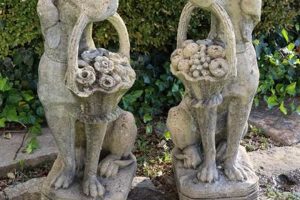
Representations of the revered friar of Assisi, often depicted with animals, serve as decorative and symbolic elements within outdoor spaces. These artistic renditions, frequently crafted from materials such as stone, resin, or concrete, are placed in residential yards, memorial gardens, and religious sanctuaries. They function as visual reminders of themes like peace, nature, and compassion.
The presence of these devotional figures offers several potential advantages. They can inspire reflection on ethical principles and spiritual values. Furthermore, these artistic pieces contribute to the aesthetic appeal of landscapes, fostering a sense of tranquility. Their enduring association with historical narratives and religious traditions imbues gardens with cultural significance.
The following discussion will examine aspects pertaining to the selection, placement, and maintenance of these emblematic features, providing insights for individuals seeking to incorporate them into their personal or communal environments.
Guidance on Integrating a Depiction of the Saint in Outdoor Settings
The careful incorporation of a representation of the Saint of Assisi into a garden or outdoor space requires thoughtful consideration. Several factors should inform the selection and placement process to ensure the figure’s enduring aesthetic appeal and symbolic resonance.
Tip 1: Material Selection: Opt for materials appropriate for the prevailing climate. Stone and bronze offer durability in diverse weather conditions, while resin may be suitable for more sheltered environments. Consider the long-term maintenance implications of each material.
Tip 2: Scale and Proportion: The size of the selected piece should be proportionate to the surrounding landscape. A statue that is too large will overwhelm the area, while one that is too small may become visually insignificant. Evaluate the space’s dimensions carefully.
Tip 3: Placement and Orientation: Consider the sightlines from key vantage points within the garden. Orient the figure to maximize its visual impact and symbolic resonance. Placement near natural elements, such as trees or water features, can enhance its appeal.
Tip 4: Integration with Landscaping: Incorporate the statue seamlessly into the existing landscape design. Planting complementary flora around the base of the figure can create a harmonious and visually appealing composition. Avoid overcrowding, allowing the statue to remain the focal point.
Tip 5: Consideration of Symbolism: Understand the symbolism associated with specific depictions of the figure. Statues showing the saint with animals may appeal to nature enthusiasts, while those depicting him in prayer may resonate with individuals seeking spiritual reflection. Choose a representation that aligns with personal values.
Tip 6: Securing the Statue: Depending on the statue’s size and weight, consider securing it to a stable base. This is particularly important in areas prone to strong winds or vandalism. A well-secured statue will ensure longevity and prevent accidental damage.
Tip 7: Regular Maintenance: Implement a regular maintenance schedule to preserve the statue’s appearance. Clean the surface periodically with appropriate cleaning agents to remove dirt and debris. Address any signs of damage or deterioration promptly to prevent further degradation.
By adhering to these guidelines, individuals can effectively integrate a figure into their outdoor spaces, creating a peaceful and visually engaging environment that reflects personal values and aesthetic preferences. The enduring presence of the Saint of Assisi offers a timeless reminder of peace, compassion, and harmony with nature.
The following section will address the historical context and artistic evolution of the figure, providing a more comprehensive understanding of its cultural significance.
1. Material Durability

The longevity and aesthetic appeal of a figure representing the Saint of Assisi in an outdoor setting are intrinsically linked to the inherent properties of its constituent material. Material durability directly influences the ability of the statue to withstand environmental stressors, such as fluctuations in temperature, exposure to ultraviolet radiation, and the corrosive effects of precipitation. The selection of a material lacking sufficient durability invariably leads to premature degradation, necessitating costly repairs or eventual replacement. For instance, a statue crafted from insufficiently treated wood will be susceptible to rot and insect infestation, whereas a low-grade resin may become brittle and prone to cracking under prolonged sun exposure.
Conversely, the utilization of robust materials, such as bronze, granite, or high-density cast stone, provides a significantly extended lifespan. These materials exhibit superior resistance to weathering, minimizing the need for frequent maintenance and preserving the statue’s visual integrity over decades. A notable example is the prevalence of bronze sculptures in historical gardens; their enduring presence serves as a testament to the material’s inherent resilience. The practical significance of understanding material durability lies in the ability to make informed purchasing decisions, ensuring that the selected statue represents a sound investment that will contribute positively to the landscape for years to come.
In conclusion, the connection between material durability and the long-term viability of these statues is undeniable. Recognizing the impact of environmental factors on various materials empowers individuals to select statues that offer both aesthetic beauty and enduring structural integrity, mitigating the risks associated with premature deterioration and preserving the intended symbolism for generations. Challenges may arise in accurately assessing material quality prior to purchase; therefore, prioritizing reputable suppliers and seeking expert advice is advisable.
2. Artistic Depiction

Artistic depiction forms a crucial component of a “saint francis garden statue,” profoundly influencing its symbolic power and aesthetic impact. The specific style, pose, and accompanying imagery directly affect how viewers perceive the figure and interpret its intended message. A statue rendered in a realistic style, for instance, emphasizing anatomical accuracy and detailed textures, may evoke a sense of reverence and historical authenticity. Conversely, an abstract or stylized representation might prioritize emotional resonance and symbolic interpretation, sacrificing literal accuracy for a more evocative effect. The choice between these approaches, or a blend thereof, significantly shapes the statue’s overall impact and its ability to communicate the values associated with the Saint.
Consider, for example, the contrasting effects of a statue depicting Francis surrounded by realistic, life-sized animals versus one featuring stylized representations of birds perched on his outstretched hands. The former may appeal to viewers seeking a literal depiction of the Saint’s connection with nature, while the latter might symbolize a more abstract concept of harmony and spiritual transcendence. Similarly, the use of color, texture, and pose within the artistic depiction can either enhance or detract from the statue’s overall effectiveness. A vibrant, polychrome statue might be more visually engaging in a vibrant garden setting, whereas a simple, monochromatic figure could provide a more contemplative focus in a secluded area. The artistic choices made by the sculptor, therefore, are not merely aesthetic decisions, but rather deliberate acts of communication that shape the statue’s meaning and impact.
In conclusion, artistic depiction is inextricably linked to the significance and effectiveness of the statue. Understanding the artistic choices inherent in its creation provides viewers with a deeper appreciation of its intended message. The practical significance of this understanding lies in the ability to select statues that effectively communicate the desired values and enhance the aesthetic qualities of the surrounding environment. Challenges may arise in discerning the subtle nuances of artistic style and symbolic representation; therefore, careful observation and engagement with art historical context are encouraged.
3. Symbolic Representation

The connection between symbolic representation and a figure representing the Saint of Assisi situated in an outdoor space is pivotal to its significance and purpose. The statue’s impact transcends mere decoration; it functions as a visual embodiment of specific values and beliefs associated with the Saint’s life and teachings. The selection of imagery, pose, and accompanying elements directly contributes to the message conveyed. For instance, a statue depicting Francis surrounded by animals symbolizes his affinity for nature and his belief in the interconnectedness of all living beings. The presence of a dove often signifies peace and divine guidance. The arrangement of the Saint in a humble, kneeling posture can represent humility and devotion. Therefore, each element contributes to a multifaceted symbolic narrative that resonates with observers.
Consider the practical implications of this understanding. A hospital garden, aiming to provide solace and hope to patients, might feature a figure of the Saint extending a hand in blessing, symbolizing healing and compassion. Alternatively, a school garden could incorporate a statue depicting Francis preaching to birds, emphasizing environmental stewardship and respect for all creatures. These choices are not arbitrary; they are deliberate attempts to leverage the statue’s inherent symbolism to reinforce specific values and create a conducive environment for reflection or learning. Moreover, the statue’s symbolic representation can serve as a potent reminder of the Saint’s teachings, encouraging individuals to emulate his virtues of simplicity, humility, and love for all.
In conclusion, symbolic representation forms the core of the Saint’s figure’s effectiveness as a meaningful addition to any outdoor setting. Its significance stems not from its artistic merit alone but from its capacity to convey profound spiritual and ethical principles. Challenges in fully grasping this symbolism may arise from varying cultural or religious backgrounds; however, understanding the common themes associated with the Saint provides a foundational basis for appreciation. Recognizing and interpreting the statue’s symbolic language enables a deeper connection with its message, transforming it from a mere object into a powerful source of inspiration and reflection.
4. Garden Placement

The strategic positioning of a representation of the Saint of Assisi within an outdoor space significantly affects its visual impact, symbolic resonance, and overall contribution to the environment. Thoughtful consideration of garden placement is essential to maximize the statue’s intended effect and ensure its harmonious integration within the landscape.
- Visual Prominence
Placement dictates the statue’s visibility from key vantage points. Positioning the figure along a frequently traversed path or within a focal area of the garden ensures regular visual engagement. Concealing the statue amidst dense foliage, conversely, creates a sense of discovery and invites closer inspection. The degree of visual prominence should align with the intended level of interaction and contemplation.
- Environmental Harmony
Integration with existing landscape elements is crucial. Placing the statue near natural features, such as trees, water features, or flowerbeds, enhances its connection to the natural world and reinforces the Saint’s association with nature. Conversely, incongruous placement amidst starkly contrasting architectural styles may diminish its symbolic resonance and aesthetic appeal. Careful consideration of surrounding textures, colors, and forms is paramount.
- Symbolic Reinforcement
Strategic placement can amplify the statue’s symbolic message. Positioning the figure near a birdbath or feeding station reinforces its association with compassion and care for animals. Placing it within a meditative space or near a rosary garden promotes spiritual reflection and contemplation. The physical environment should complement and augment the statue’s inherent symbolism.
- Sunlight and Shadow
The interplay of sunlight and shadow significantly influences the statue’s visual impact. Direct sunlight can accentuate its form and highlight intricate details, while shadows can create a sense of mystery and depth. Consider the statue’s orientation relative to the sun’s path throughout the day to optimize its aesthetic appeal and ensure that it remains visually engaging under varying lighting conditions. Furthermore, shadows can contribute symbolic meaning; for instance, casting a shadow resembling a cross during specific times of day.
These considerations collectively underscore the importance of garden placement in determining the effectiveness of a figure representing the Saint. Strategic positioning not only enhances its visual appeal but also amplifies its symbolic message and ensures its harmonious integration within the landscape, transforming it from a mere object into a powerful element of spiritual and aesthetic enrichment.
5. Spiritual Significance

The presence of a figure representing the Saint of Assisi in an outdoor space directly correlates with the infusion of spiritual significance into that environment. These artistic representations serve as potent symbols, embodying core tenets of the Saint’s life and teachings, such as poverty, humility, love for nature, and devotion to God. The figures, therefore, function not merely as decorative elements, but as tangible reminders of these spiritual values, prompting reflection and contemplation among those who encounter them. The placement of such a figure in a garden can transform a purely aesthetic space into a sanctuary imbued with deeper meaning. A cause-and-effect relationship exists: the introduction of the statue causes a shift in the perception of the space, adding a layer of spiritual depth. Without this component, the object remains simply a statue; with it, the statue becomes a focus for faith and a symbol of spiritual aspiration.
The importance of spiritual significance as a component of the depiction is demonstrated in various contexts. For example, a monastic garden featuring the Saint of Assisi often employs the figure to reinforce the community’s commitment to the Franciscan values of simplicity and connection with nature. In private gardens, individuals may use such statues to create personal spaces for prayer and meditation, imbuing their surroundings with a sense of peace and divine presence. The practical significance of understanding this lies in the ability to intentionally cultivate environments that foster spiritual well-being. A hospital garden, for instance, might incorporate a statue showing the Saint’s care for the sick, to inspire hope and compassion among patients and staff. In each scenario, the recognition of spiritual significance informs the selection, placement, and interpretation of the statue, enhancing its impact and purpose.
In conclusion, the spiritual significance of these figures is inseparable from their role within the broader context of outdoor spaces. This understanding allows individuals and institutions to leverage the symbolism of the figure in meaningful ways. Challenges may arise in interpreting the statue’s message across diverse cultural or religious perspectives; however, recognizing the fundamental principles associated with the Saint provides a unifying framework for appreciation and interpretation. The figure, therefore, stands as a powerful testament to the enduring influence of spiritual values within the physical world.
6. Weather Resistance
Weather resistance is a critical attribute for any outdoor representation of the Saint of Assisi. Exposure to environmental elements such as precipitation, temperature fluctuations, ultraviolet radiation, and wind necessitates that the chosen materials and construction methods provide substantial protection against degradation. Without adequate weather resistance, the statue will deteriorate, leading to structural damage, aesthetic decline, and eventual loss of symbolic value. The cause-and-effect relationship is direct: prolonged exposure to adverse weather accelerates material breakdown, resulting in cracking, fading, and surface erosion. The importance of weather resistance as a component is paramount; it determines the statue’s longevity and ability to maintain its intended appearance and symbolic integrity over time. A real-life example is observed in numerous garden settings where statues crafted from unsuitable materials exhibit significant damage within a few years, while those constructed with durable materials remain intact for decades. The practical significance of this understanding lies in making informed purchasing decisions, prioritizing materials and finishes designed to withstand the specific climate conditions of the intended location.
Further analysis reveals that specific material properties directly influence weather resistance. For instance, bronze, stone, and certain high-density polymers offer superior resistance to ultraviolet degradation and freeze-thaw cycles compared to less durable alternatives such as untreated wood or low-grade resins. Protective coatings, such as sealants and paints, can further enhance weather resistance by providing a barrier against moisture penetration and ultraviolet exposure. Practical applications include the selection of marine-grade sealants for statues located in coastal environments or the application of UV-resistant paints to prevent fading in areas with high sun exposure. Additionally, proper drainage design is crucial to prevent water accumulation, which can accelerate material decay. These considerations highlight the multifaceted nature of weather resistance, encompassing material selection, protective treatments, and design features.
In summary, weather resistance is an indispensable characteristic for ensuring the longevity and enduring beauty of these artistic pieces. The selection of appropriate materials, the application of protective finishes, and thoughtful design considerations are essential for mitigating the damaging effects of environmental exposure. Challenges may arise in accurately assessing the long-term weather resistance of different materials; however, consulting with experienced sculptors, landscape architects, and material scientists can provide valuable insights. Ultimately, prioritizing weather resistance ensures that the Saint’s representation remains a lasting symbol of faith, peace, and connection with nature, impervious to the detrimental effects of time and weather.
Frequently Asked Questions
This section addresses common inquiries regarding the selection, care, and significance of garden statues representing the Saint of Assisi.
Question 1: What materials are most suitable for withstanding prolonged outdoor exposure?
Durable materials such as cast stone, bronze, and certain high-density resins offer superior resistance to weathering, ultraviolet radiation, and temperature fluctuations. Untreated wood and low-grade plastics are generally unsuitable due to their susceptibility to degradation.
Question 2: How should the size of the statue be determined relative to the garden space?
The statue’s dimensions should be proportionate to the surrounding landscape. An overly large statue will overwhelm the area, while an excessively small statue may become visually insignificant. Careful measurement and consideration of sightlines are essential.
Question 3: What placement considerations optimize the statue’s visual impact and symbolic resonance?
Placement should prioritize visibility from key vantage points, integration with existing landscape elements, and reinforcement of the statue’s symbolic message. Proximity to natural features and consideration of sunlight and shadow patterns are also important factors.
Question 4: What maintenance practices are essential for preserving the statue’s appearance and structural integrity?
Regular cleaning with appropriate cleaning agents is necessary to remove dirt and debris. Protective coatings, such as sealants and paints, can mitigate the effects of weathering and ultraviolet radiation. Prompt repair of any damage is crucial to prevent further deterioration.
Question 5: How can the statue’s placement contribute to a sense of spiritual significance within the garden?
Positioning the statue in a meditative space, near a rosary garden, or adjacent to elements symbolizing peace and nature can amplify its spiritual resonance. The integration of the statue within a carefully designed environment enhances its ability to evoke reflection and contemplation.
Question 6: What are the key symbolic representations associated with figures?
Common symbolic elements include the presence of animals, signifying the Saint’s affinity for nature; the depiction of the Saint in humble postures, representing humility and devotion; and the use of symbols such as doves, representing peace and divine guidance.
These frequently asked questions provide a foundational understanding of the key considerations surrounding the selection, placement, and maintenance of statues depicting the Saint of Assisi. Understanding these points ensures the creation of a harmonious and meaningful outdoor space.
The subsequent section will explore the historical origins and cultural relevance of the figure.
Concluding Remarks
The preceding discussion has examined the multifaceted aspects of the “saint francis garden statue” as more than mere ornamentation. It has underscored its role as a symbol imbued with artistic, spiritual, and historical significance. The selection, placement, and maintenance of this devotional feature demand careful consideration to ensure its enduring beauty and symbolic resonance within the outdoor environment. Key elements such as material durability, artistic depiction, and strategic garden placement contribute to its overall effectiveness.
Ultimately, the integration of a representation of the Saint of Assisi into a garden space signifies a commitment to the values of peace, compassion, and harmony with nature. Continued attention to the factors outlined herein will ensure that these symbolic figures continue to inspire reflection and enrich outdoor environments for generations to come. The responsible stewardship of these artistic representations reflects a broader appreciation for the enduring legacy of Saint Francis and the principles he espoused.