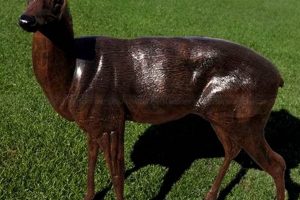
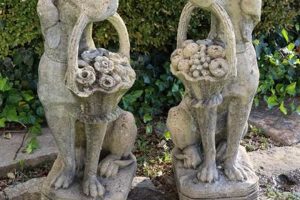
An outdoor space featuring sculpted reptiles as thematic or decorative elements. These installations can range from small, individual pieces placed amongst foliage to elaborate arrangements incorporating multiple figures, water features, and specific landscaping designs. A backyard with a stone turtle near a pond, or a public park displaying a grouping of bronze tortoises, are examples of this type of garden art.
These artistic displays offer several advantages. They contribute aesthetic value to residential and commercial landscapes, providing visual interest and a sense of tranquility. Furthermore, the incorporation of animal sculptures can promote appreciation for wildlife and nature. Historically, animal figures have been used in gardens across various cultures, often symbolizing longevity, good fortune, and protection.
The following sections will delve into the specific considerations for designing such a space, including material choices, placement strategies, and maintenance techniques, ensuring a durable and visually appealing outcome.
Design and Maintenance Considerations
The integration of sculpted reptiles into outdoor spaces requires careful planning to ensure aesthetic harmony and long-term durability. The following guidelines offer practical advice for achieving a successful installation.
Tip 1: Material Selection is Paramount: Opt for materials resistant to weathering and environmental degradation. Stone, bronze, and high-quality resin are suitable choices. Consider the regional climate when selecting materials; for instance, porous stone may not be appropriate in areas subject to frequent freezing and thawing.
Tip 2: Scale and Proportion Matters: Ensure the size of the sculpture is appropriate for the surrounding landscape. An oversized figure in a small garden can appear overwhelming, while a diminutive statue may be lost in a large expanse. Measure the area and visualize the placement before making a purchase.
Tip 3: Strategic Placement Enhances Visual Impact: Position the figure in a location that complements its form and enhances the overall design. Consider factors such as sunlight, background foliage, and sightlines from different vantage points. A sculpture placed near a water feature can create a serene and harmonious atmosphere.
Tip 4: Proper Foundation Ensures Stability: Provide a solid and level base for the sculpture to prevent tipping or sinking, particularly in areas with unstable soil. For larger pieces, a concrete pad may be necessary. Ensure adequate drainage to prevent water accumulation around the base.
Tip 5: Regular Cleaning Prevents Degradation: Implement a routine cleaning schedule to remove dirt, algae, and other debris. Use mild soap and water, and avoid abrasive cleaners that can damage the surface. For metal sculptures, consider applying a protective coating to prevent oxidation.
Tip 6: Seasonal Protection Extends Lifespan: In regions with harsh winters, take steps to protect the sculpture from frost damage. Covering the piece with a tarp or moving it indoors can prevent cracking and discoloration. For delicate sculptures, consider wrapping them in protective material.
Adhering to these principles will contribute to a visually pleasing and enduring outdoor display. Prioritizing material quality, appropriate scale, strategic placement, and diligent maintenance ensures the longevity and beauty of the installed piece.
The subsequent sections will address advanced design concepts and explore the symbolism associated with reptile sculptures across different cultures.
1. Sculpture Material

The selection of sculpture material is paramount in determining the longevity, aesthetic appeal, and overall success of an installation featuring reptile figures. The material’s properties directly impact its resistance to environmental factors, its visual integration with the surrounding landscape, and the long-term maintenance requirements of the sculpture.
- Stone Durability and Aesthetics
Stone, encompassing granite, marble, and sandstone, offers natural durability and a timeless aesthetic. Its resistance to weathering varies based on the specific type of stone and its porosity. Granite, known for its hardness, withstands freeze-thaw cycles effectively. However, porous stones like sandstone require sealing to prevent water absorption and subsequent cracking. Stone integrates well into natural garden settings, complementing foliage and other landscape elements. Its weight, however, can complicate installation and necessitate a stable foundation.
- Bronze Longevity and Patina Development
Bronze sculptures are prized for their durability and the development of a protective patina over time. The patina, a greenish or brownish layer formed through oxidation, enhances the sculpture’s aesthetic character and provides a barrier against corrosion. Bronze withstands various weather conditions and requires minimal maintenance beyond occasional cleaning. Its higher cost, however, may be a limiting factor. Examples include classical bronze tortoise statues found in formal gardens.
- Resin Versatility and Affordability
Resin, particularly high-density polyethylene, offers versatility in design and affordability. It can be molded into intricate shapes and finished to mimic the appearance of stone or bronze. However, resin is susceptible to UV degradation and may fade or crack over time if not properly treated. Its lighter weight simplifies installation, but it may require anchoring in windy conditions. Resin sculptures are suitable for less formal garden settings or temporary installations.
- Concrete Cost-Effectiveness and Formability
Concrete provides a cost-effective alternative for larger reptile sculptures. It is easily molded into various shapes and can be reinforced with steel for added strength. However, concrete is porous and prone to cracking in freeze-thaw climates. Sealing and regular maintenance are essential to prevent water absorption and deterioration. Concrete sculptures can be stained or painted to achieve different aesthetic effects. A well-constructed concrete turtle figure can be a substantial and enduring addition to a landscape.
The choice of sculpture material should align with the desired aesthetic, the environmental conditions of the site, and the available budget. Careful consideration of these factors ensures that the reptile figures enhance the beauty and longevity of the garden.
2. Garden Placement
The positioning of sculpted reptiles within a landscape exerts a profound influence on the overall aesthetic and thematic impact of the space. Strategic placement transforms a mere collection of statues into a cohesive and engaging environment. The careful consideration of sightlines, surrounding vegetation, and the intended mood are crucial determinants of a successful installation. Improper placement can diminish the visual impact of the art, while thoughtful positioning can enhance its presence and integrate it seamlessly into the garden’s overall design.
A practical example illustrates this point. Consider a bronze tortoise sculpture placed near a pond. The proximity to water creates a naturalistic setting, enhancing the symbolic association of turtles with aquatic environments and longevity. Conversely, the same sculpture placed amidst a formal rose garden may appear incongruous and detract from the established aesthetic. Furthermore, the direction of sunlight should be considered. A sculpture facing east will be illuminated by the morning sun, creating a dynamic interplay of light and shadow, whereas a sculpture placed in constant shade may lose its visual prominence. The scale of the sculpture relative to its surroundings is also essential; a diminutive statue can be easily lost in a large, open space, necessitating placement in a more intimate setting.
In summary, garden placement is not merely a logistical consideration, but an integral design element that shapes the visual narrative and emotional resonance of a landscape featuring reptile sculptures. It requires a keen understanding of spatial relationships, environmental factors, and the artistic properties of the sculpture itself. Overcoming the challenge of achieving harmonious integration hinges on careful planning and a sensitivity to the nuances of the garden environment. Mastering this aspect is essential for realizing the full potential of a sculpted reptile garden.
3. Symbolic Meaning

The incorporation of reptile figures into garden designs is not merely an aesthetic choice; it frequently embodies a deliberate invocation of symbolic associations. The cultural significance attributed to turtles, tortoises, and related species varies across different societies, influencing the meaning conveyed by their sculpted representations within a garden setting.
- Longevity and Endurance
Across numerous cultures, turtles are emblematic of longevity, stability, and endurance. This association stems from their long lifespans and perceived resilience. In the context of a garden, a turtle statue can symbolize a wish for enduring prosperity and a stable home. For example, a stone tortoise placed near the entrance to a property might be intended to represent the enduring strength and protection of the family dwelling within.
- Wisdom and Knowledge
In certain Eastern traditions, turtles are revered for their wisdom and connection to ancient knowledge. Their slow, deliberate movements are seen as a metaphor for careful contemplation and informed decision-making. A garden featuring a turtle statue could therefore be interpreted as a space for reflection and intellectual growth, encouraging visitors to cultivate wisdom through mindful observation.
- Protection and Security
The turtle’s shell naturally signifies protection and security. This symbolism can be deliberately emphasized in a garden design by positioning a turtle statue facing outwards, as a guardian against negative influences. Such placement is often intended to provide a sense of safety and well-being to those who inhabit or visit the space.
- Connection to Nature and Harmony
Reptile figures, especially when placed near water features or integrated into naturalistic landscapes, serve as a reminder of the interconnectedness of all living things. They symbolize a desire for harmony with nature and a recognition of the importance of ecological balance. A garden featuring reptile statues may encourage visitors to appreciate the natural world and to cultivate a sense of stewardship towards the environment.
The symbolic weight attributed to reptile figures significantly enriches the overall character of a garden. By understanding and thoughtfully incorporating these symbolic dimensions, garden designers and enthusiasts can create spaces that are not only visually appealing but also deeply meaningful. The deliberate selection and placement of reptile statues can transform a garden into a powerful expression of personal values, cultural traditions, and aspirations for a prosperous and harmonious life.
4. Landscape Integration
The successful integration of reptile sculptures into a landscape necessitates a deliberate design approach, recognizing that the sculptures are not isolated objects but integral components of a larger, unified composition. Effective integration considers the existing elements of the garden topography, vegetation, water features, and architectural styles to create a harmonious and visually compelling environment. The absence of careful planning can result in a discordant aesthetic, where the sculpture appears out of place and detracts from the overall beauty of the garden. A poorly integrated sculpture may disrupt established sightlines, clash with the color palette of the surrounding plants, or simply feel forced and unnatural. Therefore, a holistic perspective is essential to ensure that the reptile figures enhance, rather than detract from, the existing landscape.
A practical illustration of successful integration is found in Japanese gardens, where stone turtle sculptures are often placed near ponds or streams, symbolizing longevity and a connection to water. The placement is carefully considered to mimic a natural habitat, using moss-covered stones and carefully pruned plants to create a sense of age and serenity. The texture and color of the stone turtle complement the surrounding rocks and vegetation, creating a seamless transition between art and nature. Conversely, a poorly executed example might involve placing a brightly colored, modern-style turtle statue in a traditional English cottage garden, creating a jarring visual contrast that disrupts the established aesthetic. The success of landscape integration hinges on understanding the principles of design, including balance, proportion, and harmony, and applying them thoughtfully to the specific characteristics of the garden and the chosen sculpture.
In conclusion, landscape integration is not merely an aesthetic consideration but a fundamental principle that determines the overall success of a reptile sculpture garden. It requires a comprehensive understanding of design principles, an appreciation for the existing landscape, and a commitment to creating a unified and harmonious composition. The challenges inherent in achieving seamless integration highlight the importance of careful planning and attention to detail. This approach transforms a collection of individual elements into a cohesive and visually compelling environment that celebrates both art and nature.
5. Size Proportion

The concept of size proportion plays a critical role in the successful integration of reptile figures within a garden setting. Proper scaling ensures that the sculptures complement their surroundings, contributing to a visually balanced and aesthetically pleasing environment. Disregard for size proportion can lead to installations that appear either overwhelming or insignificant, diminishing the intended impact of the artwork.
- Sculpture Size Relative to Garden Dimensions
The overall size of the garden dictates the appropriate scale of the sculptures. A large-scale sculpture placed in a small garden will dominate the space, creating a sense of claustrophobia and imbalance. Conversely, a small sculpture in a sprawling garden may be overlooked, failing to make a significant visual contribution. A practical approach involves measuring the garden area and selecting sculptures that occupy a proportional amount of space, ensuring a balanced distribution of visual elements. For example, a small courtyard garden might benefit from a single, moderately sized turtle statue, while a larger garden could accommodate multiple sculptures of varying sizes, arranged to create visual interest without overwhelming the space.
- Proportion Relative to Other Garden Elements
The size of the reptile figure should also be proportional to other elements within the garden, such as plants, rocks, and water features. A large turtle statue placed beside a delicate flowering plant may overshadow the plant, disrupting the visual harmony. Conversely, a small turtle statue placed beside a large boulder may appear insignificant. The goal is to achieve a balance where the sculpture complements, rather than competes with, the other elements in the garden. This might involve selecting plants with foliage that complements the texture and scale of the turtle statue or placing the statue on a base that elevates it to a more prominent position.
- Viewing Distance and Perspective
The intended viewing distance influences the perceived size and impact of the sculpture. A sculpture viewed from a distance may need to be larger to maintain its visual presence. Conversely, a sculpture viewed up close can be smaller and more detailed, allowing for a more intimate viewing experience. Consider the primary viewpoints from which the garden will be observed and select sculptures that are appropriately scaled for those perspectives. A turtle statue intended to be viewed from a balcony, for instance, might need to be larger and more visually striking than one placed closer to the ground.
- Maintaining Harmony with Architectural Style
The size of the reptile sculpture should be in keeping with the architectural style of any adjacent buildings or structures. A large, imposing sculpture might be appropriate for a grand, formal garden, while a smaller, more understated sculpture would be better suited for a cozy, informal garden surrounding a cottage-style home. Consider the overall aesthetic of the property and select sculptures that complement the existing architectural features. This ensures that the sculpture integrates seamlessly into the overall design, creating a cohesive and visually pleasing environment.
In conclusion, the application of size proportion is a critical aspect of designing a reptile sculpture garden. The selection of sculptures that are appropriately scaled to the garden’s dimensions, its other elements, and the intended viewing distance, along with maintaining harmony with the architectural style ensures a visually balanced and aesthetically pleasing environment. These considerations are essential for transforming a collection of individual elements into a cohesive and visually compelling garden.
6. Maintenance Needs

The longevity and aesthetic appeal of a turtle statue garden are inextricably linked to consistent and appropriate maintenance. The materials used in the construction of the sculptures, combined with environmental exposure, necessitate regular attention to prevent degradation. Failure to address maintenance needs results in a gradual decline in the visual quality of the installation, potentially leading to irreversible damage and necessitating costly repairs or replacements. For instance, a bronze statue left uncleaned in a coastal environment will experience accelerated corrosion due to salt exposure, impacting its structural integrity and surface appearance.
Specific maintenance procedures vary according to the sculpture’s material. Stone statues require periodic cleaning to remove algae and moss, which can discolor the surface and contribute to erosion. Metal sculptures benefit from protective coatings to mitigate oxidation and rust formation. Resin statues, while generally less prone to weathering, require protection from prolonged exposure to ultraviolet radiation, which can cause fading and cracking. Furthermore, the surrounding garden environment demands attention. Overgrown vegetation can obscure the sculptures, diminishing their visual impact and creating conditions conducive to pest infestations that may damage the art. Proper drainage is also essential, as standing water can accelerate the deterioration of the statue’s base and surrounding landscape.
In summary, neglecting maintenance needs has direct and detrimental consequences for a turtle statue garden. The proactive implementation of cleaning protocols, protective measures, and landscape management strategies is essential to preserve the artwork’s beauty and extend its lifespan. Understanding the specific material properties of the sculptures and the environmental factors at play enables the creation of a sustainable maintenance plan, ensuring the continued enjoyment of the garden for years to come. The practical significance of this understanding lies in the ability to prevent costly repairs, maintain aesthetic appeal, and preserve the value of the artistic investment.
7. Artistic Style

The artistic style significantly shapes the perception and impact of a turtle statue garden. The chosen style dictates the visual language, influencing the garden’s overall mood and conveying specific cultural or aesthetic values. For example, a garden featuring realistically sculpted turtles evokes a sense of naturalism, while an abstract or stylized interpretation creates a more contemporary or whimsical atmosphere. The style must align with the garden’s design and intended purpose to achieve visual coherence. The use of classical Roman sculptures suggests formality and historical reference, whereas employing indigenous art styles provides a unique cultural expression, enriching the space with deeper meaning.
The selection of artistic style directly impacts material choices and placement strategies. Realistic sculptures often utilize stone or bronze to emulate natural textures and colors, strategically positioned amidst foliage to enhance the illusion of living creatures. Conversely, abstract forms might employ metal or resin, arranged as focal points within minimalist landscapes, emphasizing shape and form over naturalistic representation. The size and scale of the sculptures must also correspond to the chosen style; overly large, realistically detailed turtles might overwhelm a small garden, while miniature abstract forms could become lost in a sprawling landscape. Maintaining stylistic consistency across all elements, from the sculptures themselves to the surrounding plants and hardscaping, is crucial for creating a harmonious visual experience.
In conclusion, artistic style serves as a fundamental design element in a turtle statue garden, determining its overall aesthetic and communicative power. A deliberate selection process, considering the garden’s purpose, environment, and the desired emotional response, is essential for a successful and visually compelling result. The style’s impact extends to material choices, placement, and scaling, emphasizing its integral role in shaping the garden’s identity and its long-term visual appeal. By mastering this interplay, designers can create captivating spaces that reflect their artistic vision and resonate with viewers on a deeper level.
Frequently Asked Questions
The following questions address common inquiries regarding the design, implementation, and maintenance of outdoor spaces featuring sculpted reptile figures.
Question 1: What materials are most suitable for outdoor reptile sculptures, considering weather resistance and longevity?
Durable materials such as bronze, granite, and high-quality resin are generally recommended. Bronze offers excellent weather resistance and develops a protective patina over time. Granite is a naturally resilient stone. High-quality resin, treated with UV protectants, provides a cost-effective and versatile option.
Question 2: How does the size of the sculpture affect the overall aesthetic of the garden?
The scale of the reptile figure must be proportional to the garden’s dimensions. An oversized sculpture overwhelms a small space, while a diminutive sculpture becomes lost in a large garden. Careful consideration of the garden’s size and the sculpture’s dimensions is crucial for visual harmony.
Question 3: What factors should be considered when determining the placement of a reptile sculpture?
Sightlines, surrounding vegetation, and the intended thematic impact should inform placement decisions. Position the sculpture to maximize visual interest and complement the surrounding landscape. Consider the direction of sunlight and the background against which the sculpture will be viewed.
Question 4: How does cultural symbolism influence the selection and placement of reptile sculptures?
Reptiles hold symbolic meaning across various cultures. Turtles, for example, often symbolize longevity and wisdom. Research the cultural significance associated with the reptile and choose sculptures and placements that align with the desired symbolic message.
Question 5: What maintenance is required to preserve the appearance and integrity of reptile sculptures?
Regular cleaning is essential to remove dirt, algae, and other debris. Use mild soap and water, avoiding abrasive cleaners. Metal sculptures require protective coatings to prevent oxidation. Seasonal protection, such as covering the sculpture during harsh winters, extends its lifespan.
Question 6: How can reptile sculptures be integrated seamlessly into an existing garden design?
Assess the existing garden style, color palette, and vegetation. Choose sculptures that complement these elements. Consider the principles of design, including balance, proportion, and harmony, to create a unified and visually compelling environment.
Thoughtful planning and attention to detail are crucial to the success of a reptile sculpture garden. These factors contribute to an enduring and aesthetically pleasing outdoor space.
The subsequent section will delve into specific examples of successful reptile sculpture gardens and analyze their design elements.
Conclusion
This exploration has elucidated key aspects of the outdoor displays. Considerations ranging from material selection and appropriate sizing to strategic placement and symbolic representation were examined. It has been established that successful implementation hinges upon meticulous planning and informed decision-making.
The creation of a lasting and aesthetically pleasing example demands a commitment to understanding both the artistic and practical implications of design choices. Continued adherence to established maintenance protocols and an appreciation for the symbolic weight of such installations will ensure their enduring presence within the landscape.