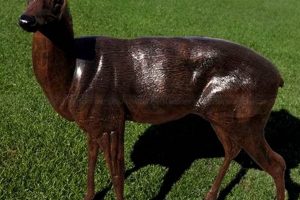
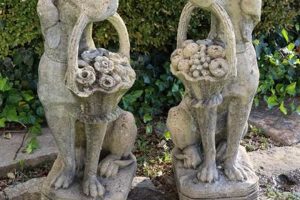
Miniature ornamental figures designed for outdoor placement in cultivated areas offer aesthetic enhancements to landscapes. These objects, often crafted from materials such as resin, concrete, or ceramic, introduce visual interest and personality to gardens and yards. For instance, a depiction of a gnome placed amongst flower beds can provide a whimsical touch.
The inclusion of such adornments provides several advantages. Beyond their decorative appeal, these additions can serve as focal points within a garden design, directing the eye and establishing a sense of scale. Historically, garden ornamentation reflects cultural values and artistic trends, with styles ranging from classical sculptures to contemporary designs. The use of garden art dates back centuries, evolving alongside gardening practices and societal aesthetics.
Therefore, exploring the diverse styles, materials, placement strategies, and maintenance considerations related to these decorative elements can assist individuals in effectively integrating them into their outdoor spaces, resulting in visually appealing and personalized gardens.
Enhancing Outdoor Spaces with Miniature Ornamental Figures
Effective integration of miniature ornamental figures into garden spaces requires careful consideration. The following tips offer guidance on selecting, placing, and maintaining these decorative elements.
Tip 1: Material Selection: Opt for materials appropriate for the climate. Resin and treated concrete are more durable in harsh conditions compared to ceramic or painted wood. A weather-resistant finish extends the lifespan of the figure.
Tip 2: Scale and Proportion: Ensure the size of the figure complements the surrounding plants and landscape features. A disproportionately large statue can overwhelm a small garden, while an undersized one may go unnoticed.
Tip 3: Strategic Placement: Position the figure in a location that maximizes visual impact without obstructing pathways or overshadowing plants. Consider sightlines from windows and seating areas.
Tip 4: Theme Consistency: Maintain a consistent aesthetic theme. Mixing styles, such as pairing classical sculptures with whimsical gnomes, may create a discordant visual effect.
Tip 5: Color Coordination: Choose colors that complement or contrast effectively with the surrounding foliage and flowers. A brightly colored figure can provide a focal point within a predominantly green landscape.
Tip 6: Secure Mounting: Secure figures, especially in windy areas, to prevent them from toppling over and causing damage. Use ground stakes or adhesive to anchor them in place.
Tip 7: Regular Cleaning: Clean the surfaces regularly to remove dirt, moss, and algae. A gentle scrub with soap and water can maintain their appearance and prevent deterioration.
Effective application of these tips contributes to the harmonious integration of miniature ornamental figures into outdoor environments, creating aesthetically pleasing and personalized garden spaces.
Consider these guidelines when choosing, placing, and maintaining outdoor embellishments to ensure lasting beauty and visual impact.
1. Material Durability

The longevity and aesthetic appeal of miniature ornamental figures are directly contingent upon the inherent durability of the materials employed in their construction. Material selection significantly influences the statues’ resistance to environmental stressors, including ultraviolet radiation, fluctuating temperatures, and precipitation. A statue crafted from a less durable substance is prone to premature degradation, requiring frequent replacement and incurring additional expense. For example, a resin statue designed for outdoor use is typically treated with UV protectants to mitigate fading and cracking caused by prolonged sun exposure. Similarly, concrete formulations often incorporate additives to enhance freeze-thaw resistance, preventing structural damage during winter months.
Understanding material characteristics is crucial for informed purchasing decisions. Polyresin, a common material, offers a balance of affordability and moderate durability, making it suitable for many garden environments. However, regions with extreme weather conditions may necessitate more robust materials such as cast stone or metal. Improper material selection can lead to consequences such as cracking, fading, and structural failure, diminishing the aesthetic value of the garden and requiring costly repairs or replacements. The practical significance of material durability extends to the overall sustainability of garden design, as durable statues require less frequent replacement, reducing environmental impact.
In conclusion, material durability is a fundamental attribute affecting the lifespan and visual quality of miniature ornamental figures. Careful consideration of environmental factors and material properties is essential for ensuring long-term satisfaction and minimizing maintenance requirements. While cost may be a factor in selection, prioritizing durability offers a more sustainable and economical approach to garden ornamentation in the long run.
2. Design Style

The selection of a specific design style for miniature ornamental figures significantly influences the overall aesthetic of a garden space. This choice dictates not only the visual characteristics of the figures but also their integration with the surrounding environment and the intended ambiance of the outdoor area.
- Classical
Classical design encompasses styles derived from ancient Greek and Roman art, characterized by symmetrical forms, realistic depictions, and the use of materials like marble or stone. Miniature statues in this style often feature figures of gods, goddesses, or cherubs, lending an air of formality and timeless elegance to gardens. Placement in symmetrical layouts or near architectural features reinforces this classical aesthetic. Conversely, introducing such figures into a rustic or informal setting may create visual dissonance.
- Whimsical
Whimsical designs embrace fantasy, humor, and unconventional forms. Figures such as gnomes, fairies, and anthropomorphic animals typify this style. Whimsical statuary introduces a playful and lighthearted element into garden spaces, often appealing to individuals seeking a less formal and more imaginative aesthetic. Placement in unexpected locations, such as nestled amongst plants or partially concealed within foliage, enhances the sense of discovery and enchantment.
- Rustic
Rustic designs prioritize natural materials and unrefined forms, reflecting a connection to the outdoors. Wooden carvings, stone formations, and figures made from recycled materials are common elements. This style complements naturalistic garden designs and those incorporating elements of wilderness. The use of weathered textures and earthy tones contributes to the overall sense of organic integration. Placing rustic figures within a formal garden context may appear incongruous, disrupting the intended sense of order and refinement.
- Modern
Modern designs emphasize clean lines, geometric shapes, and minimalist aesthetics. Figures made from metal, glass, or concrete often feature abstract forms and a lack of ornamentation. Modern statuary can introduce a contemporary edge to garden spaces, contrasting with the organic forms of plants and flowers. Placement in simple, uncluttered settings reinforces the minimalist aesthetic. Incorporating such figures into a traditional or cottage-style garden may create an intentional juxtaposition, highlighting the contrast between the old and the new.
The consistent application of a chosen design style ensures that miniature ornamental figures harmonize with the existing landscape, contributing to a cohesive and visually pleasing outdoor environment. Conversely, an inconsistent or haphazard approach can result in a discordant and disjointed aesthetic. The integration of a suitable design style in accordance with aesthetic aims allows the statuary to become an engaging focal point.
3. Placement Strategy

The strategic positioning of miniature ornamental figures within a garden environment is paramount to their overall impact and integration. Thoughtful placement maximizes visual appeal, enhances the garden’s thematic coherence, and prevents these elements from appearing incongruous or misplaced.
- Focal Point Creation
Deliberate placement can transform a miniature statue into a focal point, drawing the eye and establishing a sense of visual hierarchy within the garden. A strategically positioned figure can serve as an anchor for a flower bed, direct attention along a pathway, or highlight a specific landscape feature. For example, placing a vibrant statue at the end of a winding path can create a sense of anticipation and reward exploration. Neglecting focal point considerations can result in the figures blending into the background, diminishing their aesthetic contribution.
- Thematic Reinforcement
Placement should align with the garden’s overall theme. A classical statue positioned in a formal garden reinforces the sense of elegance and order, while a whimsical gnome nestled amongst foliage complements a cottage garden’s playful aesthetic. Introducing a discordant element, such as a modern sculpture in a traditional English garden, can disrupt the intended atmosphere. Consistent adherence to a specific theme strengthens the garden’s visual narrative.
- Scale and Proportion Considerations
The size of the miniature figure must be proportionate to its surroundings. A large statue can overwhelm a small garden, while a tiny figure may be lost within a vast landscape. Careful consideration of scale ensures that the statue complements, rather than dominates, its environment. For instance, a small fairy statue may be more effectively placed amongst delicate flowers, while a larger animal figure requires more open space.
- Visibility and Accessibility
Placement should balance visibility with accessibility. The figure should be readily visible from key vantage points within the garden, such as windows, seating areas, or pathways. However, it should not obstruct pathways or interfere with garden maintenance. Ensuring accessibility allows for easy cleaning and repositioning. Concealing figures too deeply within foliage can diminish their visual impact, while placing them in high-traffic areas can increase the risk of damage.
In conclusion, the strategic positioning of miniature ornamental figures is a critical factor in maximizing their aesthetic contribution to a garden. By considering focal point creation, thematic reinforcement, scale and proportion, and visibility and accessibility, individuals can effectively integrate these elements into their outdoor spaces, creating visually appealing and harmonious environments.
4. Size Proportionality

Size proportionality constitutes a critical design element when integrating miniature ornamental figures into garden spaces. An inappropriate scale can diminish the aesthetic appeal and overall coherence of the landscape. When the diminutive statuary overwhelms the surrounding flora or landscape features, it disrupts visual harmony. Conversely, insufficiently sized figures may become visually insignificant, failing to contribute substantively to the garden’s aesthetic narrative. For example, a gnome measuring two feet in height would be incongruous within a small rock garden designed to emulate a miniature alpine landscape; a figure of that scale disrupts the intended sense of intimacy and detail. Similarly, a rabbit figurine less than three inches tall would likely be overlooked within a sprawling flowerbed, rendering its decorative purpose ineffective. Proper proportional calibration ensures that the ornamental figures enhance, rather than detract from, the existing environment.
Achieving satisfactory size proportionality requires careful consideration of the garden’s dimensions and the specific characteristics of the intended placement area. Assessing the mature size of surrounding plants allows for the selection of statuary that will remain visually appropriate as the garden evolves. A garden with expansive lawns or mature trees can accommodate larger figures, providing ample space for their visual impact. In contrast, smaller, more confined areas necessitate smaller-scale figures to maintain a sense of balance. The purpose of the figure also influences size selection; a focal point intended to draw the eye across a large space may require a larger scale than an accent piece designed to complement a specific plant grouping. This approach ensures that visual weights are distributed evenly across the garden, leading to a satisfying visual composition.
In conclusion, size proportionality is not merely an aesthetic preference but a fundamental design principle essential for effective integration of miniature ornamental figures. The consequences of disregarding this principle range from visual discord to complete aesthetic nullification. By carefully assessing the spatial context, considering the figure’s intended purpose, and anticipating the garden’s future growth, individuals can ensure that these ornamental elements enhance, rather than detract from, the beauty and harmony of the outdoor environment. Achieving harmonious proportions transforms miniature statuary from extraneous decoration to integral components of a well-considered landscape design.
5. Weather Resistance
The longevity and sustained aesthetic quality of miniature ornamental figures, commonly known as “little garden statues,” are inextricably linked to their inherent weather resistance. The continuous exposure to environmental elements, including precipitation, solar radiation, temperature fluctuations, and wind, exerts considerable stress on these objects. Material degradation, color fading, and structural damage are potential consequences of inadequate weather-resistant properties. For instance, a statue crafted from unsealed terracotta will readily absorb moisture, leading to cracking during freeze-thaw cycles, effectively compromising its structural integrity and rendering it unsuitable for outdoor display. Similarly, pigments lacking ultraviolet (UV) stabilizers are susceptible to rapid fading, resulting in a significant reduction in visual appeal. The selection of appropriate materials and protective coatings is therefore paramount to ensuring long-term durability.
The practical implications of understanding weather resistance extend beyond mere aesthetic considerations. The cost of replacing deteriorated garden statuary constitutes a recurring expense, particularly in regions characterized by harsh climatic conditions. Selecting figures constructed from weather-resistant materials, such as treated resin, cast stone, or powder-coated metal, offers a cost-effective alternative to frequent replacements. Furthermore, the application of protective sealants or paints can significantly extend the lifespan of less durable materials. For example, applying a marine-grade sealant to a painted wooden statue can mitigate the effects of moisture and prolong its resistance to rot and decay. Regular maintenance, including cleaning and reapplying protective coatings, is also crucial for preserving weather resistance.
In summary, weather resistance is a critical attribute governing the durability and aesthetic longevity of “little garden statues.” Understanding the mechanisms of material degradation and implementing appropriate protective measures are essential for minimizing maintenance requirements and ensuring sustained visual appeal. The selection of suitable materials, application of protective coatings, and implementation of routine maintenance practices collectively contribute to maximizing the lifespan and preserving the aesthetic integrity of these decorative garden elements. The failure to prioritize weather resistance results in accelerated deterioration, increased replacement costs, and a diminished aesthetic impact on the outdoor environment.
6. Aesthetic Integration

Aesthetic integration, in the context of miniature ornamental figures, refers to the harmonious blending of these decorative objects with the surrounding garden environment. This integration is crucial for achieving a visually pleasing and cohesive outdoor space, where the statuary enhances rather than detracts from the natural and architectural elements.
- Color Palette Harmony
The coloration of miniature figures should either complement or deliberately contrast with the surrounding flora and structures to create visual interest. A statue with muted tones may blend seamlessly into a lush green backdrop, while a brightly colored figure can serve as a focal point. A poorly chosen color palette can result in visual discord, making the statue appear out of place. For example, a vibrant red gnome may clash within a pastel-themed flower garden, disrupting its aesthetic balance.
- Contextual Theming
The style and subject matter of the figure should align with the overall theme of the garden. A classical sculpture complements a formal garden, while a whimsical gnome is more suitable for a cottage-style garden. Inconsistent theming can create a disjointed and unharmonious appearance. Placing a modern, abstract sculpture in a traditional Victorian garden, for instance, can disrupt the established aesthetic.
- Spatial Proportionality
The size and scale of the miniature ornamental figure must be proportional to the surrounding landscape elements. An oversized figure can overwhelm a small garden, while an undersized figure may be lost in a larger space. Effective integration requires a careful consideration of spatial relationships. For example, a large statue of a heron is more suited to a spacious garden than a confined balcony.
- Material Compatibility
The materials used in the construction of the figure should harmonize with the surrounding textures and elements. A stone statue may complement a rock garden, while a metal sculpture can add a touch of modernity. Contrasting textures can create visual interest, but incompatible materials may detract from the overall aesthetic. A plastic figure, for instance, may appear incongruous within a garden featuring natural stone and wood elements.
When integrating “little garden statues,” thoughtful attention to color, theme, scale, and materials is imperative. By carefully considering these elements, individuals can ensure that the figures enhance, rather than detract from, the aesthetic quality of their gardens. Ignoring these principles risks creating visual dissonance and undermining the overall design.
Frequently Asked Questions About Miniature Garden Statuary
The following section addresses common inquiries regarding the selection, placement, and maintenance of miniature ornamental figures used in garden design.
Question 1: What materials offer the greatest longevity for outdoor miniature statues?
Durable materials such as cast stone, treated resin, and powder-coated metal exhibit superior resistance to weathering and physical damage. The selection should be based on regional climatic conditions.
Question 2: How does one determine the appropriate size of a statue for a particular garden space?
Statue dimensions should be proportional to the overall garden size and the specific area of placement. Overly large figures dominate smaller spaces, while diminutive figures may be lost in expansive gardens.
Question 3: Is routine maintenance necessary for miniature garden statues, and if so, what does it entail?
Regular cleaning to remove dirt, algae, and debris is advisable. Depending on the material, periodic application of protective sealants or coatings may be required to mitigate weather-related damage.
Question 4: How can I prevent my miniature statues from being damaged by severe weather events?
Consider securing statues to the ground with stakes or adhesives. During periods of extreme weather, relocating them to a sheltered area may be necessary.
Question 5: What design styles are most compatible with different garden types?
Classical statuary complements formal gardens, while whimsical figures are suitable for cottage-style gardens. The consistent application of a design style promotes visual harmony.
Question 6: How can I integrate miniature statues effectively to create a focal point within my garden?
Strategic placement along sightlines or at the end of pathways can draw the eye and establish a sense of visual hierarchy. The figure should complement, rather than obstruct, the surrounding vegetation.
In summary, the successful incorporation of miniature ornamental figures into garden design requires careful consideration of material durability, proportional scale, routine maintenance, weather protection, stylistic consistency, and strategic placement.
The subsequent section will explore best practices for purchasing miniature garden statuary, including identifying reputable suppliers and evaluating product quality.
Concluding Thoughts on Miniature Garden Statuary
This exposition has illuminated critical facets pertaining to “little garden statues.” The discourse encompassed material durability, design styles, placement strategies, size proportionality, weather resistance, and aesthetic integration. These considerations collectively dictate the longevity, visual impact, and overall suitability of such ornamental figures within diverse garden environments. A comprehensive understanding of these elements enables informed decision-making and responsible incorporation of these objects into landscape design.
The deliberate application of these principles ensures that these miniature decorative elements transcend mere ornamentation, becoming integral components of well-conceived and aesthetically pleasing outdoor spaces. Prudent selection and conscientious maintenance practices safeguard the enduring beauty and value of these landscape adornments, thereby enhancing the overall quality and enjoyment of the garden environment.