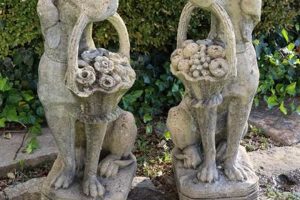
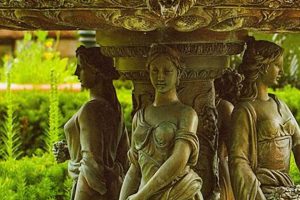
Ornamental figures enhance outdoor spaces, contributing to the aesthetic appeal of gardens and landscapes. These decorative objects, often crafted from materials like stone, concrete, or resin, can depict a wide range of subjects, from classical figures and mythical creatures to animals and abstract forms. A concrete rendering of a reclining lion positioned near a flower bed exemplifies this kind of decoration.
The incorporation of these ornaments into outdoor settings provides visual interest, personalizes the space, and complements the surrounding flora. Historically, these items served as symbols of wealth, status, or philosophical beliefs, reflecting the owner’s taste and cultural background. They can also provide a focal point within a garden design, drawing the eye and creating a sense of depth and dimension.
The following sections will explore various aspects related to selecting, placing, and maintaining these outdoor embellishments, offering guidance on how to integrate them effectively into diverse garden styles and architectural settings. Considerations will include material durability, placement strategies for optimal visual impact, and techniques for preserving their appearance over time.
Guidance on Integrating Outdoor Ornamental Figures
The following provides practical advice for selecting and utilizing outdoor ornamental figures to enhance landscape aesthetics.
Tip 1: Material Suitability: Evaluate the material based on climate and intended lifespan. Stone and concrete offer durability in harsh conditions, while resin provides a lighter, more affordable option. Consider freeze-thaw cycles for regions with significant temperature variations.
Tip 2: Scale and Proportion: Ensure the figure’s size complements the surrounding environment. An oversized piece can overwhelm a small garden, while a miniature item may be lost in a larger landscape. Maintain a proportional relationship between the ornament and nearby plants or structures.
Tip 3: Placement and Perspective: Strategic placement enhances visual impact. Consider sightlines from key vantage points, such as windows or patios. Elevated placement on a pedestal or plinth can draw attention to a particularly noteworthy object.
Tip 4: Style and Theme: Maintain a consistent aesthetic theme throughout the garden. A classical-style figure may not integrate well with a modern, minimalist landscape. Select pieces that align with the overall design principles of the outdoor space.
Tip 5: Seasonal Considerations: Some pieces benefit from seasonal protection. Delicate materials may require covering or indoor storage during winter months to prevent damage from snow and ice.
Tip 6: Foundation and Stability: Ensure a stable foundation, especially for larger or heavier pieces. A level base prevents tipping and potential damage. Consider using a concrete pad or buried support structure for increased stability.
Tip 7: Complementary Planting: Surround the figure with complementary plant life to enhance its visual appeal. Use foliage and flowers to create a harmonious backdrop that accentuates the ornament’s form and color.
Careful consideration of these guidelines will contribute to the successful integration of outdoor ornamental figures, enhancing the beauty and character of any landscape.
The subsequent section will address maintenance and preservation techniques for these outdoor features, ensuring their longevity and sustained aesthetic quality.
1. Material Durability

Material durability is a critical determinant of the longevity and aesthetic appeal of ornamental figures in outdoor settings. The ability of a material to withstand environmental stressors directly impacts the lifespan and maintenance requirements of these decorative elements.
- Weather Resistance
The capacity of a material to resist degradation from exposure to rain, sun, wind, and temperature fluctuations is paramount. For example, cast iron may corrode if not properly treated, while certain types of stone can erode over time due to acid rain. Selecting materials inherently resistant to these elements minimizes the need for frequent maintenance and replacement, extending the service life of the object.
- Freeze-Thaw Stability
In regions experiencing significant temperature variations, resistance to freeze-thaw cycles is essential. Water absorbed within porous materials like concrete can expand upon freezing, leading to cracking and disintegration. Properly formulated concrete mixes and protective coatings can mitigate this risk, ensuring the structural integrity of the figure throughout the winter months.
- UV Resistance
Prolonged exposure to ultraviolet (UV) radiation can cause fading, discoloration, and structural weakening in some materials, particularly plastics and certain types of paint. UV-resistant coatings or the selection of materials naturally impervious to UV damage, such as bronze or certain types of stone, can preserve the original appearance and prevent premature degradation.
- Resistance to Biological Growth
Materials susceptible to the growth of algae, moss, or lichen require periodic cleaning and treatment to maintain their aesthetic appeal. Non-porous materials, such as glazed ceramic or polished stone, are less prone to biological growth and easier to clean. Alternatively, treatments that inhibit biological growth can be applied to porous materials to minimize maintenance requirements.
The selection of materials based on their inherent durability characteristics ensures the long-term viability and visual appeal of garden ornamentation. Careful consideration of weather resistance, freeze-thaw stability, UV resistance, and resistance to biological growth contributes to a more sustainable and aesthetically pleasing landscape design, reducing the need for frequent repairs or replacements. The cost of more durable materials is often offset by lower maintenance requirements and a longer lifespan, resulting in a greater return on investment over time.
2. Scale Appropriateness

The principle of scale appropriateness dictates that the size and proportions of outdoor ornamental figures must harmonize with their surrounding environment. This concept is crucial for achieving visual balance and preventing these elements from either overwhelming or being overshadowed by the landscape.
- Garden Size and Proportionality
The physical dimensions of the garden dictate the appropriate size range for ornamental figures. A sprawling estate can accommodate larger, more imposing figures, while a small courtyard garden necessitates smaller, more delicate pieces. Placing an oversized statue in a compact space creates a sense of visual claustrophobia, whereas a miniature figure may be lost in a vast landscape, failing to make a meaningful impact.
- Architectural Style Compatibility
The architectural style of adjacent buildings or structures should influence the scale of ornamentation. A grand, classical villa may be complemented by large-scale neoclassical figures, while a modern, minimalist residence may be better suited to smaller, more abstract pieces. Discrepancies between architectural style and ornamental scale can create visual dissonance, detracting from the overall aesthetic coherence of the property.
- Plant Material Considerations
The size and density of surrounding plant material must be considered when determining the appropriate scale of ornamental figures. A dense hedge or mature tree can visually dwarf a small figure, rendering it insignificant. Conversely, a sparsely planted area may be overwhelmed by an excessively large statue. Maintaining a proportional relationship between figures and plant life ensures that each element contributes positively to the overall landscape composition.
- Viewing Distance and Perspective
The intended viewing distance should also inform the selection of appropriate scale. A figure intended to be viewed from afar, such as across a large lawn, may need to be larger than one intended for closer viewing from a patio or walkway. Considerations of perspective can also influence scale choices; a slightly larger figure may appear proportionally correct when viewed from a lower vantage point.
In conclusion, the successful integration of these ornaments hinges on a careful assessment of scale appropriateness. Factors such as garden size, architectural style, plant material, and viewing distance must be considered to ensure that the figures complement, rather than compete with, their surroundings. Adherence to this principle enhances the visual appeal of the landscape and creates a harmonious, balanced outdoor environment.
3. Placement Strategy

The strategic positioning of ornamental figures within a garden or landscape is critical for maximizing their visual impact and enhancing the overall aesthetic coherence of the outdoor space. Careful consideration of placement principles ensures that these elements contribute positively to the environment, rather than appearing as incongruous additions.
- Focal Point Establishment
Ornamental figures can serve as focal points, drawing the eye and establishing a sense of visual hierarchy within the garden. Placement at the terminus of a pathway or at the center of a formal garden bed immediately attracts attention. The choice of location should consider the surrounding landscape elements, ensuring that the figure commands attention without overwhelming the scene. For example, a statue positioned at the end of a long lawn creates a sense of depth and perspective, guiding the viewer’s gaze.
- Contextual Integration
The placement of these figures should reflect the surrounding context, both natural and architectural. A classical figure may be ideally situated near a formal building with similar architectural motifs, while a more whimsical sculpture may be better suited to a less structured, more naturalistic garden setting. The interplay between the figure and its surroundings enhances the overall narrative of the outdoor space. An example includes placing a water-related statue near a pond or fountain, reinforcing the theme of water within the garden.
- Sightline Optimization
Consideration of sightlines from key vantage points, such as windows, patios, or seating areas, is paramount. Positioning figures to be visible from these locations ensures that they are enjoyed frequently and contribute to the visual amenity of the property. Careful attention should be paid to background elements, ensuring that the figure is not obscured or visually competing with other objects. A statue placed strategically along a frequently used walkway offers an engaging visual experience for passersby.
- Creating Visual Balance
Placement can be used to create visual balance and symmetry within the landscape. Placing two identical figures on either side of a pathway or entrance creates a sense of formality and order. Alternatively, asymmetrical arrangements can be used to create a more dynamic and informal feel. The key is to distribute visual weight in a way that is both pleasing to the eye and harmonious with the surrounding environment. Pairing two figures of similar size on opposite sides of a garden bed achieves a sense of visual equilibrium.
By strategically positioning ornamental figures, their aesthetic potential can be fully realized, transforming a garden into a more engaging and visually appealing environment. The careful consideration of focal points, contextual integration, sightlines, and visual balance ensures that these elements contribute positively to the overall design, enhancing the character and charm of the outdoor space.
4. Stylistic Consistency
The aesthetic impact of ornamental figures within a garden is significantly influenced by the degree to which their style aligns with the overall design scheme of the outdoor space. Stylistic consistency ensures that these elements integrate harmoniously, contributing to a unified and aesthetically pleasing environment. Discrepancies in style can lead to visual dissonance, detracting from the intended ambiance of the garden. The selection of figures must therefore carefully consider the existing architectural features, plant selections, and overall design principles.
The consequences of neglecting stylistic consistency are evident in landscapes where disparate elements clash, creating a sense of visual confusion. For example, a contemporary minimalist garden featuring sleek lines and geometric forms would be negatively impacted by the addition of ornate, classical-style figures. Conversely, a traditional English garden, characterized by its romantic and informal design, would be incongruous with modern abstract sculptures. A garden designed with a Japanese theme should integrate figures that support that theme, like pagodas or stone lanterns, rather than Renaissance statues. Achieving stylistic consistency bolsters the thematic integrity and augments the visual impact, yielding a more immersive and captivating outdoor experience.
In summary, maintaining stylistic consistency is paramount for realizing the full aesthetic potential of garden ornaments. It necessitates a comprehensive evaluation of the existing garden design, ensuring that the chosen figures complement and enhance the overall theme. Challenges can arise when attempting to blend disparate styles, but a considered approach that prioritizes visual harmony will ultimately contribute to a more cohesive and appealing landscape, solidifying the importance of style considerations when selecting these elements for a successful garden design.
5. Foundation Stability
The long-term preservation and visual appeal of garden ornamentation are inextricably linked to the stability of its foundation. Foundation instability introduces a range of detrimental effects, compromising the integrity of the piece and the surrounding landscape. The absence of a secure base can lead to gradual tilting, eventual toppling, and potential breakage, particularly in heavier stone or concrete figures. Furthermore, an unstable figure poses a safety hazard, potentially causing injury to individuals or damage to property. Thus, ensuring a firm and level foundation is not merely a matter of aesthetics but a critical aspect of responsible landscape design and maintenance.
Several factors contribute to foundation instability, including soil erosion, frost heave, and improper installation. Soil erosion, accelerated by rainfall and drainage patterns, can undermine the base of the figure, causing it to shift or sink. Frost heave, common in climates with freezing temperatures, occurs when moisture in the soil freezes and expands, lifting the figure and disrupting its level alignment. Improper installation, such as failing to adequately compact the soil or using an insufficient base material, can exacerbate these issues. Mitigation strategies involve site preparation, including leveling the ground, adding a compacted gravel base, and employing a concrete pad for larger, heavier figures. Proper drainage around the base can minimize the effects of soil erosion and frost heave. A garden statue depicting a cherub, originally placed on a well-compacted gravel base, remained stable and upright for decades, while another, set directly on the soil, developed a noticeable lean within a few years due to soil settlement, demonstrating the significance of proper foundation techniques.
In conclusion, foundation stability is a fundamental prerequisite for the longevity and safety of garden ornamentation. Neglecting this aspect can result in costly repairs, potential hazards, and a diminished aesthetic experience. By understanding the factors that contribute to instability and implementing appropriate preventative measures, the enduring beauty and functionality of these landscape elements can be ensured. The commitment to a stable foundation underscores a responsible approach to landscape design and a dedication to preserving the artistic value of these outdoor embellishments, linking to the broader theme of responsible and sustainable garden design.
6. Aesthetic Integration

Aesthetic integration, concerning ornamental figures, refers to the seamless blending of these elements within the existing landscape, ensuring that they enhance, rather than detract from, the overall visual harmony. This principle posits that the selection and placement of these items should complement the established style, color palette, and spatial arrangement of the garden. When aesthetic integration is achieved, these features appear as a natural and integral part of the environment, contributing to a sense of unity and coherence.
The significance of aesthetic integration is multifaceted. Firstly, it ensures that these objects do not disrupt the established visual balance of the garden. A poorly chosen or placed figure can create a jarring effect, drawing attention away from the natural beauty of the surrounding flora. Secondly, it enhances the thematic consistency of the landscape. A garden designed with a specific theme, such as a Japanese garden or a cottage garden, benefits from figures that reinforce this theme. For example, a serene Buddha statue nestled among bamboo plants in a Japanese garden exemplifies effective aesthetic integration. Conversely, a brightly colored plastic gnome in the same setting would disrupt the intended ambiance. Thirdly, it increases the overall aesthetic appeal and perceived value of the property. A well-integrated landscape design is more visually pleasing and can enhance the property’s market value.
In conclusion, aesthetic integration represents a crucial element in the successful incorporation of ornamental figures into any outdoor space. By prioritizing stylistic coherence, contextual relevance, and visual harmony, landscapes can be transformed into aesthetically pleasing and cohesive environments. Challenges associated with achieving integration often stem from a lack of planning or an inconsistent design vision. However, with careful consideration and a deliberate approach, the benefits of aesthetic integration can be realized, creating an outdoor space that is both beautiful and harmonious.
Frequently Asked Questions
The following questions address common inquiries regarding the selection, placement, and maintenance of ornamental figures in outdoor settings.
Question 1: What materials are best suited for outdoor ornamental figures in climates with harsh winters?
Materials exhibiting high resistance to freeze-thaw cycles are recommended. Stone, concrete, and certain types of resin formulated for outdoor use offer superior durability in cold climates. Avoid porous materials prone to cracking from ice expansion.
Question 2: How does one determine the appropriate scale of an outdoor figure for a particular garden?
The scale of the figure should complement the size of the garden and the surrounding architectural elements. Oversized pieces can overwhelm smaller spaces, while miniature figures may be lost in larger landscapes. Consider proportional relationships between the figure, plant life, and structures.
Question 3: What strategies ensure the stability of a heavy figure in a garden setting?
A stable foundation is crucial. Prepare a level base, compact the soil, and consider using a concrete pad for heavier pieces. Proper drainage around the base minimizes the risk of soil erosion and frost heave.
Question 4: How can the aesthetic integration of a figure within an existing garden be improved?
Select figures that complement the style and theme of the garden. Consider the color palette, architectural features, and plant selections. Consistency enhances the overall visual harmony of the outdoor space.
Question 5: What maintenance practices are recommended to prolong the lifespan of outdoor ornamental figures?
Regular cleaning removes dirt, algae, and moss. Apply protective coatings to prevent weathering and UV damage. Inspect figures annually for cracks or damage, and address issues promptly.
Question 6: How does one prevent theft or vandalism of valuable ornamental figures?
Secure figures to their bases using appropriate hardware. Consider installing security cameras or motion sensors to deter potential thieves. Register valuable pieces with local authorities and maintain detailed records.
Proper planning, informed material selection, and diligent maintenance practices contribute to the enduring beauty and value of these ornamental features.
The next section addresses current trends and innovations in the design and manufacturing of these garden accents.
Garden Statu
This discourse has provided a comprehensive overview of garden statu, exploring key considerations for their selection, placement, and long-term maintenance. The significance of material durability, scale appropriateness, stylistic consistency, foundation stability, and aesthetic integration has been underscored. These elements, when thoughtfully addressed, contribute to the successful incorporation of such items within diverse landscape designs.
The judicious application of these principles will ensure the preservation and enhancement of outdoor spaces. Continued awareness of evolving design trends, material innovations, and best practices in conservation will further elevate the potential of garden ornamentation to contribute to enduring aesthetic value and environmental harmony.