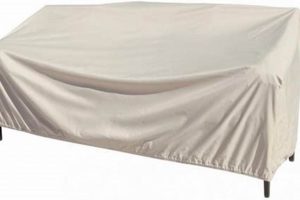
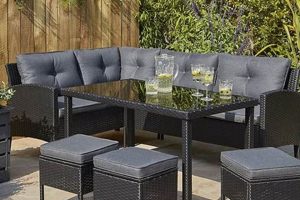
Devices designed to secure outdoor seating and tables prevent unwanted movement or displacement due to wind, accidental bumps, or theft. These fixtures commonly consist of metal or plastic components that attach to the furniture and then anchor into the ground, patio surface, or a weighted base. For example, a set of cast iron table legs might be bolted to a concrete patio using expanding anchor bolts, or a lightweight chair might be secured with a corkscrew-style stake driven into the lawn.
The utilization of these securing mechanisms provides multiple advantages, notably enhancing safety and preserving the integrity of outdoor arrangements. By mitigating the risk of furniture being blown over or shifted, these systems reduce the potential for personal injury and property damage. Historically, improvised methods such as placing heavy objects on furniture were employed; however, modern anchoring solutions offer a more reliable and aesthetically pleasing means of achieving stability. Their adoption ensures both functional stability and an increased lifespan for valuable outdoor furnishings.
The following sections will delve into the various types of these devices available, explore installation techniques suited for different surfaces, and examine the material considerations crucial for long-term outdoor performance. Furthermore, the discussion will address the selection criteria to determine the most appropriate solutions for diverse environmental conditions and furniture styles, alongside maintenance tips to guarantee sustained effectiveness.
Essential Considerations for Secure Outdoor Furnishings
The implementation of appropriate securing methods is crucial for ensuring the longevity and safety of outdoor furniture. The following tips provide guidance on selecting and utilizing these protective measures effectively.
Tip 1: Assess Environmental Conditions: Before selecting any securing mechanism, evaluate the typical wind speeds and ground conditions of the outdoor space. Areas prone to high winds necessitate more robust anchoring solutions.
Tip 2: Match Anchor Type to Surface: Different surfaces require specific anchor types. Concrete patios benefit from expansion bolts, while lawns are best suited for ground stakes or auger systems. Consider the surface composition to ensure a secure and stable connection.
Tip 3: Prioritize Material Durability: Opt for anchors constructed from corrosion-resistant materials such as stainless steel or powder-coated aluminum. This will prevent degradation from exposure to the elements, ensuring long-term performance.
Tip 4: Consider Aesthetic Integration: Select securing mechanisms that blend seamlessly with the furniture’s design and the overall aesthetic of the outdoor space. Discreet options are available that minimize visual intrusion.
Tip 5: Ensure Proper Installation: Follow the manufacturer’s instructions meticulously during installation. Incorrectly installed anchors can compromise stability and potentially damage the furniture or surrounding surfaces.
Tip 6: Regularly Inspect Anchor Points: Periodically inspect the anchor points for signs of loosening, corrosion, or damage. Address any issues promptly to maintain optimal performance.
Tip 7: Use Weighted Bases for Portability: If flexibility is required, consider weighted bases. These provide stability without permanent installation, allowing for easy repositioning of the furniture.
By adhering to these considerations, one can effectively mitigate the risks associated with unsecured outdoor furniture, enhancing both safety and the lifespan of valuable outdoor assets.
The subsequent sections will provide further insights into specific product recommendations and maintenance practices for prolonged effectiveness.
1. Material Durability

Material durability constitutes a primary determinant of the effectiveness and longevity of any garden furniture securing mechanism. The operational environment, inherently exposed to weather extremes, necessitates materials resistant to corrosion, ultraviolet (UV) degradation, and mechanical wear. The selection of inadequate materials invariably leads to premature failure of the anchoring system, potentially resulting in damage to the furniture or surrounding property, and posing safety hazards. For example, untreated steel ground stakes will rapidly corrode in damp soil, losing structural integrity and ultimately failing to provide adequate restraint. This necessitates replacement, incurring additional costs and labor.
The implementation of durable materials, such as stainless steel or powder-coated aluminum, directly mitigates these risks. Stainless steel exhibits exceptional resistance to rust and corrosion, making it suitable for coastal environments or areas with high humidity. Powder-coated aluminum provides a protective barrier against UV radiation and physical abrasion, extending the lifespan of the anchor in exposed locations. Furthermore, the choice of high-strength polymers in certain anchoring systems offers resistance to impact and chemical degradation. The investment in these materials translates to a reduced frequency of replacements and lower long-term maintenance costs. Practical applications include using galvanized steel anchors for securing pergolas to wooden decks or utilizing composite stakes for anchoring lightweight furniture on lawns; these applications demonstrate the direct correlation between material choice and performance.
In conclusion, the strategic selection of durable materials is paramount for ensuring the reliable and prolonged performance of outdoor furniture securing mechanisms. Ignoring this critical factor compromises the entire system, leading to safety concerns and financial burdens. A comprehensive understanding of material properties, environmental factors, and load requirements is essential for selecting appropriate anchoring solutions that withstand the rigors of outdoor use. Future advancements in material science may yield even more resilient and sustainable options, further enhancing the efficacy and longevity of these crucial outdoor components.
2. Surface Compatibility

The effectiveness of garden furniture securing mechanisms is inextricably linked to the compatibility between the anchor and the surface into which it is embedded. An inappropriate pairing leads to compromised stability, rendering the securing system ineffective and potentially dangerous. The composition, density, and structural integrity of the surface dictate the type of anchor required to achieve a secure and lasting hold. For instance, attempting to use a lawn stake, designed for soft earth, on a concrete patio will invariably fail due to the inability of the stake to penetrate and grip the hard surface. The result is furniture that remains vulnerable to displacement by wind or accidental contact, negating the intended purpose of the securing system.
Selection criteria must, therefore, prioritize matching the anchor’s design and material properties to the specific surface characteristics. Soft surfaces, such as lawns or garden beds, require anchors with broad surface areas or auger-like designs to maximize grip and resist pulling forces. Examples include corkscrew stakes or ground anchors. Conversely, hard surfaces like concrete or paving stones necessitate anchors that utilize expansion or chemical bonding to establish a secure connection. Expansion bolts, which expand within pre-drilled holes, or chemical anchors, which rely on resin-based adhesives, are commonly employed in these scenarios. Similarly, wooden decks demand specialized anchors, such as lag screws or deck screws, engineered to penetrate and grip the wood fibers without causing splitting or damage. Failure to address the surface’s unique properties results in inadequate anchoring, increasing the risk of accidents and property damage.
In summary, surface compatibility is not merely a secondary consideration but a foundational element in the successful implementation of garden furniture anchoring systems. The informed selection of anchors based on a thorough understanding of surface characteristics ensures optimal stability, safety, and longevity. Neglecting this critical aspect undermines the entire securing mechanism, rendering the investment in anchors largely futile. Continuing research into advanced anchoring technologies should focus on adaptable solutions that can accommodate a wider range of surface types and conditions, further enhancing the reliability and versatility of these crucial outdoor safety measures.
3. Wind Resistance

Wind resistance, as it pertains to outdoor furnishings, dictates the ability of furniture, when properly secured, to withstand the forces exerted by wind without displacement, damage, or posing a hazard. This consideration is paramount in regions prone to strong winds, storms, or unpredictable weather patterns. Securing mechanisms play a critical role in ensuring this level of resilience.
- Anchor Strength and Load Capacity
The strength and load capacity of an anchor directly correlate with its ability to resist the uplift and lateral forces generated by wind. Anchors with insufficient strength may fail under high wind conditions, resulting in the furniture becoming dislodged and potentially causing injury or property damage. For instance, lightweight plastic anchors are unsuitable for securing heavy patio tables in windy environments, whereas heavy-duty steel anchors with a high tensile strength offer superior wind resistance.
- Surface Area and Grip
The surface area and grip of an anchor determine its ability to maintain a secure hold in the ground or on a patio surface when subjected to wind forces. Anchors with a larger surface area or an aggressive gripping design provide greater resistance to being pulled out or shifted by the wind. Consider the difference between a small nail and a large auger-style anchor in resisting wind uplift on a garden bench.
- Material Properties and Corrosion Resistance
The material composition of an anchor affects its long-term wind resistance, especially in outdoor environments where corrosion is a concern. Anchors made from corrosion-resistant materials, such as stainless steel or galvanized steel, maintain their structural integrity over time, ensuring consistent wind resistance. Rusting anchors weaken and become more susceptible to failure, diminishing their effectiveness in high-wind situations.
- Installation Technique and Depth
Proper installation and sufficient depth of the anchor are crucial for maximizing wind resistance. Anchors that are improperly installed or not driven deep enough into the ground are more likely to fail under wind pressure. Following the manufacturer’s instructions and ensuring adequate embedment depth is essential for achieving the intended level of wind resistance. Shallowly installed anchors are analogous to a poorly rooted tree, vulnerable to being uprooted by a strong gust.
These interconnected factors directly influence the capacity of outdoor furniture to withstand wind forces. Selecting and implementing appropriate securing mechanisms, taking into account anchor strength, surface area, material properties, and installation technique, is critical for ensuring the safety and longevity of outdoor spaces. Neglecting these considerations can result in avoidable damage and potential hazards. Proper securing increases the safety and lifespan of outdoor furniture.
4. Installation Method

The installation method employed for garden furniture anchors critically determines their effectiveness and longevity. The improper installation of even the highest quality anchor negates its intended function, creating a false sense of security and potentially leading to property damage or personal injury. The installation method acts as the conduit through which the anchor’s design interacts with the surrounding environment. An inappropriate technique introduces stress points, compromises material integrity, or fails to establish a secure connection with the underlying surface. The impact manifests in reduced wind resistance, increased vulnerability to tampering, and premature anchor failure. For example, over-tightening an expansion bolt in concrete can fracture the surrounding material, negating the clamping force and rendering the anchor ineffective. Alternatively, failing to drive a ground stake to the recommended depth compromises its ability to resist uplift forces, especially in loose soil conditions.
Practical applications illustrate the direct correlation between installation method and performance. Securing a pergola to a wooden deck requires careful consideration of screw length, pilot hole diameter, and tightening torque. Utilizing excessively long screws without pilot holes can split the wood, weakening the connection. Conversely, insufficient torque prevents the screw from fully engaging the wood fibers. Similarly, installing chemical anchors for securing benches to a paver patio demands precise mixing ratios of the adhesive components, thorough cleaning of the drilled hole, and adequate curing time. Deviations from the manufacturer’s specifications compromise the bond strength, reducing the anchor’s resistance to lateral forces. The long-term stability of playgrounds and public spaces heavily relies on proper installation. Anchors are often used for securing swings, slides, and climbing structures. The correct methods for installing these anchors is non-negotiable for public safety and for reducing the likelihood of accidents.
In summary, the installation method is not a mere procedural step but an integral component of any garden furniture anchoring system. Its significance lies in ensuring that the anchor’s inherent design capabilities are fully realized, resulting in a secure, durable, and safe installation. Challenges in this area stem from a lack of awareness of proper techniques, inadequate training, or negligence in following manufacturer’s instructions. A comprehensive understanding of installation best practices, coupled with meticulous execution, is essential for maximizing the effectiveness and minimizing the risks associated with garden furniture securing mechanisms. Properly installed anchors will resist even strong wind force for an extended period of time, protecting property and persons.
5. Theft Deterrence
Theft deterrence represents a critical, often overlooked, function of garden furniture anchors. While primarily designed for wind resistance and stability, these securing mechanisms inherently impede unauthorized removal of outdoor furniture. The connection lies in the increased effort and tools required to detach anchored items, thereby making theft less opportunistic and more challenging. The effectiveness of this deterrent depends on the type of anchor, its installation, and the visibility of the securing mechanism. Easily removable anchors provide minimal resistance, while concealed, heavy-duty systems offer significant impediment. For example, a lightweight patio chair secured with basic ground stakes presents a negligible obstacle to a potential thief, whereas a cast iron bench bolted to a concrete patio using tamper-resistant hardware necessitates specialized tools and considerable time, effectively discouraging casual theft.
The implementation of theft-deterrent anchors extends beyond individual homeowners to businesses and public spaces. Restaurants with outdoor seating, hotels with patio furniture, and parks with benches and tables are all vulnerable to theft. Employing anchors designed specifically to resist tampering, such as those with shrouded bolt heads or requiring specialized tools for removal, reduces the likelihood of these items being stolen. Furthermore, the visible presence of robust anchoring systems can act as a deterrent in itself, signaling to potential thieves that the furniture is not easily removed. This is particularly effective when combined with other security measures, such as surveillance cameras or regular patrols. The practical significance of this is evident in the reduced replacement costs and uninterrupted availability of outdoor amenities in areas where effective anchoring strategies are employed. A park with secured benches provides an environment more conducive to relaxation and social interaction.
In conclusion, the role of garden furniture anchors in theft deterrence is a crucial component of a comprehensive outdoor security strategy. By increasing the difficulty and risk associated with unauthorized removal, these securing mechanisms protect valuable assets and contribute to a more secure and enjoyable outdoor environment. The challenge lies in selecting and implementing anchor systems that balance security with aesthetic considerations and ease of maintenance. Future advancements may focus on integrating smart technologies, such as alarm systems triggered by tampering attempts, further enhancing the theft-deterrent capabilities of these essential outdoor components. Securing outdoor furniture is not only about protection from the weather but also about preventing theft.
6. Weight Capacity

Weight capacity is a foundational specification of garden furniture anchors, directly influencing their ability to secure outdoor furnishings effectively. It denotes the maximum load or force an anchor can withstand without yielding, deforming, or failing. The relationship between the weight of the furniture and the anchor’s weight capacity is a direct causal link; exceeding the specified weight capacity compromises the anchor’s structural integrity and diminishes its ability to resist displacement due to wind, impact, or other external forces. For instance, attempting to secure a heavy granite bench with anchors designed for lightweight plastic chairs will inevitably result in anchor failure and potential damage or injury.
The practical significance of understanding weight capacity is evident in diverse outdoor settings. A restaurant patio utilizing heavy cast iron tables necessitates anchors with a significantly higher weight capacity than those used to secure aluminum chairs in a residential garden. Neglecting to match the anchor’s weight capacity to the furniture’s weight can lead to instability, posing a safety hazard to patrons. In public parks, where benches and picnic tables are subjected to varying loads and potential abuse, robust anchoring systems with high weight capacities are essential to ensure long-term stability and prevent vandalism. Selection relies on a comprehensive assessment of the anticipated load, including both the static weight of the furniture and any dynamic forces it may experience.
In conclusion, weight capacity is not merely a numerical specification but a critical performance parameter that directly impacts the effectiveness and safety of garden furniture anchors. The failure to adequately consider weight capacity compromises the entire anchoring system, negating its intended benefits and potentially creating dangerous situations. Challenges in this area stem from a lack of awareness of proper selection criteria and the inherent difficulty in accurately estimating the dynamic loads experienced by outdoor furniture. Prioritizing appropriate weight capacity selection ensures the long-term stability, safety, and security of outdoor spaces and furnishings.
7. Aesthetic Integration

Aesthetic integration, in the context of garden furniture securing mechanisms, signifies the harmonious blending of functional hardware with the visual characteristics of the furniture and the surrounding landscape. It acknowledges that while anchors serve a critical safety and security purpose, their appearance should not detract from the overall aesthetic appeal of the outdoor space.
- Material Palette and Finish
The selection of materials and finishes directly impacts the visual coherence of anchoring systems. Metallic anchors, for example, can be matched to the hardware on the furniture, while powder-coated options allow for color coordination with cushions, umbrellas, or surrounding architectural elements. Discrepancies in material or finish can create visual dissonance, drawing unwanted attention to the securing mechanisms.
- Concealment Strategies
Concealment involves minimizing the visibility of anchors through strategic placement or design. Recessed anchors, ground-level installations, or covers that blend with the surrounding surface can effectively hide the hardware without compromising functionality. For example, anchors hidden beneath patio stones or concealed within the legs of furniture offer an unobtrusive solution.
- Form Factor and Proportionality
The size and shape of anchors should be proportionate to the furniture they are securing. Overly large or bulky anchors can appear visually jarring, while diminutive options may lack the necessary strength. The form factor should complement the furniture’s design, maintaining visual balance and harmony.
- Integration with Landscape Design
Aesthetic integration extends beyond the furniture itself to encompass the surrounding landscape. Anchors should be selected to minimize their visual impact on the overall garden design. For instance, using natural materials like stone or wood to camouflage anchors in a rock garden or woodland setting can create a seamless and visually appealing effect.
The pursuit of aesthetic integration in garden furniture anchors demonstrates a commitment to both functionality and visual harmony. By carefully considering material palettes, concealment strategies, form factors, and landscape integration, it is possible to create secure and aesthetically pleasing outdoor spaces where securing mechanisms enhance, rather than detract from, the overall visual experience.
Frequently Asked Questions
This section addresses common inquiries regarding the selection, installation, and maintenance of devices designed to secure outdoor furnishings.
Question 1: What constitutes the primary benefit of utilizing garden furniture securing mechanisms?
The primary benefit is the mitigation of risks associated with unsecured outdoor furniture, including wind-induced displacement, theft, and potential injury to individuals and property.
Question 2: How does one determine the appropriate type of anchor for a specific outdoor surface?
Surface composition dictates anchor selection. Concrete surfaces necessitate expansion bolts or chemical anchors, while lawns are best suited for ground stakes or auger systems. Wooden decks require specialized screws designed to grip wood fibers.
Question 3: What materials offer optimal durability in garden furniture anchoring systems?
Corrosion-resistant materials such as stainless steel, galvanized steel, and powder-coated aluminum provide the highest levels of durability in outdoor environments.
Question 4: How does weight capacity influence the selection of garden furniture anchors?
Anchor weight capacity must exceed the weight of the furniture it is intended to secure. Failure to adhere to this principle compromises the anchor’s structural integrity and reduces its effectiveness.
Question 5: What factors should be considered when assessing the aesthetic integration of anchoring systems?
Material palette, finish, concealment strategies, form factor, and integration with the surrounding landscape all contribute to the aesthetic integration of anchoring systems.
Question 6: How frequently should installed garden furniture anchors be inspected and maintained?
Anchors should be inspected periodically, ideally on a seasonal basis, for signs of loosening, corrosion, or damage. Addressing any identified issues promptly is crucial for maintaining optimal performance.
In summary, informed selection, proper installation, and routine maintenance are paramount for maximizing the effectiveness of these devices. Selecting appropriate materials, carefully matching the anchor to the surface and taking into account weight capacity are all crucial.
The following section will explore specific product recommendations and advanced techniques for ensuring long-term security.
Conclusion
The preceding exploration has underscored the vital role devices that secure outdoor furnishings play in ensuring safety, preventing theft, and preserving the integrity of outdoor spaces. From analyzing material durability and surface compatibility to assessing wind resistance and installation methods, a clear understanding of the principles governing selection and implementation has been established. The incorporation of these safeguards promotes safety in both personal and public spaces.
The judicious application of knowledge regarding securing mechanisms will elevate outdoor environments beyond mere aesthetics, fostering a functional and secure area. Vigilance in selecting appropriate solutions and implementing meticulous maintenance routines remains essential for realizing the full benefits of securing systems. The commitment to these practices yields a safer, more sustainable, and more enjoyable outdoor experience for all.

![Protect & Extend: Garden Furniture Feet Protectors [Buy Now] | The Ultimate Gardening Guide: Grow a Thriving Garden Year-Round](https://MyGardenPatch.com/wp-content/uploads/2025/07/th-3169-300x200.jpg "Protect & Extend: Garden Furniture Feet Protectors [Buy Now] The Ultimate Gardening Guide: Grow a Thriving Garden Year-Round")