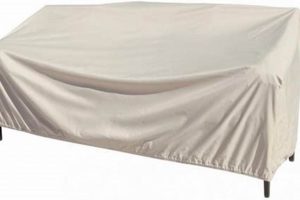
A protective coating designed for outdoor furnishings safeguards these items from the elements. For example, a product applied to wood, metal, or plastic seating and tables creates a barrier against moisture, ultraviolet radiation, and temperature fluctuations. This barrier helps prevent damage such as warping, cracking, fading, and corrosion, effectively extending the lifespan of the furniture.
The use of such protectants is crucial for maintaining the appearance and structural integrity of outdoor pieces. Prolonged exposure to sun, rain, and frost can significantly degrade materials, leading to costly repairs or replacements. Historically, various oils and waxes were used for this purpose; modern formulations now offer enhanced durability and ease of application. The application of a sealant not only preserves the aesthetic qualities but also contributes to the long-term value of the investment in outdoor living spaces.
The subsequent discussion will delve into the different types of protectants available, outlining their specific applications, optimal usage methods, and considerations for selecting the most suitable product for various furniture types. Furthermore, methods for proper application and maintenance will be addressed, ensuring optimal protection and longevity for outdoor furnishings.
Application Advice
Effective utilization is paramount to ensuring the longevity and aesthetic preservation of outdoor furnishings. The following guidelines outline best practices for achieving optimal results.
Tip 1: Surface Preparation is Key: Thoroughly clean the furniture before application. Remove any dirt, debris, or existing coatings. Sanding may be necessary to create a smooth, even surface for optimal adhesion.
Tip 2: Choose the Appropriate Formula: Select a formulation specifically designed for the furniture material. Products vary significantly for wood, metal, and plastic, with each requiring different protective qualities.
Tip 3: Apply in Favorable Weather Conditions: Avoid application during periods of high humidity, rain, or extreme temperatures. These conditions can impede the curing process and compromise the effectiveness of the coating.
Tip 4: Follow Manufacturer Instructions Diligently: Adhere to the manufacturer’s guidelines regarding application thickness, drying time, and reapplication intervals. Deviation from these instructions may result in unsatisfactory performance.
Tip 5: Apply Thin, Even Coats: Multiple thin coats are preferable to a single thick coat. This allows for proper penetration and reduces the risk of runs, drips, or uneven coverage.
Tip 6: Ensure Adequate Ventilation: Work in a well-ventilated area to minimize exposure to fumes. Use appropriate respiratory protection if necessary.
Tip 7: Allow Sufficient Drying Time: Permit the recommended drying time between coats and before placing furniture back into use. Premature use can damage the coating and reduce its protective capabilities.
Tip 8: Regular Inspection and Maintenance: Periodically inspect furniture for signs of wear or damage. Reapply the product as needed to maintain optimal protection, typically on an annual or biannual basis.
Proper application and maintenance extends the lifespan of outdoor furniture, preserving its appearance and minimizing the need for costly repairs or replacements.
The subsequent sections will explore specific product recommendations and detailed case studies illustrating the long-term benefits of consistent, informed application.
1. Material Compatibility

The selection of a garden furniture protectant is fundamentally governed by material compatibility. A mismatch between the protectant’s properties and the furniture’s composition can lead to ineffective protection or, in some cases, damage. Understanding material compatibility is, therefore, essential for ensuring the longevity and aesthetic appeal of outdoor furnishings.
- Wood Type and Porosity
Different wood species exhibit varying degrees of porosity and oil content, influencing the absorption and adherence of protectants. For instance, hardwoods like teak and mahogany possess natural oils that resist moisture, requiring protectants specifically formulated for oily woods. Softwoods, such as pine, are more porous and require formulations that penetrate deeply to provide adequate protection. Using an unsuitable protectant may lead to poor adhesion, peeling, or ineffective water resistance.
- Metal Composition and Reactivity
Metal furniture, including wrought iron, aluminum, and steel, requires protectants that prevent corrosion and rust. The specific protectant needed depends on the metal’s reactivity. Iron and steel, being highly susceptible to oxidation, necessitate protectants with rust inhibitors. Aluminum, while less reactive, can still corrode, requiring protectants that form a barrier against moisture and atmospheric pollutants. Applying an incorrect protectant may lead to accelerated corrosion and structural degradation.
- Plastic Type and Chemical Resistance
Plastic furniture, commonly made from polypropylene or polyethylene, requires protectants that offer UV resistance and prevent fading or cracking. The chemical resistance of the plastic also dictates the type of protectant to be used. Some protectants may contain solvents that can degrade or discolor certain types of plastics. Formulations specifically designed for plastic furniture ensure compatibility and provide long-lasting protection against environmental damage.
- Existing Finishes and Coatings
The presence of existing finishes, such as paint, varnish, or stain, can significantly impact the compatibility of a protectant. Applying a new protectant over an incompatible finish can lead to peeling, bubbling, or discoloration. It is often necessary to remove or prepare the existing finish before applying a new protectant to ensure proper adhesion and optimal performance. Consulting product specifications and conducting a test application in an inconspicuous area can help determine compatibility and prevent adverse reactions.
The interplay between the furniture’s material composition and the protectant’s formulation dictates the effectiveness of the protective barrier. Careful consideration of these factors is crucial for selecting a product that provides optimal protection, preserves the aesthetic quality of outdoor furnishings, and extends their lifespan. Incorrectly assessing material compatibility can negate any perceived benefits, resulting in costly repairs or replacements. Therefore, informed decision-making is paramount in selecting the appropriate protectant.
2. Weather resistance

Weather resistance is a primary attribute sought in coatings designed for outdoor furniture. These environmental factors exert continuous stress on exposed materials. Consequently, a furniture protectant’s ability to withstand these elements is paramount to its efficacy.
- Ultraviolet Radiation Protection
Exposure to ultraviolet (UV) radiation from sunlight can degrade materials, causing fading, discoloration, and embrittlement. Protectants with UV inhibitors mitigate these effects by absorbing or reflecting harmful rays. Without such protection, wood may gray and crack, plastics become brittle, and fabrics fade prematurely. The presence of UV inhibitors is thus crucial for preserving the aesthetic and structural integrity of outdoor furniture.
- Water Repellency and Moisture Barrier
Water penetration can lead to wood rot, metal corrosion, and the growth of mold or mildew. Water-repellent formulations create a barrier that prevents moisture absorption. These coatings must balance water resistance with breathability to allow trapped moisture to escape, preventing internal damage. Effective moisture control is essential for preventing long-term structural issues in furniture.
- Temperature Fluctuation Tolerance
Outdoor furniture experiences wide temperature swings, leading to expansion and contraction of materials. Coatings must accommodate these dimensional changes without cracking, peeling, or blistering. Formulations with high elasticity and flexibility maintain adhesion and integrity despite temperature variations. This attribute is particularly important in regions with significant seasonal temperature differences.
- Resistance to Precipitation and Environmental Pollutants
Rain, snow, and humidity, combined with atmospheric pollutants, accelerate the degradation of outdoor materials. Protectants must resist the corrosive effects of acid rain, salts, and other environmental contaminants. Durable coatings provide a barrier against these elements, preventing chemical reactions that weaken and discolor furniture surfaces. This resistance is critical for maintaining the long-term appearance and functionality of outdoor pieces.
The cumulative effect of these weather-related stressors underscores the necessity for coatings with robust protective properties. A well-formulated sealant provides a comprehensive defense against environmental degradation, extending the lifespan and preserving the appearance of outdoor furniture. The absence of adequate weather resistance compromises the investment in outdoor living spaces, leading to premature deterioration and increased maintenance demands.
3. Application method

The method of application directly influences the performance of coatings on outdoor furnishings. Deviations from recommended procedures can compromise protection, reducing the sealant’s efficacy and shortening the lifespan of the treated furniture. Therefore, adherence to prescribed application techniques is crucial.
- Surface Preparation and Adhesion
Proper surface preparation is a prerequisite for adequate adhesion. Removing dirt, debris, and existing coatings ensures the sealant can bond effectively. Sanding may be necessary to create a uniform surface texture, promoting optimal adhesion. Failure to prepare the surface adequately can result in peeling, blistering, or premature failure of the coating, negating its protective properties.
- Environmental Conditions and Application Timing
Environmental conditions at the time of application significantly impact sealant performance. High humidity, rain, or extreme temperatures can interfere with the curing process. Applying sealant under such conditions may lead to incomplete drying, reduced adhesion, and compromised weather resistance. Manufacturers typically specify optimal temperature and humidity ranges for application; adherence to these guidelines is essential for achieving desired results.
- Application Techniques and Uniformity
Various application methods, including brushing, spraying, and rolling, are employed depending on the sealant’s formulation and the furniture’s design. Regardless of the method chosen, achieving uniform coverage is critical. Uneven application can result in areas with inadequate protection, leading to localized damage and inconsistent appearance. Multiple thin coats are generally preferable to a single thick coat, as they promote better penetration and minimize the risk of runs or drips.
- Curing Process and Post-Application Care
The curing process is essential for the sealant to achieve its full protective properties. Adhering to the manufacturer’s recommended drying time is crucial; premature use of the furniture can disrupt the curing process and compromise the coating’s integrity. Post-application care, such as avoiding harsh chemicals or abrasive cleaning methods, also contributes to the longevity of the coating. Proper curing and subsequent care ensure sustained protection and aesthetic preservation.
These facets highlight the intimate relationship between application method and the effectiveness of protective substances on outdoor furniture. By diligently observing proper preparation, adhering to appropriate environmental parameters, employing correct application techniques, and ensuring complete curing, the protective benefits of the coating are maximized. Conversely, disregarding these considerations can lead to unsatisfactory results and diminished furniture lifespan.
4. Drying time
Drying time represents a critical parameter influencing the performance and longevity of sealants applied to outdoor furnishings. Inadequate consideration of drying time can lead to compromised protection and premature degradation of both the sealant and the furniture itself. This aspect warrants detailed examination to ensure proper application and optimal results.
- Environmental Factors and Curing Rate
Ambient temperature, humidity, and air circulation directly affect the rate at which coatings cure. Elevated humidity levels can impede solvent evaporation, extending the drying time and increasing the risk of trapped moisture. Conversely, high temperatures can accelerate drying, potentially leading to surface skinning and preventing complete curing throughout the coating layer. Proper environmental control or selection of fast-drying formulations is crucial in less-than-ideal conditions.
- Sealant Formulation and Drying Mechanisms
Sealants employ diverse drying mechanisms, including solvent evaporation, oxidation, and polymerization. Solvent-based coatings rely on the evaporation of volatile organic compounds (VOCs) to solidify, while water-based coatings utilize a similar process with water as the primary solvent. Oil-based coatings dry through oxidation, forming a solid film through chemical reactions with oxygen. Two-part epoxy sealants cure through polymerization, requiring a specific mixing ratio and pot life. Understanding the drying mechanism of a specific product is essential for anticipating drying time and ensuring proper curing.
- Impact of Insufficient Drying on Coating Properties
Incomplete drying can compromise the sealant’s protective properties. A coating that has not fully cured may remain tacky, attracting dirt and debris. It may also exhibit reduced resistance to abrasion, water penetration, and UV radiation. This compromises the barrier function of the sealant, leaving the furniture vulnerable to environmental damage. Allowing the recommended drying time is, therefore, critical for achieving the intended performance characteristics.
- Recoating Intervals and Drying Time Adherence
Many sealant applications require multiple coats to achieve optimal protection. Adhering to the recommended recoating intervals, as specified by the manufacturer, is essential. Applying a second coat before the first coat has fully dried can trap solvents or moisture, leading to blistering, peeling, or uneven drying. Conversely, waiting too long between coats can result in poor adhesion between layers. Precise adherence to drying time recommendations ensures proper layering and optimal sealant performance.
In summary, understanding and managing drying time is pivotal to the successful application of coatings on outdoor furnishings. Careful consideration of environmental factors, sealant formulation, and recoating intervals ensures proper curing, maximizing the protective benefits and extending the lifespan of both the sealant and the treated furniture.
5. Durability expectation

The anticipated lifespan of a coating on outdoor furniture directly influences the selection and application frequency of substances designed to protect such items. This expectation guides decisions regarding product type, application intensity, and maintenance schedules, ensuring a balance between protection and resource allocation.
- Material Composition and Degradation Rates
The inherent resistance of furniture materials to environmental stressors dictates the required level of protection. For instance, teak exhibits greater natural durability than pine, necessitating less frequent application of sealants. Similarly, aluminum resists corrosion better than steel, reducing the need for protective coatings. An understanding of material-specific degradation rates informs the selection of appropriate protectants and establishes a realistic durability expectation.
- Environmental Exposure and Sealant Longevity
The intensity of environmental exposure, including UV radiation, precipitation, and temperature fluctuations, significantly impacts the longevity of a coating. Furniture located in heavily shaded areas will experience less UV degradation than furniture exposed to direct sunlight. Similarly, furniture in coastal regions is subject to higher salt concentrations, accelerating corrosion and requiring more frequent sealant applications. Assessing environmental exposure allows for a more accurate estimation of sealant durability and guides the implementation of appropriate maintenance strategies.
- Application Quality and Protective Performance
The thoroughness and precision of sealant application influence its protective performance and longevity. Properly prepared surfaces and uniform coating application enhance adhesion and prevent premature failure. Conversely, inadequate surface preparation or uneven application can compromise the coating’s integrity and shorten its lifespan. The application process directly contributes to the achievement of desired durability expectations.
- Maintenance Regimen and Coating Renewal
Regular cleaning and periodic reapplication of sealants are crucial for maintaining protective performance and extending furniture lifespan. Removing dirt, debris, and mold prevents the accumulation of damaging substances that can degrade the coating. Reapplication of sealants replenishes the protective barrier, mitigating the effects of weathering and wear. A proactive maintenance regimen ensures that the desired durability expectation is met, preventing costly repairs or replacements.
These facets collectively underscore the significance of considering longevity when selecting and applying protective substances to outdoor furniture. By aligning sealant selection, application techniques, and maintenance schedules with anticipated performance requirements, a prolonged and aesthetically pleasing lifespan can be achieved. Neglecting durability expectations can result in premature furniture degradation and increased long-term costs.
6. Appearance preservation
Appearance preservation in outdoor furniture is directly linked to the appropriate selection and application of a suitable protective treatment. Environmental factors such as ultraviolet radiation, moisture, and temperature fluctuations contribute to the degradation of furniture surfaces, leading to fading, discoloration, cracking, and other forms of aesthetic damage. The protective coating functions as a barrier against these elements, mitigating their effects and extending the period for which the furniture retains its original visual characteristics. For example, untreated wooden furniture exposed to prolonged sunlight will often develop a grey, weathered appearance, while furniture treated with a UV-resistant coating will maintain its color and finish for a significantly longer duration. Consequently, appearance preservation becomes a key consideration in selecting a protective formulation, with specific properties tailored to address the vulnerabilities of the furniture material.
The effectiveness of appearance preservation extends beyond simply preventing fading or discoloration. A well-maintained finish can also enhance the overall aesthetic appeal of the furniture, contributing to the visual harmony of the outdoor living space. For instance, a glossy protectant applied to metal furniture can provide a reflective surface that complements the surrounding environment, while a matte finish on wooden furniture can accentuate its natural texture and grain. The choice of finish, therefore, becomes an integral part of the appearance preservation strategy, balancing protective properties with desired aesthetic outcomes. Furthermore, a smooth, intact surface resulting from effective preservation facilitates easier cleaning and maintenance, further contributing to the long-term visual appeal of the furniture.
The pursuit of appearance preservation in outdoor furniture requires a proactive and informed approach. Selecting the correct protective treatment, applying it according to manufacturer instructions, and implementing a regular maintenance schedule are all essential components of a successful strategy. Challenges may arise in selecting a product that balances aesthetic preferences with long-term protective capabilities or in consistently adhering to a maintenance schedule. However, the benefits of sustained appearance preservation, including enhanced aesthetic appeal, extended furniture lifespan, and reduced maintenance costs, ultimately justify the investment of time and resources. This understanding underscores the practical significance of viewing appearance preservation as a core component of outdoor furniture maintenance, rather than merely a cosmetic concern.
7. Maintenance needs

The maintenance requirements of outdoor furniture are intrinsically linked to the type and quality of protectant applied. A coating’s performance dictates the frequency and intensity of upkeep necessary to preserve both appearance and structural integrity.
- Regular Cleaning and Debris Removal
Dirt, pollen, and other environmental debris accumulate on outdoor furniture surfaces. This accumulation can compromise the protective barrier established by the sealant, leading to premature degradation. Regular cleaning with mild soap and water removes these contaminants, preserving the sealant’s effectiveness and extending its lifespan. The frequency of cleaning depends on environmental factors, such as proximity to trees or high-traffic areas.
- Inspection for Damage and Wear
Periodic inspection of furniture surfaces reveals signs of wear, such as scratches, chips, or discoloration. These imperfections indicate areas where the protective coating has been compromised, allowing moisture or UV radiation to penetrate. Timely identification of these areas facilitates localized repairs or reapplication of the sealant, preventing further damage and maintaining uniform protection.
- Reapplication Frequency and Procedure
Sealants degrade over time due to exposure to environmental stressors. The reapplication frequency varies depending on the product formulation, environmental conditions, and the furniture material. Following manufacturer recommendations for reapplication ensures continuous protection. Proper preparation, including cleaning and light sanding, is crucial for optimal adhesion and performance of the new coating.
- Storage Considerations During Inclement Weather
During periods of prolonged inclement weather, such as winter or extended rainy seasons, storing outdoor furniture indoors or covering it with protective tarps minimizes exposure to damaging elements. This reduces the strain on the protective coating, extending its lifespan and minimizing maintenance requirements. Proper storage complements the protective effects of the sealant, ensuring long-term preservation.
The synergy between the chosen protectant and ongoing maintenance directly influences the long-term viability of outdoor furnishings. Attentive maintenance, informed by an understanding of the sealant’s properties and environmental stressors, optimizes the protective barrier and minimizes the need for costly repairs or replacements.
Frequently Asked Questions About Protective Coatings for Outdoor Furnishings
This section addresses common inquiries regarding protective coatings designed for outdoor furniture, providing clarity on usage, selection, and expected performance.
Question 1: What constitutes an effective substance designed to protect outdoor furniture?
An effective substance for outdoor furnishings acts as a barrier against moisture, ultraviolet radiation, and temperature fluctuations. It should exhibit material compatibility, weather resistance, and durability appropriate for the specific furniture type and environmental conditions.
Question 2: How does the application procedure influence the performance of a protective layer?
The application technique significantly impacts the protective layer’s effectiveness. Proper surface preparation, adherence to recommended environmental conditions, and uniform application are crucial for optimal adhesion and long-term performance. Deviations from recommended procedures can compromise protection.
Question 3: How critical is drying duration in achieving optimal protective qualities?
Drying time is paramount for proper curing and the development of protective properties. Insufficient drying can lead to tackiness, reduced abrasion resistance, and compromised weather protection. Adherence to the manufacturer’s recommended drying time is essential.
Question 4: What maintenance protocols are essential to uphold long-term protection?
Essential maintenance includes regular cleaning to remove debris, periodic inspection for damage, and timely reapplication of the substance. Following these protocols preserves the protective barrier and extends the lifespan of the furniture.
Question 5: How does material composition impact the choice of a protective treatment?
Material composition dictates the selection of an appropriate treatment. Different materials, such as wood, metal, and plastic, require specific formulations tailored to their unique properties and vulnerabilities. Incompatible treatments can lead to ineffective protection or damage.
Question 6: What role does environmental exposure play in determining the needed level of safeguarding?
Environmental exposure significantly influences the needed level of protection. Furniture in areas with high UV radiation, moisture, or temperature fluctuations requires more robust and frequent application of protectants compared to furniture in sheltered environments.
In summation, diligent adherence to proper selection, application, and maintenance protocols ensures the effective protection of outdoor furniture, preserving its aesthetic appeal and extending its functional lifespan.
The succeeding segment will offer comparative analyses of various protective products, evaluating their performance under diverse environmental conditions.
Conclusion
The preceding discussion has illuminated critical aspects related to garden furniture sealer. This examination has emphasized the importance of material compatibility, proper application techniques, adherence to drying times, and the implementation of consistent maintenance schedules. A comprehensive understanding of these factors is paramount for ensuring the long-term protection and preservation of outdoor furnishings.
The prudent selection and diligent application of garden furniture sealer represent an investment in the longevity and aesthetic quality of outdoor living spaces. Future advancements in sealant technology will likely yield even more effective and environmentally conscious solutions, further enhancing the ability to safeguard valuable outdoor possessions. The consistent application of informed practices will remain the cornerstone of successful furniture preservation.

![Protect & Extend: Garden Furniture Feet Protectors [Buy Now] | The Ultimate Gardening Guide: Grow a Thriving Garden Year-Round](https://MyGardenPatch.com/wp-content/uploads/2025/07/th-3169-300x200.jpg "Protect & Extend: Garden Furniture Feet Protectors [Buy Now] The Ultimate Gardening Guide: Grow a Thriving Garden Year-Round")