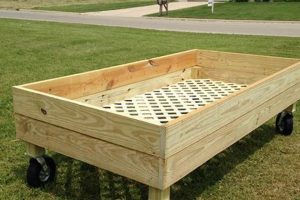
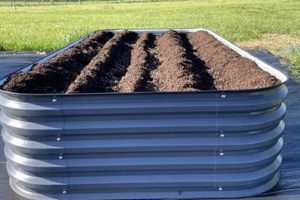
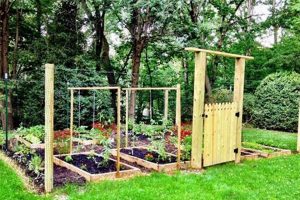
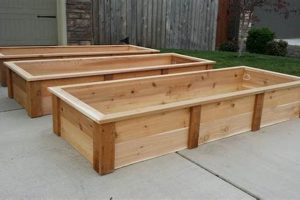
Structures composed of repurposed railroad components, elevated above the existing ground level, provide a defined area for cultivation. These constructions often utilize timbers formerly used in railway tracks to create a contained planting space. Their dimensional characteristics frequently offer advantages in soil depth and management compared to traditional in-ground gardening.
Such structures offer enhanced soil control, improved drainage, and reduced back strain during planting and harvesting. Historically, the utilization of reclaimed materials like these timbers presents both cost-effective solutions and potential environmental considerations. The durability of the materials employed contributes to the longevity of the constructed garden feature.
The following sections will delve into design considerations, suitable plant selection, construction techniques, and pertinent safety precautions when implementing this landscaping approach. Factors such as drainage, soil composition, and the potential for chemical leaching will also be examined in detail.
Construction & Maintenance Recommendations
This section outlines crucial considerations for successfully building and maintaining a garden structure employing reclaimed railway timbers. Adherence to these guidelines promotes longevity and minimizes potential adverse effects.
Tip 1: Material Assessment: Prior to construction, carefully inspect reclaimed timbers for evidence of creosote or other chemical treatments. Consider alternative materials if leaching concerns exist, especially when cultivating edible plants.
Tip 2: Proper Drainage: Implement a drainage layer at the base of the structure, consisting of gravel or similar material. This prevents waterlogging and promotes healthy root development.
Tip 3: Soil Selection: Utilize a high-quality soil blend formulated for raised beds. Avoid using native soil directly, as it may lack adequate drainage or nutrient content.
Tip 4: Structural Integrity: Ensure timbers are securely fastened together using appropriate hardware, such as landscape screws or heavy-duty fasteners. This prevents shifting and maintains the structural integrity of the enclosure.
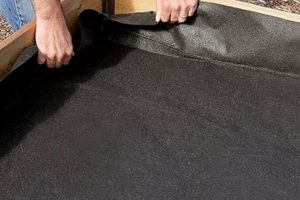
Tip 5: Liner Application: Consider lining the interior walls with a durable geotextile fabric. This helps to prevent soil erosion and prolongs the lifespan of the timber.
Tip 6: Sun Exposure Optimization: Position the structure to maximize sunlight exposure, particularly for plants requiring full sun conditions. Analyze the area’s sun path throughout the growing season.
Tip 7: Regular Maintenance: Periodically inspect the structure for signs of deterioration or insect infestation. Address any issues promptly to prevent further damage.
Implementing these recommendations contributes significantly to the successful creation and ongoing maintenance of a robust and productive garden structure. Careful planning and consistent upkeep are essential for maximizing benefits.
The following sections will present different design ideas and discuss the potential environmental ramifications associated with the selection of materials.
1. Material Composition

The composition of reclaimed railway timbers used in elevated planting structures presents significant implications for plant health and soil ecology. Historically, these timbers undergo treatment with creosote, a complex mixture of chemicals designed to prevent wood decay and insect infestation. While effective in preserving the wood, creosote contains polycyclic aromatic hydrocarbons (PAHs), some of which are carcinogenic and can leach into the surrounding soil. This leaching process poses a potential risk of contamination, affecting the plants grown within the structure and the surrounding environment.
The presence of PAHs in the soil can inhibit plant growth, reduce yields, and potentially introduce harmful chemicals into the food chain. The extent of contamination depends on factors such as the age of the timber, the concentration of creosote applied, soil pH, and rainfall patterns. For instance, acidic soils tend to facilitate greater PAH mobility. Alternative materials, such as untreated cedar or composite lumber, offer viable options that mitigate these risks, albeit potentially at a higher initial cost. The selection of materials must therefore consider both the structural requirements and the potential for environmental impact.
In summary, the material composition of these structures is a critical determinant of their suitability for cultivation purposes. A thorough assessment of potential contaminants and careful consideration of alternative, less hazardous materials are essential steps in ensuring the safety and sustainability of the planting area. Prioritizing informed material selection mitigates risks associated with soil contamination and promotes healthier plant growth.
2. Structural Integrity

The stability and longevity of a raised planting structure constructed from reclaimed railway timbers are inextricably linked to its structural integrity. This encompasses the capacity of the assembled components to withstand applied forces without deformation or failure. Ensuring adequate structural integrity is paramount to prevent collapse, soil loss, and potential hazards.
- Joint Strength
The connections between individual timbers represent critical points of vulnerability. Adequate fastening methods, such as heavy-duty screws or interlocking joinery, are essential to resist the outward pressure exerted by the contained soil. Inadequate joint strength can lead to bowing or separation of the timbers, compromising the entire structure.
- Material Degradation
Reclaimed railway timbers may exhibit varying degrees of decay or damage prior to construction. Assessing the condition of each timber and replacing those with significant structural weaknesses is crucial. Furthermore, ongoing exposure to moisture and soil contact can accelerate degradation over time, necessitating periodic inspection and maintenance.
- Load Distribution
The weight of the soil and plants within the structure exerts a significant load on the supporting timbers. Proper load distribution is achieved through careful design and construction techniques, ensuring that the weight is evenly distributed across the structure. Uneven load distribution can lead to localized stress points and premature failure.
- Foundation Stability
The base upon which the structure rests significantly influences its overall stability. A level and stable foundation, whether it be compacted gravel or a concrete pad, prevents settling or shifting, which can compromise the structural integrity of the entire structure. Proper foundation preparation is a prerequisite for ensuring long-term stability.
These facets of structural integrity are directly related to the successful implementation of a raised garden area using repurposed railway timbers. Maintaining stable structural foundation is vital for plant safety and property value. Ignoring these considerations can lead to potentially catastrophic consequences, underscoring the importance of meticulous planning and robust construction practices.
3. Soil Contamination

The utilization of reclaimed railroad components in elevated planting structures introduces the potential for soil contamination, primarily due to the historical application of creosote as a wood preservative. Creosote, a complex mixture containing polycyclic aromatic hydrocarbons (PAHs), can leach from the timbers into the adjacent soil. This leaching process represents a direct cause-and-effect relationship, where the presence of treated timber directly leads to chemical alteration of the soil composition. The introduction of PAHs into the soil environment can have detrimental effects on plant health, soil microorganisms, and potentially, human health through the uptake of contaminants by edible plants. Therefore, the assessment and mitigation of soil contamination are crucial components when considering the use of these materials in raised garden bed construction.
Examples of the effects of creosote contamination are documented in various studies examining soil chemistry around railroad tracks and treated wood structures. These studies demonstrate that PAH concentrations can exceed regulatory limits, impacting plant growth and potentially posing risks to groundwater quality. Practical significance arises from the need to carefully evaluate the source and condition of the timbers before use. Mitigation strategies include lining the raised bed with impermeable barriers, employing specialized soil mixes designed to bind contaminants, and selecting plant species known to tolerate or remediate contaminated soils. Furthermore, ongoing soil testing can provide valuable data to assess the extent of contamination and the effectiveness of mitigation efforts. A more extreme measure involves avoiding the use of treated railroad ties altogether, opting instead for alternative materials like untreated lumber or composite products.
In summary, soil contamination is a significant consideration when employing reclaimed railroad components in elevated planting structures. Understanding the mechanisms of contamination, implementing appropriate mitigation strategies, and considering alternative materials are essential steps in ensuring the safety and sustainability of the planting area. The challenge lies in balancing the cost-effectiveness and aesthetic appeal of reclaimed materials with the potential environmental risks associated with creosote contamination. Choosing alternative materials or properly lining to protect the soil are strategies to consider.
4. Drainage Management

Effective drainage management is a critical factor in the success and longevity of planting structures constructed from reclaimed railway timbers. The controlled outflow of excess water prevents waterlogging, promoting healthy root development and mitigating the risk of root rot. Inadequate drainage can lead to anaerobic conditions, hindering nutrient uptake and creating an environment conducive to fungal diseases. This section explores key facets of drainage management in this specific context.
- Substrate Composition and Permeability
The physical properties of the soil mix directly influence drainage characteristics. A well-draining soil, typically amended with materials like perlite, vermiculite, or coarse sand, facilitates the downward movement of water. Conversely, compacted or clay-rich soils impede drainage, leading to water retention and potential root damage. The selection of an appropriate soil mix is a fundamental aspect of drainage management in raised planting structures.
- Base Layer Implementation
The inclusion of a drainage layer at the base of the planting structure enhances water outflow. This layer typically consists of gravel, crushed rock, or similar coarse materials. The purpose of this layer is to create a void space that allows excess water to accumulate and gradually drain away, preventing saturation of the soil above. The depth and composition of the base layer should be tailored to the specific soil type and anticipated rainfall patterns.
- Weep Hole Placement and Functionality
Weep holes, strategically positioned along the base of the timber structure, provide an outlet for excess water to escape. The size and spacing of these holes should be carefully considered to ensure adequate drainage capacity. Clogging of weep holes by soil particles or debris can impede drainage effectiveness; therefore, periodic inspection and maintenance are necessary to ensure their proper function.
- Slope and Surface Runoff Management
The surrounding landscape and the slope of the planting surface can influence drainage patterns. Directing surface runoff away from the structure prevents excessive water accumulation. Grading the soil surface within the structure can also promote even drainage. Consideration of the surrounding environment is essential for comprehensive drainage management.
These facets of drainage management are directly relevant to the successful utilization of repurposed railway timbers in planting enclosures. Proper substrate selection, base layer implementation, weep hole functionality, and surface runoff management contribute synergistically to maintaining optimal soil moisture levels and promoting healthy plant growth. Neglecting these considerations can compromise plant viability and shorten the lifespan of the structure. The challenge lies in achieving a balance between water retention for plant uptake and efficient drainage to prevent waterlogging. Integrating these approaches ensures the longevity of the timbers and the success of the cultivated plants.
5. Plant Compatibility

The selection of appropriate plant species for cultivation within structures composed of reclaimed railroad timbers is of paramount importance, directly impacting plant health, yield, and overall success. Given the potential for soil contamination and unique microclimates within these raised beds, careful consideration of plant compatibility is crucial.
- Creosote Tolerance
Certain plant species exhibit greater tolerance to the chemical compounds present in creosote, which may leach from the timbers into the soil. Selecting plants known to withstand or even remediate PAHs can mitigate potential negative impacts. Examples include certain varieties of sunflowers and grasses. Conversely, sensitive species may exhibit stunted growth, reduced yields, or even mortality in contaminated soil. Thorough research is essential to determine the tolerance levels of desired plants.
- Soil pH Preference
The composition of the soil within the raised structure, particularly its pH level, influences nutrient availability and plant health. Different plant species have varying pH preferences; therefore, selecting plants that thrive within the existing or amended soil conditions is crucial. Some plants prefer acidic soil, while others require alkaline conditions. Conducting soil tests and adjusting the pH accordingly ensures optimal nutrient uptake and growth.
- Root Depth Considerations
Raised beds constructed from railroad components typically offer a limited soil depth compared to in-ground planting. Selecting plants with root systems that are compatible with the available depth is essential. Deep-rooted plants may become root-bound or struggle to access sufficient nutrients, while shallow-rooted plants thrive in the confined space. Carefully considering root depth requirements optimizes plant health and productivity.
- Sun and Shade Requirements
The orientation and surrounding environment of the raised bed influence the amount of sunlight and shade that plants receive. Selecting plants with compatible light requirements ensures optimal growth and yield. Plants requiring full sun may struggle in shaded locations, while shade-tolerant plants may be scorched by excessive sunlight. Careful observation of the site’s light patterns and matching plant selection accordingly maximizes success.
The interplay of these factors dictates the overall success of a raised planting area using recycled timbers. Careful planning is essential for integrating plant types best suitable for their environmental surroundings. Through careful selection and management, it is possible to establish a vibrant and productive cultivated plot, all while minimizing any adverse effects from the timbers or their treatment with chemicals.
Frequently Asked Questions
This section addresses common inquiries concerning the construction, maintenance, and potential risks associated with elevated planting structures utilizing reclaimed railway timbers.
Question 1: Is creosote leaching from these timbers a significant concern?
Creosote, a preservative historically applied to railway components, contains polycyclic aromatic hydrocarbons (PAHs). Leaching of these PAHs into the surrounding soil is a valid concern, potentially impacting plant health and soil ecology. Mitigation strategies, such as barrier liners, should be considered.
Question 2: How can structural integrity be ensured over time?
Secure fastening methods, regular inspections for decay, and proper load distribution are crucial. Replacing compromised timbers promptly prevents structural failure and ensures long-term stability.
Question 3: What soil amendments are recommended for these structures?
Well-draining soil mixes, amended with perlite, vermiculite, or compost, promote healthy root development. Avoid using native soil directly, as it may lack adequate drainage or nutrient content.
Question 4: What are the drainage requirements for these planting areas?
A base layer of gravel or crushed rock, coupled with strategically placed weep holes, facilitates proper drainage. This prevents waterlogging and minimizes the risk of root rot.
Question 5: Are all plant species suitable for cultivation in these structures?
Plant compatibility is paramount. Select species tolerant to potentially contaminated soil conditions and with root systems appropriate for the available soil depth.
Question 6: What alternative materials exist if concerns about reclaimed timbers persist?
Untreated cedar, composite lumber, or concrete blocks offer viable alternatives, mitigating the potential risks associated with creosote leaching.
In summary, while offering aesthetic and practical benefits, these structures require careful consideration of material composition, structural integrity, and soil management to ensure long-term success and minimize potential risks.
The subsequent section will delve into the environmental ramifications associated with the material selection for such structures.
Conclusion
The foregoing analysis has explored various facets of the railroad tie raised garden bed. Considerations ranging from material composition and structural integrity to drainage management and plant compatibility have been detailed, underscoring the multifaceted nature of implementing this gardening approach. Potential risks associated with creosote contamination necessitate careful planning and mitigation strategies. The selection of appropriate plant species and soil amendments is critical for achieving optimal growth and yield. The long-term viability of such structures hinges upon consistent maintenance and adherence to best practices.
While the allure of repurposed materials remains strong, the responsible implementation of a railroad tie raised garden bed demands a commitment to informed decision-making and environmental stewardship. A comprehensive understanding of the potential ecological ramifications is essential to ensure the safety and sustainability of the gardening endeavor. Further research and adherence to regulatory guidelines are encouraged for those pursuing this construction method.