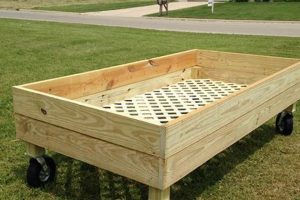
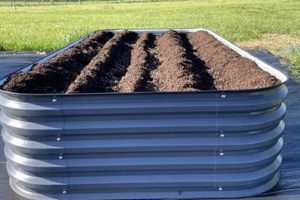
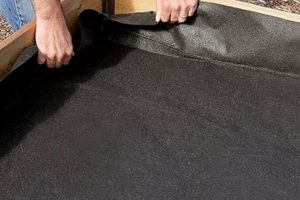
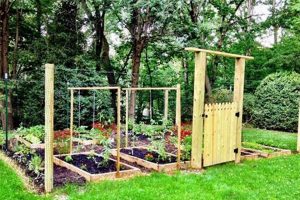
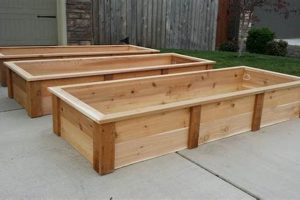
A physical barrier placed inside a framed garden structure to separate the soil from the construction material is a common horticultural practice. These barriers often consist of various materials, ranging from natural fabrics to synthetic polymers, and are specifically cut to fit the interior dimensions of the elevated gardening enclosure. They serve as an interface between the soil and the frame.
The implementation of such a barrier yields several advantages. It extends the lifespan of the frame by preventing direct contact with moisture and chemicals present in the soil, thereby reducing the likelihood of rot or corrosion. Furthermore, certain types can assist in water retention within the soil, leading to more efficient water usage and potentially reducing the frequency of irrigation. Historically, gardeners have employed diverse materials for this purpose, adapting to available resources and evolving horticultural techniques to enhance plant growth and structural integrity.
The subsequent sections will delve into the different materials utilized for these barriers, exploring their individual properties, benefits, and drawbacks, as well as providing guidance on selecting the most appropriate option based on specific gardening needs and environmental considerations.
Optimizing Soil Containment Practices
The following guidelines are designed to maximize the benefits and extend the longevity of barriers used within elevated gardening structures.
Tip 1: Material Selection Based on Soil Type: Assess the soil’s composition. Highly acidic soils may necessitate the use of barriers with increased chemical resistance. Avoid materials that degrade rapidly when exposed to acidic conditions.
Tip 2: Proper Installation Technique: Ensure the barrier is properly secured to the frame. Overlapping edges and secure fastening prevent soil from escaping and protect the frame from direct contact with the soil. Use staples or tacks appropriate for the frame material.
Tip 3: Drainage Considerations: Prioritize adequate drainage to prevent waterlogging. Consider incorporating drainage holes at the base of the barrier to allow excess water to escape. The number and size of these holes should be proportional to the expected rainfall and soil drainage characteristics.
Tip 4: Avoiding Chemical Contamination: Select barriers made from inert materials that will not leach harmful chemicals into the soil. Research the composition of the barrier before installation to ensure it is suitable for growing edible plants.
Tip 5: Regular Inspection and Maintenance: Conduct routine inspections of the barrier for signs of wear and tear, such as tears, punctures, or degradation. Address minor issues promptly to prevent larger problems from developing. Repair or replace the barrier as needed.
Tip 6: Utilizing Geotextile Fabric for Enhanced Durability: Geotextile fabric provides a robust, durable solution for soil containment. It resists tearing and puncturing, making it suitable for use with rocky or compacted soils. It also allows for excellent drainage.
By following these recommendations, gardeners can ensure the effective containment of soil, extend the life of the frame, and promote healthy plant growth.
The subsequent section will explore various material options, comparing their advantages and disadvantages to facilitate informed decision-making.
1. Material Durability

Material durability is a paramount consideration in the context of soil containment within elevated gardening structures. The inherent strength and resilience of the chosen material directly influence its capacity to withstand environmental stressors and physical demands, thereby determining the overall lifespan and effectiveness of the gardening structure.
- Resistance to Physical Damage
The material’s ability to resist punctures, tears, and abrasions is crucial. Materials such as thick polyethylene or reinforced geomembranes offer superior protection against sharp objects in the soil or accidental damage during gardening activities. Failure to select a robust material can result in breaches, leading to soil loss and diminished structural integrity.
- Resistance to Environmental Degradation
Exposure to sunlight, moisture, and temperature fluctuations can degrade certain materials over time. Ultraviolet (UV) radiation, in particular, can weaken plastics, causing them to become brittle and prone to cracking. Selecting materials with UV inhibitors or inherently resistant properties is essential for long-term performance, especially in outdoor settings.
- Resistance to Chemical Degradation
Soil composition and fertilizers can introduce chemical compounds that corrode or degrade some materials. Acidic soils, for instance, can accelerate the breakdown of certain plastics. Therefore, the chemical inertness of the selected material is critical to prevent leaching of harmful substances into the soil and to maintain the structural integrity of the barrier.
- Lifespan and Replacement Costs
The durability of the material directly correlates with its lifespan and the frequency of replacement. While less durable options may have lower initial costs, the long-term expenses associated with replacement and potential damage to the gardening structure can outweigh these savings. Choosing a more durable material, despite a higher initial investment, often proves to be more cost-effective in the long run.
The interconnectedness of these durability facets underscores the importance of a holistic approach to material selection. A comprehensive understanding of these factors, in conjunction with the specific environmental conditions and gardening practices, enables informed decision-making and ensures the effective and sustainable use of soil containment within elevated gardening structures. Therefore, by considering all facets related to durability, this will improve our raised bed garden liners last long.
2. Water Retention

Water retention within elevated gardening structures is a critical factor influencing plant health and irrigation efficiency. The choice of material for soil containment directly impacts the moisture balance within the growing medium, affecting nutrient availability and root development. An understanding of these interdependencies is essential for optimal horticultural practices.
- Material Permeability and Drainage
The permeability of the barrier material dictates the rate at which water drains from the soil. Highly permeable materials, such as landscape fabric, allow for rapid drainage, potentially leading to excessive water loss in well-draining soils. Conversely, impermeable materials, such as plastic sheeting, can impede drainage, increasing the risk of waterlogging and root rot. Selecting a material with appropriate permeability for the specific soil type and plant needs is crucial.
- Capillary Action and Moisture Distribution
Certain materials exhibit capillary action, facilitating the upward movement of water from the lower layers of the soil. This can be advantageous in promoting even moisture distribution throughout the root zone, particularly in arid climates or during periods of drought. Woven geotextiles, for example, can aid in capillary action, reducing the need for frequent irrigation.
- Evaporation Reduction
The material chosen for containment can influence the rate of evaporation from the soil surface. Impermeable materials act as a barrier, reducing direct evaporation and conserving moisture within the root zone. However, this can also limit gas exchange, potentially impacting soil health. Mulching, in conjunction with the soil containment, can further reduce evaporation and regulate soil temperature.
- Impact on Soil Microbial Activity
Soil moisture levels directly influence the activity of beneficial microorganisms that are essential for nutrient cycling and plant health. Excessive water retention can create anaerobic conditions, inhibiting microbial activity and leading to nutrient deficiencies. Conversely, insufficient water retention can dry out the soil, reducing microbial activity and limiting nutrient availability. Maintaining optimal moisture levels through appropriate material selection and irrigation practices is vital for supporting a healthy soil ecosystem.
These interconnected facets underscore the significance of material selection in optimizing water retention within elevated gardening structures. A comprehensive evaluation of permeability, capillary action, evaporation reduction, and impact on soil microbial activity is essential for promoting efficient water usage and sustainable plant growth. When considering “raised bed garden liners,” it’s imperative to consider how each will impact water retention.
3. Drainage capability

Drainage capability, referring to the rate and effectiveness with which excess water is removed from the soil, is a critical factor directly influenced by the choice of material for soil containment in elevated gardening structures. Improper drainage can lead to anaerobic conditions, root rot, and nutrient deficiencies, while excessive drainage can result in water stress and nutrient leaching. Selecting a material that balances drainage and water retention is thus essential for healthy plant growth.
- Material Permeability
The inherent permeability of the material dictates the drainage rate. Impermeable materials, such as plastic sheeting without perforations, impede water flow, potentially causing waterlogging. Conversely, highly permeable materials, such as landscape fabric or burlap, allow rapid drainage, which may be unsuitable for moisture-retentive soils or water-demanding plants. A material’s permeability must be matched to the specific needs of the plants being cultivated and the characteristics of the soil.
- Drainage Holes and Perforations
The incorporation of drainage holes or perforations in the material provides a controlled mechanism for water removal. The size, number, and placement of these openings directly influence the drainage rate. Insufficient drainage holes can lead to water accumulation, while excessive perforations may result in rapid water loss and soil erosion. The design of the drainage system should be tailored to the volume of water expected and the soil’s natural drainage capacity.
- Soil Composition and Structure
The composition and structure of the soil within the elevated gardening structure interact with the material’s drainage characteristics. Heavy clay soils, which retain water, require a material that facilitates drainage to prevent waterlogging. Sandy soils, which drain rapidly, may benefit from a material that provides some degree of water retention. Understanding the interplay between soil properties and the drainage capabilities of the material is crucial for maintaining optimal moisture levels.
- Impact on Root Health
Proper drainage is essential for maintaining a healthy root environment. Anaerobic conditions, caused by excessive water retention, can suffocate roots and promote the growth of harmful pathogens. Root rot, a common consequence of poor drainage, can lead to plant death. Selecting a material with appropriate drainage characteristics ensures adequate oxygen availability to the roots, promoting healthy growth and preventing disease.
The selection of a suitable material for soil containment, therefore, necessitates careful consideration of its drainage capabilities in relation to the specific environmental conditions, soil properties, and plant requirements. Balancing water retention and drainage is critical for fostering a thriving root environment and maximizing plant productivity. These choices all have significant impact on the raised bed garden liners, whether positive or negative.
4. Chemical Inertness

Chemical inertness, in the context of soil containment for elevated gardening, refers to the material’s resistance to chemical reactions with the surrounding environment, including the soil, water, and fertilizers. The degree of inertness exhibited by a material directly impacts the long-term health of the plants and the overall integrity of the gardening structure. Absence of reactivity prevents the leaching of harmful substances into the soil and ensures the material’s structural stability.
- Prevention of Leaching
The primary role of a chemically inert material is to prevent the release of potentially harmful compounds into the soil. Some plastics, for example, may contain additives or stabilizers that can leach into the surrounding environment over time, contaminating the soil and potentially harming plant growth. Inert materials, such as certain grades of polyethylene or polypropylene, are formulated to minimize or eliminate this leaching effect. For example, using a liner made of recycled tires, which are not chemically inert, can leach zinc and other heavy metals into the soil, with detrimental effects.
- Resistance to Degradation
Chemically inert materials resist degradation caused by exposure to common soil components, such as acids, bases, and salts. Soil pH levels, which can range from highly acidic to highly alkaline, can corrode or break down non-inert materials, compromising their structural integrity and potentially releasing harmful byproducts into the soil. Inert materials maintain their physical properties and structural stability over extended periods, irrespective of soil conditions. A concrete raised bed garden liner, while durable, is not completely chemically inert and can slowly leach lime into the soil, gradually raising the soil’s pH.
- Compatibility with Fertilizers and Soil Amendments
Fertilizers and soil amendments, such as compost and manure, often contain chemical compounds that can react with non-inert materials. These reactions can lead to the degradation of the material or the formation of undesirable byproducts. Inert materials remain unaffected by these chemical interactions, ensuring that the soil composition and nutrient availability remain consistent. The use of certain non-inert plastic liners with highly acidic fertilizers, for example, can accelerate the breakdown of the plastic, reducing its lifespan and potentially contaminating the soil.
- Impact on Soil Microorganisms
The chemical inertness of the material also influences the health and activity of soil microorganisms. Non-inert materials can release compounds that are toxic to beneficial soil microorganisms, disrupting the soil’s natural ecosystem and potentially hindering plant growth. Inert materials provide a stable and non-toxic environment for these microorganisms, promoting healthy soil biodiversity and nutrient cycling. Introducing non-inert treated wood as raised bed garden liners can release preservatives into the soil that inhibit the growth of beneficial fungi and bacteria.
Therefore, careful selection of chemically inert materials is essential for ensuring the long-term health and productivity of elevated gardening structures. The absence of reactivity minimizes the risk of soil contamination, promotes structural stability, and supports a thriving soil ecosystem, contributing to sustainable and environmentally responsible gardening practices when choosing raised bed garden liners.
5. Root Protection

Root protection, in the context of elevated gardening structures utilizing soil containment, signifies the strategic implementation of barriers to prevent root intrusion into the structural components of the raised bed, safeguarding the frame’s integrity and ensuring optimal plant health. Selection of appropriate soil containment methods plays a critical role in mitigating root-related damage.
- Physical Barrier Functionality
The primary function of a soil containment method is to create a physical barrier against root penetration. Materials such as durable polyethylene or geomembranes act as an impermeable layer, preventing roots from accessing and colonizing the wooden or metal framework of the elevated bed. Effective physical barriers minimize structural degradation caused by root expansion and moisture retention within the frame materials. For example, a robust geomembrane effectively prevents roots from infiltrating wooden frames, thereby reducing the risk of rot and extending the lifespan of the structure.
- Material Selection and Root Resistance
The choice of material directly influences the effectiveness of root protection. Certain materials, like woven geotextiles, may offer limited resistance to root penetration, particularly by aggressive root systems. Conversely, thicker, more impermeable materials provide a superior defense against root intrusion. Selecting materials specifically designed for root barrier applications is crucial for long-term structural preservation. The proper selection of “raised bed garden liners” dictates whether roots will penetrate, thereby influencing longevity.
- Prevention of Structural Damage
Root intrusion can exert significant pressure on the framework of elevated gardening structures, leading to warping, cracking, and eventual structural failure. Roots seeking moisture and nutrients can exploit weaknesses in the frame, accelerating the deterioration process. Effective soil containment mitigates these risks by preventing root contact with the structural components, preserving the integrity and stability of the raised bed. Unprotected wooden frames are particularly vulnerable to root-induced damage, necessitating robust soil containment strategies.
- Maintenance and Longevity
Implementing appropriate soil containment techniques reduces the need for costly repairs and replacements of damaged structural components. By preventing root intrusion, soil containment extends the lifespan of the elevated gardening structure, maximizing the return on investment. Regular inspection of the containment layer is essential to identify and address any breaches or weaknesses that may compromise its effectiveness. Over time, some “raised bed garden liners” may degrade, requiring replacement to maintain root protection.
The strategic implementation of root protection measures, through the careful selection and maintenance of appropriate containment, is essential for ensuring the long-term functionality and structural integrity of elevated gardening structures. The success of root protection directly influences the lifespan and sustainability of the raised bed system. Soil containment is therefore a cornerstone of responsible and effective elevated gardening practices.
6. Frame preservation

Frame preservation in elevated gardening structures is inextricably linked to the choice and implementation of soil containment methods. The primary objective of frame preservation is to extend the lifespan and structural integrity of the raised bed by mitigating the detrimental effects of direct soil contact, moisture exposure, and root intrusion. Soil containment methods, commonly referred to as barriers, serve as the interface between the soil and the frame, directly influencing the rate and extent of frame degradation. Improper or inadequate barriers accelerate frame deterioration, leading to costly repairs or premature replacement of the entire structure. The relationship is causal: ineffective barriers lead to compromised frame integrity.
The practical significance of understanding this connection is substantial. For example, wooden frames, particularly those constructed from untreated lumber, are highly susceptible to rot and decay when exposed to constant moisture from the soil. The use of a durable, impermeable soil containment material, such as high-density polyethylene, creates a barrier that prevents direct contact between the moist soil and the wooden frame, significantly reducing the risk of rot. Similarly, metal frames, while less vulnerable to rot, can corrode when exposed to certain soil compositions or fertilizers. Selecting a chemically inert soil containment prevents these corrosive elements from reaching the metal frame, extending its lifespan. The cost savings associated with avoiding frame repair or replacement far outweigh the initial investment in a high-quality soil containment method.
In summary, frame preservation is a critical component of any successful elevated gardening system, and the selection of an appropriate soil containment plays a pivotal role in achieving this goal. Challenges include selecting the correct material for specific soil conditions and frame materials and ensuring proper installation to prevent breaches in the barrier. A comprehensive understanding of these factors ensures that elevated gardening structures remain functional, aesthetically pleasing, and structurally sound for years to come. The use of adequate “raised bed garden liners” protects and preserves, leading to longevity and cost efficiency.
Frequently Asked Questions
The following addresses common inquiries regarding the implementation and selection of materials for containing soil within elevated gardening structures.
Question 1: What constitutes a soil containment in elevated gardening?
It is a physical barrier positioned inside an elevated gardening structure to separate the soil from the frame material. It protects the frame from moisture and chemical damage, prolonging its lifespan.
Question 2: Why is soil containment necessary in elevated gardening?
It is necessary to prevent direct contact between the soil and the frame, which can lead to rot, corrosion, and structural deterioration. It also aids in water retention and prevents soil erosion.
Question 3: What materials are commonly used for soil containment?
Common materials include polyethylene sheeting, geotextile fabric, pond liners, and repurposed materials like tarps. The suitability of each material depends on factors such as durability, cost, and chemical inertness.
Question 4: How does soil containment impact water drainage within elevated gardening structures?
The material selected influences drainage. Impermeable materials can impede drainage, while highly permeable materials may lead to excessive water loss. Proper drainage holes are often necessary to manage water levels effectively.
Question 5: Can soil containment contribute to soil contamination?
Yes, if the material used is not chemically inert. Some materials can leach harmful chemicals into the soil, potentially impacting plant health. Selection of food-grade or inert materials is crucial.
Question 6: How often should soil containment be replaced?
The lifespan of a soil containment varies depending on the material and environmental conditions. Regular inspection for tears, punctures, or degradation is recommended. Replacement is necessary when the material’s integrity is compromised.
Proper implementation and maintenance of soil containment are critical for the longevity and productivity of elevated gardening structures. Thoughtful material selection and regular inspections ensure optimal performance.
The following section will detail best practices for installing and maintaining soil containment in various elevated gardening scenarios.
Conclusion
The preceding analysis underscores the significance of thoughtful material selection and diligent maintenance in the context of soil containment for elevated gardening structures. The effective implementation of raised bed garden liners directly impacts the lifespan of the structure, the health of the plants cultivated within, and the overall sustainability of the gardening endeavor. Neglecting the fundamental principles of material compatibility, drainage management, and chemical inertness can lead to compromised structural integrity, soil contamination, and diminished plant productivity.
Therefore, it is incumbent upon practitioners to prioritize informed decision-making in the selection and installation of barriers. Continued research and adherence to established best practices are essential for maximizing the benefits and mitigating the risks associated with soil containment in elevated gardening systems. Further exploration into innovative materials and sustainable methodologies will undoubtedly shape the future of this horticultural practice, enhancing both its efficiency and its environmental responsibility.