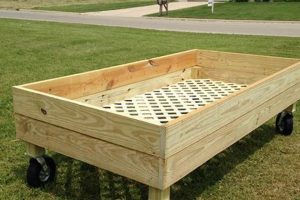
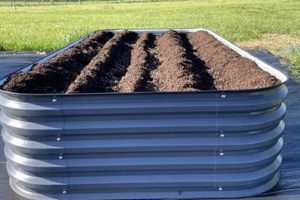
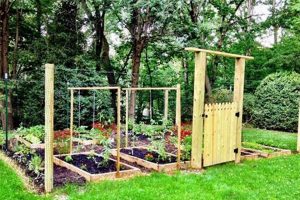
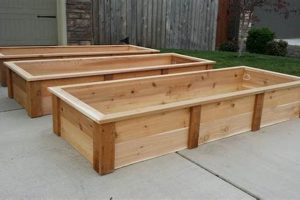
Structures elevating soil above ground level, often utilizing reclaimed timbers from railway infrastructure, create defined planting areas. These elevated plots offer a contained environment for cultivating plants, vegetables, or flowers. The use of repurposed heavy timber provides both structural integrity and a rustic aesthetic. For example, a gardener might construct a four-foot by eight-foot enclosure using six-inch by eight-inch timbers to create a designated space for growing herbs.
Employing durable materials in this manner offers several advantages. Improved drainage, reduced soil compaction, and mitigation of pest infestations are among the benefits. The elevated nature of these installations also eases accessibility for planting, weeding, and harvesting, particularly for individuals with limited mobility. Historically, the utilization of repurposed materials aligns with sustainable gardening practices, reducing waste and promoting resourcefulness. The inherent thermal mass of dense timbers can also moderate soil temperature fluctuations, providing a more stable environment for root development.
The following sections will explore the construction techniques, material selection considerations, and long-term maintenance strategies for building and maintaining these types of garden features. Emphasis will be placed on ensuring structural integrity, environmental responsibility, and maximizing the longevity of these elevated garden spaces.
Construction and Maintenance Considerations
The following guidelines provide essential insights for individuals considering constructing elevated planting areas using repurposed timbers. Proper planning and execution are crucial for ensuring the longevity and functionality of these garden features.
Tip 1: Material Sourcing: Prioritize obtaining timbers from reputable sources. Verify that the timbers have been treated with environmentally safe preservatives and are free from harmful chemicals or contaminants. Untreated or improperly treated materials can leach toxins into the soil, impacting plant health.
Tip 2: Structural Integrity: Ensure adequate support and reinforcement, particularly for larger installations. Interlocking joints, such as dovetail or mortise and tenon, provide superior stability compared to simple butt joints. Consider using metal reinforcing bars or rebar to further strengthen corners and prevent bowing.
Tip 3: Drainage Implementation: Incorporate a drainage layer beneath the soil to prevent waterlogging. A layer of gravel or crushed stone at the bottom of the structure facilitates proper water percolation and minimizes the risk of root rot.
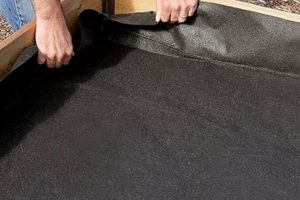
Tip 4: Liner Installation: Install a non-toxic, permeable liner between the timbers and the soil. This barrier prevents direct contact between the treated wood and the soil, mitigating the potential for chemical leaching. Geotextile fabric is a suitable option.
Tip 5: Soil Selection: Utilize a high-quality soil mix specifically formulated for container gardening. This typically consists of a blend of topsoil, compost, and drainage-enhancing amendments such as perlite or vermiculite. Avoid using garden soil directly, as it may compact and impede drainage.
Tip 6: Pest Management: Implement preventative measures to minimize pest infestations. Regularly inspect plants for signs of pests and diseases. Introduce beneficial insects, such as ladybugs, to control aphid populations. Physical barriers, like netting or row covers, can protect vulnerable plants from common pests.
Tip 7: Weather Protection: Consider the local climate and implement measures to protect the structure from extreme weather conditions. In regions with heavy rainfall, ensure adequate drainage and slope the top surface slightly to facilitate water runoff. In areas with harsh winters, insulate the perimeter of the structure to protect plant roots from freezing temperatures.
Adherence to these recommendations will contribute to the successful construction and long-term maintenance of elevated planting areas, ensuring a healthy and productive growing environment.
The subsequent section will discuss specific plant selection strategies and cultivation techniques tailored for elevated garden environments.
1. Material Sourcing

The selection of materials for constructing elevated planting areas from reclaimed timbers is a critical determinant of both structural integrity and environmental safety. The origin of the timbers dictates their inherent properties, including the type and concentration of any preservatives used, and the potential presence of contaminants absorbed during their service life. Acquiring timbers from verifiable sources allows for due diligence regarding treatment history and potential risks associated with soil and plant contamination. The absence of careful scrutiny in material sourcing can result in the unintentional introduction of harmful substances into the garden environment, negating the benefits of organic cultivation practices. For example, timbers sourced from uncontrolled demolition sites may contain creosote or heavy metals, substances detrimental to plant health and potentially hazardous to human health upon consumption of produce grown in the affected soil.
Considerations extend beyond the presence of undesirable chemicals. The structural soundness of the timbers is directly linked to their source and previous use. Timbers exposed to prolonged weathering or structural stress during their original railway service may exhibit internal decay or fractures. Employing compromised materials can lead to premature failure of the elevated planting area, necessitating costly repairs or complete reconstruction. Responsible sourcing includes visual inspection for signs of damage and, when feasible, laboratory analysis to determine the presence and concentration of any potentially harmful substances. Farmers or gardeners purchasing reclaimed timbers should request documentation detailing the treatment history and source of the materials from the supplier.
In summary, material sourcing is not merely a procurement activity but a fundamental element in the successful and environmentally responsible construction of elevated planting areas using reclaimed timbers. Diligence in selecting materials from reputable sources mitigates risks associated with contamination and structural failure, ensuring a safe and sustainable growing environment. The implications of neglecting this aspect extend beyond the immediate garden, potentially impacting soil health and the safety of produce consumed. Subsequent discussions will examine the construction techniques that complement responsible material sourcing, further enhancing the longevity and functionality of these garden structures.
2. Structural Stability

The longevity and functionality of elevated planting areas constructed with reclaimed timbers are intrinsically linked to their structural integrity. The heavy nature of soil, particularly when saturated with water, exerts significant outward pressure on the retaining walls. Inadequate structural design or construction leads to bowing, leaning, and eventual collapse. For instance, an unreinforced structure filled with wet soil can exert pressures exceeding 50 pounds per square foot, leading to deformation within a single growing season. Therefore, robust construction is not merely an aesthetic consideration, but a fundamental requirement for the sustained use of these garden features.
Several factors contribute to the structural stability of these constructions. The interlocking of timbers, through joinery techniques such as dovetail or mortise and tenon, significantly enhances resistance to outward pressure. The inclusion of internal bracing or external support structures further reinforces the walls, preventing deformation. Soil composition also plays a role; a well-draining soil mix reduces hydrostatic pressure, mitigating stress on the timber walls. Furthermore, proper site preparation, including leveling the ground beneath the structure, distributes weight evenly and prevents uneven settling. An example is a raised bed constructed on a slope without proper leveling, which may experience differential settling, leading to structural failure over time. Failure to adequately address any of these factors compromises the overall stability of the structure, increasing the risk of collapse and rendering the planting area unusable.
In summary, structural stability is not a tangential consideration, but rather a foundational element in the design and construction of elevated planting areas using repurposed timbers. Robust construction, incorporating appropriate joinery, bracing, and site preparation, ensures the longevity and functionality of these garden features. Compromised structural integrity leads to premature failure and diminishes the benefits of the elevated planting system. Subsequent discussions will address soil composition and drainage considerations, further elucidating the factors that contribute to a successful and sustainable gardening environment.
3. Soil Composition

The success of a planting area utilizing reclaimed timbers is significantly influenced by the constitution of the growing medium within. Unlike in-ground gardens where plants can access subsoil nutrients and drainage pathways, these elevated structures rely entirely on the characteristics of the contained soil. Improper soil composition directly affects plant health, nutrient uptake, and water management. For instance, a soil mix that is too dense restricts root growth and impedes drainage, predisposing plants to root rot and nutrient deficiencies. Conversely, a soil that is overly porous may drain too quickly, leading to drought stress and nutrient leaching. Therefore, careful selection and preparation of the soil mix are essential for cultivating thriving plants within a defined timber enclosure.
The ideal soil composition for these elevated gardens generally consists of a blend of topsoil, compost, and drainage-enhancing amendments. Topsoil provides a foundation of mineral content and organic matter. Compost contributes vital nutrients and improves soil structure. Amendments such as perlite, vermiculite, or coarse sand enhance drainage and aeration. The specific ratio of these components should be adjusted based on the types of plants being cultivated. For example, vegetable gardens often benefit from a higher proportion of compost to support vigorous growth and fruit production, while drought-tolerant plants require a more well-draining mix. The absence of appropriate soil amendments can lead to compaction, anaerobic conditions, and nutrient imbalances, hindering plant growth and potentially leading to crop failure. Further, the weight of saturated soil must be considered, as excessively heavy soil places undue stress on the timber walls of the structure.
In summary, soil composition is a critical factor in the performance of elevated planting areas. A well-balanced soil mix promotes healthy root development, efficient nutrient uptake, and optimal water management. Careful attention to soil composition, tailored to the specific plant needs, maximizes yields and contributes to a sustainable and productive gardening environment. Ignoring this aspect leads to diminished plant vigor, increased susceptibility to disease, and ultimately, a less rewarding gardening experience. Future discussions will examine drainage efficiency and its interconnectedness with soil composition, providing a holistic understanding of the factors governing success in these garden structures.
4. Drainage Efficiency

Drainage efficiency is a critical factor governing the long-term viability and productivity of elevated planting areas constructed using reclaimed timbers. The enclosed nature of these structures necessitates careful consideration of water management to prevent waterlogging, root rot, and nutrient imbalances. Imperfect drainage within these systems leads to anaerobic soil conditions, inhibiting root respiration and reducing nutrient availability. Consider, for example, a situation where a planting area lacks adequate drainage. Excess water accumulates following a heavy rainfall, saturating the soil. This creates an oxygen-deprived environment that damages plant roots, hindering their ability to absorb essential nutrients, ultimately resulting in stunted growth or plant death. The timbers themselves can also be negatively affected; prolonged exposure to moisture accelerates decay, shortening the lifespan of the structure.
Proper drainage can be achieved through several strategies. The incorporation of a drainage layer composed of gravel or crushed stone at the base of the structure facilitates water percolation. The use of well-draining soil amendments, such as perlite or coarse sand, enhances soil porosity and reduces water retention. The installation of drainage outlets or weep holes in the timber walls allows excess water to escape the enclosure. For example, a planting area featuring a gravel base, amended soil, and strategically placed weep holes will effectively manage excess water, creating a healthier growing environment. Failure to implement effective drainage strategies can negate the benefits of elevated planting, resulting in diminished plant vigor and reduced crop yields. Furthermore, the accumulation of stagnant water can attract pests and create conditions conducive to the development of fungal diseases.
In summary, drainage efficiency is not a peripheral consideration but a fundamental requirement for the success of elevated planting areas utilizing reclaimed timbers. Effective drainage systems prevent waterlogging, promote healthy root development, and extend the lifespan of the structure. Addressing this aspect through careful design and appropriate materials selection ensures a sustainable and productive gardening environment. The ramifications of neglecting drainage efficiency extend beyond the immediate garden, potentially impacting soil health and the overall vitality of the plants. Future considerations should focus on preservative safety in relation to drainage, ensuring that water exiting the structure does not carry harmful chemicals into the surrounding environment.
5. Liner Integrity

The functional lifespan and ecological safety of elevated planting areas constructed with reclaimed timbers are critically dependent on the sustained integrity of the liner system. This barrier, typically a sheet of durable, non-toxic material, separates the soil from the treated wood, mitigating the leaching of potentially harmful preservatives into the growing medium and surrounding environment. Degradation or failure of the liner compromises this protective function, exposing plants and soil to direct contact with the timbers.
- Chemical Migration Prevention
The primary function of the liner is to prevent the migration of wood preservatives, such as creosote or chromated copper arsenate (CCA), from the timbers into the soil. These chemicals, historically used to protect wood from decay and insect infestation, can be toxic to plants and pose health risks to humans through the consumption of contaminated produce. An intact liner creates a physical barrier, preventing direct contact between the treated wood and the soil, thus minimizing the potential for chemical contamination. For example, a puncture in the liner caused by sharp objects or root growth allows preservatives to leach into the soil, potentially inhibiting plant growth and introducing harmful substances into the food chain.
- Moisture Management Control
The liner also plays a role in moisture management within the planting area. A well-selected liner is permeable, allowing for drainage while preventing excessive water loss. An impermeable liner, on the other hand, can lead to waterlogging and anaerobic soil conditions, detrimental to plant health. Liner damage can disrupt this balance. For instance, tears or punctures in the liner can create pathways for uncontrolled water movement, either leading to excessive drying or water accumulation, both of which negatively impact plant growth. Selecting a material with appropriate permeability characteristics and ensuring its integrity during installation are crucial for maintaining optimal moisture levels within the planting area.
- Root Intrusion Resistance
Many plant species possess aggressive root systems that can penetrate and damage the liner material. Root intrusion compromises the barrier function, allowing direct contact between the roots and the treated wood, and potentially facilitating the uptake of harmful preservatives. Liner materials with high tensile strength and resistance to puncture are essential for preventing root intrusion. For example, certain woven geotextiles provide a robust barrier against root penetration, maintaining the integrity of the liner over time. Regular inspection of the liner edges and seams for signs of root intrusion is crucial for identifying and addressing potential problems before they escalate.
- Material Degradation Over Time
All liner materials degrade over time due to exposure to soil microbes, moisture, and ultraviolet (UV) radiation. The rate of degradation depends on the type of material and the environmental conditions. Regular inspection and maintenance are necessary to identify signs of wear and tear and to repair or replace the liner as needed. For instance, a polyethylene liner exposed to direct sunlight will become brittle and prone to cracking over time, compromising its barrier function. Selecting a UV-resistant material or providing shading can extend the lifespan of the liner and maintain its integrity. Failure to address material degradation leads to the eventual loss of the liner’s protective function and increases the risk of soil contamination.
The sustained integrity of the liner system is paramount to the ecological safety and long-term viability of elevated planting areas utilizing reclaimed timbers. Compromised liner integrity negates the benefits of using elevated planting beds, potentially exposing plants, soil, and ultimately, consumers to harmful preservatives. Proactive measures, including careful material selection, proper installation, and regular inspection and maintenance, are essential for ensuring the ongoing effectiveness of the liner and safeguarding the environment.
6. Preservative Safety

The utilization of reclaimed timbers from railway applications in elevated planting areas introduces specific considerations regarding preservative safety. These timbers, often treated to resist decay and insect infestation, may contain substances that can leach into the soil and affect plant health. The presence of chemical preservatives in the soil poses a potential risk of contamination to edible plants, impacting human health through the consumption of affected produce. Historical treatments such as creosote, chromated copper arsenate (CCA), and pentachlorophenol (PCP) are of particular concern due to their known toxicity and persistence in the environment. For example, if timbers treated with CCA are used without a proper barrier, arsenic can accumulate in the soil, potentially being absorbed by certain plants like leafy greens and root vegetables.
Effective strategies for mitigating the risks associated with preservative leaching involve several key elements. First, thorough identification of the timber’s treatment history is crucial. Timbers with unknown or questionable treatment records should be avoided. Second, a physical barrier, such as a polyethylene or geotextile liner, can significantly reduce the migration of preservatives from the wood into the soil. This barrier must be carefully selected for its durability and resistance to degradation. Third, soil testing can be employed to monitor the presence of chemical contaminants, allowing for timely intervention if levels exceed acceptable limits. Finally, the selection of plant species should consider their propensity to accumulate specific chemicals. Some plants are more efficient at absorbing and accumulating contaminants than others, making them unsuitable for cultivation in areas with potential preservative leaching. An informed understanding of these factors allows gardeners to make responsible decisions that minimize risks to both plant and human health.
Ultimately, preservative safety represents a critical component in the responsible use of reclaimed railroad ties for elevated planting areas. While these timbers offer a durable and aesthetically pleasing option, the potential for chemical contamination requires careful planning and diligent execution. By prioritizing material sourcing, employing effective barrier systems, monitoring soil quality, and selecting appropriate plant species, gardeners can mitigate the risks and cultivate thriving, safe growing environments. The challenges associated with preservative leaching underscore the importance of informed decision-making and a commitment to sustainable gardening practices.
7. Pest Management
Effective pest management is integral to the successful cultivation of plants within elevated planting structures utilizing repurposed timbers. The unique characteristics of these gardens, including their contained environment and potential for soil contamination, necessitate tailored pest control strategies to protect plant health and ensure harvest safety.
- Soilborne Pest Mitigation
Elevated gardens employing reclaimed timbers are susceptible to soilborne pests, such as nematodes and fungal pathogens. Reclaimed timbers may harbor dormant pests or facilitate the introduction of contaminated soil. Implementing soil solarization before planting, using certified pest-free soil mixes, and incorporating beneficial nematodes are effective mitigation strategies. These methods prevent the establishment and proliferation of soilborne pests, protecting plant roots and promoting healthy growth.
- Barrier Strategies
The construction of raised beds with reclaimed timbers facilitates the implementation of physical barriers to exclude above-ground pests. Installing netting or row covers over the planting area prevents insect access to vulnerable plants. Copper tape placed around the perimeter of the timbers deters slugs and snails. These barrier methods reduce the reliance on chemical pesticides, promoting a more sustainable and environmentally friendly pest control approach.
- Timber-Associated Pest Considerations
Reclaimed timbers, particularly if untreated or improperly treated, may attract wood-boring insects such as termites or carpenter ants. These insects can compromise the structural integrity of the raised bed. Regular inspection of the timbers for signs of infestation is crucial. Treatment with borate-based preservatives, which are less toxic to plants and humans than older preservatives, can deter wood-boring insects and extend the lifespan of the raised bed.
- Integrated Pest Management (IPM) Implementation
An integrated pest management approach is essential for sustainable pest control in raised bed gardens. IPM involves a combination of preventative measures, biological controls, and targeted pesticide applications when necessary. Regularly monitoring plant health, encouraging beneficial insects, and using organic pesticides as a last resort minimize the environmental impact of pest control while protecting plant health and maximizing yields. This holistic approach ensures long-term success in managing pests within the unique environment of elevated gardens using reclaimed timbers.
The implementation of these pest management strategies, tailored to the specific environment of raised bed gardens constructed with reclaimed timbers, is crucial for ensuring healthy plant growth and sustainable gardening practices. By combining preventative measures, physical barriers, and targeted interventions, gardeners can effectively manage pests while minimizing the reliance on harmful chemicals and preserving the integrity of the garden ecosystem.
Frequently Asked Questions
The following section addresses common inquiries regarding the construction and maintenance of elevated planting areas utilizing reclaimed timbers from railway applications. These responses aim to provide clear and concise information, enabling informed decision-making.
Question 1: Are timbers previously used in railway applications safe for use in vegetable gardens?
The safety of utilizing reclaimed timbers in vegetable gardens depends on the type of preservative used during their initial service. Timbers treated with creosote or chromated copper arsenate (CCA) pose a risk of soil contamination and potential uptake by plants. Prioritize obtaining timbers with verifiable treatment records or opt for untreated alternatives. If utilizing treated timbers, a durable, non-permeable liner is recommended to prevent direct contact between the wood and the soil.
Question 2: How should reclaimed timbers be prepared before constructing a raised bed?
Prior to construction, thoroughly clean the timbers to remove any loose debris, dirt, or remaining creosote residue. Inspect for structural damage, such as cracks or rot, and discard compromised materials. If pressure washing, avoid directing the spray near areas where runoff could contaminate surrounding soil or water sources. Consider applying a sealant to the timbers to further minimize preservative leaching.
Question 3: What type of soil is best suited for elevated planting areas constructed with reclaimed timbers?
A well-draining soil mix is essential. Combine topsoil, compost, and amendments like perlite or vermiculite to improve drainage and aeration. Avoid using garden soil directly, as it can compact and impede drainage. The specific ratio of these components should be adjusted based on the plants being cultivated. A soil pH test is recommended to ensure optimal conditions for plant growth.
Question 4: How can proper drainage be ensured in elevated planting areas?
Implement a drainage layer at the base of the planting area using gravel or crushed stone. This allows excess water to percolate away from the root zone. Install drainage outlets or weep holes in the timber walls to facilitate water runoff. Avoid overwatering and monitor soil moisture levels regularly. A slight slope of the planting surface can also aid in water drainage.
Question 5: What type of liner is recommended to prevent preservative leaching?
Select a durable, non-toxic liner material such as polyethylene or geotextile fabric. Ensure the liner is properly installed, covering all interior surfaces of the planting area and extending slightly over the top edge of the timbers. Overlap seams and secure them with waterproof tape to prevent leakage. Regularly inspect the liner for tears or punctures and repair them promptly.
Question 6: How can pest infestations be managed in elevated planting areas?
Implement an integrated pest management (IPM) approach. This includes regular monitoring for pests, using physical barriers such as netting or row covers, introducing beneficial insects, and applying organic pesticides only when necessary. Avoid using broad-spectrum pesticides, as they can harm beneficial insects. Maintain good sanitation practices by removing dead leaves and plant debris.
In summary, careful planning and informed decision-making are crucial for constructing and maintaining safe and productive elevated planting areas utilizing reclaimed timbers. Addressing concerns regarding preservative safety, soil composition, drainage, and pest management ensures a sustainable and environmentally responsible gardening practice.
The following section will explore advanced techniques for optimizing plant growth and maximizing yields in elevated planting environments.
Conclusion
The preceding examination of raised bed garden railroad ties underscores the complexities inherent in repurposing industrial materials for horticultural applications. Key considerations include preservative safety, structural integrity, drainage efficiency, and soil composition. Adherence to best practices in material sourcing, construction techniques, and ongoing maintenance is paramount for mitigating potential risks and maximizing the benefits of these elevated planting systems. The long-term viability and ecological impact of utilizing reclaimed timbers demand a thorough understanding of the associated challenges and a commitment to responsible gardening practices.
Ultimately, the successful implementation of raised bed garden railroad ties necessitates a balanced approach, weighing the economic and aesthetic advantages against the potential environmental concerns. Further research into alternative, less hazardous wood preservation methods and innovative construction techniques is warranted to ensure the sustainable use of reclaimed materials in horticultural settings. Continued vigilance and informed decision-making are essential for safeguarding soil health, protecting plant vitality, and promoting responsible resource management.