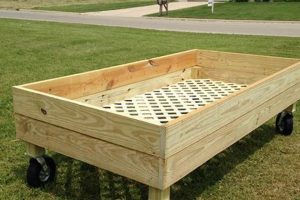
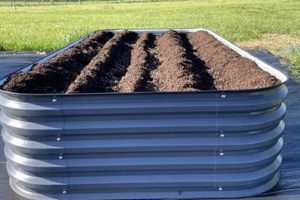
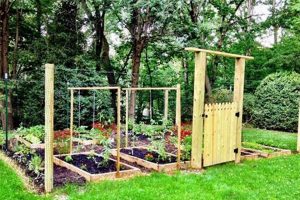
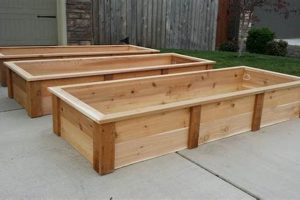
A structure crafted from polyvinyl chloride (PVC) pipes and fittings designed to elevate a planting area above ground level, creating an accessible and contained space for cultivating plants. These structures offer an alternative to traditional in-ground gardens or raised beds made of wood or other materials.
The utilization of this method provides several advantages, including improved drainage, reduced soil compaction, and ease of access for individuals with mobility limitations. Furthermore, the use of readily available and relatively inexpensive PVC materials can offer a cost-effective gardening solution. Its design principles, although contemporary, resonate with historical practices of elevated planting, adapted with modern materials for increased durability and ease of construction.
The subsequent sections will detail the construction process, explore various design options, consider material selection factors, and address common challenges encountered when building and maintaining these elevated horticultural systems.
Construction and Maintenance Tips
This section offers practical guidance for constructing and maintaining a planting structure made of PVC, ensuring its longevity and effectiveness.
Tip 1: Select Appropriate PVC Grade: Use schedule 40 PVC pipe for structural components. This grade offers greater rigidity and resistance to deformation compared to thinner-walled options. Plumbing-grade PVC is suitable for water delivery systems within the structure.
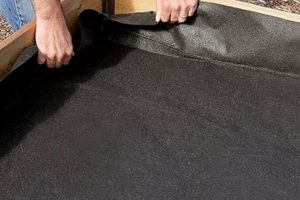
Tip 2: Ensure Proper Drainage: Drill drainage holes at regular intervals along the base of the structure. The number and size of these holes should be determined by the anticipated rainfall and soil composition. Consider adding a layer of gravel or landscape fabric at the bottom to further enhance drainage.
Tip 3: Stabilize the Structure: Secure the structure to the ground using stakes or anchors, especially in windy locations. This prevents tipping or movement that could damage plants or the structure itself. For larger installations, consider reinforcing corners with metal brackets.
Tip 4: Choose a Suitable Soil Mix: Use a lightweight potting mix formulated for raised beds. This type of mix retains moisture while providing adequate drainage and aeration for root development. Avoid using heavy garden soil, which can compact and restrict root growth.
Tip 5: Implement Integrated Pest Management: Regularly inspect plants for signs of pests or diseases. Employ organic pest control methods, such as introducing beneficial insects or using insecticidal soap, to minimize environmental impact. Proper watering and fertilization also contribute to plant health and resistance to pests.
Tip 6: Protect from UV Degradation: PVC can degrade over time due to prolonged exposure to ultraviolet (UV) radiation. Applying a UV-resistant paint or coating to the exterior of the structure will help extend its lifespan.
Tip 7: Plan for Irrigation: Integrate an irrigation system into the structure design. This could involve a simple soaker hose system or a more elaborate drip irrigation setup. Efficient watering is crucial for plant health and minimizes water waste.
Adhering to these guidelines ensures the creation of a durable and productive system, fostering optimal plant growth and minimizing maintenance requirements.
The subsequent section will address specific plant selection strategies and optimal environmental conditions for success.
1. Cost-effectiveness

The economic viability of structures constructed from polyvinyl chloride is a primary driver for their adoption in horticultural settings. Material affordability and ease of assembly contribute to reduced upfront investment, making these solutions accessible to a wider range of individuals and organizations.
- Lower Initial Investment
PVC pipes and fittings are generally less expensive than traditional materials such as lumber, stone, or metal. This cost advantage is particularly significant for larger installations or projects with budget constraints, enabling more extensive implementation of elevated planting areas.
- Reduced Labor Costs
The relatively simple construction process associated with PVC structures minimizes the need for specialized labor or equipment. Modular designs and pre-fabricated components further reduce assembly time and associated costs, making it feasible for individuals with limited construction experience to undertake such projects.
- Minimal Maintenance Expenses
Polyvinyl chloride is resistant to rot, decay, and insect infestation, reducing the need for ongoing maintenance and repair. Unlike wood, PVC does not require painting or staining, further minimizing long-term costs associated with preserving the structural integrity of the planting bed.
- Extended Lifespan
While PVC is susceptible to UV degradation over extended periods, preventative measures such as painting or the application of UV-resistant coatings can significantly prolong the lifespan of the structure. The inherent durability of the material, coupled with proactive maintenance, ensures a longer return on investment compared to less durable alternatives.
The collective advantages related to initial costs, labor, maintenance, and lifespan contribute to the overall economic appeal of using PVC in constructing elevated planting systems. The accessible price point allows for increased participation in gardening, promoting both economic and environmental sustainability.
2. Material Durability

Material durability is a key consideration in the construction of horticultural structures. The selection of materials directly impacts the longevity, performance, and sustainability of a elevated planting system. Polyvinyl chloride presents specific durability characteristics that influence its suitability for this application.
- Resistance to Rot and Decay
Unlike wood, which is susceptible to rot, fungal decay, and insect infestation, PVC is inherently resistant to these degradation mechanisms. This characteristic minimizes the need for protective treatments or ongoing maintenance to preserve the structural integrity of a planting structure. The absence of decomposition ensures that the structure maintains its physical properties over extended periods, contributing to its long-term performance.
- Chemical Inertness
Polyvinyl chloride exhibits a high degree of chemical inertness, meaning it is resistant to reactions with soil components, fertilizers, and other chemicals commonly encountered in horticultural environments. This minimizes the risk of material degradation or the leaching of harmful substances into the soil. The inert nature of PVC also makes it suitable for growing a wide variety of plants without concerns about chemical compatibility.
- Impact Resistance and Structural Integrity
While PVC is not as structurally robust as materials like steel, it possesses sufficient impact resistance and load-bearing capacity for constructing small to medium-sized elevated planting structures. The rigidity of the material allows it to maintain its shape and withstand the weight of soil, water, and plants. Proper design and construction techniques, such as reinforcing corners and using appropriate wall thicknesses, further enhance structural stability.
- UV Degradation Considerations
Prolonged exposure to ultraviolet (UV) radiation can cause PVC to become brittle and degrade over time. This is a primary limitation in the durability of PVC structures. Mitigation strategies include applying UV-resistant paints or coatings, using UV-stabilized PVC formulations, or providing shade to reduce direct sunlight exposure. Careful planning and appropriate protective measures are essential for maximizing the lifespan of a structure.
The durability profile of PVC presents both advantages and limitations in the context of elevated planting. While its resistance to rot and chemical inertness are favorable attributes, the potential for UV degradation necessitates proactive mitigation measures. Careful material selection, proper construction techniques, and ongoing maintenance are crucial for ensuring the long-term performance and sustainability of these horticultural structures.
3. Design Flexibility

The inherent versatility of polyvinyl chloride as a construction material enables considerable design adaptability in crafting elevated planting structures. This malleability allows for customization to accommodate varying spatial constraints, aesthetic preferences, and specific plant requirements, increasing the practical utility of these horticultural systems.
- Adaptable Dimensions
The modular nature of PVC components allows for the creation of planting structures in a wide range of sizes and shapes. Dimensions can be precisely tailored to fit available space, whether it be a small balcony, a sprawling backyard, or an irregular corner. The ability to specify length, width, and height provides control over soil volume and growing area, optimizing conditions for different plant species. Examples include compact vertical structures for herbs and leafy greens, or expansive rectangular beds for vegetables and flowering plants.
- Configurable Layouts
The arrangement of planting areas can be readily modified using PVC connectors and fittings. Linear configurations are suitable for maximizing space along walls or fences, while tiered designs enhance vertical space utilization. Circular or polygonal beds can be incorporated into landscape designs for aesthetic appeal. This flexibility enables integration with existing architectural features and optimizes sunlight exposure for different areas of the structure.
- Customizable Features
PVC structures can be adapted with a variety of supplementary features to enhance functionality. Integrated irrigation systems, employing drip emitters or soaker hoses, can be readily incorporated to ensure consistent moisture delivery. Trellises or support structures for climbing plants can be constructed using PVC pipes and connectors. Protective covers or shade cloths can be added to regulate temperature and protect plants from adverse weather conditions.
- Integration with Existing Infrastructure
Structures constructed from PVC can be seamlessly integrated with pre-existing architectural elements or landscaping features. Elevated beds can be attached to walls or fences, maximizing space utilization in constrained environments. Support structures can be anchored to patios or decks, providing stability and visual coherence. This adaptability enables the creation of unified and aesthetically pleasing horticultural systems that blend seamlessly with their surroundings.
The design latitude afforded by PVC construction empowers users to create planting structures that are precisely aligned with their individual needs and environmental conditions. The capacity to customize dimensions, layouts, and features results in systems that are both functional and visually appealing, contributing to the increased adoption of PVC in horticultural applications. This capability contrasts with less adaptable materials that impose constraints on design and limit the potential for tailored solutions.
4. Improved Accessibility

The construction of elevated planting structures using polyvinyl chloride directly addresses issues of accessibility for a diverse range of individuals. Traditional in-ground gardening poses physical challenges, particularly for those with mobility limitations, back problems, or those who use wheelchairs. The elevated nature of these structures mitigates the need for excessive bending, kneeling, or stooping, thereby reducing physical strain and expanding participation in horticultural activities. The height of the bed can be customized during the design phase to meet individual needs, promoting inclusivity and enabling therapeutic gardening practices.
Real-world applications illustrate the practical significance of this accessibility. Community gardens, often designed with inclusivity in mind, utilize these structures to allow participation by elderly residents or those with disabilities. Schools incorporate elevated planters into their curricula, enabling children of all abilities to engage in hands-on learning experiences. Furthermore, residential installations allow individuals to continue gardening despite physical challenges, fostering a sense of well-being and independence. The design flexibility allows for the creation of structures with integrated seating or wheelchair access points, further enhancing usability. A common example includes structures designed with a cutout along one side, allowing a wheelchair user to comfortably reach the planting area.
In summary, the use of PVC in constructing elevated planting systems directly contributes to improved accessibility in gardening. This facilitates increased participation, promotes physical well-being, and fosters inclusivity across diverse populations. While challenges exist in ensuring universal design and accommodating all individual needs, the adaptability of PVC structures offers a significant step towards creating more accessible and equitable horticultural environments. The broader implications extend to therapeutic applications, community engagement, and promoting sustainable practices accessible to all.
5. Soil Management

Effective management of the soil within a planting structure constructed of polyvinyl chloride is crucial for achieving optimal plant health and productivity. The enclosed nature of these structures necessitates a deliberate approach to soil selection, nutrient provision, and moisture regulation. Soil composition directly influences root development, nutrient uptake, and water retention, all of which significantly impact plant growth. For instance, using heavy clay soil in such a structure can lead to poor drainage and root rot, while overly sandy soil may result in rapid water loss and nutrient deficiencies. Therefore, careful consideration must be given to the properties of the soil and how they interact with the specific environmental conditions within the construction. Real-life scenarios show that a well-draining, nutrient-rich soil mix consistently yields healthier plants and higher yields in such a system.
The design of these structures also provides opportunities for soil management strategies that are difficult to implement in traditional in-ground gardens. For example, soil composition can be precisely tailored to meet the specific needs of the plants being grown. This is particularly beneficial for plants with specialized soil requirements, such as acid-loving blueberries or plants that require exceptionally well-drained soil. Furthermore, these structures often facilitate the implementation of closed-loop nutrient cycling practices, such as vermicomposting or composting, which can enhance soil fertility and reduce reliance on external inputs. The elevated nature of the structure can also simplify soil amendment and pest control interventions, making it easier to maintain a healthy soil ecosystem.
In conclusion, soil management is a critical component of successfully utilizing a horticultural system constructed from polyvinyl chloride. Understanding the interrelationship between soil properties, plant requirements, and environmental conditions within the structure is essential for maximizing plant health and productivity. While these structures offer opportunities for enhanced soil management practices, careful planning and ongoing monitoring are necessary to ensure that the soil remains a supportive and sustainable medium for plant growth. The challenges of UV degradation to the PVC structure can be mitigated and managed through the soil and planting practices utilized.
Frequently Asked Questions
This section addresses common inquiries regarding the construction, maintenance, and suitability of elevated planting systems utilizing polyvinyl chloride as a primary material.
Question 1: What are the primary advantages of utilizing polyvinyl chloride in construction versus traditional materials such as wood?
Polyvinyl chloride offers superior resistance to rot, decay, and insect infestation compared to wood. It also typically presents a lower initial cost and requires less ongoing maintenance, such as painting or sealing. The structural integrity is not compromised when in constant contact with moisture.
Question 2: Is polyvinyl chloride safe for growing edible plants? Are there concerns about chemicals leaching into the soil?
Schedule 40 PVC, commonly used in these structures, is generally considered safe for growing edible plants. However, selecting plumbing-grade PVC should be avoided as it may contain additives that are not food-safe. Using a liner within the structure is recommended to mitigate potential risks of chemical leaching.
Question 3: What is the expected lifespan of a structure constructed of polyvinyl chloride, and what factors affect its longevity?
The lifespan can vary significantly based on factors such as UV exposure, climate conditions, and the quality of the materials used. Proper UV protection through painting or coating can extend the lifespan considerably. Under optimal conditions, a well-maintained structure can last for ten years or more. The structure can be easily disassembled and moved to other locations
Question 4: What are the limitations of polyvinyl chloride in terms of structural support and weight capacity?
Polyvinyl chloride has a lower load-bearing capacity than materials like wood or metal. It is best suited for smaller to medium-sized elevated planting structures. Reinforcement techniques, such as using thicker-walled PVC or adding internal supports, can increase its structural integrity.
Question 5: How should drainage be managed in structures constructed from polyvinyl chloride?
Proper drainage is essential to prevent waterlogging and root rot. Drainage holes should be drilled at regular intervals along the base of the structure. Adding a layer of gravel or landscape fabric to the bottom of the bed can further enhance drainage and prevent soil erosion through the drainage holes.
Question 6: What are some effective strategies for protecting a structure constructed of polyvinyl chloride from UV damage?
Applying a UV-resistant paint or coating is the most effective method for mitigating UV degradation. Regular reapplication of the coating may be necessary to maintain protection over time. Strategically positioning the structure in a shaded area or using shade cloth can also reduce UV exposure.
In summary, using a structure constructed of polyvinyl chloride offers a cost-effective and durable alternative to traditional methods. Understanding the material’s properties and implementing appropriate construction and maintenance practices are crucial for ensuring its long-term performance and safety.
The subsequent section will detail the different types of plants that can be planted in a PVC raised garden.
Conclusion
The preceding exploration of pvc raised garden structures has detailed their construction, benefits, limitations, and maintenance requirements. Emphasis was placed on material selection, drainage management, soil composition, and UV protection strategies to ensure longevity and optimal plant health within these systems. The design flexibility and accessibility improvements afforded by this approach were underscored as significant advantages, expanding participation in horticultural activities. However, the importance of proper design, construction techniques, and ongoing maintenance practices cannot be overstated for maximizing the value of this system.
The information presented herein should inform responsible decision-making regarding the adoption of pvc raised garden techniques in diverse horticultural settings. Continued research into sustainable material alternatives and improved construction methods remains vital for optimizing the environmental impact and long-term viability of elevated planting systems. The informed application of these principles will determine the effectiveness of this method in promoting sustainable food production and enhancing community engagement in horticultural practices.