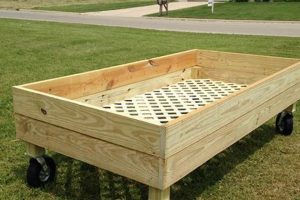
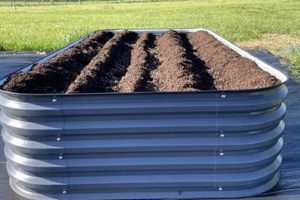
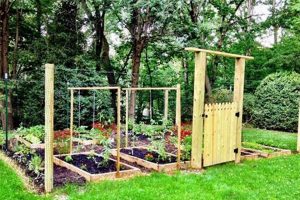
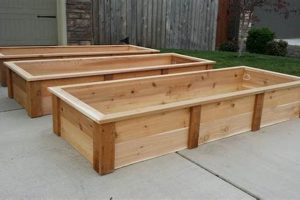
Cultivating tomatoes in elevated structures offers a practical approach to horticulture. This method involves constructing a contained planting area above ground level, typically using materials such as wood, stone, or composite lumber. Soil is then introduced into this structure, creating an environment suitable for tomato cultivation. For example, a gardener might build a rectangular wooden frame, fill it with a mixture of compost, topsoil, and peat moss, and then transplant tomato seedlings into the prepared bed.
Employing this elevated gardening technique presents several advantages. Improved soil drainage, reduced soil compaction, and enhanced accessibility for individuals with mobility limitations are notable benefits. Furthermore, this configuration provides a degree of control over soil composition and temperature, potentially leading to increased yields and reduced pest infestations. Historically, elevated beds have been utilized in various forms to overcome challenges related to poor soil quality or limited space, representing an adaptable gardening practice.
The subsequent discussion will delve into the specific considerations involved in successfully implementing this method for tomato production. Topics will encompass construction techniques, soil selection, variety selection, pest management, and optimal watering practices, providing a comprehensive guide for maximizing the potential of this gardening approach.
Cultivating Tomatoes in Elevated Structures
The following guidelines provide critical insights for maximizing yield and plant health when cultivating tomatoes using an elevated gardening approach.
Tip 1: Site Selection: Prioritize locations receiving a minimum of six hours of direct sunlight daily. Inadequate sunlight can severely impede fruit production and overall plant vigor.
Tip 2: Soil Composition: Implement a well-draining soil mixture rich in organic matter. A blend of equal parts compost, peat moss, and vermiculite offers an optimal growing medium. Conduct soil testing to determine pH levels, ideally targeting a range of 6.0 to 6.8.
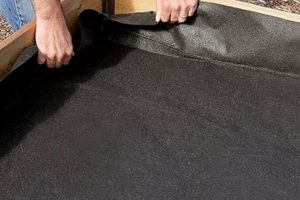
Tip 3: Structural Integrity: Employ durable materials such as treated lumber or concrete blocks to construct the elevated structure. Ensure adequate drainage holes are incorporated to prevent waterlogging.
Tip 4: Variety Selection: Select tomato varieties appropriate for the available space and growing season. Determinate varieties, which exhibit a compact growth habit, may be preferable for smaller structures.
Tip 5: Watering Practices: Implement a consistent watering schedule, maintaining adequate soil moisture without oversaturation. Drip irrigation systems are recommended to deliver water directly to the root zone, minimizing foliage wetness and reducing the risk of fungal diseases.
Tip 6: Staking and Support: Provide adequate staking or caging to support the developing plants and prevent fruit from contacting the soil. This practice minimizes the incidence of rot and disease.
Tip 7: Pest and Disease Management: Regularly inspect plants for signs of pests or diseases. Implement appropriate control measures, such as insecticidal soap or copper-based fungicides, at the first sign of infestation or infection.
Tip 8: Nutrient Supplementation: Supplement the soil with a balanced fertilizer, following the manufacturer’s recommendations. Monitor plant growth and adjust fertilization as needed to address any nutrient deficiencies.
Adhering to these guidelines will foster a thriving environment conducive to robust tomato growth and prolific fruit production. Careful attention to site selection, soil preparation, structural integrity, and ongoing maintenance will ultimately contribute to a successful and rewarding gardening endeavor.
These tips will be practically applied in the following conclusion to maximize tomato yield in the garden.
1. Drainage Optimization

Drainage optimization is a critical factor influencing the success of tomato cultivation in elevated structures. Inadequate drainage can lead to waterlogged soil conditions, fostering anaerobic environments detrimental to root health and overall plant vigor. Conversely, excessively rapid drainage can deprive plants of necessary moisture and nutrients. Therefore, a balanced approach is essential.
- Soil Composition and Structure
The selection of appropriate soil amendments directly impacts drainage characteristics. Incorporating organic matter, such as compost or well-rotted manure, improves soil structure, increasing pore space and facilitating water movement. Conversely, soils with a high clay content tend to retain water, potentially impeding drainage. The physical properties of the soil directly dictate water percolation rates and aeration levels within the root zone.
- Container Design and Materials
The design and materials used in constructing the elevated structure also influence drainage. Adequate drainage holes are imperative to allow excess water to escape. The size and spacing of these holes should be carefully considered based on the container volume and anticipated rainfall. Selecting breathable materials, such as untreated wood or terracotta, can further enhance drainage and aeration compared to non-porous options like plastic.
- Watering Practices
Employing appropriate watering techniques is crucial for optimizing drainage. Overwatering can saturate the soil, leading to anaerobic conditions and root rot. Conversely, underwatering can stress plants and hinder nutrient uptake. Implementing a watering schedule based on environmental conditions and plant needs, coupled with monitoring soil moisture levels, helps prevent both extremes.
- Plant Spacing and Variety Selection
Plant spacing and variety selection indirectly impact drainage. Overcrowding reduces airflow and increases humidity, potentially exacerbating drainage issues. Selecting varieties adapted to specific soil moisture conditions can also improve resilience. For example, cultivars with drought tolerance may be better suited for environments prone to rapid drainage.
Optimizing drainage in elevated tomato cultivation is not merely a matter of ensuring water runoff, but a holistic approach encompassing soil composition, structural design, watering practices, and cultivar selection. A well-drained environment promotes robust root development, nutrient uptake, and overall plant health, ultimately contributing to increased tomato yields and reduced susceptibility to disease. Failure to address drainage adequately can negate the other benefits of elevated gardening, resulting in stunted growth and diminished productivity.
2. Sunlight Exposure

Sunlight exposure represents a non-negotiable factor influencing the success of tomato cultivation in elevated structures. The quantity and quality of solar radiation directly affect photosynthesis, the fundamental process by which plants convert light energy into chemical energy for growth and fruit production. A deficiency in sunlight results in diminished carbohydrate synthesis, leading to stunted growth, reduced flowering, and poor fruit set. Tomato plants, classified as sun-loving, necessitate a minimum of six hours of direct sunlight daily, with eight or more hours considered optimal. The orientation of the elevated bed becomes crucial in maximizing light interception throughout the day. For example, in the northern hemisphere, a south-facing orientation often provides the most consistent sunlight exposure. Failure to provide adequate sunlight will manifest in elongated, spindly stems, pale foliage, and a significantly reduced yield.
Beyond the duration of sunlight, its intensity also plays a pivotal role. Elevated structures, while advantageous in many aspects, can inadvertently create shading issues, particularly if situated near buildings, trees, or other obstructions. Regular monitoring of sunlight patterns around the structure is, therefore, essential. Pruning nearby vegetation may be necessary to ensure unobstructed light access. Furthermore, in regions with intense summer heat, providing temporary shade during peak hours can prevent sunscald, a condition where fruits develop bleached, leathery patches due to excessive solar radiation. This can be achieved through the use of shade cloth or strategically positioned trellises with climbing plants.
In summary, understanding and actively managing sunlight exposure is paramount for achieving optimal tomato production in elevated beds. Insufficient sunlight directly impairs photosynthetic activity and fruit development, while excessive intensity can lead to fruit damage. By carefully considering the orientation of the structure, monitoring for shading issues, and implementing strategies to mitigate excessive heat, growers can create an environment conducive to robust tomato growth and abundant harvests. The ability to effectively harness solar energy represents a foundational element of successful elevated tomato gardening.
3. Soil Composition

Soil composition is intrinsically linked to the success of cultivating tomatoes in elevated structures. The restricted volume of soil within these beds necessitates a carefully formulated growing medium to support plant health and fruit production. Unlike in-ground gardens, where roots can access a broader range of nutrients and moisture, elevated beds rely entirely on the initial and ongoing management of the soil within the container. Improper soil composition directly leads to nutrient deficiencies, poor drainage, and increased susceptibility to disease, all of which compromise tomato yield. For instance, a soil lacking in essential macronutrients, such as nitrogen, phosphorus, and potassium, will result in stunted vegetative growth, reduced flowering, and ultimately, fewer tomatoes. Conversely, a soil with poor drainage inhibits root respiration, leading to root rot and reduced nutrient uptake, regardless of the available nutrient levels.
The ideal soil composition for tomatoes in elevated beds typically involves a blend of several components. A common mixture includes a combination of topsoil, compost, and a drainage-enhancing element like perlite or vermiculite. Topsoil provides a foundational structure and mineral content, while compost contributes organic matter, improves water retention, and supplies essential nutrients. Perlite or vermiculite enhances drainage, preventing waterlogging and promoting aeration around the roots. The specific proportions of these components may vary depending on the climate and tomato variety. Soil testing is a practical measure to determine the existing nutrient levels and pH, allowing for targeted amendments with lime to raise pH or sulfur to lower it, and the addition of specific fertilizers to address deficiencies. Furthermore, incorporating slow-release fertilizers at planting time ensures a consistent supply of nutrients throughout the growing season.
In conclusion, soil composition is not merely a component of elevated tomato cultivation, but a foundational element determining the overall success of the endeavor. A well-balanced soil, tailored to the specific needs of tomato plants, promotes healthy root development, efficient nutrient uptake, and robust growth, leading to abundant fruit production. Neglecting soil composition, on the other hand, inevitably leads to plant stress, reduced yields, and increased susceptibility to pests and diseases. The diligent management of soil composition, therefore, represents a critical investment in achieving optimal results in elevated tomato gardening.
4. Support Structure
The practice of cultivating tomatoes in elevated structures necessitates the implementation of adequate support systems. These structures, commonly known as stakes, cages, or trellises, serve to physically support the developing plants, preventing them from sprawling along the ground. Unsupported tomato plants, particularly indeterminate varieties, are prone to stem breakage due to the weight of the fruit. Furthermore, contact with the soil increases the risk of fungal diseases and pest infestations. Thus, a robust support structure directly contributes to plant health and fruit quality. For example, a tomato plant in an elevated bed, left unsupported, may exhibit stunted growth, reduced fruit production, and a higher incidence of blossom end rot due to poor air circulation and increased soil contact. The absence of a support system negates many of the benefits associated with elevated gardening, such as improved accessibility and reduced soilborne disease pressure.
The selection of an appropriate support structure depends on the tomato variety, the available space within the elevated bed, and the grower’s preference. Determinate varieties, characterized by their compact growth habit, may require only minimal staking. In contrast, indeterminate varieties, which continue to grow and produce fruit throughout the season, necessitate more substantial support, such as tall cages or elaborate trellis systems. Cage systems, constructed from wire or sturdy plastic, encircle the plant, providing support as it grows. Trellises, on the other hand, offer a vertical framework for the plants to climb, maximizing space utilization and improving air circulation. The practical application of these support systems involves careful installation during the initial planting phase, ensuring that the structure is firmly anchored to withstand the weight of the mature plant and its fruit load. Regular monitoring and adjustments are often necessary as the plant grows, particularly for indeterminate varieties that require continuous training and pruning to maintain optimal support and airflow.
In summary, the implementation of a suitable support structure is a crucial component of successful tomato cultivation in elevated beds. These systems mitigate the risk of stem breakage, reduce soil contact, and improve air circulation, ultimately contributing to enhanced plant health and fruit quality. The selection of an appropriate support structure should be based on the tomato variety, available space, and grower preference, with careful installation and ongoing maintenance ensuring long-term effectiveness. Overlooking the importance of support structures can lead to compromised plant health and reduced yields, undermining the benefits of elevated gardening.
5. Variety Selection

The selection of appropriate tomato varieties is a pivotal determinant of success in elevated gardening. The confined space and unique environmental conditions characteristic of structures necessitate careful consideration of plant size, growth habit, disease resistance, and anticipated yield. Inappropriate cultivar selection can result in stunted growth, overcrowding, and diminished fruit production, negating the advantages of the raised bed system.
- Determinate vs. Indeterminate Growth
Determinate tomato varieties exhibit a bush-like growth habit, reaching a predetermined size and producing their entire crop within a relatively short period. They are generally well-suited for smaller elevated beds where space is limited. Indeterminate varieties, conversely, continue to grow and produce fruit throughout the growing season, requiring significant vertical support and potentially becoming unwieldy in confined spaces. Selecting a determinate variety like ‘Roma’ for a small raised bed avoids overcrowding that an indeterminate variety such as ‘Brandywine’ would cause.
- Disease Resistance
Tomato plants are susceptible to a range of fungal and viral diseases, particularly in humid environments. Selecting disease-resistant varieties is crucial for minimizing the need for chemical interventions and ensuring a healthy, productive crop. Look for varieties labeled with resistance to common diseases such as Verticillium wilt (V), Fusarium wilt (F), and Tomato Mosaic Virus (ToMV). In regions with high humidity, choosing a variety like ‘Mountain Magic’ which has good resistance to late blight is often a good choice.
- Fruit Size and Type
The intended use of the tomatoes should influence variety selection. If the goal is to produce salad tomatoes, cherry or grape varieties are appropriate. For slicing and sandwiches, larger beefsteak varieties may be preferred. However, larger fruit sizes may require more robust support structures and potentially reduce the overall yield per plant within the limited space of the elevated bed. For example, growing ‘Sungold’ cherry tomatoes in a raised bed will yield a higher number of fruits compared to planting ‘Mortgage Lifter’ beefsteak tomatoes.
- Climate Adaptation
Tomato varieties exhibit varying degrees of tolerance to different climatic conditions. Selecting varieties adapted to the local climate is essential for maximizing yield and minimizing stress. Short-season varieties are appropriate for regions with cool summers, while heat-tolerant varieties are better suited for hot climates. ‘Early Girl’ is a popular choice for cooler climates because of its shorter time to maturity, ensuring a harvest before the first frost.
Therefore, variety selection constitutes a fundamental aspect of successful elevated tomato cultivation. Considering growth habit, disease resistance, fruit type, and climate adaptation is crucial for optimizing plant health, maximizing yield, and fully realizing the benefits of the raised bed system. A well-informed decision regarding variety selection is a prerequisite for achieving a bountiful harvest of tomatoes in elevated garden settings.
Frequently Asked Questions
The following section addresses common inquiries and clarifies potential misconceptions regarding the cultivation of tomatoes in elevated structures.
Question 1: Are raised garden tomatoes more susceptible to pests compared to those grown in traditional gardens?
Elevated structures can, in some instances, reduce pest pressure by creating a physical barrier against soilborne pests. However, they do not eliminate the risk entirely. Airborne pests and those capable of climbing will still pose a threat. Consistent monitoring and proactive pest management strategies remain crucial.
Question 2: Does the soil in a raised garden heat up more quickly, potentially harming tomato roots?
Due to increased sun exposure and drainage, soil within elevated structures can indeed warm up more rapidly than in-ground soil. This can be advantageous in cooler climates, promoting faster growth. However, in warmer climates, it may necessitate measures to moderate soil temperature, such as mulching or shading.
Question 3: Is there a specific soil pH level recommended for raised garden tomatoes?
Tomato plants generally thrive in slightly acidic soil with a pH range between 6.0 and 6.8. Regular soil testing and amendments with lime or sulfur, as needed, are recommended to maintain this optimal range. Failure to do so can impair nutrient uptake and negatively impact plant health.
Question 4: How often should raised garden tomatoes be watered?
Watering frequency depends on factors such as climate, soil composition, and plant size. Generally, raised garden tomatoes require more frequent watering than in-ground plants due to increased drainage and evaporation. Soil moisture should be checked regularly, and plants watered when the top inch of soil feels dry to the touch. Avoid overwatering, which can lead to root rot.
Question 5: Are raised garden tomatoes more prone to blossom-end rot?
Blossom-end rot, a physiological disorder caused by calcium deficiency, can occur in raised garden tomatoes if calcium uptake is impaired. This is often related to inconsistent watering practices. Maintaining consistent soil moisture and amending the soil with calcium-rich supplements can help prevent this condition.
Question 6: Do raised garden tomatoes require more fertilizer than those grown in the ground?
Due to the limited soil volume and increased drainage in elevated structures, nutrients can be depleted more quickly. Therefore, raised garden tomatoes may require more frequent fertilization than in-ground plants. However, the specific fertilizer requirements will vary depending on the soil composition and plant growth stage. Regular soil testing and monitoring of plant health can help determine the appropriate fertilization schedule.
In summary, the successful cultivation of tomatoes in raised gardens requires attention to specific environmental factors and management practices. Addressing potential challenges proactively will optimize plant health and fruit production.
The following section will provide a concluding summary, emphasizing the key takeaways regarding raised garden tomato cultivation.
Raised Garden Tomatoes
The preceding analysis has detailed various aspects of cultivating tomatoes in elevated structures. Successful implementation relies on a holistic approach encompassing optimal drainage, sufficient sunlight exposure, appropriate soil composition, robust support structures, and judicious variety selection. Failure to address these core elements diminishes potential yields and increases vulnerability to pests and diseases. The advantages afforded by this method, including improved accessibility and soil control, are contingent upon meticulous planning and consistent maintenance.
Effective utilization of the strategies outlined herein represents a tangible path toward maximizing tomato production within limited spaces and challenging environments. The information presented serves as a foundation for informed decision-making, enabling growers to optimize their practices and cultivate healthy, productive plants. Continued refinement of these techniques through empirical observation and data-driven analysis will further enhance the efficacy of this method, contributing to increased food security and sustainable agricultural practices.