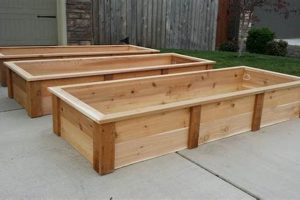
The localized water delivery method offers a highly efficient way to hydrate plants in elevated planting structures. Water is slowly applied directly to the root zone of plants, minimizing water loss through evaporation and runoff. This approach contrasts with traditional methods like overhead sprinklers, which distribute water more broadly.
Implementing this watering technique presents several advantages for horticulturalists. The benefits include optimized water usage, reduced weed growth due to targeted watering, and decreased risk of foliar diseases often associated with wet leaves. Historically, such systems have been employed in arid regions to conserve precious water resources and maximize crop yields. Their application in controlled environments such as elevated planting structures extends these benefits to smaller-scale gardening.
The following sections will delve into the specific components of these systems, best practices for installation and maintenance, and strategies for optimizing plant health within this specialized gardening context. We will also explore considerations for selecting appropriate equipment and addressing common challenges encountered during operation.
Essential Guidance
Optimizing the performance and longevity of water-efficient systems requires careful planning and consistent maintenance. The following advice ensures successful implementation and sustained effectiveness.
Tip 1: System Design: Prior to installation, meticulously plan the layout. Consider plant spacing, water requirements, and the overall dimensions. Proper design is the foundation of efficient and even water distribution.
Tip 2: Water Source Filtration: Utilize a high-quality filter at the water source. This is critical to prevent clogging of emitters by debris and mineral deposits, ensuring consistent water flow.
Tip 3: Emitter Selection: Choose emitters with flow rates appropriate for the specific plants being grown. Different plant species have varying water needs; therefore, selecting correct emitters is essential to avoid over- or under-watering.
Tip 4: Pressure Regulation: Install a pressure regulator to maintain consistent water pressure throughout the system. Fluctuations in pressure can lead to uneven water distribution and system inefficiencies.
Tip 5: Regular Inspection: Conduct regular inspections to identify and address leaks, clogs, or damaged components. Prompt attention to these issues prevents significant water loss and maintains system integrity.
Tip 6: Seasonal Adjustments: Adjust watering schedules according to seasonal changes in temperature and rainfall. Monitoring soil moisture levels and adapting watering accordingly is vital for plant health.
Tip 7: Winterization: In regions with freezing temperatures, properly winterize the system by draining water from the lines and protecting vulnerable components. This prevents damage from ice expansion.
Adhering to these recommendations promotes optimal water usage, reduces maintenance costs, and fosters a thriving garden environment within elevated planting structures.
The following section will conclude the guide.
1. Water Conservation

Water conservation is inextricably linked to the use of localized irrigation in elevated planting structures. The system’s inherent design minimizes water loss, a direct consequence of delivering water precisely to the root zone of cultivated plants. This targeted approach contrasts sharply with traditional irrigation methods, such as overhead sprinklers, which often result in significant water wastage through evaporation, runoff, and unintended wetting of non-cultivated areas. The implementation of a localized system in this context thus constitutes a tangible strategy for reducing overall water consumption in gardening practices. Consider, for instance, a study by the University of California, Davis, demonstrating that vineyards utilizing this system reduced water usage by as much as 60% compared to those employing flood irrigation. While the application differs, the principle of efficient water delivery remains consistent.
The practical significance of this connection extends beyond simple resource management. By conserving water, gardeners can reduce their environmental footprint and contribute to the sustainable use of this vital resource. Furthermore, reduced water usage can translate into lower water bills, providing economic benefits. The precision with which water is delivered also minimizes the likelihood of overwatering, a common issue that can lead to root rot and other plant health problems. This translates into healthier plants, higher yields, and a reduced need for chemical interventions to address water-related issues. In arid and semi-arid regions, where water scarcity is a pressing concern, the adoption of this technique is particularly crucial for ensuring the viability of gardening activities.
In summary, the relationship between water conservation and localized irrigation in elevated planting structures is one of direct causation and mutual benefit. The latter serves as an effective tool for achieving the former, leading to environmental responsibility, economic savings, and improved plant health. While challenges such as initial setup costs and the need for careful system design exist, the long-term benefits of reduced water consumption and improved resource efficiency make this system a valuable approach for sustainable gardening practices.
2. Targeted Delivery

Targeted delivery constitutes a defining characteristic of localized irrigation in elevated planting structures, impacting efficiency, plant health, and resource utilization. The subsequent analysis clarifies the multifaceted relationship between localized systems and precision water distribution.
- Water Placement Accuracy
The fundamental advantage of this irrigation approach resides in its capacity to deliver water directly to the active root zone. This minimizes water loss through surface evaporation or wind drift, which are common occurrences with sprinkler systems. For example, in a tomato plant cultivation, emitters can be positioned inches from the stem, ensuring that water penetrates directly into the soil where roots are concentrated. This precision is crucial for plant hydration.
- Nutrient Distribution Control
The ability to mix soluble fertilizers with irrigation water allows for targeted nutrient delivery. This method, often termed “fertigation,” ensures that plants receive essential nutrients concurrently with hydration. For instance, a gardener may administer a nitrogen-rich solution during a plant’s vegetative growth phase, directly at the root level, promoting foliage development. The process reduces nutrient runoff and enhances plant uptake efficiency.
- Disease Mitigation through Foliar Dryness
By delivering water directly to the soil, localized systems minimize the wetting of plant foliage. This is particularly important in preventing fungal diseases that thrive in moist environments. Consider the example of roses, which are susceptible to black spot disease. By keeping rose leaves dry, the system reduces the prevalence of this disease, lessening the need for fungicide applications.
- Reduced Weed Germination
This system can limit the germination of weeds by keeping the soil surface between cultivated plants drier. Weed seeds require moisture to germinate, and by restricting water to the immediate vicinity of desired plants, this method inhibits weed growth. In a raised bed of herbs, strategic emitter placement can minimize water availability to weed seeds in the inter-row spaces, decreasing weeding labor.
The combined impact of these facets highlights the importance of targeted delivery in optimizing the utilization of water and nutrients within the environment. The precision afforded by localized irrigation systems minimizes resource waste, promotes plant health, and reduces the need for chemical interventions. This approach represents a substantial improvement over traditional irrigation methods and underscores its relevance in modern gardening practices.
3. Weed Reduction
The implementation of localized irrigation in elevated planting structures directly contributes to weed reduction. This outcome stems from the targeted nature of water delivery inherent to this system. Unlike traditional irrigation methods that broadly distribute water across the soil surface, localized systems apply water directly to the root zones of desired plants. This minimizes the availability of moisture to weed seeds present in the surrounding soil. Consequently, weed germination and growth are inhibited, reducing the overall weed population within the growing area. For example, a raised bed dedicated to cultivating lettuce, equipped with such a system, would exhibit fewer weeds compared to a similar bed irrigated using a sprinkler, simply because the water supply is focused on the immediate vicinity of the lettuce plants.
The significance of this weed reduction extends beyond mere aesthetic considerations. Weeds compete with cultivated plants for essential resources such as water, nutrients, and sunlight. By suppressing weed growth, localized irrigation ensures that these resources are primarily available to the intended crop, thereby promoting healthier plant development and potentially increasing yields. Furthermore, reduced weed pressure lessens the need for manual weeding or the application of herbicides, both of which can be labor-intensive and environmentally impactful. Consider the scenario of a small-scale organic farm; the ability to minimize herbicide use through effective weed control is crucial for maintaining organic certification and appealing to environmentally conscious consumers.
In summary, the connection between weed reduction and localized irrigation is a direct and beneficial consequence of the system’s design and application. The targeted delivery of water restricts moisture availability to weed seeds, inhibiting their germination and growth. This results in reduced competition for resources, healthier plants, decreased reliance on herbicides, and ultimately, a more sustainable and productive gardening or farming system. Challenges may involve initial system setup and the need to monitor for localized weed outbreaks, but the overall benefits of weed reduction make localized irrigation a valuable tool for effective garden management.
4. Disease Prevention

The implementation of localized irrigation within elevated planting structures inherently contributes to disease prevention, primarily by minimizing foliar wetness. Many plant diseases, particularly fungal infections, thrive in humid environments and require prolonged periods of leaf wetness to establish themselves. By delivering water directly to the root zone, these systems avoid wetting the foliage, thereby creating an environment less conducive to disease development. For instance, in a rose garden, overhead watering can lead to black spot, a common fungal disease. Switching to localized watering significantly reduces the incidence of black spot by keeping the rose leaves dry. This direct correlation between reduced foliar wetness and decreased disease susceptibility is a key advantage of the system.
The practical significance of disease prevention extends beyond simply reducing the need for chemical treatments. Healthier plants are inherently more productive and resilient. Reducing disease pressure allows plants to allocate more energy towards growth and fruit production, rather than defense mechanisms. Furthermore, minimizing the use of fungicides and other chemical controls benefits the environment and promotes a more sustainable gardening practice. In the context of organic gardening, this aspect is particularly crucial. Organic growers rely on preventative measures, such as localized watering, to maintain plant health without resorting to synthetic chemicals. The system can also be incorporated with disease-resistant plant varieties, which will make plants even more resilient.
In conclusion, the connection between localized irrigation and disease prevention in elevated planting structures is fundamentally based on the principle of minimizing foliar wetness and the advantages of healthier plants. By limiting the conditions conducive to disease development, this system reduces the need for chemical interventions, promotes sustainable gardening practices, and ultimately contributes to healthier, more productive plants. While challenges such as proper system design and maintenance exist, the disease-prevention benefits make localized irrigation a valuable component of integrated pest and disease management strategies in any garden setting.
5. Nutrient Efficiency

Nutrient efficiency is significantly enhanced through the implementation of localized irrigation in elevated planting structures. The capacity to deliver water and nutrients directly to the root zone minimizes loss, optimizes uptake, and promotes vigorous plant growth.
- Targeted Nutrient Delivery
Fertilizers can be dissolved in the irrigation water and delivered directly to the plant roots. This process, known as fertigation, reduces nutrient runoff and ensures that plants receive nutrients precisely when and where they are needed. For example, a tomato crop can be supplied with a nitrogen-rich solution during its vegetative growth phase, optimizing foliage development and fruit production.
- Reduced Nutrient Loss
Traditional irrigation methods, such as flood or sprinkler irrigation, often result in nutrient leaching and runoff. These losses reduce the effectiveness of fertilization and contribute to environmental pollution. Localized systems minimize these losses by delivering water and nutrients directly to the root zone, ensuring that they are available for plant uptake. The method can be particularly important in sandy soils, which drain rapidly and are prone to nutrient leaching.
- Optimized Nutrient Uptake
The system maintains consistent soil moisture levels in the root zone, creating ideal conditions for nutrient uptake. Plants can efficiently absorb nutrients when the soil is moist but not waterlogged. By precisely controlling water delivery, the system optimizes nutrient availability and uptake, leading to healthier and more productive plants. This is especially beneficial for plants with high nutrient demands, such as fruiting vegetables.
- Minimized Weed Competition
Weeds compete with cultivated plants for nutrients. By delivering water and nutrients directly to the root zone of desired plants, localized systems minimize nutrient availability to weeds growing in the surrounding area. This reduces weed competition and ensures that cultivated plants have access to the nutrients they need to thrive. The weed reduction benefits translate to less labor for weeding and reduced need for herbicides.
The combined effects of targeted delivery, reduced loss, optimized uptake, and minimized weed competition underscore the importance of localized irrigation in elevated planting structures for maximizing nutrient efficiency. This approach leads to healthier plants, increased yields, reduced fertilizer use, and a more sustainable gardening practice. While careful system design and maintenance are essential, the nutrient efficiency benefits of the system make it a valuable tool for gardeners seeking to optimize plant nutrition and minimize environmental impact.
6. System Customization
The capacity to tailor the system to specific environmental and horticultural needs constitutes a pivotal aspect of its successful application. This adaptability allows gardeners to optimize water use, plant health, and overall system performance within the controlled environment of elevated planting structures. The system is highly flexible.
- Emitter Selection and Placement
The system’s emitters come in varying flow rates and patterns, allowing precise water delivery based on individual plant requirements. For example, a high-water-demand tomato plant can be paired with a high-flow emitter, while a drought-tolerant herb receives a low-flow emitter. Emitter placement is customizable to target the active root zone of each plant, ensuring efficient water absorption and minimizing water waste. This adaptability is crucial in mixed plantings where water needs vary.
- Zonal Irrigation Control
Dividing a system into zones allows for independent control of water delivery to different sections of the elevated planting structure. This feature is particularly useful when growing plants with varying water requirements in the same bed. For instance, one zone might be dedicated to moisture-loving plants, while another caters to drought-tolerant species. Zonal control enables precise water management, preventing overwatering or underwatering in specific areas.
- Pressure Regulation Adjustments
The pressure regulators maintain consistent water pressure throughout the system, ensuring uniform water delivery from all emitters. The regulators are adjustable to accommodate varying water pressure levels. This adjustment is important when water sources have fluctuating pressure or when the system is expanded with more emitters. A consistent pressure supply promotes even water distribution and optimal system performance.
- Timer and Controller Programming
Automated timers and controllers allow for precise scheduling of watering cycles, optimizing water delivery based on plant needs and environmental conditions. The automated systems are programmable with different watering durations, frequencies, and start times. These systems are helpful for unattended watering and ensuring that plants receive adequate moisture, even during periods of absence. Programmability contributes to efficient water management and overall system reliability.
The flexibility afforded by system customization enables gardeners to adapt the system to a wide range of horticultural scenarios. By tailoring emitter selection, zonal control, pressure regulation, and timer programming, the system can be optimized for diverse plant needs and environmental conditions. This adaptability promotes efficient water use, healthy plant growth, and sustainable gardening practices.
7. Soil Health

Soil health, defined as the soil’s capacity to function as a vital living ecosystem that sustains plants, animals, and humans, is intrinsically linked to irrigation methods employed, especially within controlled environments like elevated planting structures. The selection of irrigation systems directly influences soil structure, microbial activity, and nutrient availability, all of which are fundamental components of a healthy soil profile. Implementing systems that support rather than degrade these factors is crucial for long-term horticultural success.
- Water Content Regulation
Maintaining optimal soil moisture is essential for sustaining microbial populations and facilitating nutrient cycling. Localized irrigation provides a precise means of regulating water content, preventing both waterlogging and drought conditions. Waterlogged soils suffer from anaerobic conditions that inhibit root respiration and microbial activity, while excessively dry soils limit nutrient availability and microbial mobility. The system helps to maintain soil moisture to optimum levels for soil and plant health.
- Minimizing Soil Compaction
Traditional irrigation methods, such as flood irrigation, can contribute to soil compaction, especially in poorly structured soils. The weight of the water and repeated wetting and drying cycles can compress soil particles, reducing pore space and impeding root growth. The system delivers water slowly and directly to the soil surface, minimizing soil compaction and preserving soil structure. An example is a raised bed with delicate root vegetables, where compaction must be minimized. Systems with high pressure can accelerate compaction, and slow systems minimize the compaction.
- Nutrient Availability Management
The efficient delivery of water and nutrients directly to the root zone can enhance nutrient uptake and reduce nutrient losses through leaching or volatilization. Localized irrigation allows for the precise application of fertilizers, ensuring that plants receive the necessary nutrients without over-fertilizing or polluting the surrounding environment. For instance, a raised bed growing heavy feeders like tomatoes can benefit from fertigation, where water-soluble fertilizers are applied through the irrigation system.
- Promoting Microbial Activity
A healthy soil microbiome is essential for nutrient cycling, disease suppression, and plant growth promotion. Maintaining optimal soil moisture and aeration levels, as achieved through localized irrigation, supports a diverse and active microbial community. Beneficial microbes, such as mycorrhizal fungi and nitrogen-fixing bacteria, thrive in well-aerated, moist soils and play a critical role in nutrient acquisition and plant health. Using water efficiently can enable the soil microbiome to thrive as well.
These facets underscore the integral relationship between soil health and the selection of irrigation methods. Utilizing the system within elevated planting structures not only optimizes water use but also supports the physical, chemical, and biological properties of the soil, creating a favorable environment for plant growth and long-term sustainability. Consideration must be given to soil type, plant species, and environmental conditions to maximize the benefits of this system and promote a thriving soil ecosystem.
Frequently Asked Questions
The following section addresses common inquiries regarding the implementation of water-efficient systems in elevated planting structures, providing clarity on key considerations.
Question 1: Is this localized watering method suitable for all plant types within elevated planting structures?
While adaptable, the suitability of this watering method varies depending on the specific water requirements of different plant species. Plants with high water demands may benefit significantly, while drought-tolerant species may require careful monitoring to prevent overwatering.
Question 2: What is the expected lifespan of the emitters within a typical system?
The longevity of emitters is influenced by water quality, operating pressure, and material composition. Generally, high-quality emitters can last for several years with proper maintenance. Regular flushing of the system to remove debris extends emitter lifespan.
Question 3: How does system installation differ in wooden versus metal elevated planting structures?
The primary difference lies in the method of securing the irrigation lines. Wooden structures allow for the use of staples or clips, while metal structures may require adhesive fasteners or specialized clamps to attach the tubing.
Question 4: What are the potential drawbacks of using this watering method?
Potential drawbacks include the initial investment cost, the need for regular maintenance to prevent clogging, and the possibility of uneven water distribution if the system is not properly designed or installed.
Question 5: Can the system be automated for hands-free operation?
Yes, integrating a timer and controller enables automated operation. These devices allow for pre-programmed watering schedules, optimizing water delivery based on plant needs and environmental conditions.
Question 6: How does localized watering impact fertilizer application in elevated planting structures?
This method facilitates fertigation, where fertilizers are dissolved in the irrigation water and delivered directly to the root zone. This approach enhances nutrient uptake efficiency and minimizes nutrient loss through runoff or leaching.
In summary, localized irrigation presents a viable and efficient watering solution for elevated planting structures. Careful planning, proper installation, and regular maintenance are essential for maximizing its benefits and addressing potential challenges.
The subsequent section concludes this comprehensive overview.
Conclusion
This exploration has elucidated the multifaceted benefits of drip irrigation in raised garden beds. The analysis has covered crucial aspects, including water conservation, targeted delivery, weed reduction, disease prevention, nutrient efficiency, system customization, and soil health. Each facet demonstrates the system’s capacity to optimize resource utilization and promote sustainable horticultural practices. Its strategic water delivery minimizes waste, fostering healthy plant growth and reduced environmental impact.
The adoption of drip irrigation in raised garden beds represents a tangible step towards responsible gardening. Its capacity to enhance resource efficiency and mitigate common horticultural challenges underscores its significance in modern cultivation. Further research and development will refine this technique, solidifying its role in creating sustainable and productive growing environments.